From Concept to Classroom: Mastering Educational Video Content
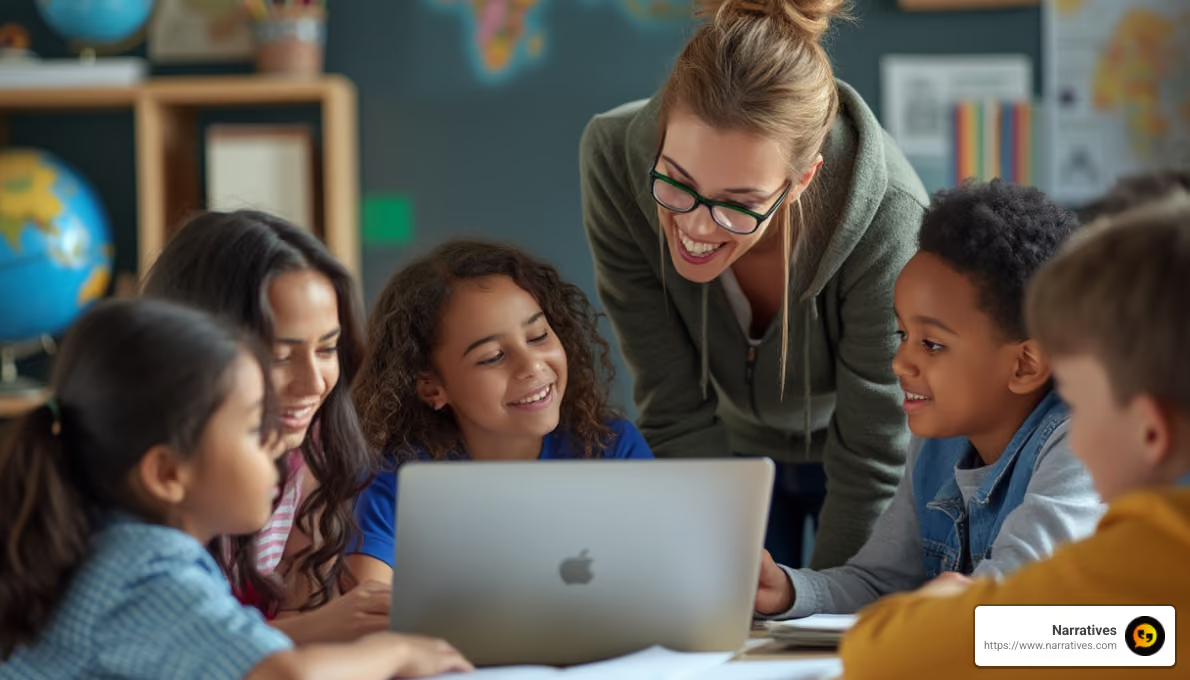
Educational video content is not just a trendy catchphrase; it’s a transformative approach to learning. Whether you’re a nonprofit aiming to amplify your mission or an educator looking to engage students, educational videos offer enormous potential.
- Educational videos are tools that improve learning by integrating visual and auditory elements.
- Managing cognitive load is crucial to ensure content is effective and comprehensible.
- Effective videos boost student engagement, sparking curiosity and participation.
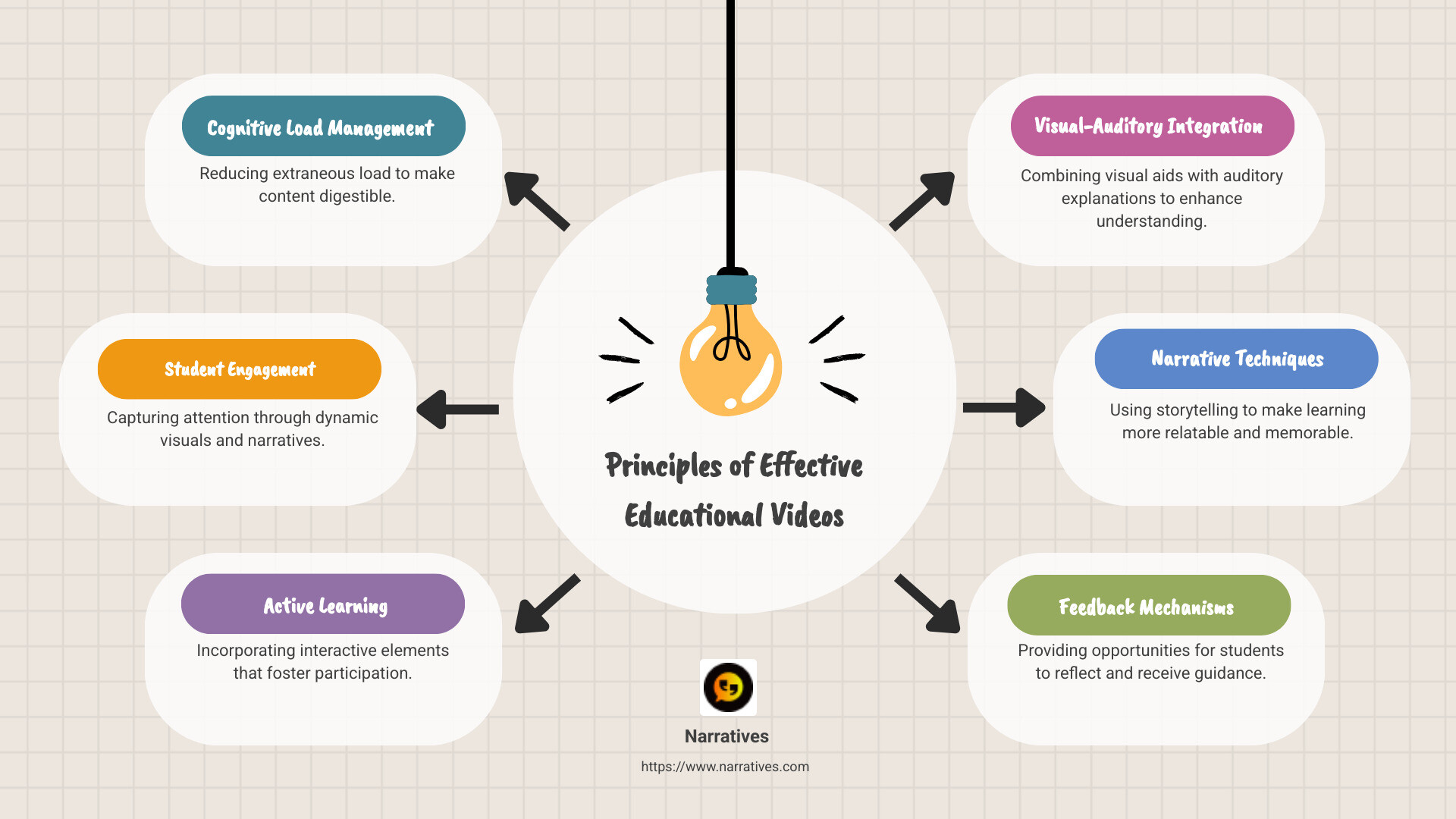
Educational videos have revolutionized how we learn and teach, largely due to their ability to visually represent complex concepts. By reducing cognitive load, these videos make dense information more digestible, inevitably boosting student engagement. When crafted thoughtfully, educational videos not only convey facts but also captivate attention, stimulate interest, and spark a deeper understanding. For marketing and communications professionals within nonprofits, using these principles could turn content from mere information into a compelling story that resonates with diverse audiences.
Understanding the principles of creating effective educational videos can empower organizations and educators to make a lasting impact.
Related content about Educational video content:
Understanding Educational Video Content
Educational video content is a powerful tool for delivering information, especially in higher education settings. It plays a crucial role in flipped classrooms, where traditional teaching methods are turned on their head.
Content-Delivery Tool
Educational videos are essential in modern classrooms. They help present information in a way that's easy to understand and remember. Videos combine visuals and audio, making learning more engaging and effective. This multimedia approach caters to different learning styles, ensuring that students grasp complex ideas faster.
Higher Education
In higher education, videos have become a staple. They are used in online courses, blended learning environments, and even in traditional classrooms. Studies have shown that technology, including video, can significantly improve learning outcomes. For instance, video content can make abstract or difficult-to-visualize topics, like those covered in biology, more accessible and engaging for students.
Flipped Classes
Flipped classrooms are changing how students learn. In this model, students watch video lectures at home and engage in interactive activities in class. This approach allows students to learn at their own pace, pausing and rewinding videos as needed. It also frees up classroom time for discussions, problem-solving, and hands-on activities, promoting active learning.
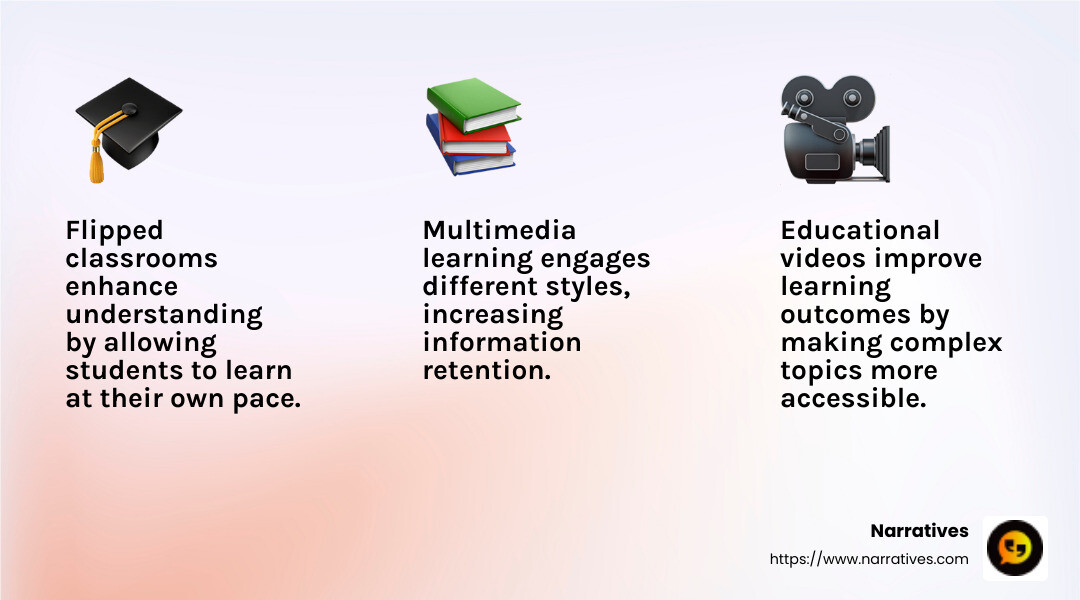
The use of educational videos in flipped classrooms has been linked to improved student performance and engagement. By shifting the initial learning phase outside the classroom, educators can focus on reinforcing and applying knowledge during class time.
In summary, educational video content is not just a supplementary tool; it's a transformative element in education. Whether used in traditional settings or innovative models like flipped classrooms, videos are reshaping the educational landscape. They offer a dynamic way to deliver content, making learning more interactive and effective for students at all levels.
Designing Effective Educational Videos
Creating impactful educational video content requires careful consideration of several key principles. Let's explore how cognitive load theory, multimedia learning, and signaling can improve video effectiveness.
Cognitive Load Theory
Understanding cognitive load is crucial when designing educational videos. This theory, introduced by Sweller, explains how our memory processes information. Our working memory can only handle a limited amount of information at a time. Therefore, videos need to be designed to minimize unnecessary information (extraneous load) and focus on essential content (germane load).
Practical Tip: Break down complex topics into smaller, manageable segments. This approach helps students process information without feeling overwhelmed.
Multimedia Learning
Multimedia learning combines visuals and audio to improve understanding. Mayer's research highlights how well-designed multimedia can improve retention and comprehension. Videos that integrate text, images, and narration can cater to different learning styles, making complex subjects more accessible.
Practical Tip: Use visuals to illustrate key concepts and reinforce spoken information. This dual-channel approach helps students connect ideas more effectively.
Signaling
Signaling, or cueing, involves highlighting important information within videos. This can be done using on-screen text, symbols, or changes in color. By directing attention to key points, signaling helps students focus on what's important, reducing cognitive load and increasing engagement.
Practical Tip: Use arrows, bold text, or color changes to emphasize critical information. This technique guides students' attention and aids in processing and retaining new knowledge.
Incorporating these principles can transform educational video content from a passive viewing experience into an active learning tool. By managing cognitive load, leveraging multimedia elements, and employing signaling, educators can create videos that not only inform but also engage and inspire students.
Next, we'll explore how to engage students further with video content, focusing on styles and video length.
Engaging Students with Video Content
To truly captivate students, educational video content must prioritize engagement. This means considering how to keep students interested and invested in the material. Let's look at three key factors: student engagement, conversational style, and video length.
Student Engagement
Engagement is crucial for learning. Videos should be more than just passive viewing experiences. Research shows that when students are actively engaged, they learn better. One way to boost engagement is by integrating interactive elements, like questions or prompts, within the video. These elements encourage students to think critically and apply what they’ve learned.
Tip: Use interactive tools to add questions to your videos. This can improve memory retention and help students assess their understanding.
Conversational Style
The tone of a video can significantly impact student engagement. Using a conversational style, as opposed to formal language, makes the content feel more relatable and less intimidating. Mayer's personalization principle suggests that a conversational tone fosters a sense of social partnership between the student and the narrator, making the learning experience more enjoyable and effective.
Example: Instead of saying, "The experiment demonstrates the principles of physics," try, "Let’s see how physics works in this cool experiment!"
Video Length
Keeping videos short is vital for maintaining student attention. According to a study by Guo and colleagues, the median engagement time for videos under six minutes is nearly 100%. As videos get longer, engagement drops significantly. Therefore, it's best to keep videos concise—ideally between 6 and 9 minutes.
Stat: Videos longer than 12 minutes see a dramatic drop in student engagement, often to around 20%.
By focusing on these elements—engagement, conversational style, and video length—educators can create educational video content that not only informs but also captivates students. These strategies ensure that videos are a dynamic part of the learning experience.
Next, we'll dig into how active learning can be facilitated through video, exploring techniques like interactive questions and fostering metacognition.
Active Learning through Video
Active learning transforms educational video content from a passive experience into an engaging one. Let's explore how incorporating interactive questions, promoting self-regulated learning, and encouraging metacognition can make this happen.
Interactive Questions
Interactive questions are a powerful tool for turning video watching into an active learning event. By embedding questions throughout a video, students are prompted to recall and apply information in real-time. This method was highlighted by Szpunar et al. (2013), who found that students who answered questions interspersed within video lectures performed significantly better on tests. They also reported less mind wandering and anxiety.
Example: Use platforms like HapYak to seamlessly add questions to your videos. This approach helps students stay focused and better understand the material.
Self-Regulated Learning
Self-regulated learning is all about students taking charge of their own educational journey. It involves monitoring their understanding, identifying difficulties, and adjusting strategies accordingly. However, novices often struggle with accurately assessing their learning, as noted by Bjork et al. (2013). Videos with built-in prompts and questions can guide students in evaluating their comprehension, making them more aware of their learning process.
Tip: Encourage students to pause videos and reflect on what they've learned. This practice helps them develop critical self-assessment skills.
Metacognition
Metacognition is the process of thinking about one's own thinking. It’s crucial for effective learning because it helps students become aware of their cognitive processes. According to Schacter and Szpunar (2015), incorporating activities that promote metacognition can improve learning from videos. By engaging with content actively, students can build and refine their mental models.
Strategy: After watching a video, ask students to summarize the content in their own words or predict what might come next. This encourages them to actively process and internalize the information.
By integrating these elements—interactive questions, self-regulated learning, and metacognition—educational video content becomes a dynamic tool that not only delivers information but also improves the learning experience. These strategies empower students to take an active role in their education, leading to deeper understanding and retention.
Next, we'll explore the various types of educational videos and how each format can be used effectively in the classroom.
Types of Educational Videos
When it comes to creating educational video content, there are several styles to consider, each with its unique strengths. Let’s dive into these types and see how they can be effectively used in the classroom.
Lecture with Slides
Lecture with Slides is a classic format that pairs spoken explanations with visual slides. This method is great for presenting structured information clearly and succinctly. Adding digital ink or annotations can make these videos more dynamic and engaging.
Example: A video on "The US Healthcare Delivery System" uses this format to break down complex topics into digestible pieces.
Talking Head
In a Talking Head video, you see a person speaking directly to the camera. This style creates a personal connection and can include graphics or animations to illustrate points. It’s perfect for introductions or when a more intimate presentation is needed.
Example: "Introduction to Environmental Health" uses a talking head format to engage viewers with eye contact and expression.
On Location Lecture
On Location Lectures bring the subject matter to life by filming in relevant settings. Whether it's a factory or a historical site, this format immerses viewers in the topic.
Example: A video on "E-waste and Environmental Health" filmed at a recycling plant provides a tangible context to the discussion.
Interview
Interviews introduce diverse perspectives and expert insights. By planning questions carefully, these videos can deeply explore a topic.
Example: "Why Are Highly Processed Foods Generally Less Healthy?" uses interviews to offer expert opinions and real-world insights.
Documentary
Documentaries combine multiple elements—interviews, narration, and visuals—to tell a comprehensive story. This format is ideal for deep dives into complex subjects.
Example: "A Brief History of Public Health" mixes interviews and historical footage to create an engaging narrative.
Drawing a Concept or Diagram
Drawing videos visually break down complex ideas using sketches and diagrams. They’re quick to create and help in explaining abstract concepts step by step.
Example: Videos on the "Circular Flow of Income" use this format to simplify economic concepts.
Demonstration
Demonstrations are practical and hands-on, showing processes or experiments in action. This format is excellent for subjects like math or science, where seeing is learning.
Example: A "Matrix Algebra Review" video uses screencapture to work through problems step by step.
Lightboard Video
Lightboard Videos allow instructors to write and draw while facing the camera. This engaging format combines personal interaction with visual explanations, making complex topics more accessible.
Example: Northwestern's "Lightboard" videos show instructors solving problems in real-time, maintaining eye contact with viewers.
Each of these video types can be a powerful tool in the classroom, enhancing student engagement and understanding. The choice of format depends on the content, audience, and educational goals. Up next, we’ll address frequently asked questions about educational video content.
Frequently Asked Questions about Educational Video Content
What are the benefits of using educational videos in the classroom?
Educational video content offers numerous benefits in the classroom. Firstly, it significantly boosts student engagement. Videos are inherently more captivating than traditional lectures because they combine visuals, sound, and motion, making them more likely to hold students' attention. According to multiple studies, including those by Stockwell et al. (2015), students find videos engaging, especially in subjects like biology where abstract concepts can be visualized.
Moreover, videos promote active learning. By incorporating interactive elements such as questions or prompts within the video, students are encouraged to think critically and apply what they've learned. This approach not only aids retention but also improves understanding.
How can cognitive load be managed in educational videos?
Managing cognitive load is crucial to ensure that students can process and retain the information presented in videos. Two effective strategies are signaling and segmenting.
Signaling involves using on-screen cues like arrows, highlighted text, or color changes to draw attention to key information. This method helps students focus on important content, reducing extraneous cognitive load and making it easier to organize and integrate new knowledge. Research by Mayer and Moreno (2003) supports the effectiveness of this technique in improving retention.
Segmenting breaks the information into smaller, manageable chunks. This can be achieved by creating shorter videos or incorporating pauses where students can reflect or answer questions before moving on. By controlling the pace of learning, segmenting helps manage intrinsic load and emphasizes the structure of the content, as highlighted by Zhang et al. (2006).
What are some examples of educational video content?
Platforms like Khan Academy and TED-Ed are prime examples of high-quality educational video content.
Khan Academy offers a vast library of videos on subjects ranging from math to history, using simple explanations and engaging visuals to make learning accessible to everyone. Their videos often incorporate the drawing of concepts or diagrams, which helps in breaking down complex ideas into simpler parts.
TED-Ed provides animated lessons that explore a wide range of topics. These videos are known for their storytelling approach, combining expert insights with captivating animations. They often include interactive questions to promote active learning and self-assessment.
Both platforms exemplify how educational videos can be structured to improve learning outcomes effectively. As we continue to explore educational video content, understanding these examples can guide the development of impactful learning materials.
Conclusion
Educational video content is revolutionizing the way we learn and teach. At Narratives, we believe in the power of digital storytelling to transform education, especially for non-profits and purpose-driven organizations. By creating emotionally resonant videos, we help these organizations share their impact stories in a way that inspires action and builds trust.
Non-profit partnerships are at the heart of what we do. We collaborate with organizations to lift underrepresented voices, ensuring their stories reach a wider audience. Our focus is on creating high-quality, multimedia content that not only informs but also engages and moves people to take action.
The use of educational videos in classrooms and beyond is not just about delivering content. It's about creating an immersive experience that fosters understanding and retention. By utilizing techniques like signaling and segmenting, we ensure that the cognitive load is managed, allowing learners to absorb information effectively.
As we continue to innovate in the field of educational videos, our commitment remains the same: to be the go-to digital storytelling partner for those who are making a difference in the world. We invite you to explore our work and see how we can help tell your story in a way that resonates deeply with your audience.
For more information on how Narratives can assist your organization in crafting compelling educational video content, visit our media services page. Together, let's create stories that change the world.

.avif)