Lights, Camera, Story: Unlocking the Power of Effective Video Storytelling

Effective video storytelling is a game-changer in today's marketing landscape. Why? Because stories have always been our primary way of sharing and receiving information, and with videos, it's like giving those stories wings. From ancient cave paintings to viral YouTube clips, storytelling is how we connect on a human level.
Here's a quick takeaway:
- Storytelling history: It's as ancient as humankind, with visual storytelling dating back 32,000 years to cave paintings.
- Video popularity: Videos are the most consumed media form. A staggering 72% of consumers prefer video content over text.
- Consumer preference: Videos aren't just watched; they evoke emotions, making them memorable and shareable — the ultimate marketing magic.
We've always treasured a good story. With the advent of video, storytelling isn't just about words anymore. It's an art that marries sights and sounds to touch our senses and stir emotions, making it a powerful tool for brands.
Marketing through storytelling brings your mission to life, turning brand messages into memorable narratives. This approach is transformative, especially for those in non-profit sectors or social impact spaces. It's not about what you do, but how you communicate why it matters. Video stories capture these nuances and resonate deeply with audiences.
Why is storytelling history significant in videos? Because it's how we naturally share experiences and emotions.
Why is video so popular today? Because it’s engaging, easy to consume, and aligns with modern content consumption habits.
Why do consumers prefer video? It creates emotional connections and makes information stick.
Basic effective video storytelling vocab:
What is Effective Video Storytelling?
Effective video storytelling is much more than just moving pictures. It's about crafting a narrative that resonates with your audience on an emotional level. Why does this matter? Because humans are wired for stories. They help us connect, understand, and remember.
Narrative
At the heart of effective video storytelling is the narrative. It's the backbone of your video, guiding viewers from beginning to end. A well-structured narrative has a clear introduction, conflict, and resolution. Think of it as a journey you’re inviting your audience to join.
A compelling narrative doesn't just tell viewers what your brand is about; it shows them. It pulls them into a world where your brand becomes a part of the story. This approach makes your message more relatable and engaging.
Emotional Connection
Emotion is the secret sauce in effective video storytelling. When viewers feel something, they’re more likely to remember your message. Whether it's joy, sadness, or inspiration, triggering emotions helps your story stick.
Consider how a simple story about a family using a new product can evoke feelings of warmth and happiness. This emotional connection is what makes video storytelling so powerful. It transforms viewers from passive observers into active participants.
Brand Storytelling
Brand storytelling is where the magic happens. It’s about weaving your brand into the narrative in a way that feels natural and authentic. Instead of focusing on selling a product, you’re sharing a story that aligns with your brand values and mission.
For instance, a brand committed to sustainability might tell a story about the positive impact of eco-friendly living. This narrative not only highlights the brand's values but also connects with viewers who share those values.
Effective video storytelling is about creating a narrative that engages emotionally and aligns with your brand. It’s not just about what you say, but how you make your audience feel.
Next, we’ll dig into the key elements that make effective video storytelling so impactful.
Key Elements of Effective Video Storytelling
To create a captivating video, you need to master several key elements. Let's explore these components that make effective video storytelling truly impactful.
Plot Structure
A strong plot structure is the skeleton of your story. It includes a clear beginning, middle, and end. This structure helps guide your audience through the narrative.
- Beginning: Introduce the setting and characters. Set the stage for what's to come.
- Middle: Present the conflict or challenge. This is where tension builds and keeps viewers engaged.
- End: Resolve the conflict. Provide closure and leave the audience with a sense of satisfaction.
A well-structured plot keeps viewers hooked from start to finish.
Character Development
Characters are the heart of your story. They provide a personal touch that audiences can connect with.
- Relatable Characters: Whether it’s a real person or an animated mascot, your characters should be relatable and memorable.
- Character Arcs: Show growth or change in your characters. This adds depth and makes your story more engaging.
Even in short videos, well-developed characters can make a lasting impression.
Visual Appeal
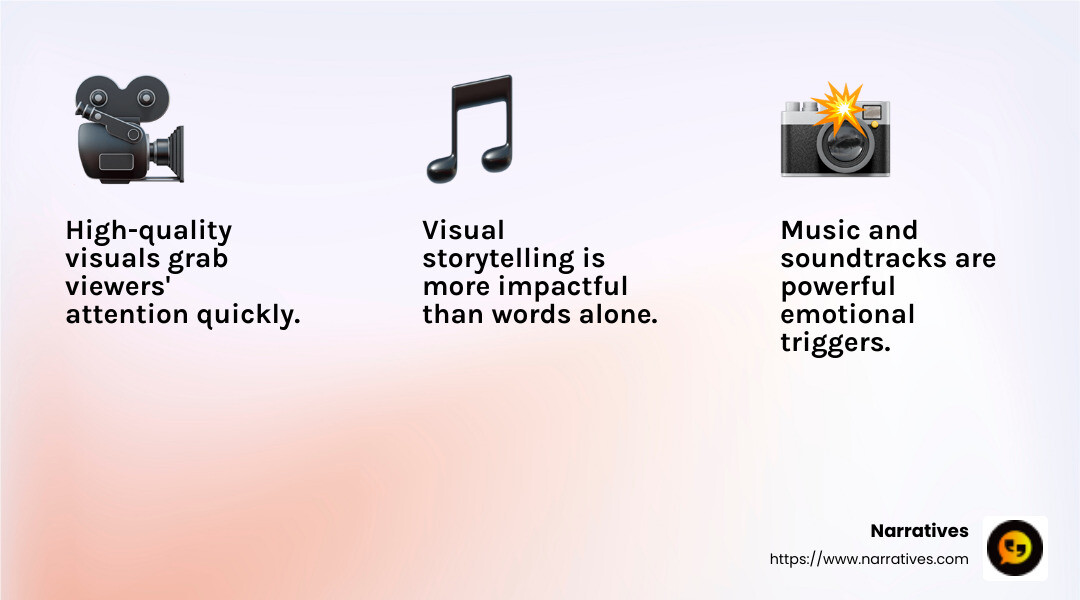
Visuals are the first thing viewers notice. They set the tone and draw people in.
- High-Quality Footage: Use clear, professional visuals to capture attention.
- Visual Storytelling: Show, don’t tell. Use imagery to convey your message without relying solely on words.
Emotional Triggers
Emotions are what make stories memorable. They create a connection between the story and the audience.
- Music and Sound: The right soundtrack can evoke feelings and improve the story.
- Visual Elements: Use color, lighting, and composition to stir emotions.
By focusing on these key elements, you can craft stories that resonate with your audience and leave a lasting impact. Up next, we'll explore techniques for crafting compelling video stories.
Techniques for Crafting Compelling Video Stories
Creating a video that captivates and resonates with your audience involves more than just shooting footage. It's about weaving together elements that make your story unforgettable. Here are some essential techniques for effective video storytelling:
Show, Don’t Tell
The power of video lies in its ability to show rather than tell. Instead of explaining every detail, use visuals to convey your message. For instance, instead of saying someone is happy, show them laughing or smiling. This technique engages viewers, allowing them to interpret and feel the story themselves.
Consider a scene where a family uses a new sustainable product. Rather than listing its benefits, show the family enjoying a cleaner environment. This approach makes the message more relatable and impactful.
High-Quality Visuals
High-quality visuals are crucial for capturing and keeping attention. Blurry or poorly lit footage can distract from your message. Invest in good lighting and use a steady camera. Even smartphone cameras can produce stunning visuals with the right techniques.
Think of visuals as your storytelling canvas. Each shot should be purposeful and contribute to the narrative. Use close-ups to show emotion and wide shots to establish setting.
Music and Sound
Music and sound add depth to your story. The right soundtrack can evoke emotions and complement the visuals. For example, upbeat music can create excitement, while a gentle melody might evoke nostalgia.
But be strategic—sound should improve, not overpower. Use sound effects sparingly to add realism or highlight key moments. Silence can also be powerful, drawing attention to specific visuals or dialogue.
Editing for Impact
Editing is where the magic happens. It's your chance to refine the story, ensuring a smooth flow and engaging pace. Cut out unnecessary footage to keep the narrative tight and focused.
Use transitions to guide viewers seamlessly from one scene to the next. This keeps the story cohesive and maintains viewer interest. Even basic editing software can transform your video into a polished piece.
By mastering these techniques, you can craft video stories that not only capture attention but also leave a lasting impact. Next, we'll explore how non-profits can harness the power of video storytelling to amplify their message.
How to Implement Video Storytelling for Non-Profits
Video storytelling can be a powerful tool for non-profits, enabling them to share their mission and impact with a wider audience. Here's how non-profits can leverage effective video storytelling:
Human Stories
At the heart of every compelling video is a human story. People connect with people, not abstract ideas. Highlight the individuals your organization helps. Show their challenges and triumphs. This personal touch can make your cause more relatable and inspire action.
Example: A non-profit focused on education might feature a student who overcame obstacles to graduate. This story could illustrate the organization's impact more powerfully than statistics alone.
Community Impact
Showcase the broader impact of your work on the community. This not only highlights the importance of your mission but also demonstrates accountability to donors and supporters.
Tip: Use before-and-after visuals or testimonials from community members to illustrate positive changes. This can help viewers see the tangible results of their support.
Relatable Narratives
Craft narratives that your audience can relate to. Use simple language and familiar scenarios. Avoid jargon or overly complex explanations.
Example: If your non-profit provides clean water, tell a story about a family who no longer has to travel miles for safe drinking water. This paints a clear picture of how your work changes lives.
Social Media Strategy
Social media is a crucial platform for distributing your video stories. Share your videos on platforms where your audience is most active. Use engaging captions and hashtags to increase visibility.
Ideas: Host live Q&A sessions about the video, encourage followers to share their thoughts, or create a campaign around the video's theme. This can boost engagement and expand your reach.
By focusing on human stories, demonstrating community impact, crafting relatable narratives, and utilizing a savvy social media strategy, non-profits can create video stories that resonate deeply and drive meaningful change. Next, we'll tackle some frequently asked questions about effective video storytelling.
Frequently Asked Questions about Effective Video Storytelling
What is the main focus of the video "Visual Storytelling 101 – Film Riot Channel"?
The "Visual Storytelling 101 – Film Riot Channel" video focuses on the essentials of crafting a compelling story through visuals. The emphasis is on the conflict and plotline format. Conflict is the driving force that keeps viewers engaged. It creates tension and interest, making audiences want to see how the story unfolds. The plotline format typically follows a clear structure: introduction, conflict, climax, and resolution. This format helps viewers easily follow and connect with the story.
How can video storytelling trigger emotions?
Video storytelling can evoke emotions by using a mix of visual components and music. Visuals are powerful in showing emotions without words. A simple shot of a smiling child or a teary-eyed elder can convey deep feelings. Music improves these visuals by setting the mood. A happy tune can make a scene joyful, while a somber melody can add depth to a sad moment. Together, visuals and music work to create a strong emotional connection with the audience.
What are some effective video storytelling techniques?
Several techniques can make video storytelling more engaging and impactful:
Show, Don't Tell: Instead of explaining everything, let the visuals do the talking. This technique allows viewers to interpret and connect with the story on a personal level.
Narrative: A strong narrative guides the viewer through the story. It keeps the audience engaged and provides a clear path from beginning to end.
High-Quality Visuals: Crisp and clear visuals capture attention and make the story more appealing. They help convey emotions and details effectively.
By incorporating these techniques, creators can craft stories that are not only engaging but also memorable.
Conclusion
In effective video storytelling, Narratives is your partner in crafting stories that resonate and inspire. We specialize in elevating underrepresented voices and helping non-profits share their impact through emotionally engaging videos.
Our focus on non-profit partnerships ensures that we create content that truly reflects the mission and values of the organizations we work with. By telling human stories that highlight community impact, we build trust and foster connections with audiences. This approach not only increases visibility but also drives action and support for important causes.
Community-driven storytelling is at the heart of what we do. We believe that every story has the power to bring people together and make a difference. By highlighting the struggles and triumphs of communities, we create narratives that are relatable and inspiring.
As we continue to build our domain authority, our commitment to storytelling remains unwavering. We aim to be the go-to digital storytelling partner for purpose-driven organizations, helping them steer the complexities of video content to achieve their goals.
For more information on how we can help your organization harness the power of storytelling, visit our Narratives service page. Let's tell stories that matter, together.

.avif)