Storytelling Secrets: Techniques to Keep Your Audience Hooked

Engaging storytelling methods can keep your audience glued to your narrative, making them part of the journey you’re narrating. In an era where attention is a limited resource, mastering these methods is crucial.
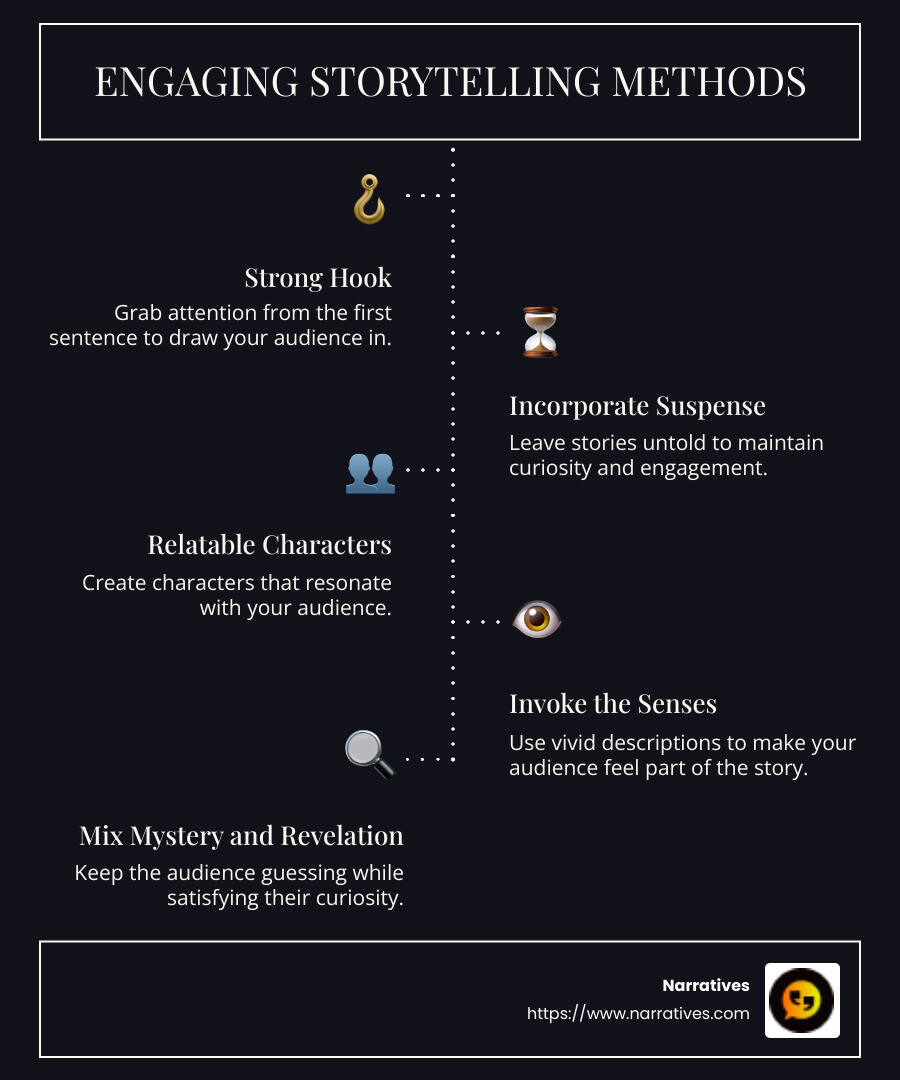
Here's how to keep your audience hooked:
- Start with a strong hook: Grab attention from the first sentence.
- Incorporate suspense: Leave some stories untold to maintain curiosity.
- Use relatable characters: Create heroes and foes that resonate.
- Invoke the senses: Use vivid descriptions to make your audience feel part of the story.
- Mix mystery and revelation: Keep them guessing while satisfying their curiosity.
Storytelling isn't just about the content — it's about the connection you build with your audience. Non-profit marketing leaders, social impact organizations, and story-driven brands often grapple with turning impactful missions into engaging stories. It’s about weaving narratives that resonate, provoke emotions, and drive action.
As playwright Bryan Delaney advises, by encouraging your audience to "work their brains," you engage them more deeply. It’s akin to the suspense of a cliffhanger or the allure of the unknown in a mystery.
Important Engaging storytelling methods terms:
- successful storytelling campaigns
- interactive digital storytelling examples
- storytelling for environmental nonprofits
Understanding Engaging Storytelling Methods
Engaging storytelling methods are the secret sauce for keeping your audience captivated and invested in your narrative. Let's explore some classic techniques that can transform your storytelling.
Monomyth: The Hero's Journey
The monomyth, also known as the hero's journey, is a timeless storytelling structure found in myths and folk tales around the world. It follows a hero who ventures from the familiar into the unknown, faces trials, and returns home transformed. Think of it as the backbone of many epic tales, from Star Wars to The Lion King.
This structure works wonders in presentations or speeches because it mirrors the personal challenges and triumphs that audiences relate to. When you use the monomyth, you invite your audience to journey alongside your hero, experiencing their struggles and victories. This creates a powerful connection, as listeners see themselves in the hero's shoes.
Audience as Co-Creators
Your audience isn't just passive listeners; they are co-creators of the story. Engaging storytelling methods invite them to fill in the gaps, imagine the scenes, and relate the story to their own lives. This interaction makes the narrative more memorable and impactful.
For instance, when you leave parts of the story untold, you engage their imagination. As Ira Glass puts it, "The whole shape of a story is that you are throwing out questions to keep people watching or listening and then answering them along the way."
Weaving Narratives
Narratives are more than just stories—they are a way to convey complex ideas and emotions in a relatable manner. A well-crafted narrative can transform dry facts into a compelling journey. By structuring your story with a clear beginning, middle, and end, you guide your audience through your message seamlessly.
Consider using nested loops, where you layer stories within stories. This technique allows you to elaborate on your core message through multiple perspectives, enriching the overall narrative. It's like peeling an onion, revealing deeper layers of meaning as you progress.

In summary, by understanding and applying these storytelling methods, you can transform your presentations and speeches into captivating experiences. Whether you're using the monomyth to guide your narrative or engaging your audience as co-creators, the goal is to create a story that resonates, inspires, and leaves a lasting impression.
Classic Storytelling Techniques
When it comes to storytelling, certain techniques have stood the test of time. They captivate audiences, making them an integral part of engaging storytelling methods. Let's explore these classic techniques:
Monomyth: The Hero's Journey
The monomyth is a narrative template that takes a hero through a transformative journey. The hero leaves the familiar, faces challenges, and returns with newfound wisdom. This structure is powerful because it mirrors personal growth and triumphs, resonating deeply with audiences.
The Mountain
The mountain technique is about building tension. Imagine climbing a mountain: there are ups and downs before reaching the peak. This storytelling method focuses on a series of challenges leading up to a climactic conclusion. It's perfect for showing perseverance and resilience.
Nested Loops
Nested loops involve layering stories within stories. The core message sits at the center, surrounded by narratives that elaborate on it. This is like peeling an onion, revealing deeper meanings as you progress. It's a way to enrich your narrative with multiple perspectives.
Sparklines
Sparklines contrast the current state with an ideal future. They highlight the gap between "what is" and "what could be," motivating audiences to strive for change. This technique is emotionally powerful, as it fuels a desire for improvement and action.
In Medias Res
Starting in medias res means beginning your story in the middle of the action. This technique grabs attention immediately, as audiences are thrown into the excitement and then taken back to understand how events unfolded. It's a hook that keeps people engaged.
Converging Ideas
Converging ideas bring together different storylines or concepts into a single, cohesive message. It's about finding common threads among seemingly unrelated elements. This technique can showcase collaboration and innovation, leading to a strong conclusion.
False Start
A false start disrupts expectations by beginning with a predictable story and then taking an unexpected turn. It's an attention hack that surprises the audience, making them more attentive and curious about the rest of the narrative.
Petal Structure
The petal structure organizes multiple stories around a central theme. Each story is a petal, complete in itself, but together they form a rich mix around the core message. This technique allows for diverse narratives to support a single, powerful idea.

By mastering these classic storytelling techniques, you can craft narratives that captivate and inspire. Whether you're guiding your audience through a hero's journey or weaving multiple stories together, these methods ensure your message resonates.
Crafting Your Story
Crafting a compelling story is both an art and a science. To keep your audience engaged, you need a mix of techniques that create intrigue and connection. Here, we'll explore how to effectively use hooks, build suspense, incorporate personal stories, and maintain clarity and authenticity.
Hook Your Audience Early
You have mere seconds to grab attention. Start with something that pulls at the emotions or piques curiosity. Instead of saying, "I thought about climbing a mountain," say, "The mountain loomed before me." This immediate dive into action captures interest.
Consider using one of these five hooks: hope, help, heart, humor, or healing. Each involves emotion, making your story relatable and engaging right from the start.
Build Suspense
Suspense keeps your audience on the edge of their seats. Use questions and mysteries to make them think. As playwright Bryan Delaney suggests, "Starve the audience of information to make them work their brains." Leave parts of your story untold, creating a sense of anticipation and curiosity.
Intercutting scenes or using serialized storytelling can further build suspense. Think of a TV series that ends each episode on a cliffhanger, urging viewers to tune in next time.
Share Personal Stories
Personal stories create a connection. They show vulnerability and authenticity, making your message relatable. When you share a personal truth or revelation, you invite your audience into your world, fostering empathy and understanding.
Make your personal stories vivid. Engage the senses by describing how things smelled, tasted, or felt. This sensory detail immerses your audience in your experience, making the story more memorable.
Maintain Clarity and Authenticity
Clarity ensures your message is understood. Avoid jargon or overly complex language. Use simple words and short sentences to keep your audience on track.
Authenticity builds trust. Be genuine in your storytelling, as audiences can sense when something feels off. Share your true experiences and emotions, and don't be afraid to show imperfections. This honesty resonates and strengthens your connection with the audience.
By focusing on these elements, you can craft stories that not only capture but also hold your audience's attention. Whether you're telling a personal tale or weaving a grand narrative, these techniques ensure your story is both engaging and impactful.
Visual and Sensory Storytelling
Visual and sensory storytelling can transform a good story into an unforgettable experience. By engaging the senses and using vivid imagery, you create a more immersive world for your audience.
Imagery and Metaphors
Imagery is your tool to paint pictures with words. Describe the scene in a way that your audience can see, hear, and feel. Instead of saying, "It was a sunny day," you might say, "The sun kissed my skin as a gentle breeze whispered through the trees."
Metaphors are powerful in adding depth. They connect the unfamiliar with the familiar, making complex ideas more relatable. For instance, describing a challenging project as "climbing a mountain" instantly evokes struggle and triumph.
Visual Storytelling
Visual storytelling isn't just about words; it's about using images to convey your message. Seeing Is Believing, a guide from Resource Media, highlights the emotional power of visuals. Pairing words with pictures can evoke stronger emotions and make your message more memorable.
Consider using photographs, illustrations, or videos to support your narrative. A well-timed image can emphasize a point or evoke a specific emotion. Make sure your visuals align with your message for maximum impact.
Multimedia Elements
Incorporating multimedia elements like sound and video can lift your storytelling. A short video clip or a sound bite can bring a story to life. For example, a video of a busy city street can convey the chaos and energy of urban life better than words alone.
Multimedia also caters to different learning styles. Some people absorb information better through visuals, while others prefer auditory content. By mixing media, you reach a broader audience.
Engage the Senses
To fully immerse your audience, engage their senses. Describe the taste of a freshly baked cookie or the sound of rain tapping on a window. Sensory details make your story more vivid and relatable.
When you share these sensory experiences, you invite your audience to step into your world. They don't just hear your story; they experience it, making it more memorable and impactful.
By using imagery, metaphors, and multimedia, you can create stories that captivate and resonate. These techniques ensure your audience is not just passive listeners but active participants in your narrative.
Frequently Asked Questions about Storytelling
What is the monomyth?
The monomyth, also known as the hero's journey, is a storytelling structure that has been used for centuries. It involves a hero who starts on an trip, faces a crisis, and returns transformed. This journey is found in many myths and stories, from Star Wars to The Lion King.
Why use it? The monomyth helps you take your audience on a journey, showing them the value of taking risks and the wisdom gained from challenges. When using this structure, your audience can see themselves in the hero's shoes, making your message more relatable and inspiring.
How can I hook my audience early?
Hooking your audience early is crucial in storytelling. You have only a few seconds to grab their attention. Start with action or a compelling statement to draw them in. For instance, instead of saying, "I decided to climb a mountain," you might say, "The mountain loomed before me, daring me to take the first step."
Tips to hook your audience:
- Use emotion: Connect emotionally with your audience through hope, humor, or surprise.
- Start in the action: Begin your story at a pivotal moment to immediately engage your audience.
- Leave questions: Introduce a mystery or question that keeps your audience curious.
As Bryan Delaney suggests, "Starve the audience of information to make them work their brains." This approach keeps them engaged and eager to hear more.
What are nested loops in storytelling?
Nested loops are a technique where you layer stories within stories. Picture it like a set of Russian dolls, where each smaller doll is a story within the larger one. This method allows you to build depth and context around your main message.
How it works:
- Start with a broader story.
- Introduce a secondary story that elaborates on or explains the main point.
- Continue layering stories, each adding depth and perspective.
- Conclude by returning to the original story, tying all narratives together.
This technique is effective because it keeps your audience engaged by providing multiple perspectives and insights. It's like peeling back layers of an onion, revealing more with each layer.
By understanding and using these storytelling techniques, you can create narratives that captivate and resonate with your audience. These methods transform simple stories into powerful tools for connection and engagement.
Conclusion
In today's digital world, storytelling is more than just a buzzword—it's a vital tool for creating meaningful connections and driving social impact. At Narratives, we specialize in using engaging storytelling methods to amplify the voices of non-profits and purpose-driven organizations. Our goal is to help these groups share their powerful stories in ways that inspire action, build trust, and increase visibility.
Why is non-profit storytelling so crucial?
Non-profits often tackle complex issues and need to convey their missions clearly and emotionally to engage supporters and stakeholders. Through storytelling, organizations can transform facts and figures into relatable and compelling narratives that resonate with their audience. By highlighting personal stories and real-life impacts, non-profits can make their causes more tangible and urgent.
Social impact through storytelling
Storytelling isn't just about sharing information; it's about creating change. When non-profits use storytelling effectively, they can mobilize communities, influence public opinion, and drive policy changes. By crafting narratives that highlight challenges and successes, organizations can rally support and foster a deeper understanding of their work.
At Narratives, we believe that every story has the power to make a difference. Our expertise in digital storytelling for non-profits ensures that your message is not only heard but felt. By partnering with us, you can lift your storytelling to new heights, making a lasting impact on your community and beyond.
Explore how we can help you tell your story and drive social change. Visit Narratives to learn more about our services and how we can support your mission.


.avif)