Bridging the Gap: How to Connect with Your Audience

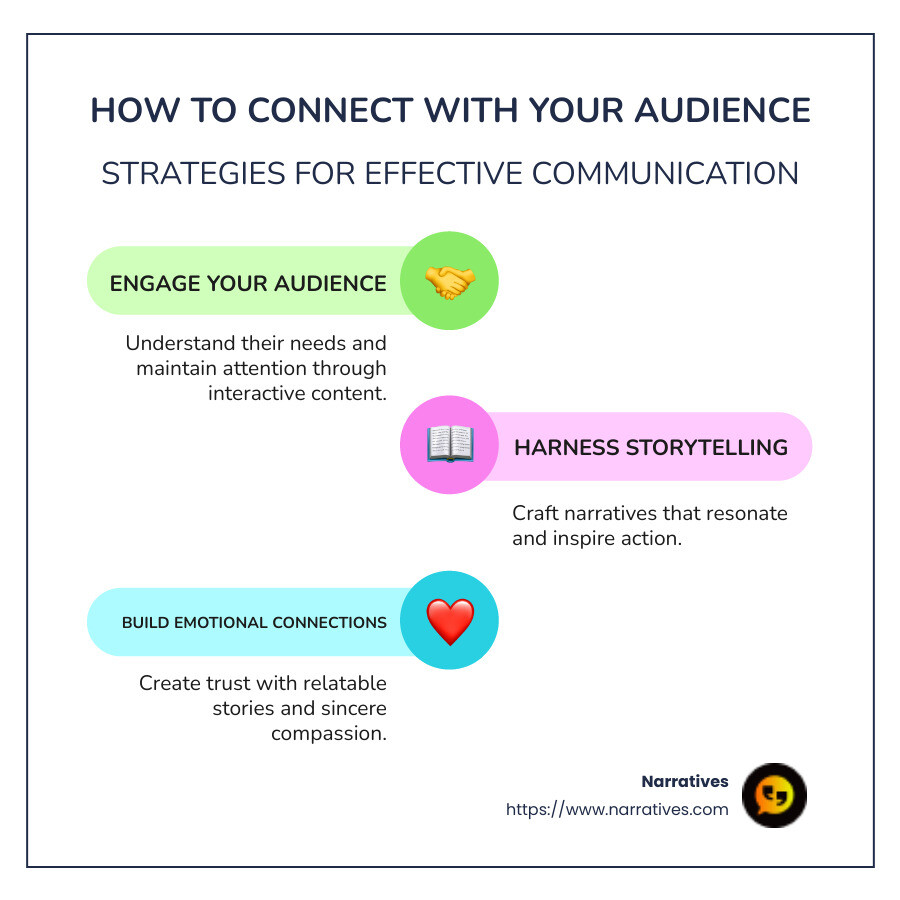
How to connect with audience lies at the heart of effective communication in today’s busy world. To truly captivate and persuade your audience, you need to focus on three core elements:
Audience Engagement: This involves understanding the interests and needs of your audience, maintaining their attention, and actively involving them in your presentation or content.
Storytelling: Crafting compelling stories that resonate with your audience is key. Stories not only make information memorable but also create a narrative that can inspire action and change.
Emotional Connection: Building a genuine emotional bond with your audience can foster trust and influence. This is achieved by sharing relatable stories and expressing sincere compassion for their concerns and aspirations.
When these elements come together, they help craft a message that not only informs but also moves people to action. For organizations focused on advocacy, diversity, and social justice, mastering these aspects can amplify their mission and foster deeper community connections.
As an anecdote from the Harvard Business Review suggests, "Leaders often shy away from sharing personal stories... But this is a missed opportunity to connect with your audience." Embracing vulnerability and personal narratives can be transformative.
Key terms for How to connect with audience:
Understanding Your Audience
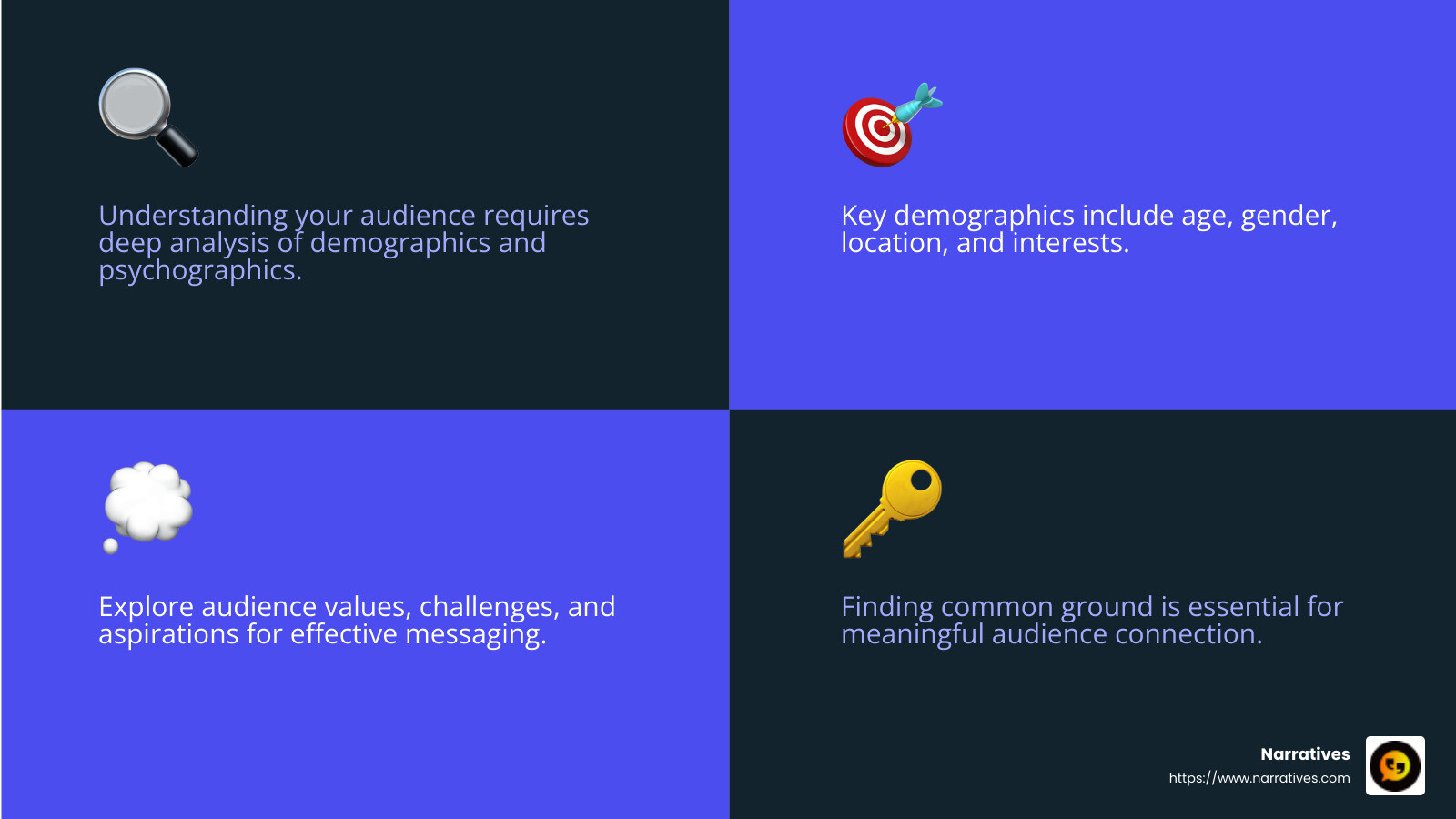
To truly connect with your audience, start with audience analysis. This means diving deep into who they are, what they care about, and what motivates them. Think of it as getting to know a friend. The more you understand their likes, dislikes, and priorities, the better you can tailor your message to resonate with them.
Audience Analysis
Begin by identifying key demographics: age, gender, location, and interests. But don't stop there. Dig into their values, challenges, and aspirations. What keeps them up at night? What do they dream about achieving? This information is gold when crafting messages that stick.
Finding Common Ground
Once you know your audience, look for common ground. This is where your interests and theirs overlap. It's the sweet spot where connection happens. For instance, if you're speaking to a group of environmentalists, emphasizing shared values around sustainability can bridge the gap between you and them.
Incorporate anecdotes or references they relate to. As Michael Foley suggests, "When your structure is custom for a specific audience, the first thing out of your mouth is exactly what’s on their minds." This approach ensures they feel seen and understood.
Prioritizing Audience Needs
Finally, focus on audience priorities. What do they need to hear? What problems are they trying to solve? By aligning your message with their priorities, you not only capture their attention but also demonstrate empathy and understanding.
For example, if you're addressing a group of tech professionals, highlight how your message can help streamline processes or improve efficiency. This relevance makes your communication more impactful and memorable.
By mastering these elements—audience analysis, finding common ground, and understanding audience priorities—you lay the foundation for a meaningful connection. This connection is the first step in guiding your audience toward the action you want them to take.
How to Connect with Audience: Key Strategies
Connecting with your audience goes beyond just delivering information; it's about creating a bond. Let's explore some strategies to make this happen effectively.
Personal Stories
Stories have a magical way of drawing people in. When you share personal stories, you reveal a bit of your own humanity. This vulnerability can make you relatable and trustworthy. According to Nancy Duarte, stories that expose our human flaws and vulnerabilities often inspire people. Think about the moments in your life that shaped you. Which of these can you share to illustrate your points?
Consider writing one-line summaries of your best anecdotes and keep them handy. When planning your talk, choose a story that aligns with your audience's values and interests. This approach ensures your message resonates on a personal level.
Custom Messages
Crafting custom messages means tailoring your content specifically for your audience. As Michael Foley suggests, "When your structure is custom for a specific audience, the first thing out of your mouth is exactly what’s on their minds." This makes your audience feel understood and valued.
Start by brainstorming the top three priorities of your audience. What questions might they have? Use these insights to shape your message. When your audience hears exactly what they need, they're more likely to engage with your content.
Structured Improvisation
While preparation is crucial, structured improvisation allows you to adapt in real-time. Pay attention to audience reactions. Are they nodding along or looking confused? Adjust your delivery based on these cues.
Responding to what you see in the room shows you care about their experience. If you notice disagreement, acknowledge it and explain your perspective. This responsiveness builds trust and connection.
The goal is not to impress but to educate and connect. As Foley notes, focusing on educating rather than impressing helps you relax and connect effortlessly with your audience. Practice your delivery until it feels natural, but be ready to adjust as needed.
By using personal stories, crafting custom messages, and embracing structured improvisation, you can create a meaningful connection with your audience. This connection is the foundation for guiding them toward the action you want them to take.
Techniques for Engaging Presentations
Engaging presentations are about more than just speaking; they are about creating a connection with your audience. Let's explore some key techniques to help you achieve this.
Eye Contact
Eye contact is a powerful tool in public speaking. When you make eye contact, you show your audience that you are present and attentive. It helps build trust and makes your message more convincing.
Instead of quickly scanning the room, focus on a few individuals for a couple of seconds. This creates a feeling of personal connection. Remember not to linger too long, as this can become uncomfortable. Aim for a balance that feels natural.
Relaxed Posture
Your body language speaks volumes. A relaxed posture conveys confidence and openness. Stand tall, but avoid stiffness. Let your arms move naturally as you speak. This openness makes you appear approachable and helps put your audience at ease.
Avoid crossing your arms or turning your back to the audience, as these signals can create a barrier. Instead, face your audience with an open stance. This invites them into your space and makes them more receptive to your message.
Vocal Delivery
Your voice is a powerful instrument. Vocal delivery involves using your voice to keep your audience engaged. Vary your tone, pitch, and pace to emphasize key points and maintain interest.
A monotone delivery can cause your audience to lose interest. Instead, use your voice to convey enthusiasm and passion. Pause at key moments to let your message sink in. This gives your audience time to process information and keeps them engaged.
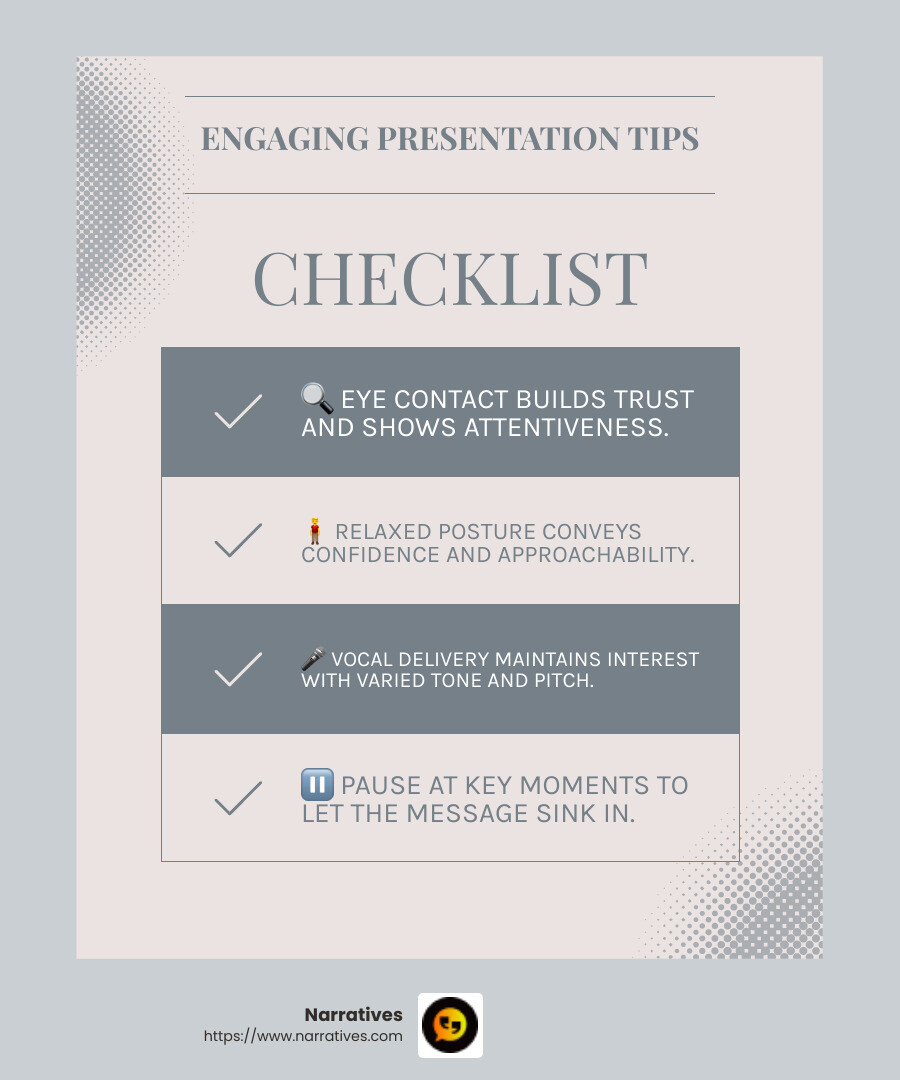
By focusing on eye contact, maintaining a relaxed posture, and mastering vocal delivery, you can create an engaging presentation that resonates with your audience. These techniques help bridge the gap between you and your audience, fostering a deeper connection.
Balancing Data and Stories
When it comes to how to connect with your audience, finding the right balance between data and stories is crucial. Both elements have their unique strengths, and using them effectively can make your presentation more engaging and memorable.
Objective Evidence
Objective evidence includes data, statistics, and charts. These elements provide a solid foundation for your arguments. They help establish context and build credibility, especially with technical audiences. For instance, if you're presenting to engineers or researchers, detailed data can help validate your claims and make your message more persuasive.
Tip: Use visuals like graphs or charts to present data in a digestible way. This helps your audience grasp complex information quickly.
Subjective Evidence
Subjective evidence involves stories and examples. These are powerful tools for illustrating your points and making your presentation relatable. While data appeals to logic, stories appeal to emotions, helping your audience connect on a deeper level. Foley, an expert in presentation techniques, explains that stories are best placed at the beginning or end of a talk for maximum impact.
Tip: Share a personal story or a client testimonial to make your message more relatable. This approach not only captures attention but also leaves a lasting impression.
Storytelling Impact
Stories have a unique ability to captivate and inspire audiences. They are more than just anecdotes; they are a means to convey values, ideals, and experiences. According to research, people listen better and remember more when a story is involved. This is because stories tap into our emotions and create a sense of trust with the storyteller.
Example: Imagine you're a consultant pitching a new client. Sharing a story about how you helped a similar client overcome challenges can demonstrate your expertise and build trust. You might say, "I was working with another client who had the same questions that you're asking. Let me tell you what we did and how it went."
By combining objective evidence with subjective narratives, you create a presentation that is both informative and engaging. This approach helps you connect with your audience, making your message more impactful and memorable.
In the next section, we'll tackle some frequently asked questions about connecting with your audience, including strategies for capturing and maintaining their attention.
Frequently Asked Questions about Connecting with Your Audience
How to attract audience attention?
Capturing your audience's attention is all about relevance, novelty, and importance.
Relevance: Make sure your content speaks directly to your audience's needs and interests. Use data insights to understand what they care about most. This way, your message will feel personal and significant.
Novelty: Introduce new ideas or perspectives. This can spark curiosity and keep your audience engaged. People are naturally drawn to fresh concepts, so don't be afraid to surprise them.
Importance: Highlight why your message matters. Show how it impacts your audience's lives or work. When people see the value in what you're saying, they're more likely to pay attention.
How to maintain audience retention?
Keeping your audience engaged throughout your presentation requires strategic use of restatement, repetition, and impactful statements.
Restatement and Repetition: Reinforce key points by restating them in different ways. This helps cement the information in your audience's memory. Repetition is a proven method to improve retention, as it gives listeners multiple chances to absorb the message.
Impactful Statements: End with a strong, memorable statement. This leaves a lasting impression and ensures your message sticks. Think of it as the takeaway that your audience will remember long after your presentation is over.
How to connect with audience in communication?
Building a connection with your audience involves identification, immediacy, and sharing common experiences.
Identification: Help your audience see themselves in your stories or examples. This creates a sense of belonging and makes your message more relatable. When people identify with the content, they feel more connected to you as a speaker.
Immediacy: Use a conversational tone and engage directly with your audience. Ask questions, encourage participation, and acknowledge their reactions. This fosters a sense of closeness and makes your presentation feel like a dialogue rather than a monologue.
Common Experiences: Share stories or anecdotes that resonate with your audience's experiences. This builds rapport and trust, as people are more likely to connect with someone who understands their world.
By focusing on these strategies, you can effectively capture and maintain your audience's attention, ensuring a meaningful and engaging communication experience.
Conclusion
At Narratives, we believe that non-profit storytelling is a powerful tool for driving community impact. By partnering with purpose-driven organizations, we help lift underrepresented voices and share stories that inspire action and change.
Our approach centers around creating high-quality, emotionally resonant content that not only tells a story but also connects with the audience on a personal level. We understand that how to connect with audience is crucial for non-profits aiming to build trust and increase visibility. Through strategic storytelling, we ensure that these organizations can effectively communicate their mission and impact to a broader audience.
By focusing on storytelling that highlights real experiences and challenges, we help non-profits foster a deeper connection with their communities. This connection is instrumental in mobilizing support, raising awareness, and ultimately making a significant difference in the lives of those they serve.
To learn more about how Narratives can assist your organization in crafting compelling stories that resonate and inspire, visit our service page and find how we can help you make a meaningful impact.


.avif)