The Power of Narrative: How Human-Focused Storytelling Drives Change

Human-focused storytelling is a profound tool that taps into the innate power of narratives to drive emotional impact and real-world change. At its core, storytelling is not just about sharing information but about connecting with audiences on a deeper emotional level.
- Stories captivate our minds and hearts. They make information relatable and memorable.
- Emotional journeys inspire actions, creating ripples of change in communities and organizations.
- Nobel Laureate Daniel Kahneman famously noted, "No one ever made a decision because of a number. They need a story."
Research shows that storytelling activates multiple parts of the brain, turning experiences into personal journeys that evoke strong emotions and memories. In the worlds of advocacy, branding, and leadership, human-focused storytelling leverages empathy and emotional resonance to foster understanding and inspire action.
In an era where the fight for attention is fierce, this approach offers a way to stand out by engaging audiences not just cognitively, but emotionally. The result? Stories that lift missions, drive engagement, and encourage impactful outcomes.
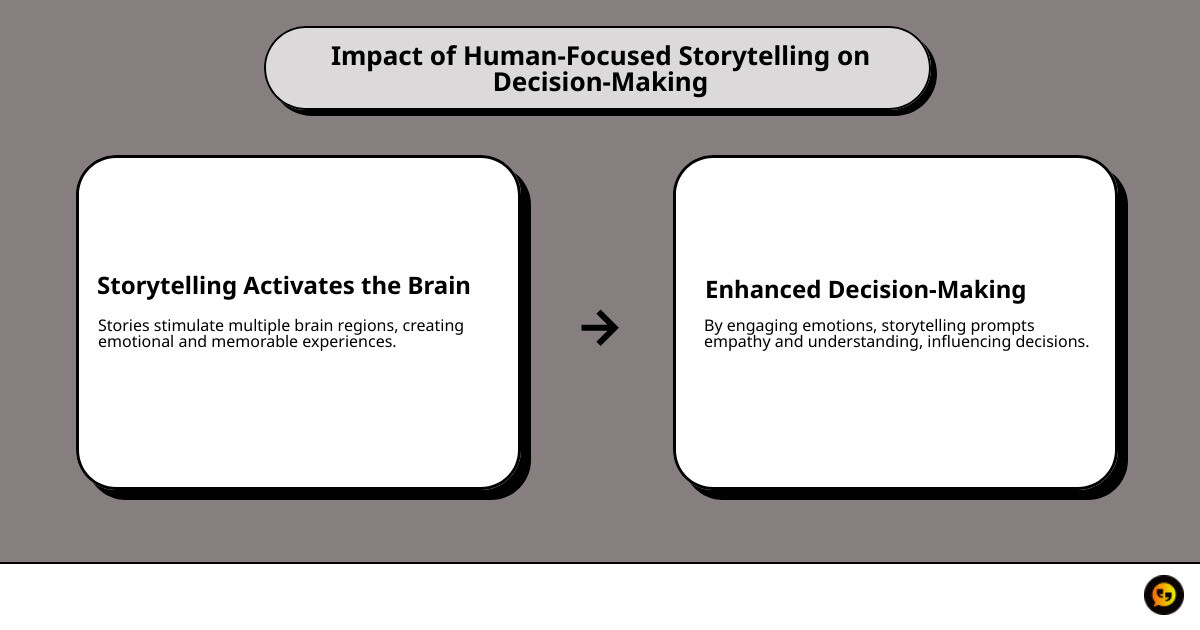
Human-focused storytelling word guide:
The Science Behind Human-Focused Storytelling
Human-focused storytelling is more than just a narrative technique; it's a science-backed approach that taps into the brain's chemistry to create emotional connections. When we hear a story, our brains release chemicals that improve our engagement and empathy, making the storytelling experience memorable and impactful.
Brain Chemistry: The Role of Cortisol, Dopamine, and Oxytocin
When you dive into a story, your brain doesn't just sit back and relax. It gets to work, releasing a cocktail of chemicals that make the experience engaging and memorable.
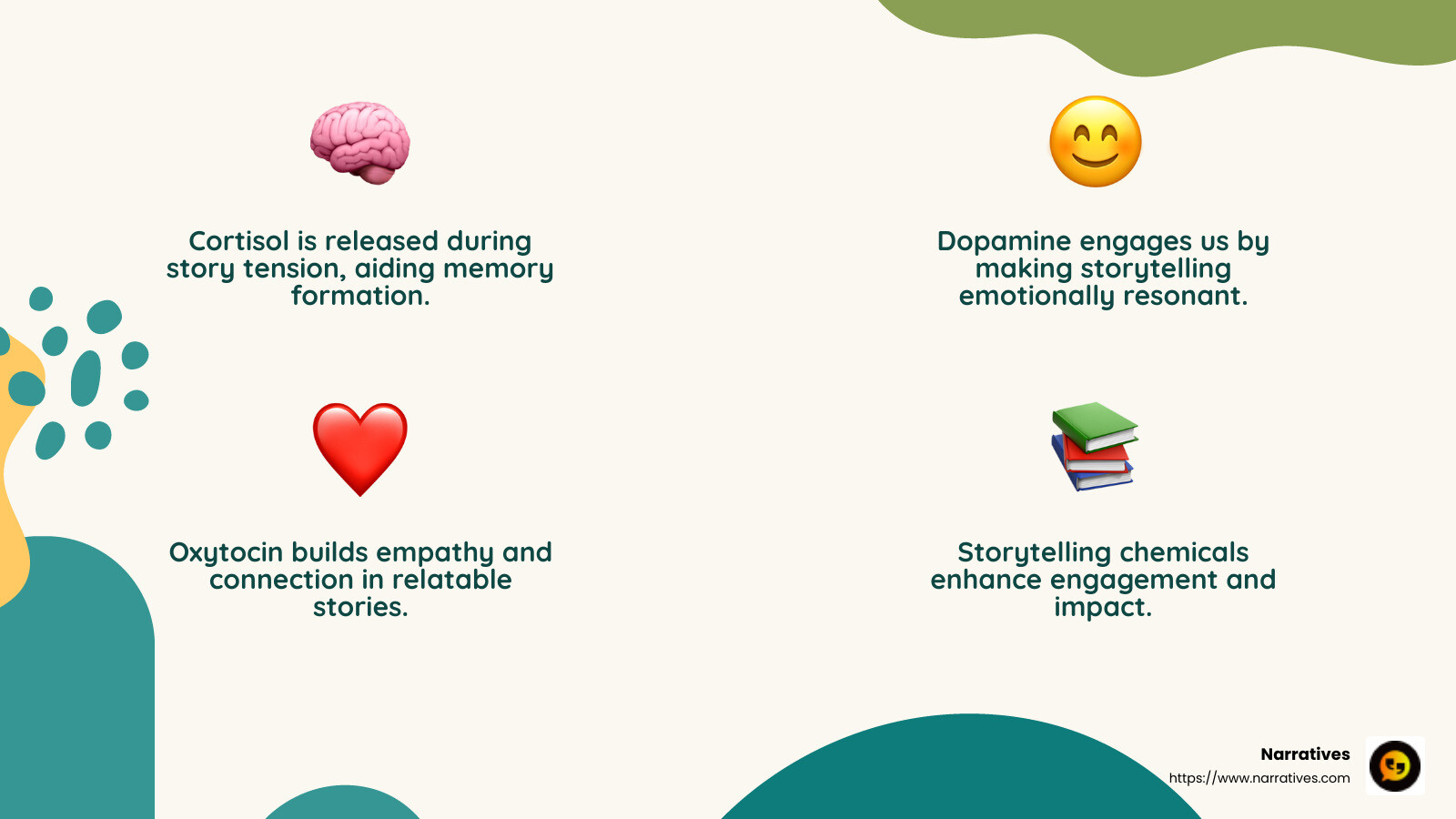
Cortisol: This hormone is released during moments of tension or stress in a story. It helps with memory formation, ensuring that the key points of the narrative stick with you long after the story ends.
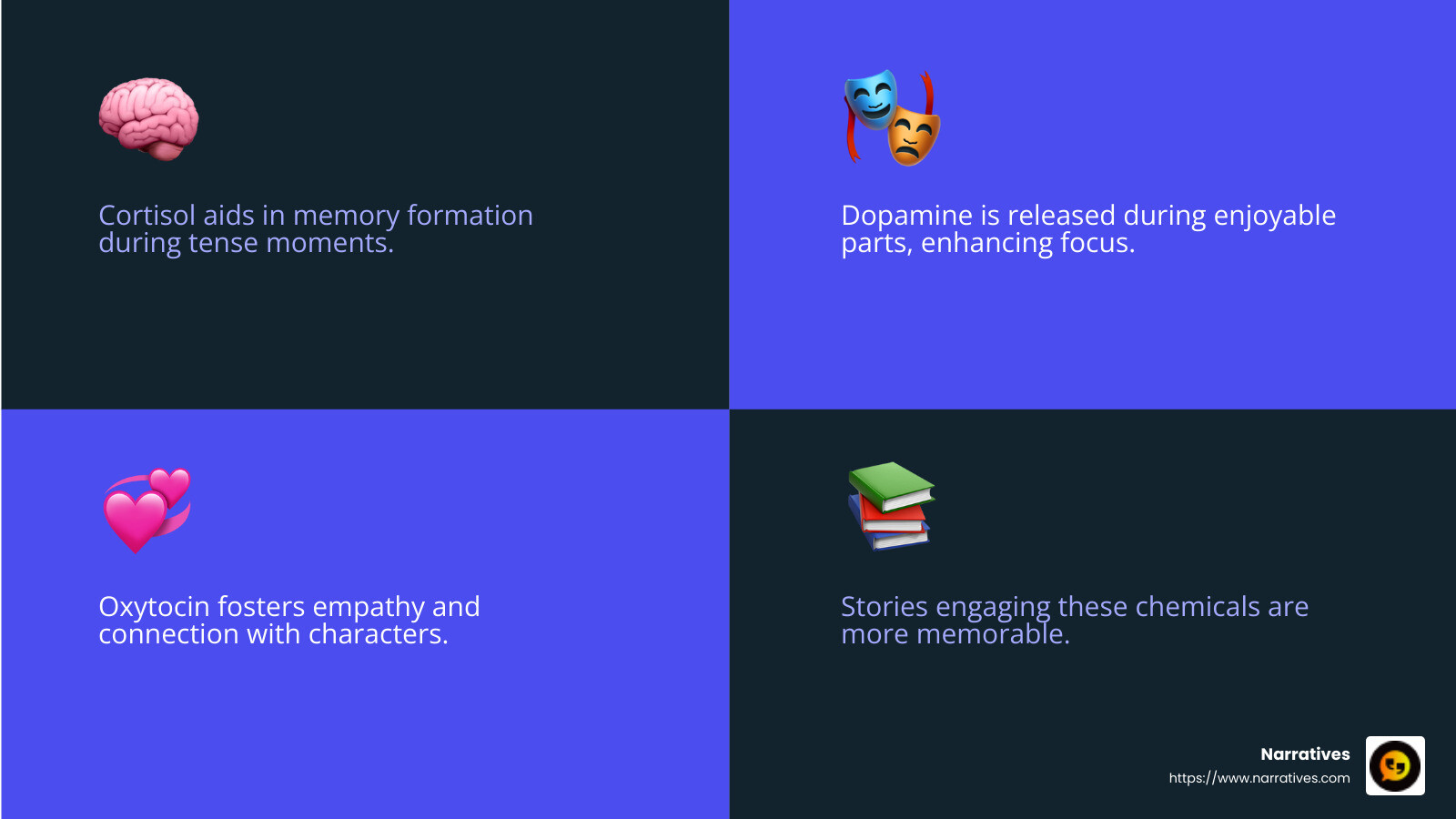
Dopamine: Known as the "feel-good" neurotransmitter, dopamine is released when a story resonates emotionally. It keeps us engaged and eager to know what happens next. This chemical reaction is why a gripping tale can keep us on the edge of our seats.
Oxytocin: Often called the "love hormone," oxytocin fosters empathy and connection. When a story introduces relatable characters or situations, oxytocin helps us feel compassion and understanding, bridging the gap between storyteller and audience.
Why It Matters
These chemicals don't just make stories enjoyable—they make them powerful tools for change. Human-focused storytelling leverages these natural reactions to create narratives that resonate on a personal level. Stories become more than entertainment; they become experiences that can influence beliefs, drive decisions, and inspire action.
By understanding the science behind storytelling, we can craft narratives that not only inform but also transform. These stories become catalysts for change, encouraging audiences to see the world through new perspectives and take meaningful action.
In the next section, we'll explore how human-focused storytelling is used in marketing to create emotional connections and brand loyalty.
Human-Focused Storytelling in Marketing
Human-focused storytelling is a game-changer in marketing. It doesn't just sell products; it builds emotional connections that last. Let's look at how brands like Nike have mastered this art.
Nike: A Storytelling Pioneer
Nike is a prime example of using storytelling to create powerful brand impact. Their iconic "Just Do It" slogan isn't just words—it's a narrative that inspires action. One of their standout campaigns, the "Dream Crazier" ad, showcases this perfectly. It tells women that "it's only crazy until you do it," challenging societal norms and encouraging empowerment.
The result? Nike saw a 31% revenue boost and added $6 billion in brand value. This isn't just marketing; it's storytelling that resonates deeply with audiences.
Emotional Triggers and Brand Impact
Stories like Nike's work because they tap into emotional triggers. When a story evokes emotions like joy, sadness, or inspiration, it becomes memorable. These emotions are tied to the chemicals we discussed earlier—dopamine, cortisol, and oxytocin—which improve engagement and retention.
Dopamine keeps the audience engaged. When Nike tells a story of triumph against the odds, it releases dopamine, making the story compelling and memorable.
Oxytocin builds trust and connection. By featuring relatable characters and stories, Nike creates a bond with their audience, fostering brand loyalty.
Cortisol ensures the story is unforgettable. By introducing challenges or conflicts, Nike captures attention and makes their message stick.
Why It Works
Nike’s success shows that human-focused storytelling isn't about selling a product. It's about selling an idea, a vision, a dream. When a brand's story aligns with a customer's values and emotions, it transforms them from a buyer into a believer.
In the next section, we'll dig into how human-focused storytelling impacts leadership, driving credibility and inspiring organizational change.
Human-Focused Storytelling in Leadership
Human-focused storytelling is more than just a tool for marketers. It's a powerful force in leadership, shaping credibility, inspiring teams, and driving organizational change.
Building Credibility Through Stories
Leaders who tell stories can build trust and authenticity. When a leader shares a personal story, it shows vulnerability and honesty—key elements for credibility. Employees are more likely to trust leaders who reveal their human side.
Consider a leader who shares their journey of overcoming a professional challenge. This narrative not only humanizes the leader but also establishes a connection with the team. It signals that the leader understands the struggles employees face, building a bridge of trust.
Inspiring Teams with Visionary Narratives
Inspirational storytelling can ignite passion and motivation within a team. When leaders paint a vivid picture of the future, it helps employees see beyond their daily tasks. A compelling narrative can transform a mundane goal into a shared mission.
For example, a CEO might share a story about the company's humble beginnings and its journey to success. This not only celebrates past achievements but also inspires employees to contribute to the next chapter of the story. It creates a sense of belonging and purpose.
Driving Organizational Change
Change is often met with resistance. But through human-focused storytelling, leaders can smooth the path to change. Stories help explain the "why" behind changes, making them relatable and less intimidating.
Imagine a company undergoing a digital change. A leader might tell the story of a competitor that successfully adapted to new technologies, highlighting the benefits and opportunities. This narrative can help alleviate fears and foster a culture open to change.
Why It Works
Human-focused storytelling in leadership works because it taps into the same emotional triggers as marketing. It engages the audience's emotions, making the message memorable and impactful. By weaving stories into leadership, leaders can connect with their teams on a deeper level, fostering trust, inspiration, and adaptability.
In the next section, we'll explore frameworks that can improve human-focused storytelling, providing tools and techniques for crafting compelling narratives.
Human-Focused Storytelling Frameworks
Crafting a compelling narrative isn't just about telling a story; it's about structuring it in a way that resonates deeply with the audience. This is where human-focused storytelling frameworks come into play. These frameworks offer a roadmap for constructing stories that capture attention and inspire action.
Joseph Campbell's Monomyth
One of the most influential storytelling frameworks is Joseph Campbell's Monomyth, also known as the "Hero's Journey." This framework outlines a universal pattern found in many narratives, from ancient myths to modern movies. It consists of stages like the Call to Trip, the Hero's Journey, and the Return with the Elixir.
Imagine a brand telling the story of a product's development. The product itself becomes the hero, facing challenges and overcoming obstacles to finally deliver value to the customer. This framework helps to create a relatable and engaging narrative that audiences can connect with on a personal level.
Storytelling Frameworks for Business
In business, storytelling frameworks can help structure narratives that align with brand values and goals. For example, a common framework includes:
- Problem: Identify the audience's pain point.
- Solution: Introduce the product or service as the solution.
- Success: Share the positive outcomes and changes.
This simple structure is powerful because it mirrors the customer's journey, making the story relevant and impactful.
Narrative Techniques
Beyond frameworks, various narrative techniques can improve storytelling. Techniques like metaphor, analogy, and sensory details can add depth and richness to a story. For instance, using a metaphor like "navigating a storm" to describe overcoming business challenges can evoke strong imagery and emotion.
Human-focused storytelling also benefits from techniques that invite audience participation. Encouraging the audience to imagine themselves in the story or asking rhetorical questions can make the narrative more engaging and interactive.
Combining Frameworks and Techniques
Combining storytelling frameworks with narrative techniques creates a robust toolkit for crafting compelling narratives. Whether you're a marketer, leader, or content creator, these tools help to convey messages in a way that's memorable and emotionally resonant.
In the next section, we'll address common questions about human-focused storytelling, exploring its impact on the brain and its importance in marketing.
Frequently Asked Questions about Human-Focused Storytelling
What is human-focused storytelling?
Human-focused storytelling is the art of crafting narratives that resonate deeply with people by centering on human experiences, emotions, and values. Unlike traditional storytelling, which might focus on events or data, human-focused storytelling prioritizes the human element. It connects with audiences on an emotional level, making stories more relatable and impactful. This approach is used across various fields, from marketing to leadership, to engage and inspire.
How does storytelling affect the brain?
Storytelling has a unique power to engage our brains in ways that raw data cannot. When we hear a story, our brains release chemicals like cortisol, dopamine, and oxytocin.
- Cortisol: This "stress hormone" helps us focus and remember important details, especially during tense or suspenseful moments in a story.
- Dopamine: Released during moments of pleasure or satisfaction, dopamine makes stories enjoyable and memorable.
- Oxytocin: Often called the "love hormone," oxytocin fosters empathy and connection, making us more likely to trust and relate to the characters in a story.
Research suggests that these chemical reactions make stories more engaging and help us process information in a meaningful way. When we listen to a well-told story, our brain activity mirrors that of the storyteller, creating a shared experience.
Why is storytelling important in marketing?
Storytelling in marketing is crucial because it transforms brands from faceless entities into relatable characters. It helps brands connect with their audience on an emotional level, which is often more persuasive than facts and figures alone. As Daniel Kahneman, a Nobel Prize-winning psychologist, said, "No one ever made a decision because of a number. They need a story."
Consider how brands use storytelling to highlight their values and create emotional connections. For instance, brands often use narratives to showcase how their products solve real-world problems, making their offerings more relatable and desirable. This approach not only captures attention but also builds trust and loyalty among consumers.
In the next section, we'll dig into the conclusion, exploring the broader social impact of human-focused storytelling and its role in community-driven narratives.
Conclusion
Human-focused storytelling is more than just a communication tool; it's a catalyst for social impact and community-driven change. By centering stories around real human experiences, we can inspire empathy, foster understanding, and drive action. This form of storytelling is particularly powerful in the context of non-profits and purpose-driven organizations, where the goal is to lift underrepresented voices and highlight the real-world impact of their work.
Narratives that Inspire Change
At Narratives, we believe that storytelling has the power to change the world. Our mission is to partner with non-profits and purpose-driven organizations to create high-quality, emotionally resonant video and multimedia content. These narratives not only showcase the impact of their work but also inspire others to join their cause. By focusing on the human element, we can create stories that resonate deeply with audiences and motivate them to take meaningful action.
Building Community Through Storytelling
Community-driven storytelling is about more than just sharing stories; it's about building connections and fostering a sense of belonging. When we tell stories that highlight shared experiences and common values, we create a space where people feel seen and heard. This sense of community is essential for driving social change and encouraging collective action.
By partnering with organizations that are committed to making a difference, we can help amplify their voices and bring their missions to a wider audience. Our approach is to create content that not only informs but also inspires, helping to build a community of engaged supporters who are passionate about making a difference.
A Call to Action
Where challenges like climate change and social inequality are ever-present, the need for human-focused storytelling is more critical than ever. By crafting narratives that resonate on a personal level, we can drive the kind of change that makes a lasting impact.
If you're a non-profit or purpose-driven organization looking to lift your storytelling and amplify your impact, consider partnering with us. Together, we can create compelling narratives that inspire action and drive social change. Learn more about our media services here.
In conclusion, human-focused storytelling is a powerful tool for driving social impact and building community. By centering our stories around real human experiences, we can inspire empathy, foster understanding, and motivate action. At Narratives, we're committed to helping organizations tell stories that make a difference. Join us in our mission to create a more connected and compassionate world through the power of storytelling.


.avif)