Capturing Hearts: The Art of Human Interest Storytelling

Human interest storytelling is all about connecting emotionally with people by sharing their stories. Whether it's the tale of a small-town hero or a community overcoming obstacles, these stories can inspire and bring lasting change.
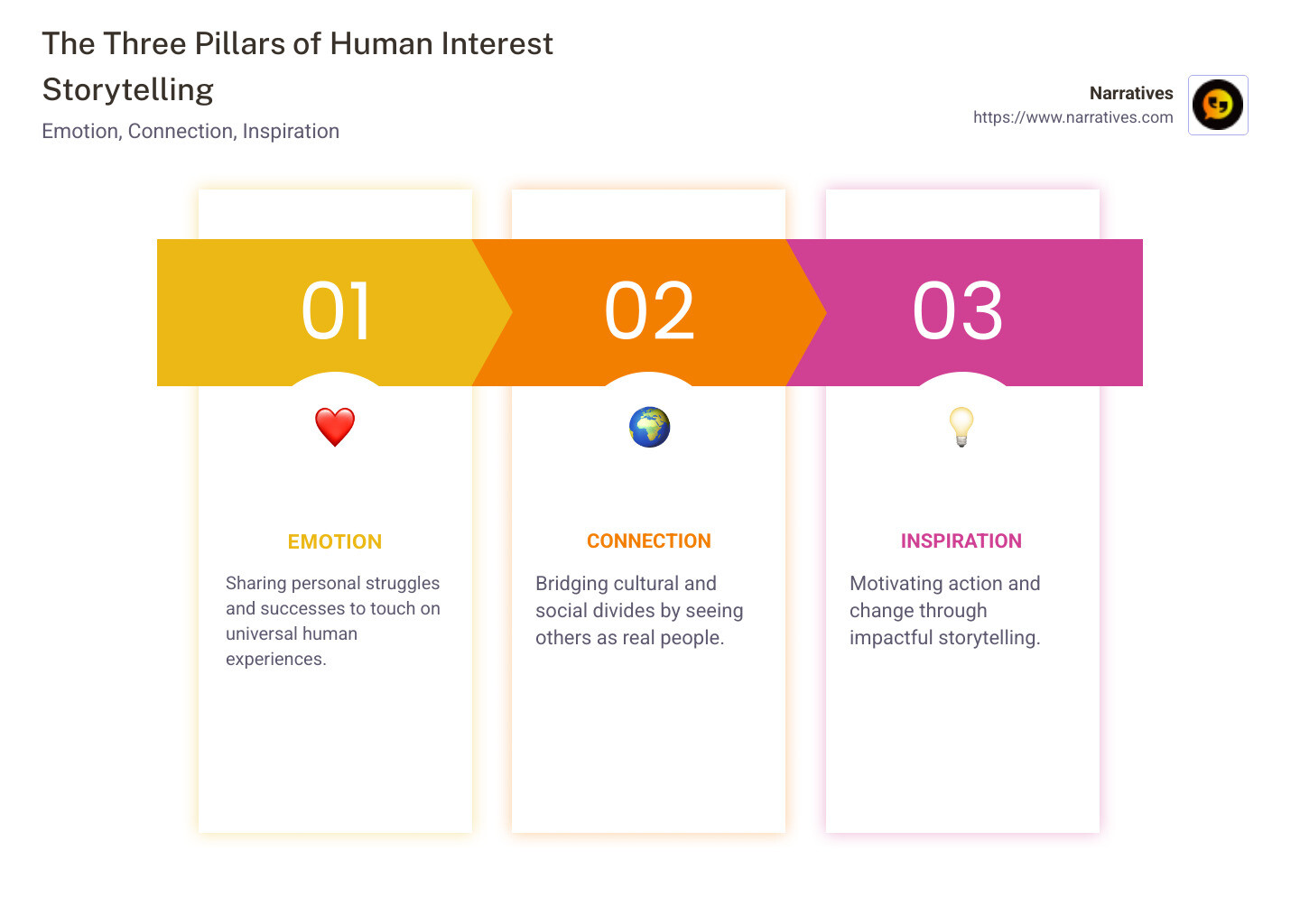
In a nutshell, this storytelling style focuses on three key elements:
- Emotion: By sharing personal struggles and successes, these stories touch on universal human experiences.
- Connection: They help to bridge cultural and social divides, making us see others as real people, not just statistics.
- Inspiration: A well-told story can motivate us to take action and make a difference.
“When people visually and emotionally connect with a character, place, or event in your story, you have changed them.” — Research Insights
These narratives are essential in a world overwhelmed with data. They remind us of our shared humanity and potential for compassion. This is why they are a powerful tool for non-profits and brands seeking to amplify their missions.
Find more about Human interest storytelling:
Understanding Human Interest Storytelling
Human interest storytelling is a unique form of narrative focused on the human experience. It centers around the emotional aspects of life, bringing personal stories to the forefront. This approach is all about telling tales that resonate on a deeply emotional level.
Emotional Aspects
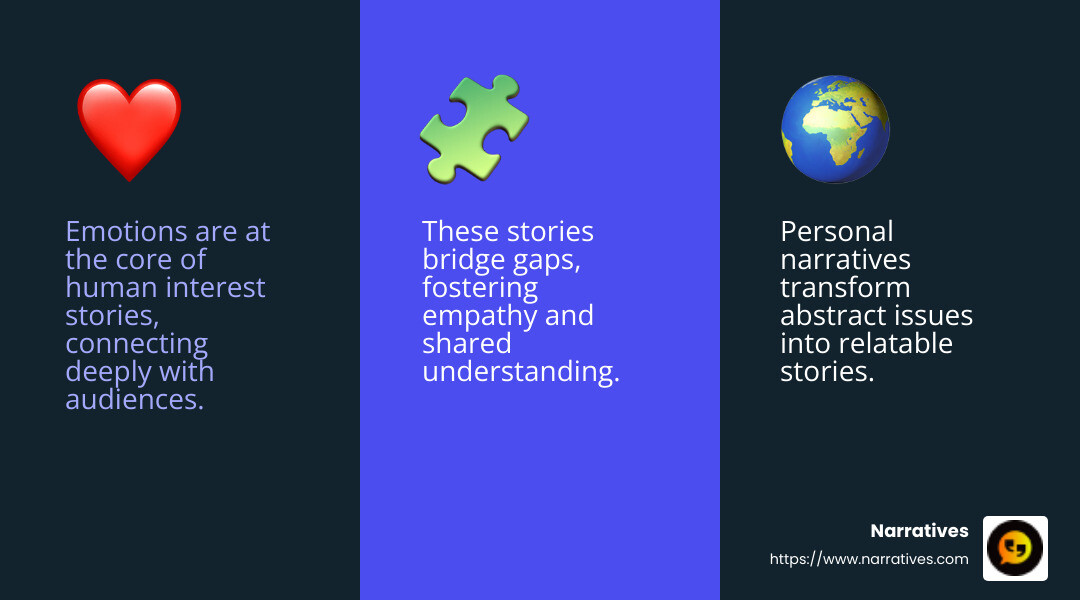
At the heart of human interest stories are emotions. These narratives capture the joys and sorrows, challenges and triumphs that make up the human condition. By focusing on emotions, these stories create a powerful connection with the audience.
Consider the story of a mother who, after losing everything in an earthquake, struggles to rebuild her life. This narrative doesn't just present facts; it dives into her fears, hopes, and resilience. It's this emotional depth that makes human interest stories so compelling.
Personal Narratives
Personal narratives are the backbone of human interest storytelling. They spotlight individual journeys, offering an intimate glimpse into someone's life. This personal focus transforms abstract issues into relatable stories.
Take, for instance, the tale of an athlete overcoming a disability to achieve greatness. This story not only highlights the athlete's determination but also inspires others to believe in their potential.
Bridging the Gap
Human interest stories serve as a bridge, connecting us to people and experiences we might not otherwise understand. They break down barriers, making it easier for us to empathize with others. In a world often divided by differences, these stories remind us of our shared humanity.
Real-Life Examples
One powerful example is The Immortal Life of Henrietta Lacks. This book uses a personal story to explore complex topics like genetic research and medical ethics. By framing these issues through Henrietta's life, the narrative becomes accessible and engaging.
These stories are not just about information; they are about change. They change how we see the world and each other. Human interest storytelling is a tool for empathy, understanding, and connection. It’s about seeing the world through someone else’s eyes and feeling their story in your heart.
The Emotional Power of Human Interest Stories
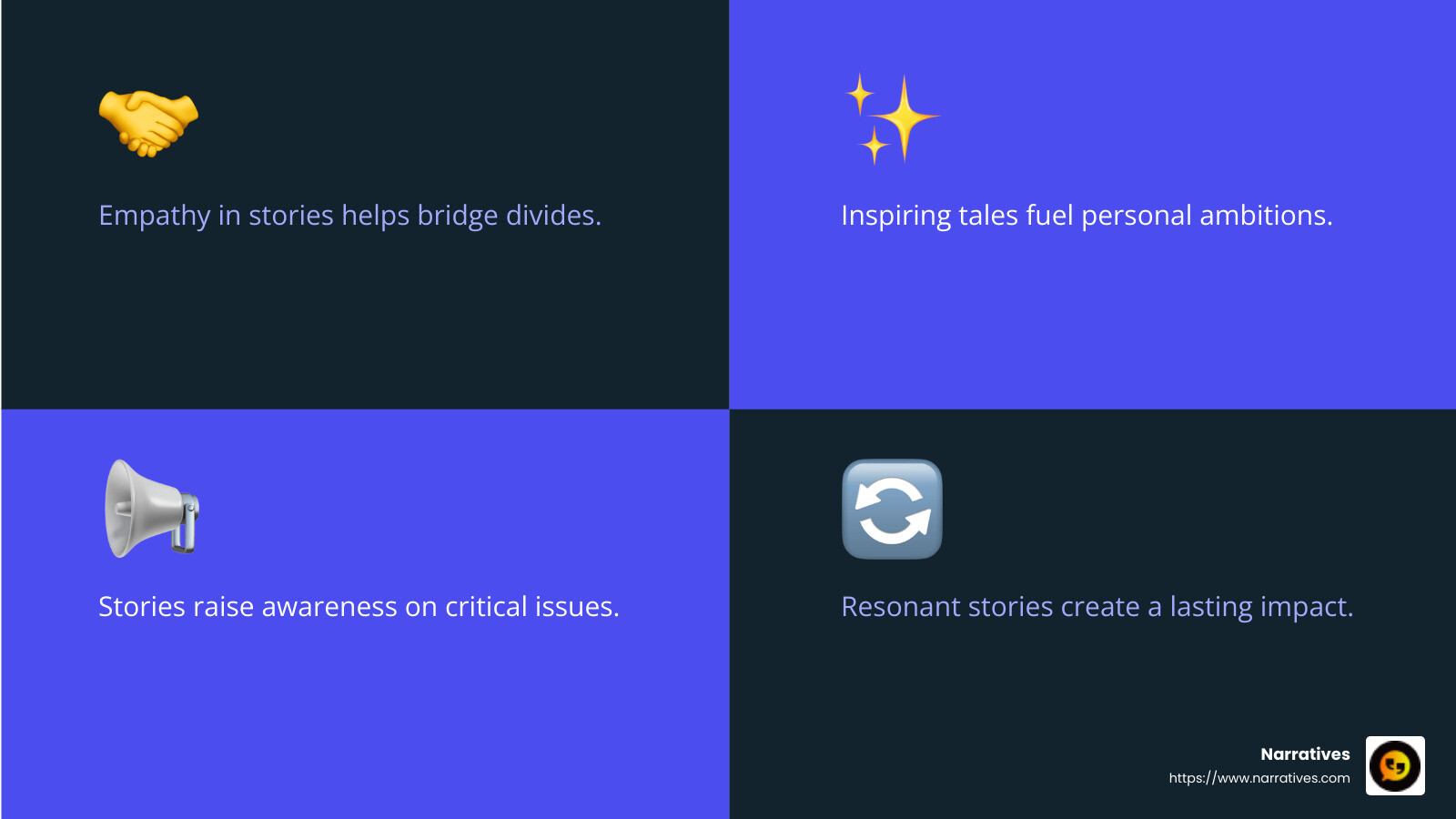
Human interest stories are not just tales; they are catalysts for change. Their emotional power lies in their ability to evoke empathy, ignite inspiration, raise awareness, and create lasting resonance.
Empathy: Bridging Divides
Empathy is the cornerstone of human interest storytelling. By presenting personal experiences, these stories help us step into someone else's shoes. This can be seen in the story of Bahraini footballer Hakeem al-Araibi. His plight, highlighted by Craig Foster's advocacy, stirred public empathy and led to widespread support for his release. Such stories remind us of our shared emotions and aspirations, making it easier to understand and connect with others.
Inspiration: Fueling Ambition
Human interest stories often serve as powerful sources of inspiration. They showcase individuals who have overcome significant challenges, motivating us to push beyond our limits. For example, narratives of athletes overcoming disabilities to achieve greatness illustrate human resilience and potential. These stories encourage us to strive for our own dreams, no matter the obstacles.
Awareness: Illuminating Issues
These stories also play a critical role in raising awareness about important social issues. By putting a human face on abstract problems, they make these issues more relatable and urgent. Consider the impact of narratives that highlight poverty or discrimination. They not only inform but also prompt discussions and inspire action. As noted in the research, human interest stories can even increase pressure on governments to address these issues.
Resonance: Leaving a Lasting Impact
Finally, the resonance of human interest stories is what makes them unforgettable. They echo our own experiences, dreams, and struggles. A mother rebuilding her life after a disaster or a community coming together in the face of adversity are stories that stay with us. They resonate because they reflect the universal aspects of the human condition.
The emotional power of human interest stories lies in their ability to touch hearts and minds. They are not just stories; they are bridges that connect us to each other and to the world around us.
Crafting Compelling Human Interest Stories
Creating a human interest story that captivates requires more than just telling a tale. It involves careful selection, a strong narrative arc, compelling visuals, and ethical storytelling standards.
Subject Selection: Finding the Heartbeat
Choosing the right subject is the first step. Look for stories that have a unique angle and evoke strong emotions. The subject could be an individual, a community, or even an event. What's important is that the story is relatable and touches on universal human experiences like hope, resilience, or compassion. For instance, the story of Quan Huynh, who turned his life around from inmate to entrepreneur, is a profound example of change and redemption.
Narrative Arc: Weaving the Story
A good story needs a beginning, middle, and end — just like a movie. The narrative arc should create tension and suspense, leading to a satisfying resolution. Start by setting the scene and introducing the characters. Then, dig into the challenges or conflicts they face. Finally, provide a resolution or a call to action. This structure keeps readers engaged and makes the story memorable.
Visuals: Enhancing the Experience
Incorporating visuals like photographs, videos, or artwork can significantly improve a story's impact. Visuals make the story more engaging and can help convey emotions that words alone might not capture. As noted by Akintunde Akinleye, a Reuters photographer, visuals allow us to get closer to the subject, providing a window into their world and making the story more relatable and real.
Ethical Standards: Respecting the Story
Ethical storytelling is crucial. Always respect the privacy and dignity of the subjects involved. Obtain consent and be sensitive to cultural and ethical considerations. This not only builds trust but also ensures that the story is told with integrity. As highlighted in the research, maintaining ethical standards is essential in crafting stories that resonate and inspire without exploiting the subjects.
By carefully selecting subjects, crafting a strong narrative arc, using compelling visuals, and adhering to ethical standards, you can create human interest stories that not only inform but also inspire and connect with readers on a deep emotional level.
Human Interest Storytelling for Non-Profits
Human interest storytelling can be a powerful tool for non-profits. It goes beyond facts and figures, reaching into the heart of communities and bringing their stories to the forefront. This approach is crucial for creating social impact, driving community engagement, and amplifying the voices of those often overlooked.
Social Impact: Changing the Narrative
Non-profits aim to create change. By using human interest stories, they can highlight the real-world effects of their work. These stories bring attention to pressing social issues, like poverty or discrimination, by showing the personal struggles and triumphs of individuals. For instance, the story of Hakeem al-Araibi, an Australian political refugee, used a human interest frame to garner international support and action, ultimately leading to his release from detention.
Community-Driven: Building Strong Connections
Stories that focus on communities foster a sense of belonging and unity. They show how people come together to overcome challenges, celebrate successes, or support each other during tough times. This community-driven storytelling not only strengthens bonds within the community but also encourages external support. The Pars Equality Center, for example, uses storytelling to highlight the struggles and achievements of Persian-speaking immigrants, building bridges between them and the wider society.
Underrepresented Voices: Giving Voice to the Voiceless
Many non-profits work with underrepresented groups whose stories are often unheard. Human interest storytelling gives these individuals a platform to share their experiences, challenges, and hopes. By doing so, it raises awareness and fosters empathy among a broader audience. This approach can lead to increased support and advocacy for these communities, as seen in the work of organizations like Narratives, which collaborates with non-profits to bring these stories to light.
By focusing on social impact, fostering community connections, and amplifying underrepresented voices, non-profits can use human interest storytelling to inspire change and build a more empathetic world.
Frequently Asked Questions about Human Interest Storytelling
What makes a story a human interest story?
A human interest story is all about the emotional connection it creates. It focuses on the personal aspects of someone's life, highlighting their struggles, dreams, and achievements. These stories go beyond mere facts. They dive into the human experience, making readers feel a range of emotions like empathy and compassion.
For example, imagine reading about a single mother's journey to provide for her family after losing everything in a natural disaster. This personal focus makes the story relatable and memorable, touching on universal emotions that resonate with everyone.
How can human interest stories inspire action?
Empathy is a powerful motivator. When people connect emotionally with a story, they're more likely to take action. Human interest stories can raise awareness about important social issues, such as poverty or discrimination, by putting a face to the problem.
For instance, when a story highlights a community coming together after a natural disaster, it can inspire others to help or donate. The emotional impact of these stories encourages readers to step up and make a difference, showing the true power of storytelling in driving change.
Why are visuals important in human interest storytelling?
Visuals can significantly improve the storytelling experience. They improve engagement by making the story more vivid and relatable. Photos, videos, or artwork can capture emotions and moments that words alone might not fully convey.
For example, a photograph of a child's joy after receiving a donated toy can speak volumes. It adds depth to the narrative and helps the audience connect on a deeper level. Using visuals effectively not only enriches the story but also ensures it leaves a lasting impression on the audience.
Conclusion
At Narratives, we believe in the transformative power of human interest storytelling. By focusing on personal narratives and emotional connections, we help non-profits and purpose-driven organizations share their impactful stories with the world. Our approach is not just about telling stories; it's about creating meaningful connections that inspire action and drive social change.
Digital storytelling is at the heart of what we do. We leverage high-quality, emotionally resonant video and multimedia content to lift underrepresented voices. This helps our partners not only increase their visibility but also build trust within their communities. By showcasing the real people and real stories behind the statistics, we make abstract issues tangible and relatable.
Our commitment to non-profit partnerships is unwavering. We work closely with organizations to craft stories that highlight their social impact and the communities they serve. By emphasizing community-driven storytelling, we ensure that the voices of those who are often unheard are amplified.
In a world filled with information, it's the stories that touch our hearts that truly stand out. Human interest storytelling is a powerful tool for change, and at Narratives, we're proud to be at the forefront of this movement. If you're ready to share your story and make a difference, learn more about how we can help you achieve your goals.

.avif)