Impact Stories: Inspiring Action Through Nonprofit Narratives

Impact stories for nonprofits are more than just a recounting of success; they're the bridge that forms an emotional connection between a cause and its supporters. Through the art of storytelling, these narratives bring to life the humans, animals, or environments that benefit from an organization’s efforts.
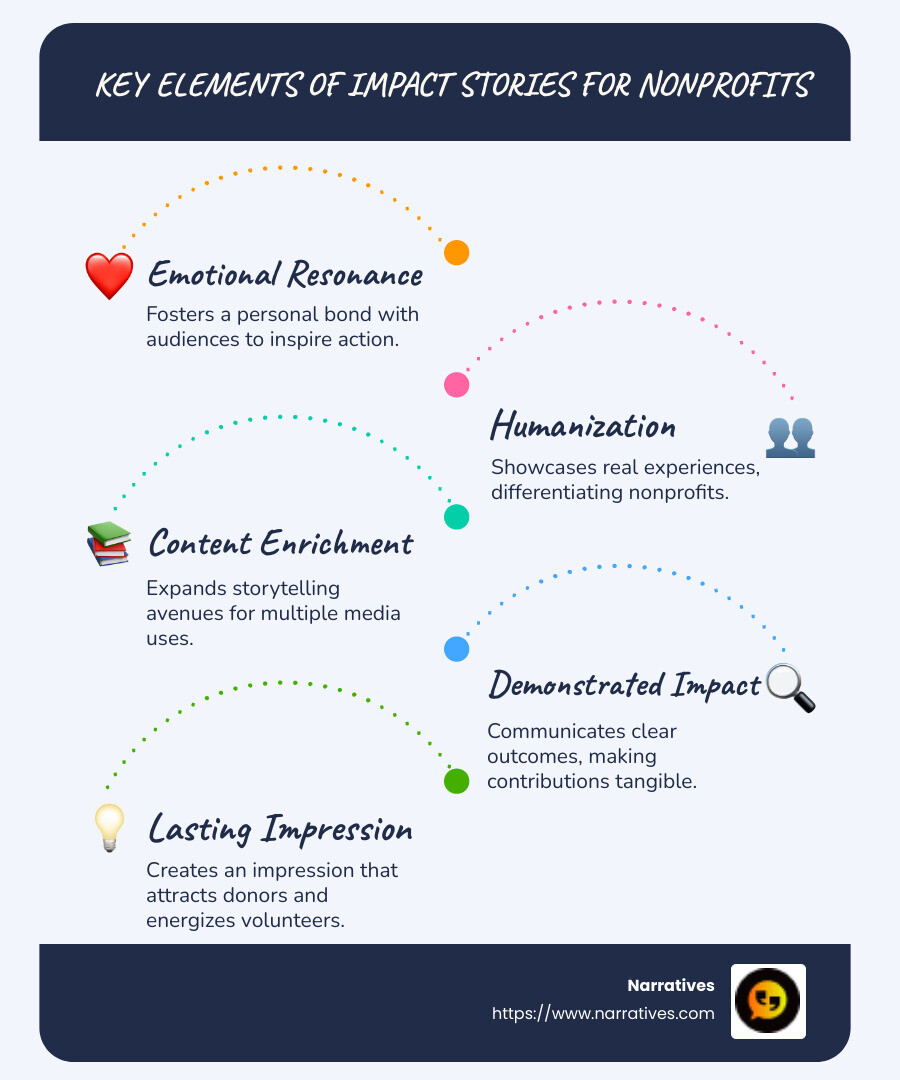
Here's what makes impact stories for nonprofits essential:
- Emotional Resonance: They foster a personal bond with audiences, which can inspire action.
- Humanization: They showcase real experiences, differentiating nonprofits from others.
- Content Enrichment: They expand storytelling avenues, enabling multiple media uses.
- Demonstrated Impact: They communicate clear outcomes, making contributions tangible.
By weaving together facts and feelings, impact stories create a lasting impression that attracts donors, energizes volunteers, and galvanizes communities. They turn the abstract into the relatable, making abstract missions feel personal and urgent.
Impact stories for nonprofits definitions:
Understanding Impact Stories for Nonprofits
An impact story is a powerful tool for nonprofits. It combines a narrative statement with anecdotal evidence to showcase the real-world effects of an organization’s efforts. But what exactly does this mean?
What is an Impact Story?
At its core, an impact story is a narrative that illustrates the changes brought about by a nonprofit's work. It integrates both numbers and personal tales to paint a complete picture of the organization's influence. This approach makes it easier for readers to grasp the tangible and intangible results of a nonprofit's activities. 
The Power of Narrative Statements
A narrative statement is more than just a collection of words. It's the backbone of an impact story, providing structure and clarity. This statement outlines the key elements of the story, such as:
- Who: The individuals or communities impacted.
- What: The change or change that occurred.
- How: The nonprofit's actions that led to this impact.
Why Anecdotal Evidence Matters
While data is essential, anecdotes bring a story to life. They provide a human element that statistics alone cannot convey. Anecdotal evidence includes personal stories and testimonials from those directly affected by the nonprofit's work. These stories make the impact relatable and memorable.
For example, consider a nonprofit working to provide clean water in rural areas. An impact story might include a narrative about a child whose health improved after gaining access to clean water. This personal touch, supported by data showing reduced illness rates, creates a compelling narrative that resonates with readers.
Bringing It All Together
By blending narrative statements with anecdotal evidence, nonprofits can craft impact stories that are both informative and inspiring. These stories not only highlight the organization's achievements but also invite supporters to become part of the journey.
Impact stories are more than just tales of success; they are invitations for others to join in making a difference. They transform abstract concepts into concrete, relatable experiences, fostering a deeper connection between nonprofits and their supporters.
Next, we'll explore how to craft compelling impact stories by considering your audience, purpose, and the best storytelling channels for your message.
Crafting Compelling Impact Stories
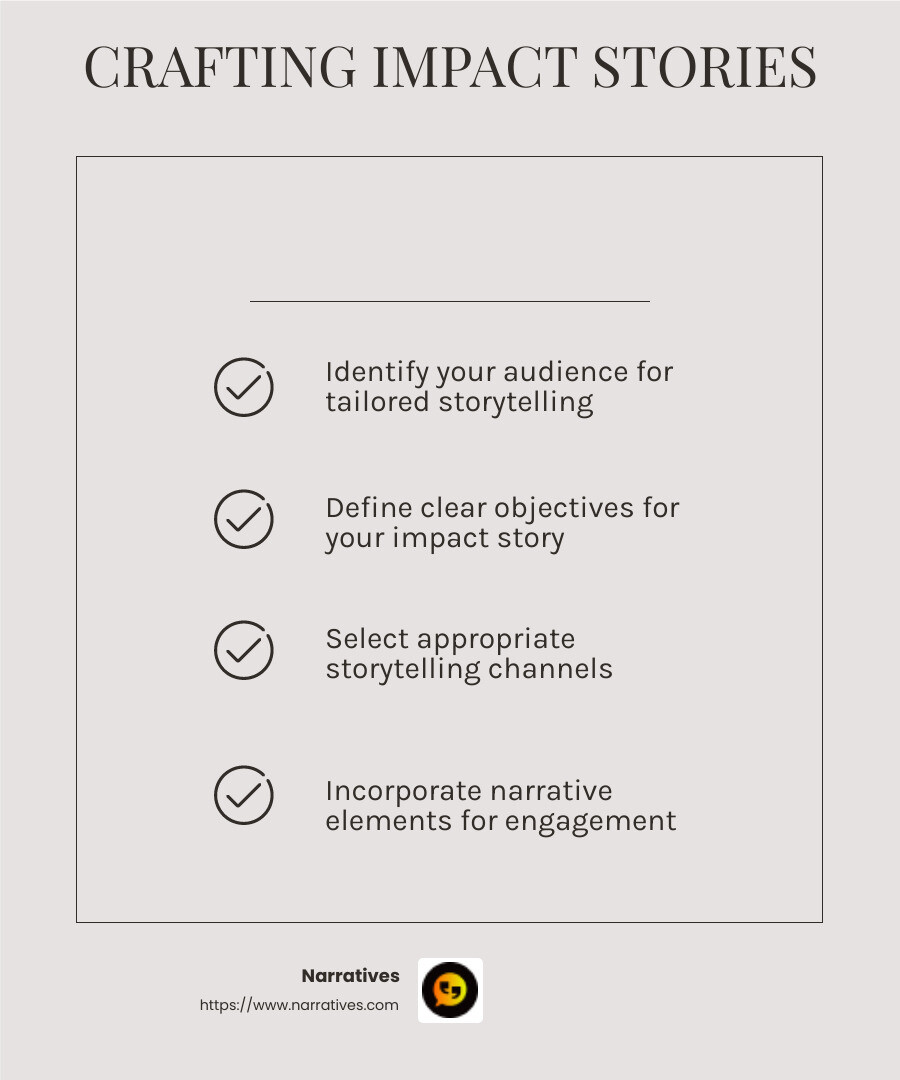
Creating an impact story for nonprofits starts with understanding your audience. Knowing who you're speaking to is key to crafting a message that resonates. Whether it's potential donors, volunteers, or the general public, each audience requires a custom approach.
Identifying Your Audience
Begin by asking: Who will read or watch this story? Are they long-time supporters or new potential allies? Understanding their interests and motivations helps in shaping a story that speaks directly to them. For instance, a story aimed at donors might focus on the tangible changes their contributions have made, while one for volunteers might highlight the personal fulfillment and community impact of their efforts.
Clarifying Your Purpose
Next, define the purpose of your story. What action do you want your audience to take after engaging with your story? Is it to donate, volunteer, or simply become more aware of your cause? Clear objectives guide the narrative, ensuring it aligns with your organization's broader goals.
Choosing the Right Storytelling Channels
Once you know your audience and purpose, it's time to decide where to share your story. Different storytelling channels work better for different audiences. Here are some options:
- Social Media: Ideal for reaching a broad audience quickly. Use platforms like Facebook, Instagram, and Twitter for short, engaging stories that can go viral.
- Emails: Perfect for a more personal touch. Tailor your message to specific segments of your mailing list for maximum impact.
- Videos: A powerful way to convey emotion and detail. Platforms like YouTube can amplify your reach, especially with tools like YouTube's Impact Lab, which helps nonprofits craft and share compelling stories.
- Websites and Blogs: Great for in-depth stories. Use these platforms to provide detailed narratives, backed by data and personal testimonials.
Integrating Narrative Elements
Incorporate narrative elements to make your story engaging. Use a clear structure with a beginning, middle, and end. Introduce real people and real events to create an emotional connection. Highlight challenges and the solutions your nonprofit provided, leading to a satisfying resolution.
Example: A Case Study
Let's look at a real-life example. Defy Ventures, a nonprofit that helps reduce recidivism by turning inmates into entrepreneurs, uses compelling stories to illustrate their impact. By sharing personal narratives like Quan Huynh's change, they effectively engage their audience, inspire action, and attract support.
The Role of Feedback
Finally, create a feedback loop with your audience. Encourage comments and discussions to understand what resonates and what doesn't. This continuous feedback helps refine your storytelling approach and strengthens your connection with supporters.
By focusing on your audience, clarifying your purpose, and choosing the right channels, you can craft impact stories that not only inform but also inspire action. These stories become a bridge, connecting your nonprofit's mission with the hearts and minds of your audience.
Next, we'll dive into how to humanize data within these stories, making the impact even more tangible and relatable.
Humanizing Data in Impact Stories
To make impact stories for nonprofits truly resonate, humanize the data. While numbers and statistics are crucial, they often lack the emotional pull needed to inspire action. By weaving in concrete details and anecdotal narratives, nonprofits can transform raw data into compelling stories that capture hearts and minds.
Concrete Details
Concrete details bring data to life. Instead of stating that "200 families received food aid," describe a single family's experience. For example, "Maria, a single mother of three, received weekly food packages that allowed her to cook healthy meals for her children." This approach paints a vivid picture, making the impact more real and relatable.
Anecdotal Narrative
An anecdotal narrative adds depth to an impact story. It involves sharing a specific event or experience that highlights the human side of your organization’s work. For instance, you might tell the story of Carlos, a young boy who gained access to education through your nonprofit's scholarship program. His journey from struggling in school to excelling in his studies illustrates the broader impact of your efforts.
Quote: "Stories about individuals, not statistics, are what move people to action," says storytelling expert Vanessa. This underscores the power of personal stories in making an emotional connection.
Individual Journey
Focusing on an individual's journey creates a powerful narrative arc. This journey should encompass the challenges they faced, the support they received from your nonprofit, and the positive changes in their life. By following a single person's story, your audience can see the direct impact of their support.
For example, Defy Ventures shares the journey of Quan Huynh, who transformed from a prison lifer to a successful entrepreneur. His story not only highlights the organization's impact but also inspires others to believe in the possibility of change.
Combining Data with Story
The magic happens when data and story merge. Use statistics to support your narrative, providing evidence of your impact while keeping the focus on the human element. For example, "80% of participants in our program secure stable jobs, just like Quan did." This combination builds credibility and emotional engagement.
By humanizing data through concrete details, anecdotal narratives, and individual journeys, nonprofits can create impact stories that resonate deeply with their audience, encouraging them to support and engage with the cause.
Next, we'll explore how to communicate social return on investment, deepening donor engagement and illustrating the value of their financial contributions.
Communicating Social Return on Investment
When it comes to impact stories for nonprofits, communicating social return on investment (ROI) is crucial. While financial ROI is a common metric in the business world, nonprofits focus on social ROI — the tangible and intangible benefits that arise from their work. Here's how to effectively convey this to your donors and stakeholders.
What is Social ROI?
Social ROI measures the impact of your nonprofit's efforts in terms of social value. It's about showing donors what their contributions achieve in the community. For instance, a pet shelter might highlight that every $50 donation results in one dog being rescued and placed in a loving home. This correlation between financial contribution and social impact helps donors see the direct effects of their support.
Engaging Donors with Impact
Engaging donors means connecting them emotionally to the cause. To do this, nonprofits must translate their outcomes into relatable stories. Sharing personal narratives, like Quan Huynh's change through Defy Ventures, not only illustrates the program's success but also fosters a deeper connection with donors.
Quote: "Donors are more likely to give when they can see the difference their money makes," says nonprofit expert Vanessa. This highlights the importance of clear communication in donor engagement.
Illustrating Financial Contribution
To illustrate financial contribution, break down how donations are used. Use simple visuals like infographics to show how funds are allocated. For example, "For every dollar donated, 80 cents go directly to program services, impacting lives like Maria's, who now has access to nutritious meals."
Using Data to Support Stories
Numbers add credibility to your impact stories. Share statistics that back up your narrative. For example, "Our education program has helped 95% of participants, like Carlos, improve their academic performance." This data-driven approach reassures donors that their contributions are making a real difference.
Creating a Compelling Narrative
Crafting a compelling narrative involves integrating social ROI into your storytelling. Begin with the problem your nonprofit addresses, introduce the solution you provide, and highlight the positive outcomes. Use real-life examples to paint a vivid picture of your impact.
By effectively communicating social ROI, nonprofits can deepen donor engagement and demonstrate the value of financial contributions. This approach not only strengthens relationships with existing donors but also attracts new supporters eager to make a meaningful difference.
Next, we'll dig into mapping impact stories onto traditional story structures, ensuring your message resonates and inspires action.
Mapping Impact Stories onto Traditional Story Structures
To make impact stories for nonprofits resonate, map them onto traditional story structures. This approach helps create a narrative that is both engaging and memorable. Let's break down the key components: exposition, conflict, and climax.
Exposition
The exposition sets the stage for your impact story. Here, you introduce the main characters, such as beneficiaries, staff, or volunteers. It's also where you describe the setting and urgency of the situation. For example, imagine a community center in a small town facing closure due to lack of funding. By highlighting the center's role in providing after-school programs for local kids, you create an immediate connection with your audience.
Tips for a Strong Exposition:
- Introduce Real People: Use names and specific details. Instead of saying "a child," say "Liam, a 10-year-old who dreams of becoming a scientist."
- Set the Scene: Describe the environment and circumstances. Paint a picture of what's at stake if the problem isn't addressed.
Conflict
Conflict is the heart of any good story. It's the problem that needs solving, often highlighting the challenges your nonprofit tackles. For instance, the community center might face financial struggles, putting its programs at risk. This section should clearly outline the obstacles and why they matter.
Crafting Compelling Conflict:
- Identify the Problem: Be specific about what needs to be solved. "The center needs $50,000 to keep its doors open."
- Show the Stakes: Explain the consequences of inaction. "Without funding, 200 children will lose access to safe after-school activities."
Climax
The climax is the turning point where the solution becomes apparent, and the path to resolution is clear. This is the moment of highest emotional intensity in your story. Continuing with our example, the climax might occur when a local business steps in to sponsor the community center, ensuring its programs continue.
Creating an Impactful Climax:
- Highlight the Solution: Show how the problem is being addressed. "Thanks to a generous donation, the center secured its future."
- Emphasize Emotional Impact: Share how this solution changes lives. "Liam and his friends can now continue their science club, nurturing their dreams."
By structuring your narrative with exposition, conflict, and climax, you ensure your impact stories for nonprofits are not only compelling but also inspire action. This approach helps your audience connect emotionally and motivates them to support your cause.
Next, we'll explore frequently asked questions about impact stories for nonprofits, providing insights into their benefits and sharing strategies for effective storytelling.
Frequently Asked Questions about Impact Stories for Nonprofits
What is an impact story?
An impact story is a narrative that illustrates the real-world effects of a nonprofit's work. It's more than just facts and figures; it's about weaving anecdotal evidence into a compelling story. This narrative often involves real people and events, making it relatable and memorable.
Example: Instead of saying, "We provided 100 meals," an impact story would follow Sarah, a single mom who, thanks to your food program, can feed her children healthy meals every day.
How do impact stories benefit nonprofits?
Impact stories create an emotional connection with your audience. When people feel emotionally connected to a cause, they are more likely to engage and contribute. This connection can lead to increased donor engagement, as stories are remembered up to 22 times more than plain facts, according to research from the Stanford Graduate School of Business.
Key Benefits:
- Emotional Engagement: Stories engage the heart, making potential donors more likely to take action.
- Transparency: Sharing real stories shows transparency in how donations make a difference.
- Inspiration: A well-told story can inspire others to become advocates for your cause.
How can nonprofits effectively share their impact stories?
To effectively share impact stories for nonprofits, it's important to choose the right storytelling channels and tailor your message to your audience. Here are some tips:
Select Appropriate Channels: Use platforms like social media, blogs, newsletters, or videos to reach your audience. YouTube's Impact Lab, for example, offers tools for creating engaging video content.
Engage Your Audience: Encourage interaction by asking questions or inviting feedback. This can increase engagement and make your audience feel like part of the story.
Leverage Supporters: Enlist your current supporters to share your stories within their networks. This can amplify your reach and attract new donors.
By understanding these elements, nonprofits can harness the power of storytelling to connect with their audience and drive meaningful action.
Next, we'll dig into the conclusion, focusing on how Narratives uses digital storytelling to foster community-driven change.
Conclusion
At Narratives, we believe in the power of digital storytelling to transform how nonprofits connect with their communities. By elevating underrepresented voices through high-quality, emotionally resonant content, we help organizations share their impact stories in ways that inspire action, build trust, and increase visibility.
Digital storytelling is not just about sharing facts. It's about crafting narratives that resonate on a human level. This approach allows us to highlight the personal journeys and struggles of those benefiting from nonprofit efforts. By focusing on these individual stories, we foster a deeper understanding and empathy among audiences.
Our commitment is to be a catalyst for community-driven change. By partnering with nonprofits, we aim to amplify their missions and ensure their stories reach the right ears. We empower organizations to illustrate their social return on investment, showing donors exactly how their contributions make a tangible difference.
Key Elements of Our Approach:
- Human-Centered Stories: We focus on real people and their experiences, creating a strong emotional connection with the audience.
- Multimedia Content: By using videos, photos, and written narratives, we ensure the stories are engaging and accessible.
- Community Engagement: Our stories not only inform but also invite participation, encouraging communities to rally around the cause.
If you're ready to harness the power of storytelling to lift your nonprofit's mission, learn more about how Narratives can help you. Together, we can create a world where every story inspires action and every voice is heard.


.avif)