From Heart to Action: Mastering Nonprofit Storytelling
The Heartbeat of Nonprofits: Crafting Emotional Impact Stories
Impact stories for nonprofits are powerful narratives that bridge the gap between mission and support by weaving emotional connections. These stories don't just describe what your organization does; they dig into the human elements—real people, real challenges, and real triumphs—that your mission is built upon.
Here's a quick glimpse into why impact stories matter:
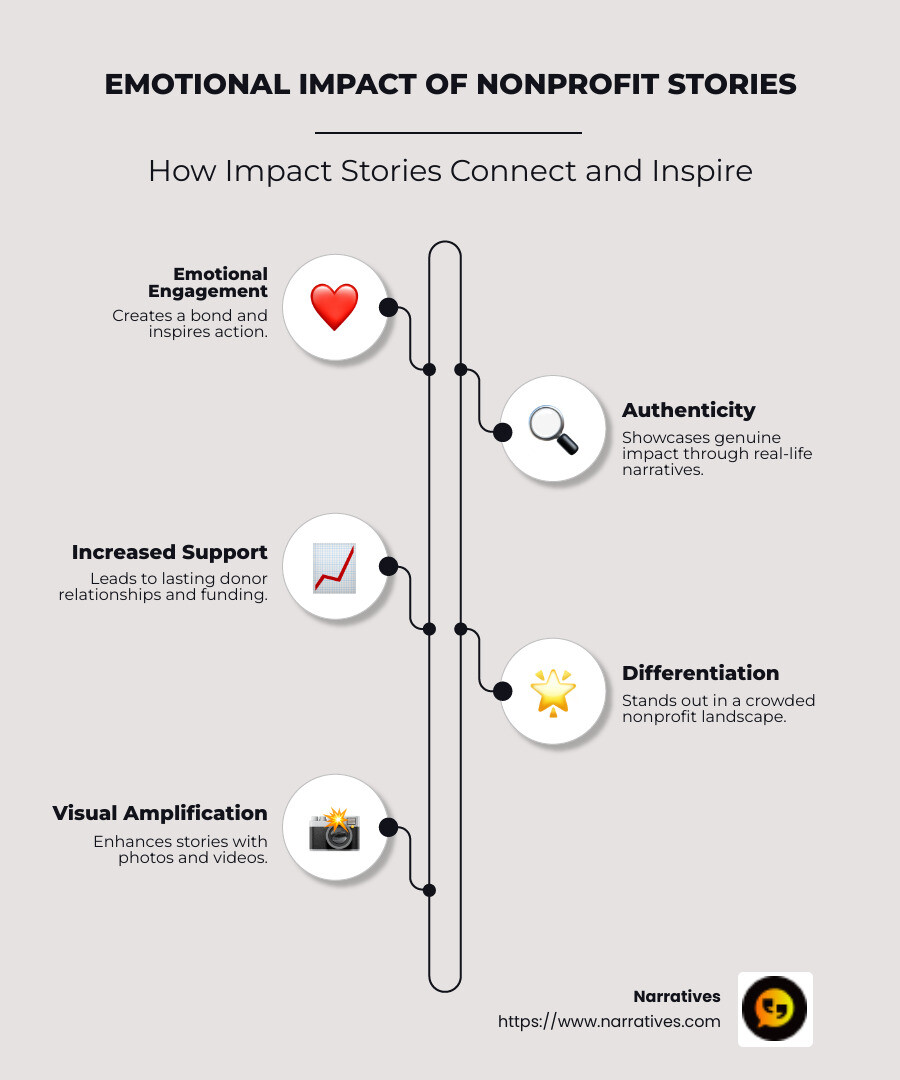
Emotional Engagement: They create a powerful emotional bond with your audience, inspiring them to care.
Authenticity: Real-life narratives showcase your nonprofit's genuine impact, making your message more credible.
Increased Support: Stories that touch hearts often lead to lasting donor relationships and increased funding.
Differentiation: In a crowded nonprofit landscape, compelling storytelling is your ticket to stand out.
By telling these stories, you humanize your work, making it relatable and memorable. Visuals like photos and videos can amplify this effect, pulling at heartstrings and motivating action.
Real emotions lead to real donations. And in today's digital age, where attention spans are short, an authentic, emotionally-rooted story can cut through the noise and resonate deeply.
Basic Impact stories for nonprofits glossary:
The Power of Impact Stories for Nonprofits
Impact stories for nonprofits are more than just narratives; they're the catalyst that transforms passive interest into active involvement. These stories are the emotional glue that binds donors to your cause, creating a lasting connection that goes beyond a one-time donation.
Emotional Connection
At the heart of every impactful story is an emotional connection. Imagine a story about a single mother overcoming adversity with the help of your nonprofit. This isn't just a tale—it's a journey that potential donors can relate to, feel for, and ultimately, support. Emotional connections make your mission personal, turning abstract concepts into tangible realities.

Donor Engagement
Engaging donors is about more than just asking for money. It's about inviting them into a story where they play a crucial role. When donors see the impact of their contributions through compelling narratives, like a video of a community transformed by their support, they feel valued and essential. This engagement doesn't just encourage financial support; it fosters a community of advocates who are eager to spread your message.
Here's why donor engagement through storytelling works:
Personalization: Tailor your stories to resonate with different donor segments. A young professional might be inspired by a story of innovation, while a retiree might connect with stories of legacy and continuity.
Continuity: Keep donors updated on ongoing stories. Show them the progress and changes their contributions have enabled over time.
Call to Action: Every story should have a clear path for further engagement, whether it's volunteering, sharing the story, or making another donation.
Real-Life Impact
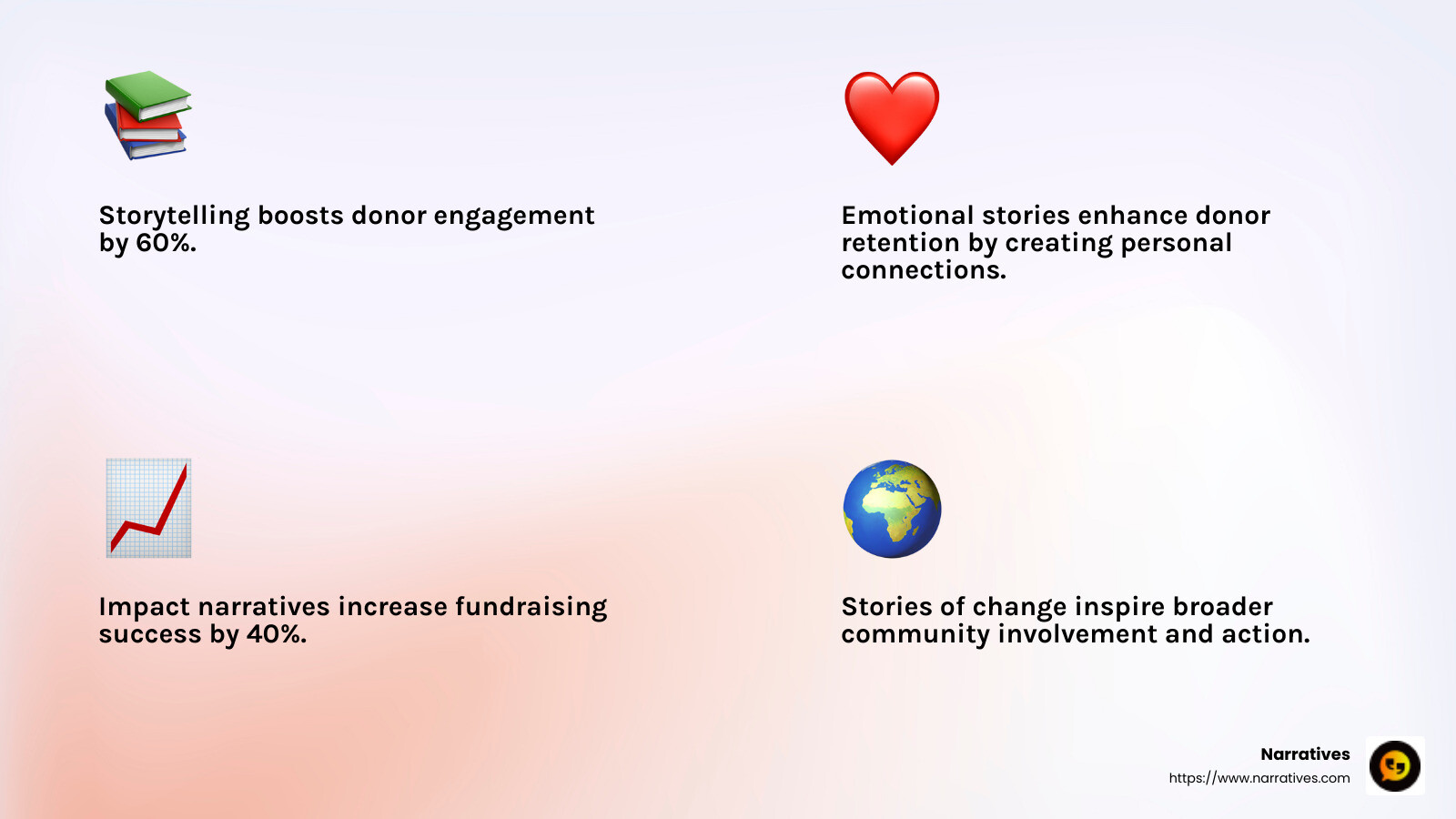
Real stories have real power. According to the Stanford Graduate School of Business, stories are remembered up to 22 times more than facts alone. This means that while statistics and data are important, the stories behind those numbers are what truly inspire action.

By crafting narratives that highlight individual successes and community changes, your nonprofit not only showcases its impact but also builds a foundation of trust and transparency with its supporters.
When countless causes vie for attention, a well-told impact story can be your nonprofit's most powerful tool. It turns empathy into action, changing potential supporters into lifelong advocates.
Crafting Compelling Nonprofit Narratives
Creating an impact story for nonprofits that resonates requires more than just presenting facts. It's about weaving real narratives that evoke emotions and drive action. Here's how you can master the art:
Story Structure
Every compelling story follows a structure that guides the audience through a journey. This structure isn't just a formula; it's a roadmap for emotional engagement.
Exposition: Introduce the main characters and setting. This could be a community or individual your nonprofit has helped. Set the mood with a sense of urgency or hope.
Conflict: Present the challenge or problem. This is the heart of your narrative, where the stakes are high and the need for your nonprofit's intervention becomes clear.
Rising Action: Detail the steps taken to address the problem. Highlight your nonprofit's role and the efforts involved. This builds anticipation and investment in the outcome.
Climax: The turning point where change happens. This is the emotional peak of your story, showing how your nonprofit's work leads to change.
Resolution: Conclude with the results and future possibilities. Leave your audience with a sense of accomplishment and a call to action, whether it's donating, volunteering, or spreading the word.
Real Narratives
Real stories mean real people. When crafting your narrative, focus on authentic experiences. Share the journey of a specific person or group impacted by your nonprofit's work.
For instance, highlight a student who, with your support, was able to pursue higher education. Use their voice to tell the story, ensuring it remains genuine and relatable.
Emotional Resonance
The key to a successful nonprofit narrative is emotional resonance. This is what makes a story memorable and impactful.
Use Descriptive Language: Paint vivid pictures with your words to evoke emotions. Describe the sights, sounds, and feelings involved in the story.
Incorporate Quotes: Let the people in your stories speak for themselves. Their words add authenticity and depth.
Focus on Specifics: Details matter. Instead of saying "a child," say "Emily, a 10-year-old from Chicago." Specifics make stories relatable and personal.
Bringing It All Together
By combining a solid story structure with real narratives and emotional resonance, your nonprofit can craft stories that not only inform but inspire. These narratives become the bridge between your mission and your supporters, changing interest into action and building a community of engaged advocates.
In the next section, we'll explore how to improve these stories with visual storytelling techniques, elevating your narratives to new heights.
Visual Storytelling Techniques
Once you've crafted a compelling narrative, it's time to lift it with visual storytelling techniques. Visual content is crucial for nonprofits looking to create a lasting impact. Photos and videos can transform your impact stories for nonprofits into immersive experiences that captivate and inspire.
The Power of Photos & Videos
Photos and videos are not just add-ons; they are essential components of storytelling. They convey emotions and details that words alone can't capture. Here's why they're indispensable:
Emotional Connection: Visuals tap into emotions quickly. A single image of a smiling child or a heartfelt thank-you video can create an immediate emotional bond.
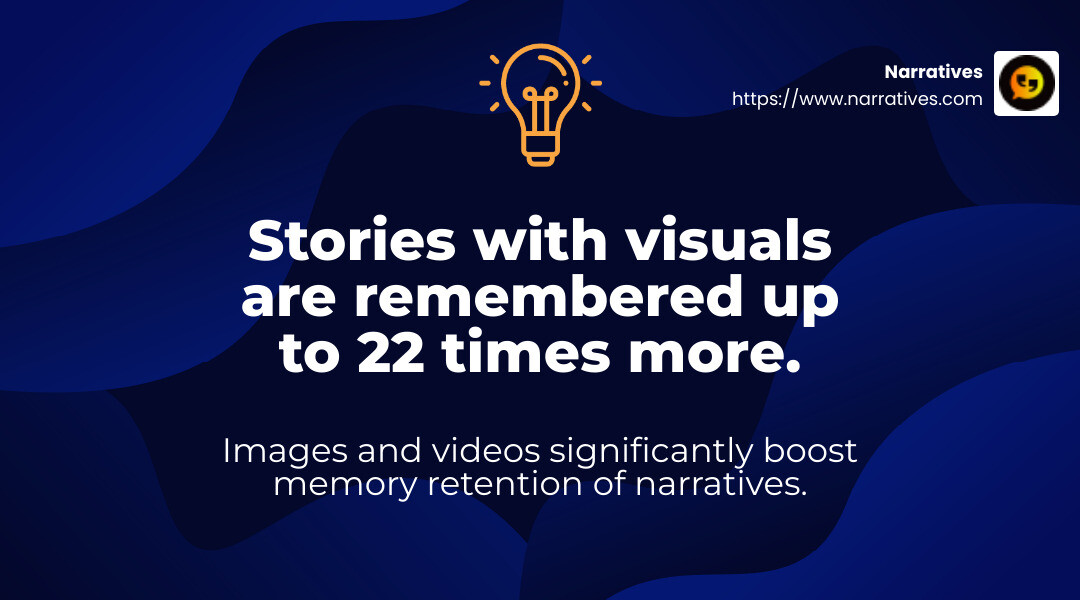
Memorability: According to research, stories with visuals are remembered up to 22 times more than those with text alone. People recall images long after they've forgotten words.
Clarity and Engagement: Visuals clarify complex ideas and keep the audience engaged. Instead of explaining a process, show it in action through a video or infographic.
Multimedia Storytelling
Multimedia storytelling combines text, images, and sound to create a rich, engaging narrative. This approach offers several benefits:
Diverse Platforms: Different platforms favor different types of content. Use photos for Instagram, videos for YouTube, and infographics for your website.
Cross-Promotion: Repurpose content across platforms. A video clip can become a GIF for social media, while a powerful quote can be a standalone image.
Interactive Elements: Encourage participation with interactive elements like polls or Q&A sessions. These can be embedded in videos or live streams, making the audience part of the story.
Best Practices for Visual Storytelling
To make the most of visual storytelling, follow these best practices:
High-Quality Content: Ensure your visuals are clear and professional. Blurry or poorly lit images can detract from your message.
Authenticity: Use real images and footage. Stock photos can feel impersonal, while authentic visuals build trust and credibility.
Consistency: Maintain a consistent style and tone across all visuals. This creates a cohesive brand image and reinforces your message.
Narrative Flow: Ensure your visuals follow the story's structure. Align images and videos with the exposition, conflict, climax, and resolution to maintain a coherent narrative.
By integrating visual content into your storytelling, you not only improve the emotional impact but also broaden your reach. In the next section, we'll explore how transparency in storytelling builds trust with your audience, ensuring your message resonates and inspires action.
Building Trust Through Transparency
Transparency is the cornerstone of building trust with your donors. When supporters understand how their contributions are used, their confidence in your organization grows. This trust fosters long-term relationships and encourages continued support.
Clear Communication
Clear communication is key to transparency. Here’s how you can ensure your messaging is straightforward and effective:
Simple Language: Use plain language to explain your initiatives and finances. Avoid jargon that might confuse or alienate donors.
Detailed Reports: Regularly share reports that outline where donations go and what they achieve. This could include impact stories for nonprofits that highlight real-life changes brought about by contributions.
Open Channels: Maintain open communication channels. Encourage questions and provide timely responses to build a sense of accessibility and openness.
Showcasing Impact
To improve transparency, showcase the tangible impact of donations. Here are some ways to do it:
Impact Metrics: Use statistics to demonstrate your success. For example, "Every $50 donation helps provide meals for a family of four for a week."
Personal Stories: Share stories of individuals or communities that have benefited from your work. These narratives personalize the impact and make it relatable.
Visual Proof: Incorporate photos and videos that show your projects in action. Seeing is believing, and visuals can powerfully convey the real-world effects of your efforts.
Building Donor Trust
Building trust isn’t just about sharing data; it's about creating a relationship. Here’s how to nurture donor trust:
Regular Updates: Keep donors in the loop with frequent updates. Whether through newsletters or social media, regular communication shows that you value their involvement.
Acknowledgment: Recognize and thank your donors. A simple thank-you note or public acknowledgment can go a long way in making supporters feel appreciated.
Feedback Opportunities: Provide avenues for donors to give feedback. This not only shows you value their opinions but also helps improve your processes.
By prioritizing transparency and clear communication, you strengthen donor trust. This trust is essential for sustaining support and ensuring your nonprofit can continue to make a meaningful impact.
In the next section, we'll answer some frequently asked questions about nonprofit storytelling, providing further insights into how to effectively engage and inspire your audience.
Frequently Asked Questions about Nonprofit Storytelling
What is an impact story?
An impact story is a powerful narrative that highlights the real-life effects of a nonprofit's work. Instead of just listing facts or achievements, it tells a personal story about the people or communities that have benefited from the organization's efforts. This storytelling approach creates an emotional connection, making the impact more relatable and memorable.
According to research from the Stanford Graduate School of Business, stories are remembered up to 22 times more than facts alone. So, when a donor hears about a family overcoming food insecurity thanks to your food pantry, they're more likely to remember and support your cause.
How do nonprofits use storytelling effectively?
Nonprofits use storytelling to engage, inspire, and mobilize their audience. Here's how they do it:
Identify the Audience: Tailor the story to resonate with specific groups, whether they're potential donors, volunteers, or community members.
Craft a Compelling Narrative: Use a clear story structure. Start with a problem, introduce the solution provided by your nonprofit, and end with the positive outcome.
Emotional Resonance: Focus on the human element. Share personal anecdotes and experiences that evoke emotions and connect with the audience on a deeper level.
Call to Action: Every story should encourage the audience to take action, whether it's donating, volunteering, or spreading the word.
These strategies not only improve engagement but also turn passive supporters into active advocates.
Why is visual content important in nonprofit storytelling?
Visual content, such as photos and videos, is crucial in nonprofit storytelling for several reasons:
Increased Engagement: Visuals capture attention more effectively than text alone. They make content more engaging and easier to digest.
Emotional Impact: Images and videos can evoke strong emotions, helping to forge a deeper connection with the audience. A photo of a smiling child who benefited from your program can speak volumes.
Clarity and Understanding: Visuals help clarify complex information. For example, an infographic can simplify data about your organization's impact, making it more accessible to a broader audience.
Shareability: Visual content is more likely to be shared on social media, increasing your reach and potentially attracting new supporters.
By incorporating visual elements, nonprofits can improve their storytelling efforts, making their messages more compelling and impactful.
In the next section, we'll explore how to use these storytelling techniques to create community-driven narratives that drive social impact.
Conclusion
Narratives are at the heart of effective nonprofit storytelling. They allow organizations to connect emotionally with their audience, turning passive observers into active participants in their mission. By focusing on community-driven storytelling, nonprofits can highlight the real-world changes they inspire and the lives they touch.
Community-driven storytelling is about more than just telling a story; it's about amplifying the voices of those who are often underrepresented. These stories create a sense of belonging and urgency, encouraging audiences to rally around a cause. When people see themselves in a story, they are more likely to engage, support, and advocate for the mission.
The ultimate goal of these narratives is to drive social impact. By sharing compelling stories, nonprofits can inspire action and foster a community of supporters who are committed to making a difference. This is where the power of storytelling truly shines—changing heartfelt stories into tangible actions that change lives.
At Narratives, we specialize in crafting high-quality, emotionally resonant video and multimedia content that lifts these narratives. We partner with nonprofits to bring their stories to life, helping them to inspire action, build trust, and increase visibility. By focusing on community-driven storytelling, we aim to amplify underrepresented voices and drive meaningful social change.
Whether you're a nonprofit looking to share your impact or a supporter eager to make a difference, every story has the power to change the world. Let's tell those stories together.


.avif)