Crafting the Future: Innovative Storytelling Ideas for Writers

Innovative storytelling ideas are changing how writers connect with their audiences, making narratives more engaging and impactful than ever before. In stories, creativity and technology converge, giving rise to fresh techniques that not only entertain but also educate and inspire. Writers today are breaking the mold by blending traditional and cutting-edge methods to craft compelling stories.
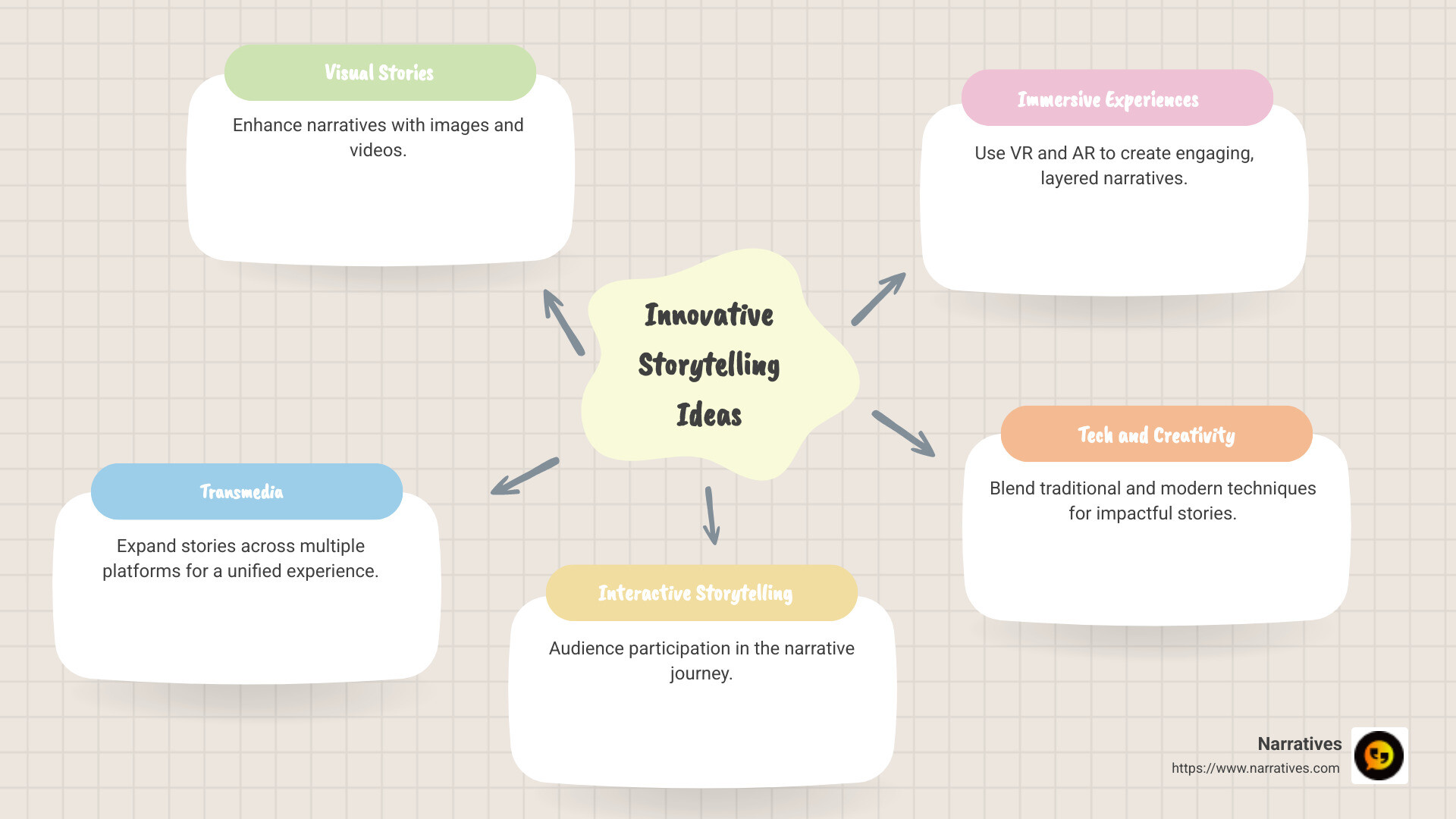
Here's a quick glimpse of innovative storytelling ideas that are setting new standards:
- Visual Stories: Using images and videos to improve narrative depth.
- Transmedia Storytelling: Expanding stories across multiple platforms to create a unified and immersive experience.
- Interactive Storytelling: Inviting audiences to participate in the narrative journey actively.
- Immersive Experiences: Leveraging virtual reality and augmented reality to create layered narratives.
These ideas hold the power to transform how stories are told, ensuring they leave a lasting impression on audiences. We'll explore each of these in turn, shedding light on how you can incorporate them into your storytelling toolkit. Stay tuned to open up the deeper potential of crafting stories that resonate and inspire.
Innovative storytelling ideas word roundup:
- interactive digital storytelling examples
- successful storytelling campaigns
- storytelling for environmental nonprofits
The Power of Storytelling
Storytelling isn't just about telling tales; it's about creating emotional connections that resonate deeply with audiences. When done right, storytelling can transform how people perceive and interact with a brand. Let's explore why this matters.
Emotional Connection
A good story has the ability to evoke emotions, which is why storytelling is so powerful. Our brains are wired to respond to stories more profoundly than to plain facts or figures. This emotional connection helps audiences relate to the content on a personal level, making them more likely to engage and remember the story.
Imagine a non-profit organization sharing a story about a community it serves. The narrative could focus on a single individual's journey, highlighting their struggles and triumphs. This personal touch not only informs but also inspires empathy and action from the audience.
Audience Engagement
Engaged audiences are more likely to take action, whether it's supporting a cause, buying a product, or sharing a message. Storytelling plays a crucial role in capturing and maintaining this engagement by making content more relatable and memorable.
Consider the storytelling techniques like the Hero's Journey, where the audience follows a protagonist overcoming challenges. This structure keeps audiences invested in the outcome, as they root for the hero's success. By placing the audience in the hero's shoes, the story becomes an immersive experience.
Brand Loyalty
Stories are a powerful tool for building brand loyalty. When a brand consistently tells stories that align with its values and resonate with its audience, it fosters a sense of trust and loyalty. This is because stories can convey the brand's mission and values more effectively than traditional advertising methods.
For instance, Harley-Davidson uses storytelling to connect with its audience by highlighting themes of heritage, community, and trip. By doing so, it reaffirms its place not just in the market but in the hearts of its followers. 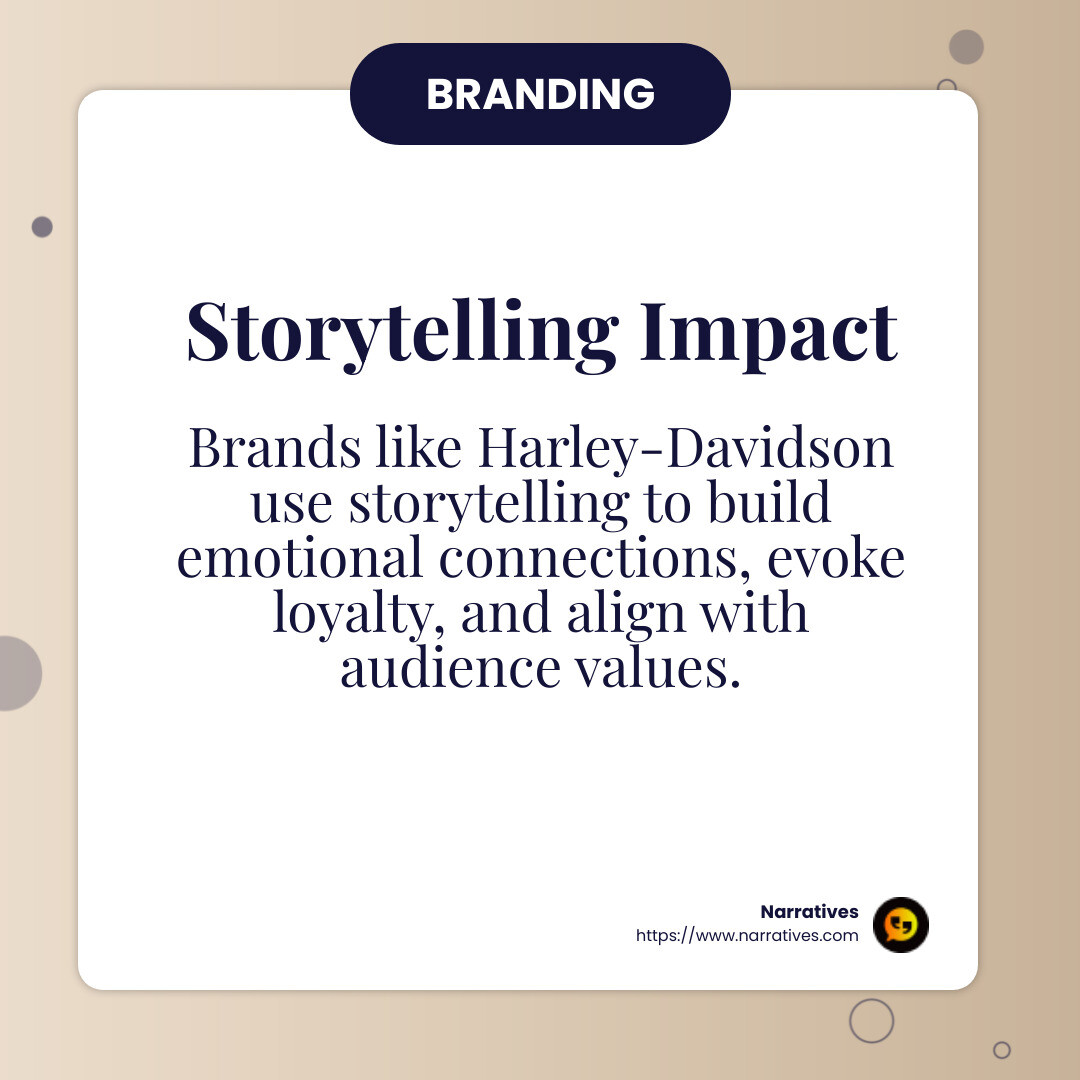
In summary, storytelling is a vital component of successful communication, especially when it comes to creating emotional connections, engaging audiences, and building brand loyalty. As we explore more innovative storytelling ideas, keep in mind the power these narratives hold in shaping perceptions and inspiring action.
Innovative Storytelling Ideas
Storytelling has evolved beyond traditional narratives. Let's explore some innovative storytelling ideas that are changing the way we engage with audiences.
Visual Stories
Visual storytelling is more than just adding pictures to text. It's about creating a narrative that comes to life through images, infographics, and videos. Visual stories are highly effective because our brains process images much faster than words. This makes them a powerful tool for capturing attention and conveying complex information quickly.
Platforms like Shorthand have made it easier for content creators to craft stunning visual stories without needing a developer. This democratization of storytelling tools allows even small brands to produce high-quality content that captivates their audience.
Transmedia Storytelling
Transmedia storytelling involves telling a story across multiple platforms and formats, each contributing uniquely to the narrative. This approach allows audiences to engage with the story in different ways, creating a richer experience.
For example, a brand might start a story with a short film, expand it with a podcast, and invite audience participation through social media. Each medium adds a new layer, encouraging audiences to explore and interact with the story from different angles.
Interactive Storytelling
Interactive storytelling invites the audience to become part of the narrative. This can be achieved through elements like quizzes, polls, or choose-your-own-trip formats. By allowing audiences to influence the outcome, interactive stories create a deeper level of engagement.
Consider a non-profit organization using an interactive map to show the impact of its projects around the world. Users can click on different regions to learn more about specific initiatives, making the experience both educational and engaging.
Immersive Experiences
Immersive storytelling takes engagement to the next level by fully enveloping the audience in the narrative. This can be achieved through virtual reality (VR), augmented reality (AR), or 360-degree videos. These technologies allow users to experience the story as if they were part of it.
For example, a charity might use VR to transport donors to the field, letting them see the impact of their contributions. This immersive experience can foster a stronger emotional connection and inspire greater support.
Incorporating these innovative storytelling ideas into your content strategy can transform how audiences interact with your brand. By leveraging visual, transmedia, interactive, and immersive storytelling, you can create compelling narratives that not only capture attention but also inspire action. We'll explore techniques to make these storytelling methods even more effective.
Techniques for Effective Storytelling
Crafting a compelling story is an art. But with the right techniques, it becomes a strategic tool that can captivate and engage your audience. Let's explore some proven storytelling techniques that can lift your narrative.
The Hero’s Journey
The Hero’s Journey is a classic storytelling framework that resonates across cultures. It involves a protagonist who starts on an trip, faces challenges, and eventually triumphs. This journey is divided into three acts: Departure, Initiation, and Return.
In content marketing, your customer is the hero. Your product or service is the tool that helps them overcome obstacles. For example, imagine a campaign where a customer faces the challenge of a fragile smartphone. Your brand's durable smartphone case becomes the hero's ally, leading to a triumphant return to safety.
Before-After-Bridge
The Before-After-Bridge technique paints a picture of change. Start by relating to your audience's current struggles (Before). Then, show them a brighter future (After), and finally, present your product as the bridge to get there.
Consider a skincare brand that identifies with customers' frustrations over acne. The brand shares success stories of individuals who achieved clear skin (After) and positions their product as the transformative solution (Bridge).
AIDA
AIDA stands for Attention, Interest, Desire, and Action. This model guides you in structuring your message effectively.
- Attention: Capture the audience’s focus immediately.
- Interest: Keep them engaged with relatable or intriguing content.
- Desire: Build a strong emotional connection, making them want what you offer.
- Action: Encourage them to take the next step, like purchasing or signing up.
Brands like Apple excel at grabbing attention with bold statements and maintaining interest with innovative product features, leading to a strong desire and clear call to action.
PPPP
The PPPP technique—Promise, Picture, Proof, Push—offers a comprehensive approach to storytelling.
- Promise: Start with a promise that addresses your audience's pain points.
- Picture: Paint a vivid picture of the benefits they’ll enjoy.
- Proof: Back up your claims with evidence like testimonials or data.
- Push: Conclude with a compelling call to action.
For instance, a fitness app might promise to improve users' health (Promise), describe a lifestyle of energy and confidence (Picture), share user testimonials (Proof), and encourage downloading the app (Push).
By mastering these storytelling techniques, you can craft narratives that not only engage but also inspire action. As we explore further, we'll see how these techniques can be applied in non-profit storytelling to drive social impact and community engagement.
Storytelling in Non-Profit Organizations
Storytelling is a powerful tool for non-profit organizations. It can amplify social impact, foster community connections, and highlight purpose-driven missions. Let's explore how storytelling can drive change in the non-profit sector.
Social Impact
Non-profits often work on issues that require societal change. Storytelling can be a catalyst for this change. By sharing compelling stories, non-profits can raise awareness and inspire action. For example, Helen's story from the research highlights how access to clean water transformed her life. This narrative showcases the profound impact of the organization’s efforts in her community.
Community-Driven Storytelling
Community-driven stories focus on the people who benefit from or contribute to a non-profit's mission. These stories give a voice to those who are often unheard, fostering empathy and understanding. An example from the research is Brenda Nurre's story with Team Rubicon. Despite her limitations, Brenda's involvement in virtual volunteering highlights the vital role community members play in relief efforts.
Purpose-Driven Storytelling
Non-profits are inherently purpose-driven. Storytelling helps convey this purpose to a broader audience. By aligning stories with their mission, non-profits can connect with supporters on a deeper level. Balance Autism, for instance, uses their blog to share success stories, reinforcing their commitment to providing care for individuals with autism.
Incorporating these storytelling strategies can help non-profits create narratives that resonate with their audience. By focusing on social impact, community involvement, and organizational purpose, non-profits can drive meaningful change and build a stronger connection with their supporters.
Frequently Asked Questions about Innovative Storytelling Ideas
How can storytelling benefit non-profits?
Storytelling is a game-changer for non-profits. It transforms abstract missions into relatable narratives, making it easier to connect with audiences. By telling stories, non-profits can:
Raise Awareness: Stories like Helen's, where clean water changed her life, highlight the tangible impact of a non-profit’s work. This kind of narrative can motivate people to support the cause.
Build Empathy: Sharing stories from community members, like Brenda Nurre's virtual volunteering with Team Rubicon, fosters understanding and empathy. These personal tales show the human side of non-profit missions.
Strengthen Community Ties: By focusing on community-driven stories, non-profits can give a voice to those they serve, creating a sense of belonging and engagement among supporters.
What are some examples of innovative storytelling techniques?
Innovative storytelling techniques go beyond traditional narratives. Here are a few examples:
Visual Stories: Use illustrations, infographics, and animations to make complex topics accessible. Visual elements can simplify understanding and keep audiences engaged.
Interactive Storytelling: Encourage audience participation through interactive maps or data visualizations. This approach makes the audience an active part of the story.
Immersive Experiences: Create immersive experiences using video or virtual reality to transport audiences into the story's world. This can deepen emotional connections and improve engagement.
How do I start incorporating storytelling into my content strategy?
Starting with storytelling doesn't have to be daunting. Here’s a simple approach:
Identify Your Message: Determine what you want your audience to feel or do after hearing your story. This will guide your storytelling efforts.
Know Your Audience: Understand who your audience is and what resonates with them. Tailor your stories to match their interests and values.
Choose the Right Format: Decide on the best format for your story. Whether it's a blog post, video, or interactive map, the format should suit your message and audience.
Create a Story Arc: Use storytelling techniques like the Hero’s Journey or Before-After-Bridge to structure your narrative. This helps maintain audience interest and deliver your message effectively.
Test and Refine: Share your stories and gather feedback. Use this information to refine your storytelling approach and improve future content.
By integrating these strategies, you can start crafting compelling stories that resonate with your audience and improve your content strategy.
Conclusion
Narratives is at the forefront of changing digital storytelling for non-profits and purpose-driven organizations. By focusing on elevating underrepresented voices, we help our partners craft stories that resonate deeply and inspire action. Our approach is centered on creating emotionally engaging content that not only builds trust but also significantly increases visibility for non-profits.
Digital storytelling is more than just a buzzword; it's a powerful tool that can turn abstract missions into compelling, relatable narratives. When done right, it can motivate audiences, build empathy, and strengthen community ties. At Narratives, we specialize in leveraging innovative storytelling techniques to achieve these goals. From visual stories and interactive storytelling to immersive experiences, we offer a wide range of options to bring stories to life in the most impactful way.
Partnerships with non-profits are at the heart of what we do. By collaborating closely with these organizations, we ensure that their stories are told with authenticity and passion. This not only aids in their mission to create social impact but also helps in building a community-driven narrative that engages and inspires.
As we continue to explore the possibilities of digital storytelling, we invite you to join us on this journey. Whether you are a non-profit looking to amplify your mission or a storyteller eager to explore new techniques, we are here to support you every step of the way.
Find how we can help your organization craft compelling stories that make a difference. Explore our services and start your storytelling journey with Narratives today.


.avif)