From Awareness to Action: Inspiring Non-Profit Digital Campaigns

Non-profit digital campaigns are crucial tools for driving change in our communities and the world. These campaigns harness digital strategies to amplify storytelling, promote inclusivity, advance sustainability, and advocate for social justice. When connecting with audiences online is vital, non-profits have a powerful platform to share their stories and missions.
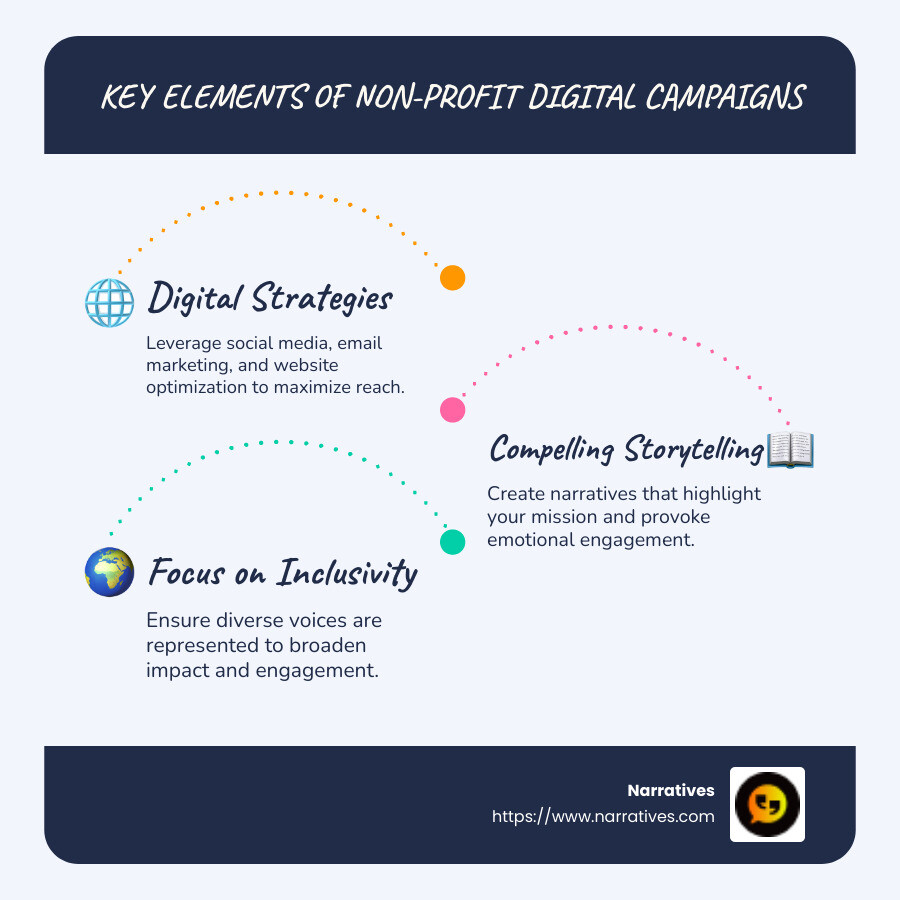
Digital Strategies: Use social media, email marketing, and website optimization to reach broader audiences.
Storytelling: Craft compelling narratives that highlight your mission and evoke emotional responses.
Inclusivity: Ensure diverse voices are represented and heard in your campaigns.
Sustainability: Focus on long-term impact and environmental responsibility.
Social Justice: Advocate for equity, fairness, and change.
These elements are the backbone of any successful non-profit digital campaign. By integrating technology and powerful storytelling, organizations not only raise awareness but also inspire action and support for their causes.
Looking to create impactful digital campaigns? Explore how leading non-profits are mastering these strategies and making a significant difference.
Essential non-profit digital campaigns terms:
Top Non-Profit Digital Campaigns of 2024
In 2024, several non-profit digital campaigns have stood out for their creativity, impact, and ability to inspire action. Let's explore some of these groundbreaking initiatives:
Greenpeace: #SaveOurPlanet
Greenpeace has been a leader in environmental advocacy for years. This year, their #SaveOurPlanet campaign has made waves by focusing on climate justice and biodiversity conservation. Using augmented reality (AR), Greenpeace allows users to visualize climate impacts in their local areas, making the issue personal and urgent. By educating youth on social media and partnering with local NGOs, they are driving policy changes and fostering collective action.
NAMI: #MentalHealthForAll
With mental health challenges on the rise, NAMI's #MentalHealthForAll campaign emphasizes equitable access to mental health care. Featuring survivor stories and influencer partnerships, this initiative breaks down barriers to care and reduces stigma. NAMI also provides digital toolkits for communities to advocate for mental health legislation, focusing on inclusion and accessibility.
ACLU: #VoicesForEquality
The ACLU's #VoicesForEquality campaign addresses racial justice, voting rights, and LGBTQ+ equality. Through powerful video testimonials and digital storytelling, the ACLU amplifies marginalized voices and calls for legislative action. Their grassroots organizing and digital activism tools, like petitions, engage supporters in policy changes.
Feeding America: #EndHungerNow
Feeding America's #EndHungerNow campaign tackles the root causes of hunger while providing emergency relief. Using data-driven storytelling, they highlight the impact of hunger and partner with local businesses for "hunger action" days. Their community-based programs and digital fundraising efforts aim to end food insecurity.
Code for America: #TechForGood
Focusing on using technology for public good, Code for America's #TechForGood campaign develops digital tools that make government services more accessible. By collaborating with tech companies and governments, they bridge the digital divide and increase civic engagement. Their efforts streamline application processes for essential services.
World Central Kitchen: #GiveItForward
World Central Kitchen's #GiveItForward campaign, led by chef José Andrés, provides emergency food relief and supports local economies. By partnering with local chefs, they build sustainable food systems and inspire action through social media challenges. Their work during natural disasters and conflicts highlights the transformative power of food.
NEA: #SupportTheArts
The National Endowment for the Arts' #SupportTheArts campaign advocates for sustaining and expanding arts funding. By showcasing the arts' role in economic recovery and mental health, they raise public awareness and ensure access to cultural programs for underserved communities. Their partnerships with artists and cultural organizations drive this mission forward.
These non-profit digital campaigns showcase the power of digital strategies, storytelling, and community engagement. They serve as a blueprint for creating impactful campaigns that inspire real change.
Key Elements of Successful Non-Profit Digital Campaigns
Creating a successful non-profit digital campaign requires a blend of strategic elements. Let's explore the key components that make these campaigns stand out:
Digital Marketing
Digital marketing is the backbone of any effective non-profit campaign. It involves using online platforms to reach and engage your audience. A well-optimized website is crucial, as it serves as the central hub for all activities. Ensuring mobile optimization, intuitive navigation, and accessibility can make a significant difference in how supporters interact with your cause.
Example: Food Forward's LA Fruit Share event showcased a visually appealing and mobile-friendly website, which helped them reach a wider audience and boost participation.
Storytelling
Storytelling is a powerful tool for connecting with audiences on an emotional level. By sharing compelling narratives, non-profits can humanize their causes and inspire action. Whether it's through video testimonials, blog posts, or social media updates, storytelling can make complex issues more relatable.
Example: NAMI's #MentalHealthForAll campaign effectively uses survivor stories to break down mental health stigmas and foster community support.
Audience Engagement
Engaging your audience is essential for driving action. This involves creating opportunities for supporters to interact with your campaign, such as through surveys, social media challenges, or interactive maps. Engagement keeps your audience invested and encourages them to spread the word.
Example: Greenpeace's #SaveOurPlanet campaign uses augmented reality to visualize climate impacts, making the issue personal and engaging for users.
SMART Goals
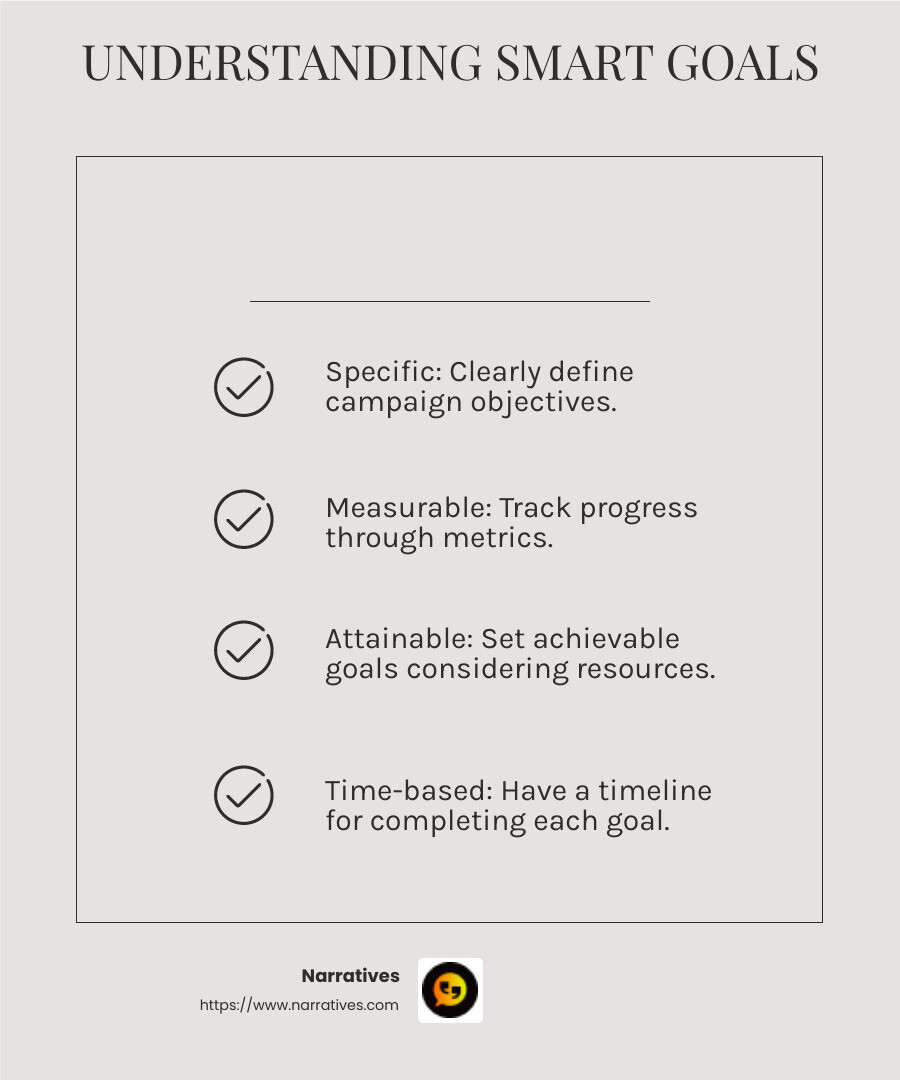
Setting SMART goals (Specific, Measurable, Attainable, Relevant, Time-based) is vital for measuring a campaign's success. These goals help non-profits stay focused and evaluate their strategies' effectiveness.
Example: If your goal is to increase email sign-ups by 200 within three months, ensure your strategy aligns with this target and track your progress.
Social Media
Social media platforms are indispensable for amplifying a campaign's reach. By leveraging channels like Facebook, Instagram, and Twitter, non-profits can engage with a broader audience. Collaborating with influencers can further extend your campaign's visibility.
Example: World Central Kitchen's #GiveItForward campaign uses social media challenges to inspire action and engage supporters globally.
Partnerships
Building partnerships with other organizations, influencers, or companies can improve a campaign's impact. These collaborations can provide additional resources, expand your reach, and lend credibility to your efforts.
Example: Code for America's #TechForGood campaign partners with tech companies and governments to bridge the digital divide and increase civic engagement.
By integrating these elements—digital marketing, storytelling, audience engagement, SMART goals, social media, and partnerships—non-profits can craft campaigns that not only raise awareness but also drive meaningful change.
Next, we will explore strategies and tools for implementing these elements effectively in your campaigns.
Non-Profit Digital Campaigns: Strategies and Tools
Successful non-profit digital campaigns hinge on the right strategies and tools. Here's how to make the most of your resources:
Multi-Channel Strategy
A multi-channel approach ensures your message reaches supporters wherever they are. By using a combination of website, social media, email, and text, you can engage different segments of your audience. This strategy prevents over-reliance on a single platform and maximizes your reach.
Example: Feeding America's campaign uses a mix of email newsletters, social media posts, and direct mail to engage donors and volunteers across various touchpoints.
Email Automation
Email remains a powerful tool in digital campaigns. Automation helps maintain consistent communication without overwhelming your team. By setting up triggers for follow-up emails, you can keep supporters engaged with personalized content.
Example: NAMI's email series automatically follows up with new subscribers, offering resources and inviting them to participate in upcoming events.
Digital Ads
Digital advertising, like Google Ads, allows for targeted outreach. By focusing on specific demographics or interests, non-profits can efficiently use their budgets to reach the right people.
Example: The ACLU's use of digital ads targets potential supporters based on their online behavior, increasing both awareness and donations.
Social Media
Social media is crucial for spreading your message quickly and widely. Platforms like Instagram, Twitter, and Facebook can amplify your campaign's reach. Collaborating with influencers or leveraging trending hashtags can further boost visibility.
Example: World Central Kitchen's #GiveItForward campaign uses social media to engage a global audience, encouraging them to share their own stories of giving.
Website Optimization
Your website is the cornerstone of your digital presence. Ensuring it's user-friendly, mobile-optimized, and accessible is essential. A seamless experience encourages visitors to learn more, donate, or get involved.
Example: Greenpeace's website features intuitive navigation and engaging visuals, making it easy for visitors to take action and support their cause.
By integrating these strategies and tools—multi-channel outreach, email automation, digital advertising, social media, and website optimization—you can create powerful digital campaigns that resonate with your audience and drive action.
Next, we'll address common questions about leveraging digital marketing for non-profits.
Frequently Asked Questions about Non-Profit Digital Campaigns
What are the benefits of digital marketing for non-profits?
Digital marketing offers numerous benefits for non-profits, especially in terms of engagement and brand awareness. By reaching supporters where they already spend time online, you can build a strong online presence and foster a community around your cause.
Engagement: Digital platforms allow for real-time interaction with supporters. This can lead to increased participation in events, more volunteer sign-ups, and higher donation rates.
Brand Awareness: Consistent online activity helps increase visibility. Sharing stories and updates on social media or through email newsletters keeps your non-profit top-of-mind for current and potential supporters.
Online Presence: A well-maintained online presence, including a user-friendly website and active social media profiles, makes it easier for people to find and learn about your organization.
How can non-profits effectively use social media?
Social media is a powerful tool for non-profits to connect with their audience and spread their message. Here are some strategies:
Platforms: Choose the right platforms for your audience. Facebook and Instagram are great for visual storytelling, while Twitter is ideal for quick updates and engaging in conversations.
Influencers: Collaborate with influencers who align with your mission. Their endorsement can introduce your cause to a wider audience and increase credibility.
Content Sharing: Share a mix of content, including stories, photos, videos, and updates. Encourage your followers to share your content to expand your reach.
What are SMART goals in non-profit digital campaigns?
Setting SMART goals is crucial for the success of your non-profit digital campaigns. Here's what SMART stands for:
Specific: Clearly define what you want to achieve. For example, "Increase email subscribers by 20% in six months."
Measurable: Ensure you can track progress. Use metrics like website visits, social media shares, or donation amounts.
Attainable: Set realistic goals that challenge your team but are still achievable.
Relevant: Align goals with your organization's mission and current priorities.
Time-Based: Set a deadline to focus efforts and create urgency, like "by the end of the year."
By understanding and implementing these strategies, non-profits can leverage digital marketing to effectively engage supporters, boost brand awareness, and achieve their goals.
Conclusion
Narratives stands out as a key partner for non-profits aiming to amplify their impact through storytelling. Our focus is on helping organizations harness the power of digital storytelling to inspire action and create meaningful connections with their audience.
Through strategic non-profit partnerships, we craft high-quality, emotionally engaging content that lifts underrepresented voices. This approach not only builds trust but also increases the visibility of the causes we support. By telling compelling stories, we enable non-profits to highlight their work in a way that resonates deeply with their supporters.
Social impact is at the heart of what we do. We believe that sharing authentic stories can drive change and foster a sense of community. Our content empowers non-profits to showcase their impact, encouraging others to join their mission and make a difference.
Community-driven storytelling is another pillar of our strategy. We work closely with non-profits to ensure their stories are told with empathy and authenticity, creating a ripple effect that inspires others to take action. By focusing on the human element, we help organizations connect with their audience on a personal level, motivating them to support and engage with the cause.
For non-profits looking to improve their digital campaigns and storytelling efforts, partnering with Narratives can be a game-changer. Together, we can create content that not only informs but also inspires, turning awareness into action.
Explore how Narratives can help your organization lift its storytelling efforts.


.avif)