Mastering Non-Profit Public Relations: A Comprehensive Guide

Mastering Non-Profit Public Relations: Driving Impact Through Strategic Communication
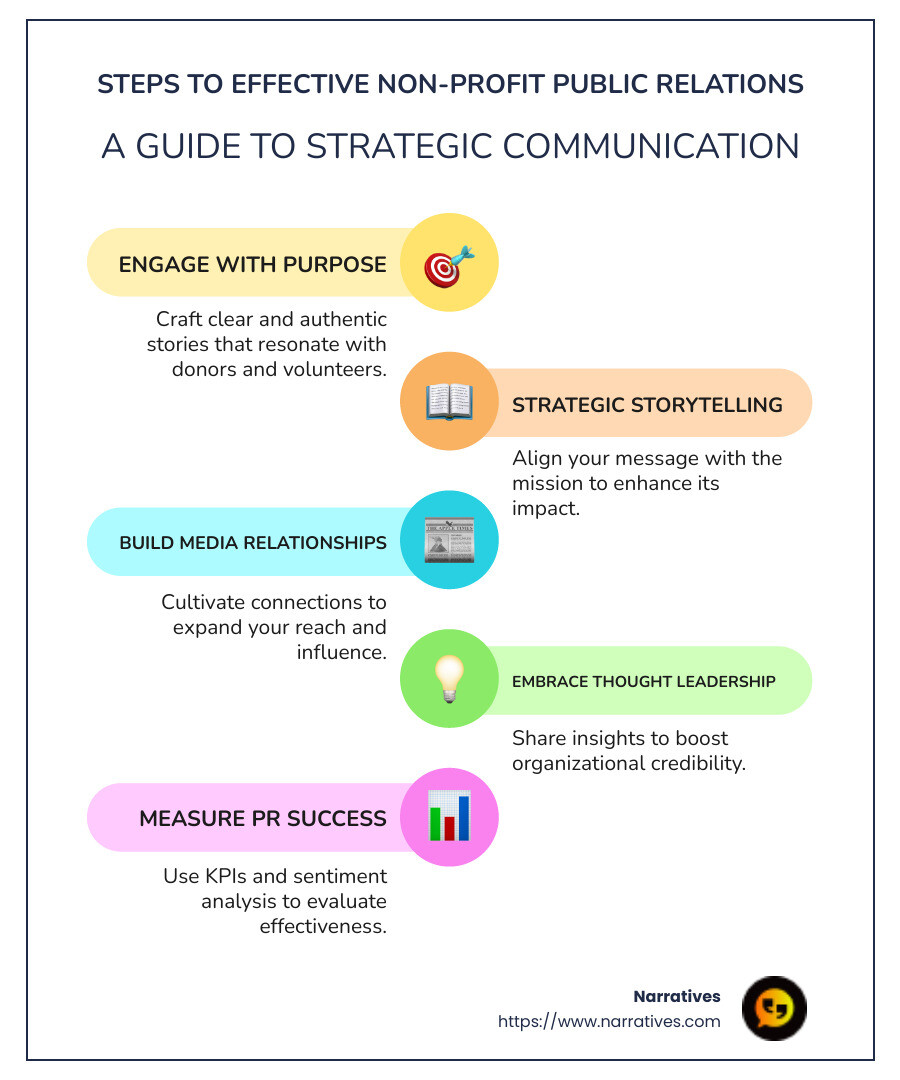
Non-profit public relations is the art of using strategic communication to lift your mission and connect with broader audiences. Whether you're aiming to increase visibility, attract donors, or engage volunteers, effective PR can be a game-changer for your organization. Here’s a quick takeaway for non-profit marketing and communication success:
- Engage with Purpose: Clear and authentic stories resonate with donors and volunteers.
- Strategic Storytelling: Tailor your message to align with your mission.
- Build Media Relationships: Grow your reach by nurturing media connections.
- Accept Thought Leadership: Share insights for greater organizational credibility.
Successfully navigating non-profit marketing means maximizing the power of a well-crafted public relations strategy. This essential guide will walk you through effective storytelling techniques, media engagement, and how to measure PR success, all specifically custom for values-driven organizations.
Non-profit public relations word guide:
Understanding Non-Profit Public Relations
Public relations (PR) for non-profits is about more than just getting your name out there. It's about building credibility, earning trust, and garnering support for your cause. When over 1.5 million non-profits vie for attention in the U.S. alone, effective PR can set your organization apart.
Building Credibility
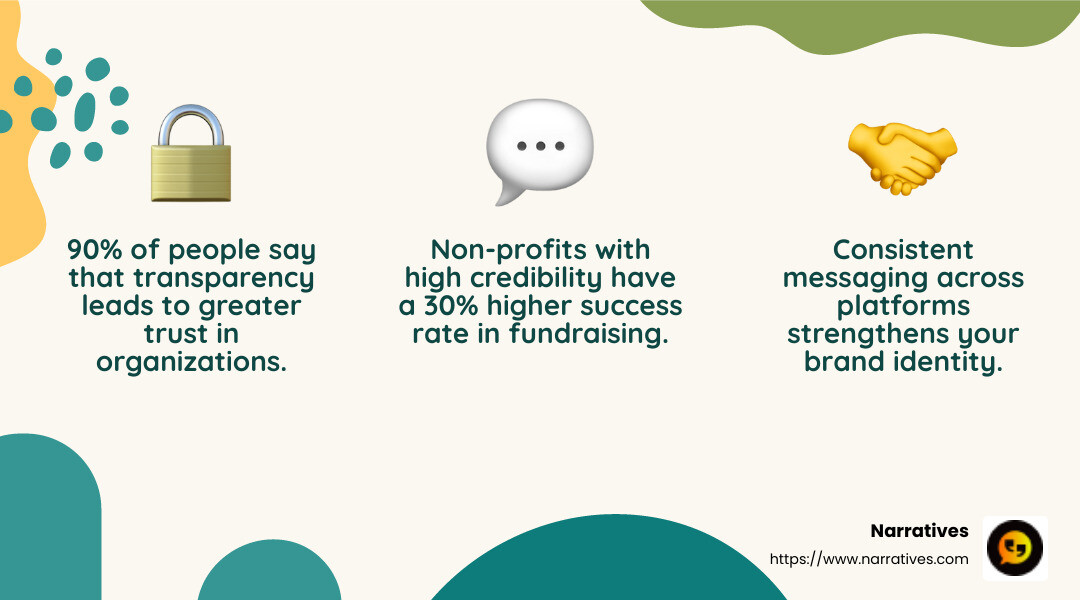
Credibility is the foundation of any successful non-profit PR strategy. When your organization is seen as trustworthy and competent, it becomes easier to attract donors, volunteers, and partners. Credibility is built through consistent messaging and transparency.
Consistent Messaging: Keep your message aligned with your mission and values across all platforms. This helps people understand who you are and what you stand for.
Transparency: Be open about your goals, successes, and challenges. Sharing both the highs and the lows can foster a deeper connection with your audience.
Earning Trust
Trust is earned over time through honest communication and by demonstrating impact. Share real stories of how your organization is making a difference.
Storytelling: Use powerful stories to show the human impact of your work. Highlighting individual stories can make your mission relatable and compelling.
Impact Reporting: Regularly share updates and outcomes of your projects. This shows accountability and reassures supporters that their contributions are making a difference.
Garnering Support
Support from the community, media, and other stakeholders is crucial for non-profit success. Effective PR strategies can help you secure this support.
Media Engagement: Build relationships with journalists and media outlets. Positive media coverage can vastly extend your reach and influence.
Community Involvement: Engage with your local community through events and collaborations. This not only raises awareness but also strengthens your network of supporters.
By focusing on these core elements—credibility, trust, and support—your non-profit can harness the power of public relations to amplify your mission and drive meaningful impact.
Next, we'll explore key strategies for crafting an effective non-profit PR plan, including message refinement and media training.
Key Strategies for Effective Non-Profit PR
Creating an impactful non-profit public relations strategy requires a blend of refined messaging, transparency, storytelling, and media engagement. Here’s how you can effectively use these elements to amplify your mission.
Message Refinement
Your message is the core of your PR strategy. It should be clear, concise, and consistent across all platforms. This means aligning your messaging with your organizational goals and ensuring it's easily understandable by your target audience. For instance, if your non-profit focuses on environmental sustainability, your messaging should consistently highlight your efforts and achievements in this area.
Transparency
Being transparent builds trust with your audience. Share your successes, but also be open about challenges and setbacks. This honesty fosters a genuine connection with your supporters. For example, the Pars Equality Center effectively communicates its initiatives and impact, building strong community ties.
Storytelling
Stories are powerful tools for non-profits. They humanize your mission and create an emotional connection with your audience. Highlight personal stories of individuals impacted by your work. A great example is the Veterans Association Food Bank in Edmonton, which highlighted the personal journey of a veteran in need, capturing media attention and public interest.
Spokespeople
Identify key figures within your organization who can serve as spokespeople. These could be executives, volunteers, or beneficiaries who can share compelling stories and insights. Training them in media communication is crucial to ensure they effectively represent your organization.
Media Training
Conduct media training sessions to prepare your spokespeople for interviews and public appearances. This ensures they convey your message clearly and confidently. Media training can include mock interviews, feedback sessions, and tips for handling difficult questions.
Media Engagement
Build relationships with journalists and media outlets. Regularly pitch stories that align with your mission and are newsworthy. For example, Chailey Heritage Foundation successfully secured media coverage by highlighting the story of a teenager benefiting from their services.
Content Repurposing
Maximize your content by repurposing it across different platforms. A single story can be transformed into a blog post, social media update, press release, or newsletter feature. This not only saves resources but also ensures consistent messaging across channels.
By implementing these strategies, your non-profit can improve its public relations efforts, increasing visibility and support for your cause. Next, we'll dig into building a mission-driven PR plan, focusing on organizational goals and audience targeting.
Building a Mission-Driven PR Plan
To create a successful non-profit public relations plan, start by aligning your PR efforts with your organization's goals. This ensures your strategy is focused and effective.
Organizational Goals
Begin by identifying your non-profit's key objectives. These could include raising awareness, increasing donations, or expanding volunteer engagement. Your PR plan should directly support these goals. For example, if your goal is to boost volunteer numbers, your PR activities should highlight volunteer stories and opportunities.
Key Audience
Understanding your audience is crucial. Identify who they are, what they care about, and how they prefer to receive information. This could be donors, volunteers, or the communities you serve. Tailor your messaging to resonate with each group. For instance, if your audience includes young adults, leverage social media platforms like Instagram or TikTok to engage them effectively.
Tactics and Timeline
Outline specific tactics to achieve your PR goals. This could include media outreach, social media campaigns, or community events. Create a timeline to keep your efforts organized and on track. For example, plan media pitches around key dates, such as awareness days relevant to your cause. This structured approach helps ensure consistent and timely communication.
Messaging and Storytelling
Craft clear and compelling messages that align with your mission. Use storytelling to bring your cause to life. Share real stories of impact, featuring individuals who have benefited from your work. This not only humanizes your mission but also creates an emotional connection with your audience. For example, a story about a community member whose life was transformed by your services can be powerful.
Media Training
Prepare your spokespeople to effectively communicate your message. Conduct media training sessions to build their confidence and skills in handling interviews. This includes practicing responses to common questions and learning how to stay on message. Well-prepared spokespeople can significantly improve your organization's credibility and visibility.
By focusing on these elements, you can build a mission-driven PR plan that amplifies your non-profit's impact and fosters deeper connections with your audience. Up next, we'll explore the challenges and solutions in non-profit PR, including managing limited resources and handling crises.
Challenges and Solutions in Non-Profit PR
Navigating non-profit public relations can be tricky, especially when you're working with limited resources. Let's explore some common challenges and practical solutions.
Limited Resources
Many non-profits operate on tight budgets. This can limit your ability to hire dedicated PR staff or invest in extensive media campaigns. But don't worry—there are ways to make the most of what you have.
Leverage Volunteers: Tap into your volunteer base for PR support. Volunteers can help with social media, writing press releases, or even media outreach.
Focus on Earned Media: Instead of paying for ads, aim for media coverage. Share compelling stories that resonate with journalists and their audiences. This costs less and can be more impactful.
Use Free Tools: Use free or low-cost tools for social media management and media monitoring. Platforms like Canva for graphics or Hootsuite for scheduling can be lifesavers.
Crisis Management
Crises can arise unexpectedly, and how you handle them can make or break your organization's reputation.
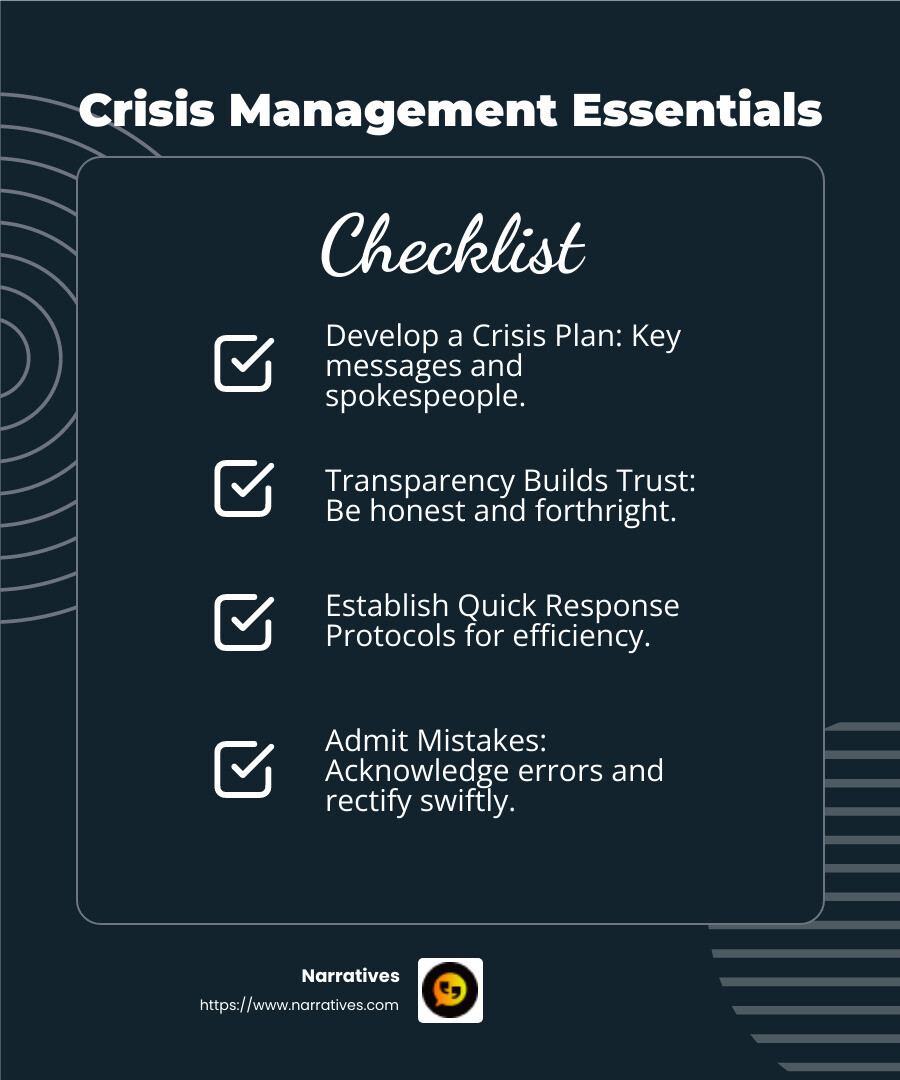
Develop a Crisis Plan: Have a plan ready. Outline key messages, designate spokespeople, and establish communication protocols. Being prepared ensures a quick and coordinated response.
Transparency is Key: During a crisis, be transparent and honest. Admit mistakes if necessary and communicate the steps you're taking to resolve the issue. This builds trust and credibility.
Inconsistent Messaging
Inconsistent messaging can confuse your audience and dilute your impact. It's crucial to maintain clarity and coherence in all communications.
Align Messaging with Mission: Ensure all communications reflect your mission and values. Regularly update your messaging to stay relevant and consistent.
Internal Communication: Share your messaging strategy with everyone in your organization. This ensures that all team members, from volunteers to leadership, are on the same page.
Internal Communication
Effective internal communication is vital for a cohesive PR strategy.
Information Sharing: Regularly update your team on upcoming events, campaigns, and key messages. This keeps everyone informed and aligned.
Feedback Loops: Encourage feedback from staff and volunteers. This can provide valuable insights and improve your PR efforts.
By addressing these challenges head-on, you can strengthen your non-profit public relations strategy. Next, we'll explore how to measure success in non-profit PR, focusing on tracking objectives and analyzing media coverage.
Measuring Success in Non-Profit PR
Measuring the success of your non-profit public relations efforts is crucial. It helps you understand what’s working and where you need to improve. Let’s break down the key components for evaluating your PR success.
Objectives
Start with clear objectives. What do you want to achieve with your PR efforts? Objectives should be specific, measurable, achievable, relevant, and time-bound (SMART). For instance, you might aim to increase media mentions by 20% over the next six months or boost social media engagement by 30% in the next quarter.
Key Performance Indicators (KPIs)
Once objectives are set, identify KPIs to track progress. KPIs could include:
- Media Coverage: Number of articles, interviews, or mentions in media outlets.
- Social Media Engagement: Likes, shares, comments, and overall reach.
- Website Traffic: Increase in unique visitors after a PR campaign.
- Donor Inquiries: Number of new donor inquiries or donations following media exposure.
Media Coverage
Media coverage is a powerful indicator of PR success. It not only boosts visibility but also improves credibility. Track the number of times your organization is mentioned in newspapers, magazines, or online publications. Tools like Google Alerts can help monitor these mentions.
Tip: Focus on quality over quantity. A feature in a reputable publication can be more valuable than numerous mentions in lesser-known outlets.
Social Media Engagement
Social media is a vital part of any PR strategy. Track engagement metrics like likes, shares, and comments. These interactions indicate how well your audience is connecting with your content. Also, monitor follower growth and engagement rates over time.
Pro Tip: Posts that end with a question mark often generate more engagement. Try starting with "Should" or "Would" to spark conversation.
Sentiment Analysis
Understanding how your audience feels about your organization is crucial. Sentiment analysis involves evaluating the tone of mentions and comments—whether they are positive, neutral, or negative. This can be done manually or with tools like Sprout Social or Radian6.
Why It Matters: Positive sentiment can amplify your message, while negative sentiment needs addressing to protect your reputation.
By setting clear objectives, tracking relevant KPIs, and analyzing media coverage and social media engagement, you can effectively measure the success of your non-profit PR efforts. Up next, let's dive into some frequently asked questions about non-profit public relations.
Frequently Asked Questions about Non-Profit Public Relations
How can an aspiring PR professional get involved in non-profit PR?
Getting started in non-profit public relations can be both rewarding and impactful. Here’s how you can dive in:
Volunteer: Many nonprofits welcome volunteers to help with PR tasks. This is a great way to gain experience and build your portfolio.
Internships: Look for internship opportunities at nonprofits. They provide hands-on experience and often lead to full-time roles.
Network: Attend nonprofit events, webinars, and PR workshops. Connecting with professionals in the field can open doors and provide valuable insights.
Education: Consider courses or certifications in PR. Understanding the basics of media relations, storytelling, and crisis management is essential.
Stay Informed: Follow nonprofit news and trends. Being aware of current issues helps you contribute meaningfully to PR strategies.
What is the best way to build good public relations for non-profits?
Building effective public relations involves several key strategies:
Storytelling: Craft compelling stories that highlight your mission and impact. Use real-life examples and testimonials to connect with your audience emotionally.
Consistency: Ensure all messaging aligns with your organization’s mission and values. Consistent communication builds trust and credibility.
Engage with Media: Develop relationships with journalists and media outlets. Regularly pitch stories that align with their interests and your goals.
Social Media: Use platforms like Facebook, Twitter, and Instagram to engage with your community. Share updates, success stories, and calls to action.
Transparency: Be open about your goals, challenges, and achievements. Transparency fosters trust and encourages support.
How do non-profits manage media relations effectively?
Effective media relations are crucial for amplifying your nonprofit’s voice. Here’s how to manage them:
Create a Media List: Compile a list of journalists, bloggers, and influencers who cover topics related to your cause. Tailor your pitches to their interests.
Train Spokespeople: Ensure your spokespeople are media-ready. Conduct training sessions to help them communicate clearly and confidently.
Timely Responses: Respond promptly to media inquiries. Being available and helpful can lead to more coverage and stronger relationships.
Press Releases: Use press releases to announce major news, events, or achievements. Make them clear, concise, and newsworthy.
Follow Up: After sending a pitch or press release, follow up with journalists. A gentle reminder can keep your story top of mind.
By volunteering, networking, and following these strategies, aspiring PR professionals can effectively contribute to non-profit public relations. Now, let’s wrap up with some concluding thoughts on non-profit public relations.
Conclusion
Non-profit public relations is more than just communication—it's about creating meaningful connections and driving change. At the heart of this endeavor is Narratives, a digital storytelling partner dedicated to elevating the voices of underrepresented communities. Our focus on community-driven storytelling helps non-profits convey their impact in a way that resonates deeply with audiences.
Digital storytelling is a powerful tool in the non-profit PR arsenal. It allows organizations to share their mission through engaging multimedia content that captures attention and inspires action. By crafting stories that are both authentic and emotionally resonant, non-profits can effectively build trust and increase their visibility.
Community-driven storytelling emphasizes the importance of collaboration. By involving the communities they serve in the storytelling process, non-profits can ensure their narratives are genuine and reflective of real experiences. This approach not only strengthens the bond between the organization and its community but also improves the authenticity of the message.
The ultimate goal of these efforts is to create a social impact. Through strategic PR and storytelling, non-profits can mobilize support, drive change, and make a tangible difference in the world. By sharing stories that highlight their mission and achievements, they can inspire others to join their cause and contribute to a better future.
For non-profits looking to harness the power of storytelling, partnering with Narratives can be a game-changer. Our expertise in creating high-quality video and multimedia content ensures that your stories are told in the most compelling way possible. Explore our services to learn how we can help amplify your impact and drive meaningful engagement.
In conclusion, mastering non-profit PR requires a blend of strategic communication, authentic storytelling, and a focus on community and impact. By leveraging these elements, non-profits can effectively share their mission, build trust, and inspire action. Let's work together to tell stories that matter and make a difference.


.avif)