From Stories to Support: How Nonprofit Storytelling Inspires Action
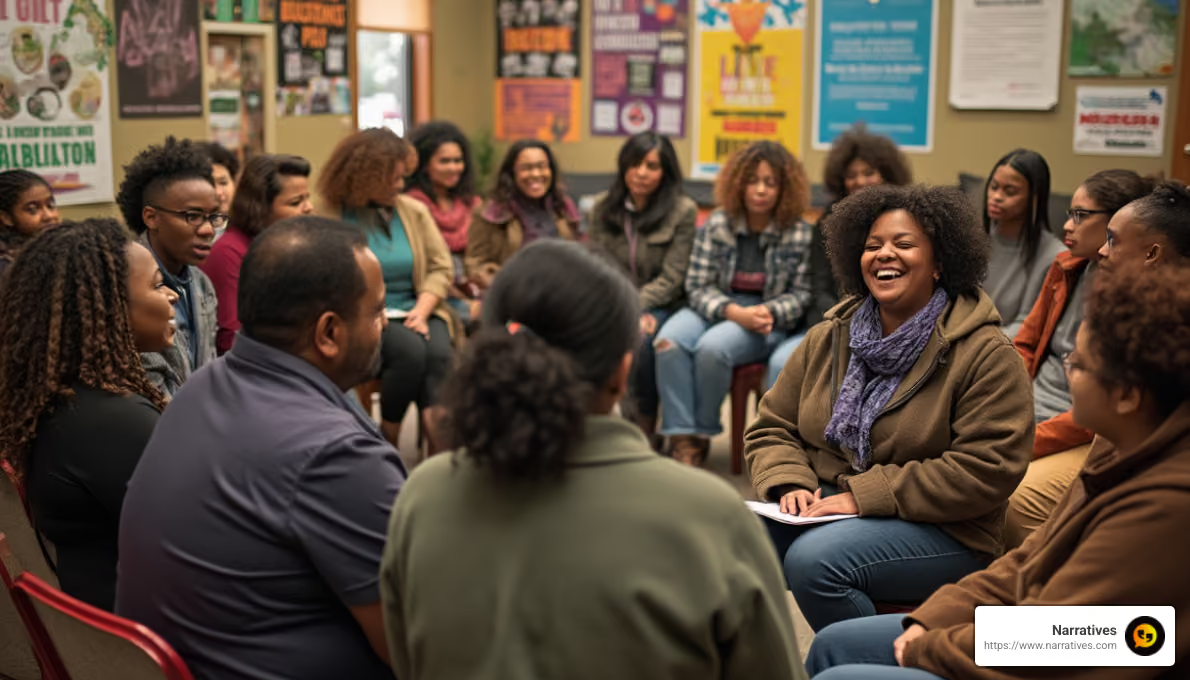
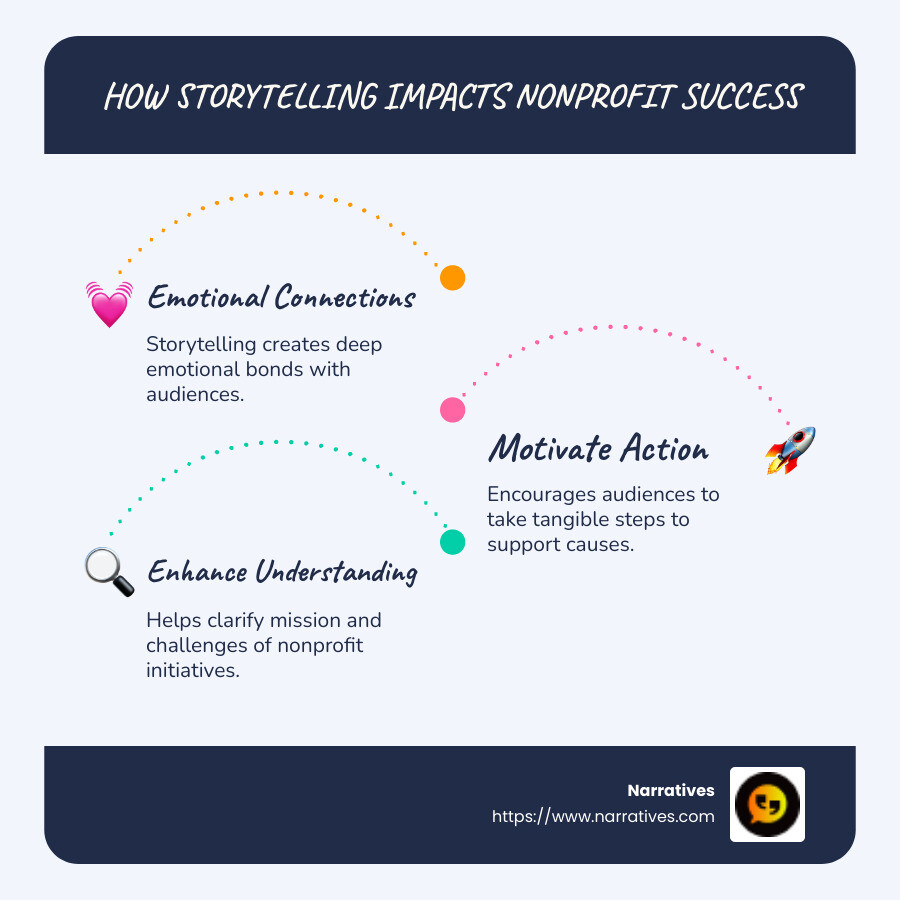
Nonprofit cause storytelling is a powerful tool that transforms missions into moving narratives, inspiring action and fostering emotional connections. At its core, storytelling allows nonprofits to showcase their impact and humanize complex issues. This makes donors, volunteers, and supporters feel more involved. Through storytelling, organizations can:
- Create emotional connections that resonate deeply with audiences.
- Motivate action by illustrating the direct impact of contributions.
- Improve understanding of their mission and challenges faced.
Where attention spans are shorter and skepticism can be high, storytelling stands out as a guide of authenticity. Stories are not just about relaying facts; they are meant to evoke emotions and inspire change. This is how nonprofits can truly rally support and build a community around their cause.
The Essence of Nonprofit Cause Storytelling
Nonprofit cause storytelling is more than just sharing facts and figures. It's about weaving narratives that resonate with audiences and bring a nonprofit's mission to life. This storytelling approach helps organizations communicate their mission and vision in ways that are both compelling and relatable.
Storytelling Definition
At its core, nonprofit storytelling involves crafting narratives that highlight the organization's mission, vision, and values. It's about changing data and objectives into stories that people can connect with on an emotional level. This connection is what inspires people to act, whether it's donating, volunteering, or advocating for a cause.
Mission and Vision
A clear mission and vision are the backbone of any nonprofit story. They provide the framework for all narratives, ensuring consistency and clarity in messaging. For instance, Covenant House, which provides shelter for homeless youth, uses storytelling to convey the urgency and importance of their work. They feature personal stories from beneficiaries, offering a glimpse into their transformative journey. This approach not only highlights the organization's goals but also shows the impact of their work on individual lives.
Emotional Appeal
Emotional appeal is a key element in nonprofit storytelling. Stories that evoke emotions like empathy, hope, or urgency can move audiences to support a cause. For example, the Akshaya Patra Foundation effectively uses storytelling to show how their meal programs change children's lives. By sharing stories of improved health and education outcomes, they create a powerful emotional connection with their supporters.
Bringing Stories to Life
Nonprofits use various formats to tell their stories, such as videos, podcasts, and social media posts. These formats allow organizations to reach wider audiences and make their stories more engaging. Visuals and multimedia elements can improve the storytelling experience, making it more vivid and memorable.
For instance, HonorHealth Foundation uses annual reports to share stories of patients who have benefited from their services, illustrating the tangible impact of donor contributions. By combining narratives with visuals, they create a compelling case for continued support.
Nonprofit cause storytelling is about making missions relatable and inspiring action through emotional connection. It’s about turning abstract concepts into tangible stories that resonate with audiences, fostering a deeper understanding and commitment to the cause.
Next, we'll explore the key elements that make nonprofit storytelling effective, focusing on character, setting, plot, conflict, and resolution.
Key Elements of Effective Nonprofit Storytelling
Nonprofit cause storytelling is a powerful way to connect with audiences. But what makes a story effective? Let's break it down into five key elements: character, setting, plot, conflict, and resolution.
Character
Characters are the heart of any story. In nonprofit storytelling, these are often the people impacted by your work—beneficiaries, volunteers, or even donors. Each character brings a unique perspective and emotional depth to your narrative.
For example, consider Barbara, a single mother of four from a low-income neighborhood. Her story, shared by a nonprofit offering job training, highlights her journey from struggling to thriving. Characters like Barbara make your cause real and relatable.
Setting
The setting provides context and background. It’s where your story unfolds. A well-defined setting helps your audience visualize the environment in which your characters live and the challenges they face.
In Barbara's story, her low-income neighborhood is not just a backdrop. It highlights the difficulties she faces and underscores the importance of the nonprofit's work. This setting helps the audience understand the stakes and the need for action.
Plot
The plot is the sequence of events that drives the story forward. A strong plot keeps your audience engaged and invested in the outcome.
In Barbara's narrative, the plot starts with her struggling to provide for her children, followed by her findy of the job training program, and culminating in her success at a job interview. This progression keeps the audience hooked, eager to see how her story unfolds.
Conflict
Conflict is the challenge or obstacle your character must overcome. It adds tension and urgency to the story, making it more compelling.
For Barbara, the conflict arises when her work hours are cut, pushing her to seek a better job. This conflict is relatable and highlights the nonprofit's role in helping her overcome it. Without conflict, the story lacks the drama that captures attention.
Resolution
Resolution is the story's conclusion, where conflicts are resolved, and the character's journey is complete. It provides closure and often leaves the audience feeling hopeful.
In the resolution of Barbara’s story, she achieves financial stability and gives her children a better life. This satisfying ending not only underscores the nonprofit’s impact but also inspires others to support the cause.
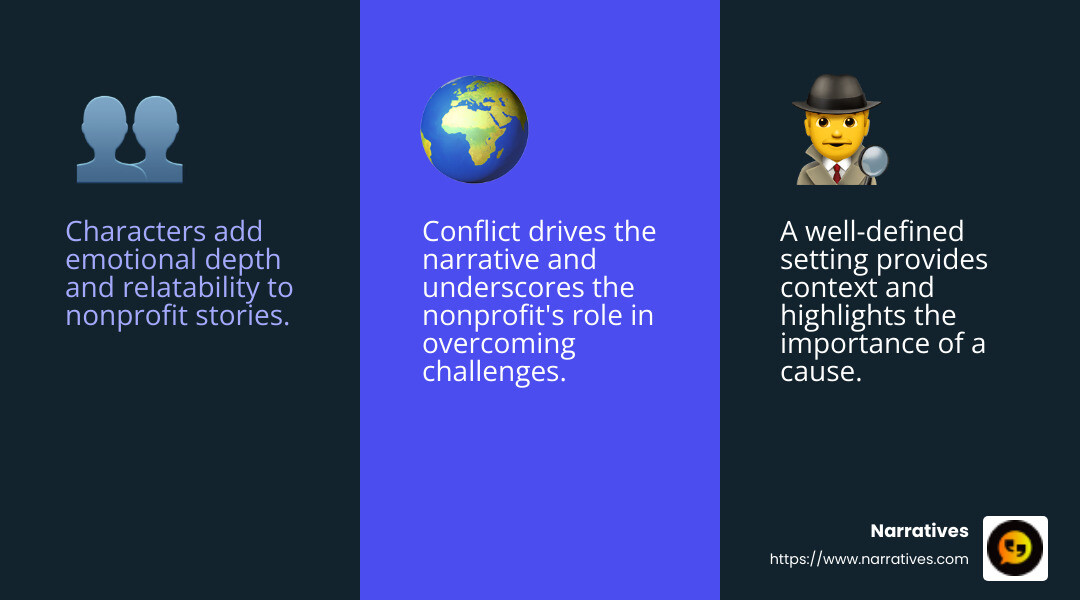
By focusing on these elements—character, setting, plot, conflict, and resolution—nonprofits can craft stories that resonate deeply with their audience. These stories not only inform but also inspire action, turning passive readers into active supporters.
Next, we’ll look at the benefits of nonprofit storytelling, including how it can increase awareness, engagement, and trust.
Benefits of Nonprofit Storytelling
Nonprofit cause storytelling is more than just sharing tales—it's a strategic tool that can transform how organizations connect with their audience. Let's explore the key benefits:
Awareness
Storytelling raises awareness by capturing attention in a way that facts and figures alone cannot. A compelling story about a community receiving clean water can highlight the broader issue of water scarcity. This approach not only informs but also encourages people to learn more about the cause.
Engagement
Stories engage by tapping into emotions. When people hear about a rescued animal finding a loving home, they feel joy and empathy. This emotional connection motivates them to act, whether through donating, volunteering, or spreading the word.
Trust
Sharing authentic stories builds trust. When nonprofits feature real people and real outcomes, they demonstrate transparency and credibility. For example, sharing a video of a successful surgery funded by donations shows supporters exactly where their money goes, reinforcing trust in the organization.
Transparency
Transparency is critical in maintaining donor confidence. By telling stories that clearly illustrate how donations are used, nonprofits can dispel doubts and skepticism. A detailed impact report with stories of beneficiaries can effectively communicate the organization's achievements and accountability.
Action
The goal of nonprofit cause storytelling is to inspire action. Whether it's signing a petition, attending an event, or making a donation, stories can drive people to take meaningful steps. For instance, a podcast featuring accounts of climate change impacts can motivate listeners to support environmental initiatives.
By leveraging these benefits, nonprofits can turn storytelling into a powerful catalyst for change. Next, we'll explore some top examples of effective nonprofit storytelling to see these principles in action.
Top Examples of Nonprofit Storytelling
Nonprofit organizations use a variety of storytelling formats to connect with their audience and inspire action. Here are some of the most effective examples:
Impact Reports
Impact reports combine data with storytelling to showcase an organization's achievements. Instead of just listing numbers, they tell stories of real people who have benefitted from the nonprofit's work. For instance, MENTOR California uses impact reports to highlight its mission of expanding youth mentoring. By integrating stories from beneficiaries with quantitative data, they create a compelling narrative that demonstrates their impact.
Case Studies
Case studies dive deep into specific projects or initiatives. They often focus on individual beneficiaries or programs, providing a detailed look at how the nonprofit's efforts have made a difference. The Akshaya Patra Foundation shares case studies about children who have improved their health and education through their meal program. These stories not only highlight the issue of child nutrition but also show the tangible impact of the foundation's work.
Videos
Videos are a powerful tool for storytelling, combining visuals and audio to create an emotional experience. The American Heart Association uses survivor stories in their videos to connect with viewers on a personal level. These videos feature individuals who have overcome heart disease, illustrating the life-saving impact of donations and research. By sharing these stories, the association builds empathy and encourages support.
Podcasts
Podcasts offer a unique way to explore stories in depth. They allow nonprofits to share personal narratives and expert insights. For example, organizations use podcasts to discuss current events related to their cause, featuring interviews with beneficiaries and experts. This format not only informs but also engages listeners, motivating them to get involved.
By utilizing these storytelling formats, nonprofits can effectively communicate their mission and inspire their audience to take action. Whether through impact reports, case studies, videos, or podcasts, storytelling remains a vital tool for driving change.
Next, we'll address some frequently asked questions about nonprofit cause storytelling to provide further insights into this powerful strategy.
Frequently Asked Questions about Nonprofit Cause Storytelling
How can storytelling improve donor engagement?
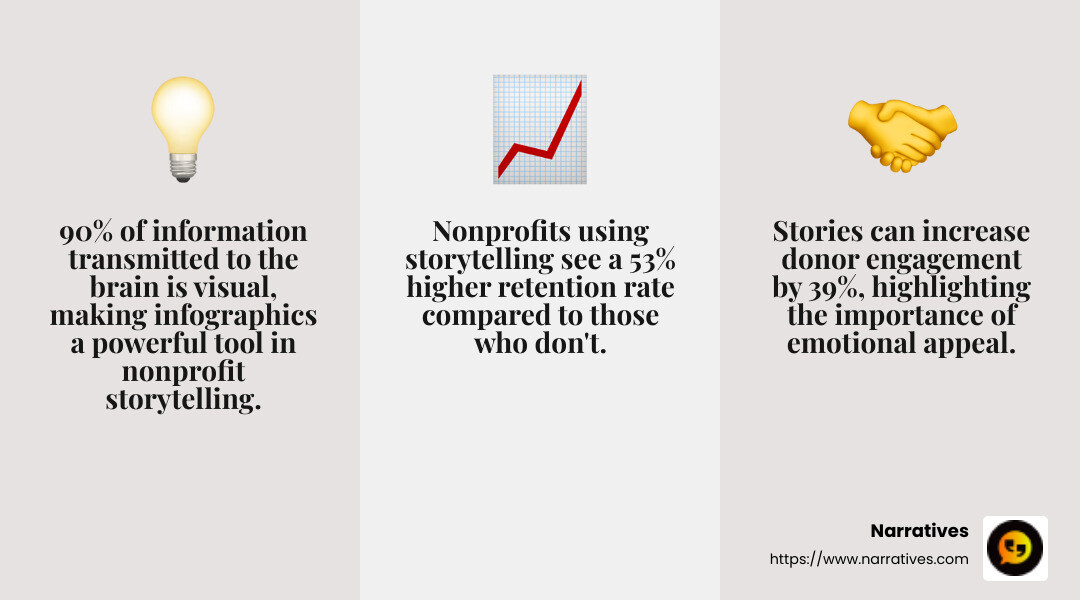
Nonprofit cause storytelling plays a crucial role in building emotional connections with donors. When donors hear stories about the real people impacted by their contributions, they feel more connected to the mission. This emotional bond often translates into increased donor retention. According to research, engaging donors through storytelling can boost retention rates by up to 4%. This means more consistent support for the nonprofit's cause.
What role does multimedia play in nonprofit storytelling?
Multimedia elements like visuals and videos are essential in nonprofit storytelling. They make stories more engaging and memorable. For instance, the Sankara Eye Foundation USA uses high-quality videos and images to document their eye surgeries. This visual storytelling helps potential donors see the direct impact of their contributions, making the cause more relatable.
Social media is another powerful tool. Platforms like Instagram and Facebook allow nonprofits to share these multimedia stories widely. By reaching a broader audience, they can increase awareness and drive more engagement. Social media campaigns often encourage supporters to share their own stories, creating a community-driven narrative that amplifies the nonprofit's message.
How can nonprofits gather impactful stories?
To gather compelling stories, nonprofits should engage directly with their communities. Conducting interviews with beneficiaries, donors, and volunteers can uncover personal narratives that highlight the organization's impact. Asking questions like, "Can you share what motivated your first gift?" helps nonprofits understand donor motivations and preferences.
Community engagement is also key. By participating in local events or hosting storytelling workshops, nonprofits can collect authentic stories from those they serve. This not only enriches the storytelling database but also strengthens the relationship with the community.
Interviews and community engagement are not just about collecting stories—they're about building trust and transparency. When people feel heard and valued, they are more likely to support the cause long-term.
By integrating these elements, nonprofits can harness the full power of storytelling to inspire action and drive change.
Conclusion
At Narratives, we believe in the transformative power of nonprofit cause storytelling. Our approach centers on elevating underrepresented voices through high-quality, emotionally resonant video and multimedia content. By helping nonprofits share their impact stories effectively, we aim to inspire action, build trust, and increase visibility.
A strong storytelling strategy is essential for any nonprofit looking to make a significant impact. By focusing on community-driven storytelling, organizations can connect with their audience on a deeper level. This involves not just telling stories, but actively engaging with the community to gather authentic narratives. These stories become the backbone of a nonprofit's mission, showcasing real-life impact and fostering genuine connections with supporters.
Our goal is to be the go-to digital storytelling partner for nonprofits and purpose-driven organizations. By leveraging our expertise in multimedia content, we help organizations craft stories that resonate and inspire. We understand that each story is unique, and we are committed to helping nonprofits tell theirs in a way that drives meaningful change.
To learn more about how we can help your organization harness the power of storytelling, visit our media services page. Let's work together to create stories that inspire action and make a lasting difference.


.avif)