Content Creation Unleashed: A Nonprofit's Guide to Engaging Media

Nonprofit content creation is a vital tool for organizations that aim to amplify their mission and connect with their audience. Nonprofits need to harness the power of storytelling to fuel their impact and inspire change. Here's what you need to know:
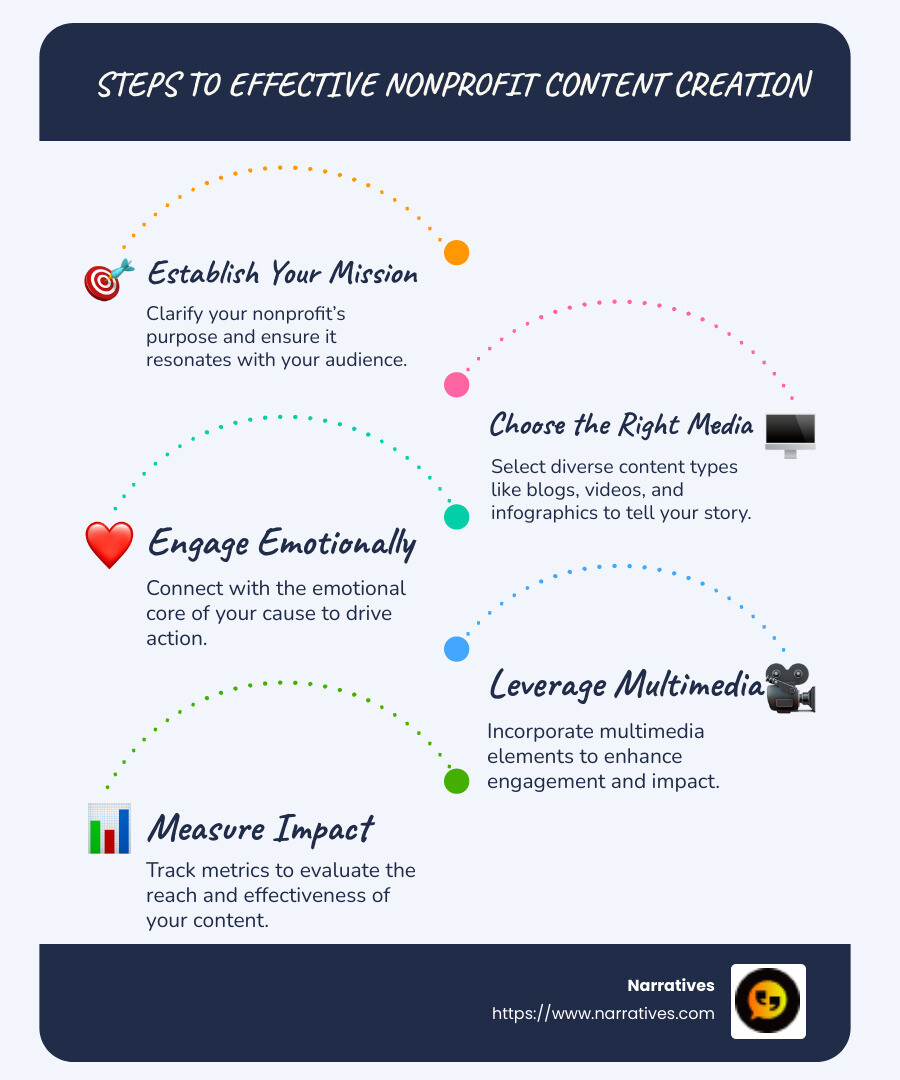
- Establish Your Mission: Start with a clear purpose that resonates with your audience.
- Choose the Right Media: Use various content types—blogs, videos, infographics—to bring your stories to life.
- Engage Emotionally: Tap into the emotional core of your cause to compel action from your supporters.
- Measure Impact: Track metrics to understand the reach and effectiveness of your content.
Nonprofit marketing is not just about spreading awareness—it's about creating a narrative that your audience can connect with. Digital storytelling, particularly, offers a unique chance to tell powerful stories that inspire and engage. This approach is essential for nonprofits to cut through the noise and establish a deep, lasting connection with supporters.
Incorporating multimedia elements such as videos, infographics, and compelling case studies can make your content more engaging and impactful. By leveraging these tools, nonprofits can open up new avenues for fundraising, expand community engagement, and truly transform their storytelling capabilities.
Basic Nonprofit content creation terms:
Understanding Nonprofit Content Creation
Nonprofit content creation is more than just crafting messages—it's about weaving narratives that resonate and inspire. For nonprofits, content marketing is a powerful tool to build awareness and drive engagement. Here's how it works:
Content Marketing
Content marketing for nonprofits revolves around creating valuable and informative content that aligns with your mission. The goal is to attract and engage your audience, turning passive viewers into active supporters.
Key Elements:
- Purpose-Driven Content: Each piece should serve a specific goal, like increasing donations or volunteer sign-ups.
- SEO Strategies: Use targeted keywords to improve visibility and reach a wider audience. Niche keywords can often be more effective than popular ones due to less competition.
Storytelling
Storytelling is at the heart of nonprofit content creation. It's how organizations connect emotionally with their audience, share their mission, and inspire action.
Effective Storytelling Tips:
- Highlight Impact: Use real-life stories to show the tangible difference your nonprofit makes. This could be through donor impact reports or personal stories from those you've helped.
- Visual Storytelling: Incorporate images and videos to make your stories more relatable and memorable.

Audience Engagement
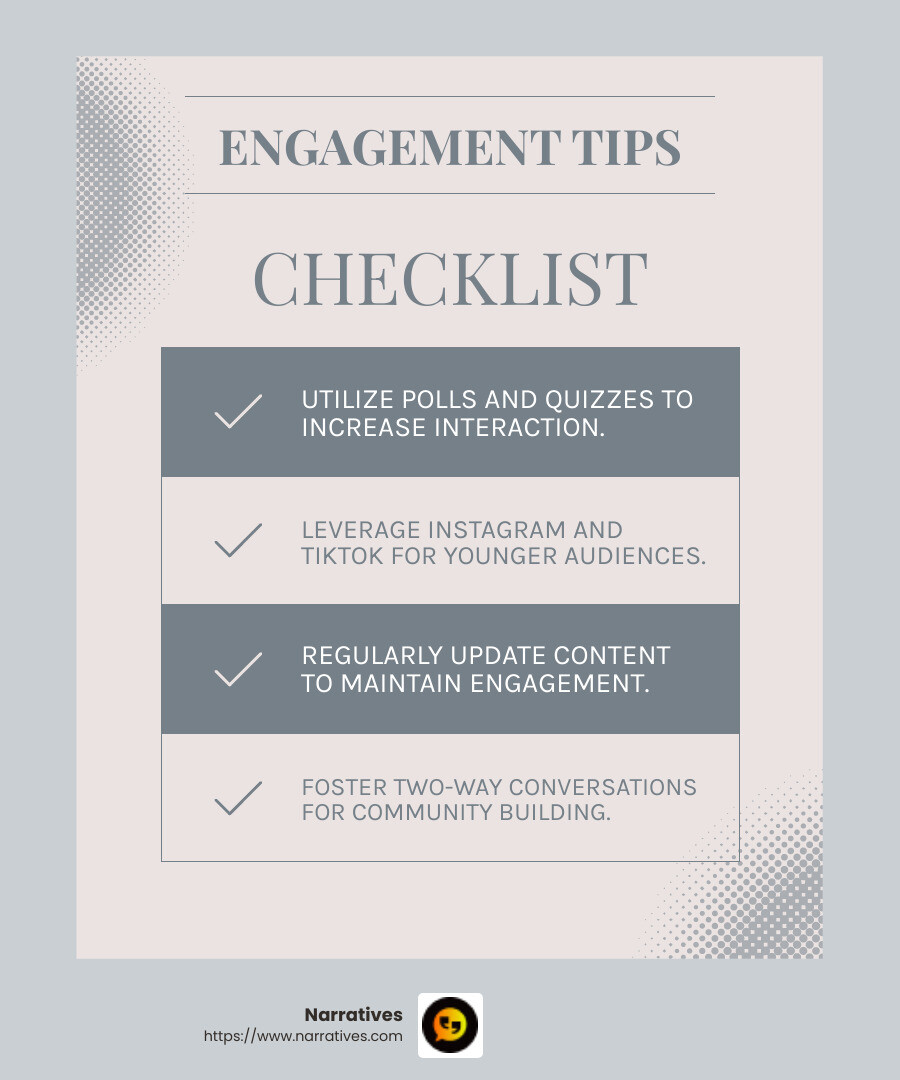
Engaging your audience is crucial for building a supportive community around your cause. It's not just about broadcasting messages—it's about fostering a two-way conversation.
Strategies for Engagement:
- Interactive Content: Use polls, quizzes, and interactive stories to involve your audience actively.
- Social Media: Platforms like Instagram and TikTok can be effective for reaching younger demographics. Regularly update and interact with your audience to maintain engagement.
By focusing on these elements, nonprofits can create content that not only informs but also moves people to act. This approach ensures that your message doesn't just reach your audience—it resonates with them, encouraging them to become advocates for your cause.
Top Content Formats for Nonprofits
SEO Content
SEO content is the backbone of any nonprofit's digital strategy. By optimizing your blog posts and web pages for search engines, you can increase visibility and attract new supporters. The key is to focus on niche keywords that align closely with your mission. This approach reduces competition and targets an audience more likely to engage with your cause. A well-crafted blog post not only informs but also inspires action. For example, Charity: Water effectively uses blog stories to connect donors with the real-world impact of their contributions.
Social Media
Social media platforms are essential for nonprofits to reach and engage with their audience. With the right strategy, you can educate, inspire, and mobilize supporters. Focus on creating a mix of content, such as informative posts, inspirational stories, and behind-the-scenes glimpses of your work. While going viral is rare, consistent and authentic engagement can build a strong community. Tools like Canva can help in designing visually appealing posts that capture attention quickly.
Video Content
Videos are a powerful way to connect emotionally with your audience. They bring your nonprofit's mission to life, making it tangible and relatable. Whether it's a short thank-you message or a detailed documentary, videos can vividly showcase the impact of your work. Platforms like YouTube and social media are perfect for sharing these stories. For instance, Charity: Water uses videos to highlight the transformative effects of clean water projects, providing transparency and fostering trust with donors.
Podcasts
Podcasts offer a unique way to engage with your audience on a deeper level. They allow you to discuss important topics, share stories, and provide updates in an accessible format. Podcasts can be consumed on-the-go, making them an ideal medium for busy supporters. Consider featuring interviews with beneficiaries, volunteers, or experts in your field to provide diverse perspectives on your mission.
Interactive Stories
Interactive stories are an innovative way to engage your audience. By allowing supporters to participate in the narrative, you can create a more immersive experience. This format can include elements like polls, quizzes, or choose-your-own-trip stories that involve the audience in your mission. Interactive content not only educates but also fosters a sense of community and investment in your cause.
By leveraging these content formats, nonprofits can create compelling and engaging media that resonates with their audience, driving awareness and action for their mission.
Building a Nonprofit Content Strategy
Creating a successful nonprofit content creation strategy starts by setting clear goals. Every piece of content should have a purpose, whether it's to increase donations, attract volunteers, or raise awareness. If you can't sum up the goal of a piece of content in a few words, it might need rethinking.
Goals
Define what you want to achieve. Are you looking to boost donations, increase volunteer sign-ups, or spread awareness about a specific issue? Clear goals guide your content creation and help measure success. For example, if your goal is to increase awareness, track metrics like website visits and social media shares.
Resources
Assess the resources you have. Consider your budget, team skills, and access to tools like design software or video editing suites. Also, think about your access to stories and interviews. A realistic resource assessment helps in planning a feasible content calendar. A small but dedicated team can create impactful content with the right focus.
Target Audience
Understanding your target audience is crucial. Develop profiles of your ideal supporters, considering their demographics and interests. This helps tailor your content to what resonates with them. For instance, if you're targeting young adults, focus on platforms like Instagram and TikTok, and use engaging visuals and stories.
Distribution Strategy
How you share your content is as important as the content itself. A strong distribution strategy ensures your content reaches the right people. Use a mix of owned media (like your website and newsletters), shared media (social media platforms), and earned media (press coverage and partnerships). For example, after publishing a blog post, promote it through social media and email newsletters to maximize reach.
By focusing on these elements, your nonprofit can develop a robust content strategy that aligns with your mission and engages your audience effectively.
Amplifying Your Nonprofit's Content
Creating content is just the beginning. To make sure your message reaches your audience, you need to amplify it using the PESO model: Paid, Earned, Shared, and Owned media. Each plays a vital role in expanding your reach and engaging your audience.
Paid Media
Paid media involves using advertisements to promote your content. This can include boosted social posts, sponsored content, and search ads. The key is to use soft calls to action like "learn more" or "read the story" to encourage clicks without pressure. For example, if a nonprofit wants to highlight a success story, a soft CTA can attract more people to engage with the content.
Steps to Use Paid Media:
- Identify your audience through surveys or social media interactions.
- Choose platforms where your target audience is most active, such as Instagram or Facebook.
- Regularly update audience profiles to keep content relevant.
Earned Media
Earned media is all about getting others to share your content. This could be through press coverage, blogs, or social media influencers. To achieve this, make your content engaging, timely, and easy to share. For example, a nonprofit can create a compelling story that ties to a current event, making it more likely to be picked up by news outlets.
Tips for Earned Media:
- Have a clear ask when reaching out to media outlets.
- Link content to timely events or data.
- Encourage others to share your story as part of their own narrative.
Shared Media
Shared media focuses on social media platforms. It's about engaging with your audience directly. Encourage interactions by asking questions or prompting responses. For instance, a simple prompt like "Comment your favorite book" can boost engagement.
Best Practices for Shared Media:
- Post less frequently but with higher quality.
- Encourage comments and interactions.
- Have a plan for managing community feedback, including negative comments.
Owned Media
Strategies for Owned Media:
- Treat your website and emails as prime promotional spaces.
- Include "house ads" to highlight key content.
- Use navigation and site search to guide users to important stories.
By leveraging the PESO model, nonprofits can effectively amplify their content, ensuring it reaches a broader audience and has a greater impact. This approach not only boosts visibility but also strengthens engagement with your mission.
Frequently Asked Questions about Nonprofit Content Creation
How to build a strategy and practical tips
Building a nonprofit content creation strategy is like crafting a roadmap for your mission. Start by setting clear goals. Do you want to increase donations, attract volunteers, or raise awareness? Knowing your goals will guide your content.
Steps to Build a Strategy:
Set Clear Goals: Define what success looks like. Whether it's more website visits or higher engagement, be specific.
Know Your Audience: Create profiles of your target audience. Understand their interests, needs, and how they prefer to receive information.
Choose Your Channels: Decide where to share your content. Social media, blogs, and newsletters are great places to start.
Create a Content Calendar: Plan out your content. This helps keep your team organized and ensures consistency.
Measure Success: Use tools to track engagement and adjust your strategy based on what's working.
How to create a professional content strategy
A professional content strategy requires more than just posting regularly. It involves aligning your content with your organization's mission and goals.
Key Elements of a Professional Strategy:
Content Themes: Establish themes that resonate with your audience. For example, a food bank might focus on topics like food insecurity or community support.
Tone and Voice: Define how you want to communicate. Should your content be formal, friendly, or somewhere in between?
Resource Allocation: Determine what resources you have and what you need. This includes budget, staff, and technology.
Stakeholder Engagement: Involve key stakeholders in your planning process. Their insights can help shape your strategy.
How to showcase your impact
Showcasing your impact is crucial for building trust and encouraging support. Use storytelling to highlight how your organization makes a difference.
Ways to Showcase Impact:
Success Stories: Share stories of individuals or communities you've helped. Use quotes and personal anecdotes to make it relatable.
Visual Content: Use infographics, videos, and photos to illustrate your achievements. Visuals are powerful and can convey complex information simply.
Data and Statistics: Present data in a way that's easy to understand. For instance, "We provided 10,000 meals last year" is clear and impactful.
Testimonials: Let your beneficiaries speak. Their words can be more convincing than any marketing message.
By addressing these FAQs, nonprofits can create effective content strategies that not only engage but also inspire action. Up next, we'll explore how to leverage digital storytelling to further improve your nonprofit’s outreach.
Conclusion
In nonprofit content creation, the power of digital storytelling cannot be overstated. It's more than just a tool—it's a bridge connecting your mission to the hearts and minds of your audience. At Narratives, we believe in elevating underrepresented voices through high-quality, emotionally resonant multimedia content. This approach not only tells your story but also inspires action and builds trust.
Community-driven storytelling is at the heart of what we do. It’s about more than just sharing facts; it’s about weaving together the stories of those you serve and those who support you. When you highlight personal narratives, you create a mix of impact that showcases the real difference your organization makes. For example, the Hamilton Commission's report on diversity in motorsport used a mix of statistics and personal stories to engage a wide audience and spark meaningful conversations.
By focusing on community-driven storytelling, you can amplify your nonprofit's reach and effectiveness. This strategy not only increases visibility but also strengthens your community bonds. When people see the tangible effects of your work through compelling stories, they are more likely to become advocates for your cause.
At Narratives, we are committed to helping nonprofits like yours share their impact stories in a way that resonates and inspires. Our goal is to be your go-to partner in digital storytelling, helping you to engage your audience and drive meaningful change.
Ready to release the power of storytelling for your nonprofit? Find how Narratives can help you lift your message. Together, we can create content that not only informs but transforms.


.avif)