Building Bridges: The Ultimate Guide to Donor Engagement for Nonprofits

Nonprofit donor engagement is crucial for any organization seeking to build lasting relationships with supporters. Simply put, it's how donors interact with your nonprofit, and it's vital for ensuring that these contributors continue their support over time. Effective engagement doesn't just happen during PR events or donation drives. It's an ongoing effort to keep your cause at the forefront of donors' minds.
Here's a simple overview of what nonprofits need to know:
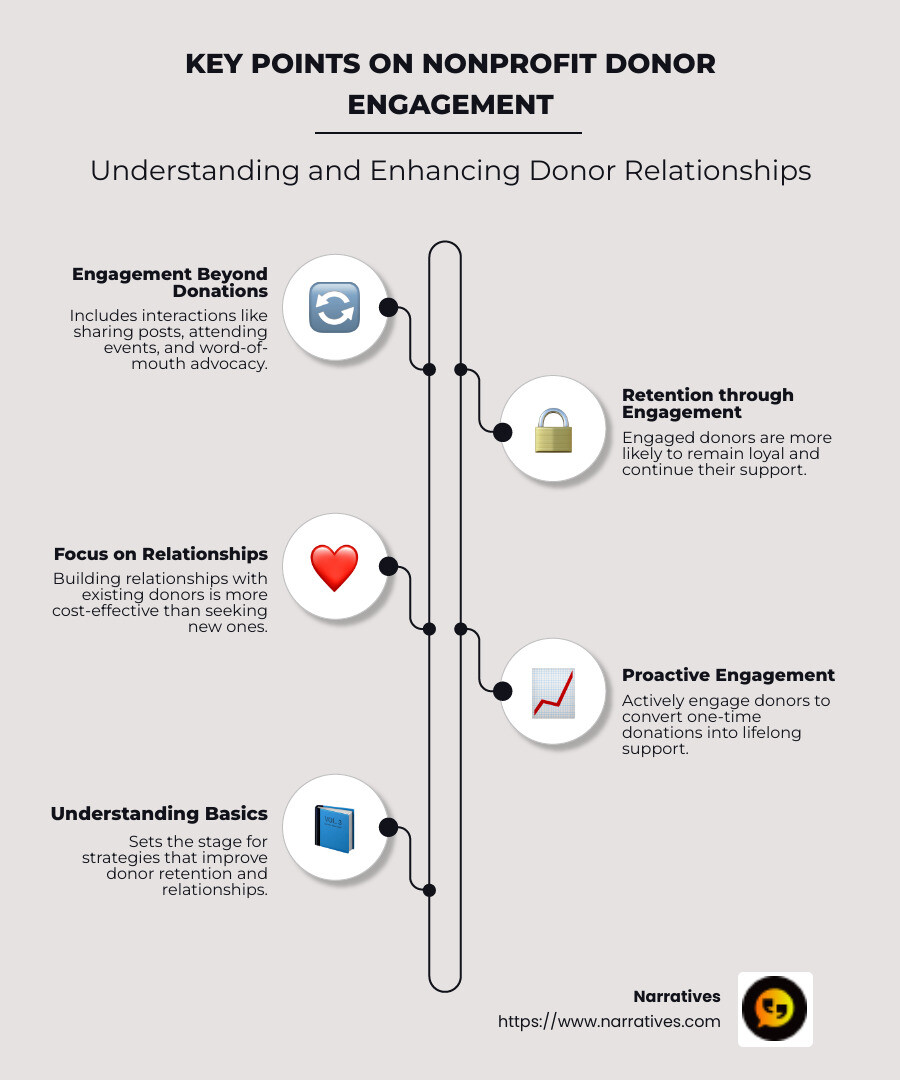
- Engagement beyond donations: Involves all interactions, including sharing posts, attending events, and word-of-mouth advocacy.
- Retention through engagement: The more engaged your donors, the likelier they are to stick around and continue supporting you.
- Focus on relationships: Building relationships with existing donors is more cost-effective than constantly seeking new ones.
Being proactive about engagement can mean the difference between a one-time donation and lifelong support.
Understanding the basics sets the stage for implementing strategies that will foster robust donor relationships and, in turn, improve donor retention.
Nonprofit donor engagement vocab to learn:
Understanding Nonprofit Donor Engagement
Nonprofit donor engagement is all about the relationship between your organization and its supporters. It's not just about the money; it's about every touchpoint that keeps your cause alive in their hearts and minds.
Donor Engagement Definition
At its core, donor engagement is how donors interact with your nonprofit. This includes everything from reading your emails to attending events and even sharing your social media posts. The goal is to create a strong bond that encourages ongoing support.
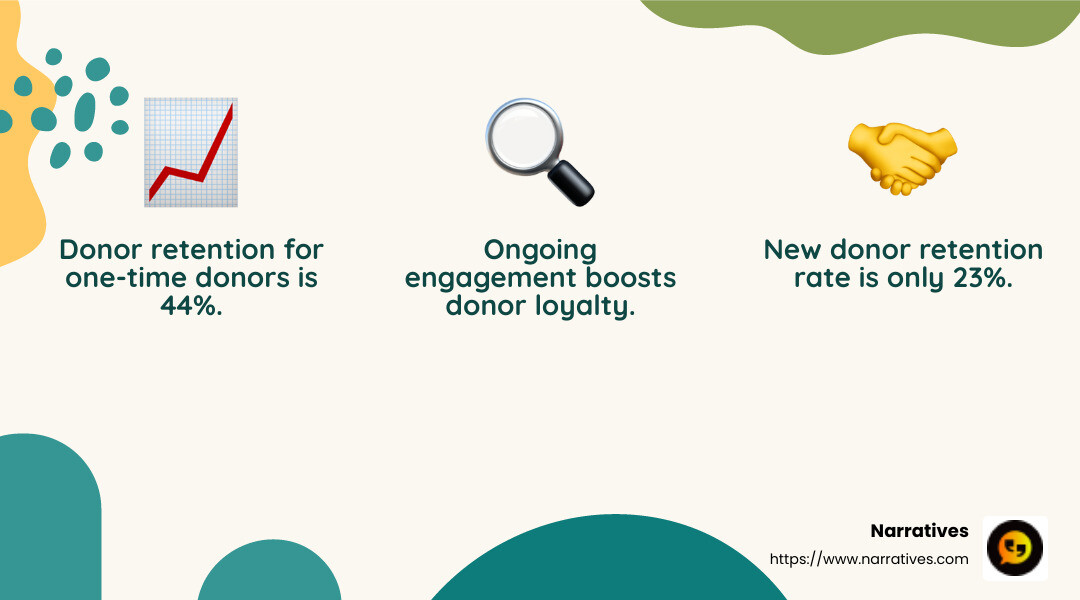
Engagement is crucial because it directly impacts donor retention. The more connected donors feel, the more likely they are to stay involved. A study revealed that retention rates for one-time donors were 44%, while new donors had a retention rate of just 23%. This highlights the importance of keeping donors engaged.
Donor Cultivation Cycle
The donor cultivation cycle is a roadmap for nurturing donor relationships. It consists of several key stages:
- Awareness: Potential donors find your nonprofit through channels like social media or email.
- Consideration: They learn more about your mission by exploring your website and other resources.
- Engagement: Engage these prospects with personalized outreach, like emails or direct mail.
- Donation: Prospects decide to give, influenced by trust in your organization and a seamless donation process.
- Loyalty: Maintain positive relationships to encourage continued support and potentially upgrade their giving.
This cycle highlights the importance of continuous engagement, even after the initial donation.
Donor Engagement Signals
Understanding engagement signals helps you track how well you're connecting with donors. Here are a few key signals to monitor:
- Event Attendance: Donors attending your events are likely more engaged.
- Social Media Interaction: Shares, likes, and comments indicate interest and involvement.
- Feedback and Surveys: Donors who provide feedback or respond to surveys are showing their willingness to engage.
- Volunteer Participation: Donors who volunteer their time are deeply connected to your cause.
By monitoring these signals, you can tailor your strategies to keep donors interested and involved.
In summary, understanding nonprofit donor engagement involves recognizing the importance of every interaction, following the donor cultivation cycle, and keeping an eye on engagement signals. This knowledge is foundational for building and maintaining strong donor relationships.
Key Strategies for Effective Donor Engagement
Creating meaningful connections with donors is essential for any nonprofit. Here are some key strategies to improve nonprofit donor engagement: personalized communication, donor segmentation, and donor stewardship.
Personalized Communication
Personalized communication is a game-changer. It makes donors feel valued and connected to your mission. Start by addressing donors by name in all communications. This simple step can significantly increase the likelihood of your message being noticed and appreciated.
Reference their past involvement. Whether they've donated, volunteered, or attended events, acknowledging their contributions shows that you pay attention and value their support. For example, "Thanks for your volunteer work at our annual fundraising 5K. With your help, we raised $60,000 to support local families."
Also, use the donor's preferred communication platform. Some may prefer emails, while others might respond better to phone calls or social media. Tailoring your approach can improve engagement.
Donor Segmentation
Donor segmentation involves categorizing donors based on shared characteristics. This can help you tailor your outreach and make it more relevant. Here are some ways to segment your donors:
- Level of Engagement: Identify highly engaged, somewhat engaged, and disengaged donors.
- Length of Involvement: Consider long-time versus new donors.
- Donation Amount: Group donors into major, mid-level, and small donors.
- Donation Frequency: Recognize monthly, annual, occasional, and one-time donors.
- Communication Preferences: Identify preferences for email, social media, direct mail, texts, phone calls, or in-person meetings.
Segmenting donors allows you to create more targeted content and outreach strategies, enhancing the personalized experience they seek.
Donor Stewardship
Donor stewardship focuses on nurturing relationships to encourage ongoing support. It's about showing appreciation and keeping donors informed about their impact. Here are some effective stewardship practices:
- Thank You Notes: Send personalized thank-you notes for every donation, regardless of size. This simple gesture can go a long way in making donors feel appreciated.
- Impact Reports: Share updates on how their contributions have made a difference. Use both quantitative data (e.g., funds raised) and qualitative stories (e.g., personal impact stories) to illustrate their impact.
- Exclusive Updates: Offer dedicated donors exclusive newsletters or invitations to special events. This makes them feel like valued insiders.
By focusing on personalized communication, donor segmentation, and stewardship, you can build lasting relationships with your donors. This not only improves donor retention but also strengthens their connection to your cause. Up next, we'll dive into the top 10 donor engagement activities that can further solidify these relationships.
Top 10 Donor Engagement Activities
Once you've set up the foundation for effective donor engagement, it's time to dive into specific activities that can further solidify relationships with your supporters. Here are the top 10 activities to consider:
Invite Donors to Events
Hosting events is a great way to connect with donors face-to-face. Whether it's a gala, auction, or a simple meet-and-greet, events offer donors a tangible experience of your cause. Research shows that in-person donation requests are 34 times more effective than emails. So, make these moments count!
Encourage Volunteering
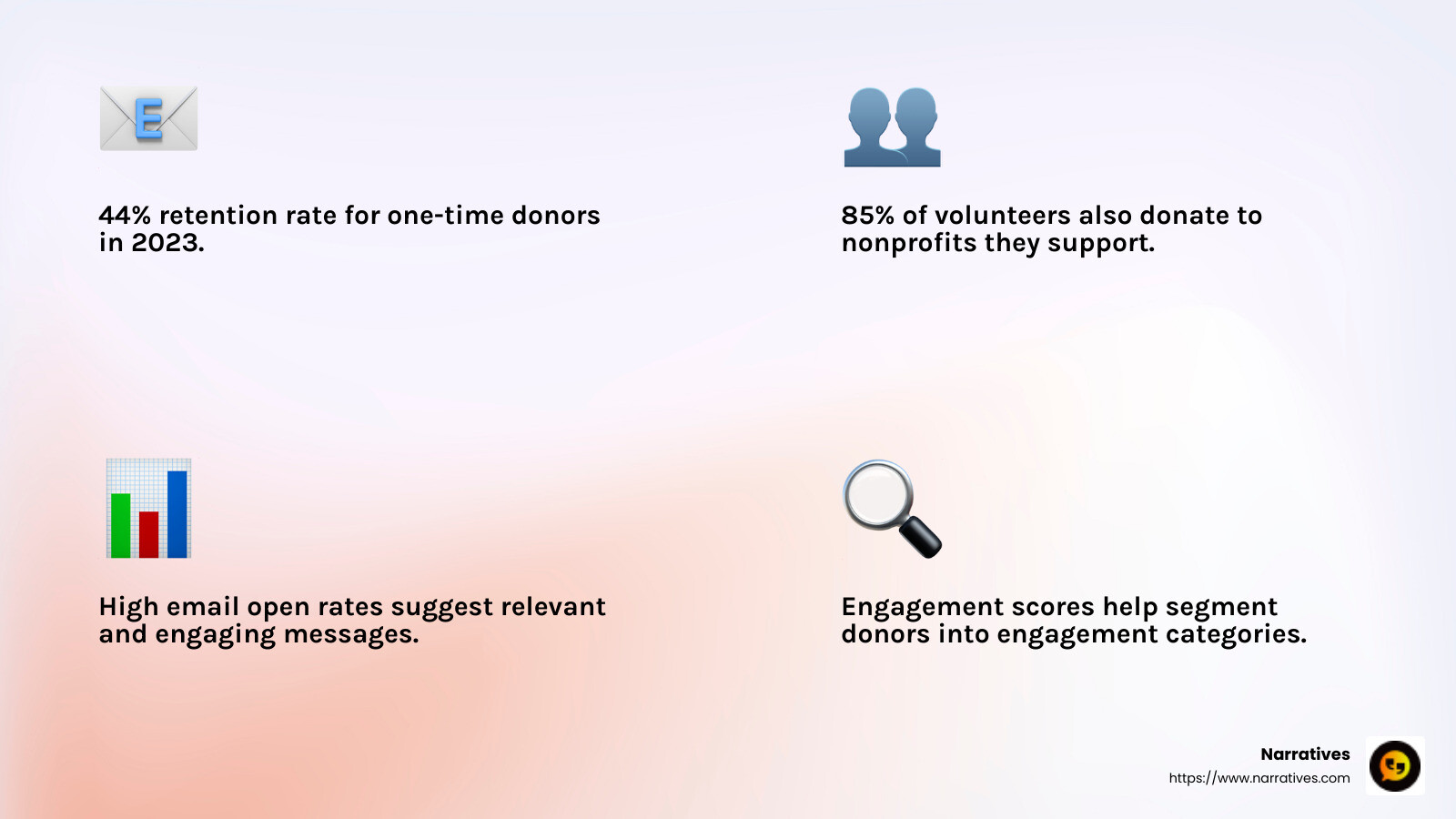
Volunteering offers donors a hands-on way to engage with your mission. This direct involvement can boost their emotional investment and commitment. Plus, 85% of volunteers also donate to the nonprofits they serve. Highlight opportunities that match their interests or skills.
Share Impact Stories
Stories can powerfully illustrate the impact of donations. Share real-life examples of how contributions have transformed lives. For instance, a story about how a donor's support helped a family in need can create a strong emotional connection.
Call Donors
A simple phone call can make a big difference. Reach out to thank donors personally or update them on your organization's progress. Personal calls can show donors they are valued beyond their monetary contributions.
Send Surveys
Surveys are an excellent way to gather feedback and understand donor preferences. Ask about their communication preferences or what aspects of your mission they are most passionate about. This data can help tailor your engagement strategies.
Email Outreach
Emails remain a staple in donor communication. However, ensure that your emails are personalized and relevant. Regular newsletters can keep donors informed about your organization's achievements and upcoming events.
Social Media Engagement
Social media is a powerful tool for connecting with donors. Use platforms like Facebook, Instagram, and X to share updates, celebrate milestones, and engage with your audience. Tag donors in posts or highlight their contributions to make them feel appreciated.
Board Member Involvement
Encourage board members to actively engage with donors. Their involvement can lend credibility and show donors that your organization values their support at every level.
Feature Donors
Recognize donors by featuring them in newsletters, on your website, or social media. This public acknowledgment can make them feel special and encourage continued support.
Donor Walls
Creating a donor wall, whether physical or virtual, honors those who have significantly contributed to your cause. It's a visual representation of appreciation and can inspire others to give.
By incorporating these activities into your nonprofit donor engagement strategy, you can create a more connected and committed donor base. Each activity offers a unique way to deepen relationships and show donors they are an integral part of your mission. Next, we'll explore how to measure and track your engagement efforts to ensure they're effective.
Measuring and Tracking Donor Engagement
To build strong relationships with donors, it's crucial to measure and track their engagement. This helps you understand how connected they feel to your cause and how likely they are to continue supporting your nonprofit.
Donor Engagement Metrics
Metrics are the backbone of any nonprofit donor engagement strategy. They provide insights into how well you're connecting with your supporters. Here are some key metrics to track:
- Email Open Rates: This measures how many recipients open your emails. High open rates suggest that your messages are relevant and engaging.
- Click-Through Rates (CTR): Shows how many people clicked on links within your emails. A high CTR indicates that your content is compelling.
- Event Attendance: Track how many donors attend your events. This can reveal their level of interest in your activities.
- Volunteer Participation: Monitor how many donors also volunteer. Since 85% of volunteers donate to the nonprofits they support, this metric is vital.
- Donation Frequency: Keep an eye on how often donors give. Frequent donations suggest strong engagement.
Donor Database
A well-maintained donor database is essential for tracking engagement. It stores valuable information about each donor, such as:
- Contact Details: Ensure you have up-to-date contact information for personalized communication.
- Donation History: Keep a record of past donations to identify patterns and tailor future requests.
- Communication Preferences: Know how donors prefer to be contacted—whether by email, phone, or social media.
Using a robust CRM system can help automate these processes, making it easier to manage donor data and track interactions.
Engagement Scores
Engagement scores provide a quick snapshot of how connected a donor is to your organization. These scores are calculated based on various factors, such as:
- Recency of Donations: How recently a donor made a contribution.
- Frequency of Donations: How often a donor gives.
- Monetary Value: The total amount a donor has contributed.
By assigning engagement scores, you can segment your donor base into categories, such as highly engaged, moderately engaged, and at-risk. This segmentation allows you to tailor your engagement strategies to each group.
Tracking these metrics and scores will help you identify areas for improvement and opportunities to strengthen donor relationships. With this data, you can create targeted strategies to boost engagement and retention.
Next, we'll dive into frequently asked questions about nonprofit donor engagement to address common concerns and provide further insights.
Frequently Asked Questions about Nonprofit Donor Engagement
What is donor engagement?
Donor engagement is all about the connection between a nonprofit and its supporters. It goes beyond just asking for donations. It includes every interaction, from sharing social media posts to attending events. The goal is to build lasting relationships, making donors feel like a vital part of your mission.
Engagement is a key step in the donor cultivation cycle. It starts when potential donors first hear about your nonprofit and continues as they consider, engage, and eventually donate. Keeping donors engaged means they are more likely to support your cause over the long term.
Why is donor engagement important?
Engaging donors is crucial because it builds trust and fosters retention. According to the Give.org Donor Trust Report, 70% of donors need to trust a charity before giving. Donor engagement helps establish this trust by providing transparency and showing the impact of their contributions.
Engaged donors are more likely to become recurring supporters. In fact, the Recurring Giving Report found that recurring donors have a lifetime value of $7,604.17, compared to $3,620.67 for one-time donors. This shows the financial benefits of focusing on ongoing donor relationships.
Moreover, engaged donors often become advocates for your cause. They can help spread the word, bringing in new supporters and amplifying your mission.
How can nonprofits improve donor retention?
Improving donor retention involves several strategies:
Personalized Communication: Tailor your messages to each donor's interests and past contributions. This makes them feel valued and understood.
Donor Stewardship: Regularly thank donors and show them the impact of their gifts. This can be through personalized thank-you notes, impact reports, or exclusive updates.
Segment Donors: Organize your donor database to segment supporters based on their giving history and engagement level. This allows you to send targeted messages that resonate with each group.
Engagement Activities: Invite donors to events, encourage volunteering, and share compelling impact stories. These activities keep donors involved and connected to your mission.
By focusing on these strategies, nonprofits can build stronger relationships with their donors, leading to improved retention and a more sustainable future.
Next, we'll explore how digital storytelling and partnerships can further improve your nonprofit's engagement efforts.
Conclusion
In nonprofit donor engagement, Narratives plays a key role in helping organizations tell their stories in a way that resonates deeply with their supporters. By focusing on digital storytelling, we help nonprofits highlight the impact of their work, making it easier for donors to see the difference their contributions make. This connection is vital for building trust and fostering long-term relationships.
Digital storytelling is more than just sharing facts and figures. It's about creating emotionally engaging content that captures the heart of your mission. At Narratives, we specialize in crafting high-quality multimedia content that showcases underrepresented voices and the communities you serve. This approach not only lifts your message but also inspires action and increases visibility.
Partnerships with nonprofits are at the heart of what we do. We work closely with organizations to understand their unique challenges and goals. Our collaborative approach ensures that the stories we create are authentic and impactful, helping to drive donor engagement and support.
Through our media services, we offer a range of tools and strategies to improve your nonprofit's storytelling efforts. Whether it's through video, blogs, or social media, our goal is to help you connect with your audience in meaningful ways.
Building bridges with donors is essential for any nonprofit's success. By leveraging the power of digital storytelling and strong partnerships, you can create lasting relationships that support your mission and amplify your impact. Let's work together to tell the stories that matter and drive positive change in the world.


.avif)