From Script to Screen: Mastering Nonprofit Video Strategy

Nonprofit video strategy is the key for organizations to transform their missions into powerful, visual stories. By turning your nonprofit’s impactful work into engaging videos, you can:
- Connect emotionally with viewers.
- Increase donations and awareness.
- Spread your mission further and faster.
In today’s digital age, videos are more than just a medium; they're a bridge between your message and your audience's heart. Nonprofits have a unique opportunity to harness this storytelling power to inspire, inform, and incite action. The emotional connection forged through visual storytelling can be the catalyst that transforms passive observers into active supporters.
As Kalie VanDewater, an expert in content for social causes, points out, showcasing the positive impact your organization makes – like the Boys & Girls Clubs' approach of highlighting smiling, thriving children – can drive more support than focusing solely on the challenges.
Understanding the art and science of nonprofit video strategy can improve your marketing efforts, helping you reach goals like expanding donor networks, engaging current supporters, and effectively communicating your organization’s impact.
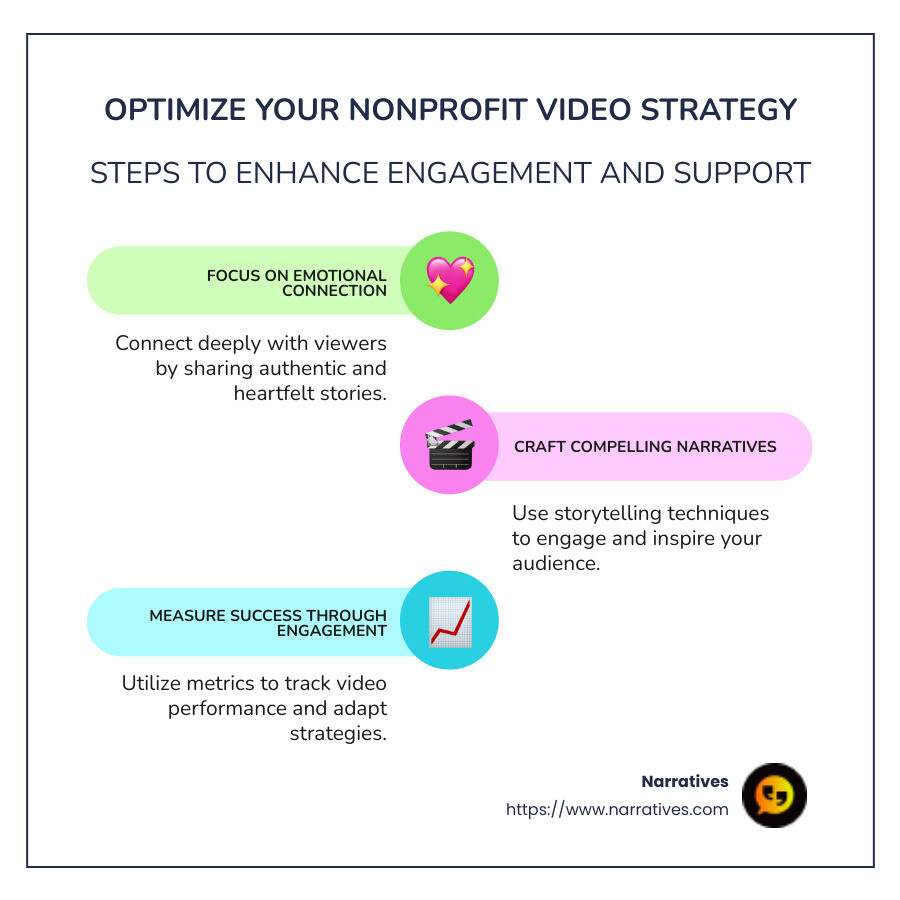
Understanding Nonprofit Video Strategy
Crafting a nonprofit video strategy is about more than just pressing record. It's about creating a bridge between your mission and your audience. Videos have the power to stir emotions, convey complex ideas simply, and inspire action. This makes them an essential tool in any nonprofit's outreach strategy.
The Role of Storytelling
Storytelling is at the heart of effective video strategy. It’s what turns a simple video into a powerful narrative that resonates with viewers. When done right, storytelling can:
Create an emotional connection. Videos that tell a story can evoke emotions that statistics and facts alone cannot. For instance, sharing a personal success story from someone your organization has helped can make your mission feel real and urgent.
Simplify complex messages. Videos can break down complicated issues into digestible content. This is crucial for nonprofits dealing with intricate topics, as it helps viewers understand and engage with the cause.
Inspire action. A well-told story can motivate viewers to act, whether it’s donating, volunteering, or sharing the video with others.
Building an Outreach Strategy
A successful nonprofit video strategy should be part of a broader outreach plan. This means understanding your audience and tailoring your videos to meet their needs and interests.
Audience Research: Before creating a video, know who you’re speaking to. Are they potential donors, volunteers, or beneficiaries? Each group will connect with different aspects of your story.
Platform Optimization: Choose the right platform for your video. YouTube is great for longer content, while Instagram and TikTok are better for short, impactful clips.
Feedback and Adaptation: Use metrics like views, shares, and comments to gauge your video’s effectiveness and adapt your strategy as needed.
Using Storytelling Power
The power of video lies in its ability to tell stories that move people. By weaving your nonprofit’s mission into a compelling narrative, you can expand your reach and deepen your impact.
Consider the success of World Relief's "For the Women" video, which used spoken word poetry to tell the stories of women affected by gender-based violence. This approach not only raised awareness but also generated support for their cause.
Incorporating storytelling into your nonprofit video strategy isn't just about telling any story; it's about telling the right story. A story that aligns with your mission, resonates with your audience, and inspires them to take action.

As you develop your strategy, each video is a chance to connect with your audience on a deeper level. Use this opportunity to not only share your work but to invite others to join you in making a difference.
Crafting Compelling Narratives
Creating a compelling narrative is crucial for any nonprofit video strategy. This is where you bring your mission to life, turning it into a story that captivates and motivates. Let's break down the key elements: storytelling tips, emotional appeals, and central characters.
Storytelling Tips
Start with a Clear Narrative Structure
Every great story has a beginning, middle, and end. Your video should guide viewers through a journey, highlighting the challenge and how your organization provides the solution. This structure keeps the viewer engaged and makes your message memorable.Focus on Real Stories
Authenticity matters. Use real stories from the people your nonprofit helps. This not only builds trust but also makes your mission relatable. For example, charity: water's founder used his personal journey to connect with audiences, highlighting themes of redemption and hope.Use Emotional Appeals Wisely
Emotions drive action. Craft your video to evoke feelings, but balance is key. Too much negativity can overwhelm, so focus on stories of perseverance and success. The "CrashCourse Concussion Education" video used virtual reality to create an emotional experience, teaching viewers the importance of proper training.
Emotional Appeals
Emotional storytelling can transform passive viewers into active supporters. Here’s how:
Show Impact, Not Just Need
People are more likely to support a cause when they see the positive impact their contributions can make. Use data visualization, like infographics, to highlight key statistics and show progress.Incorporate Visuals That Resonate
Images and videos are powerful tools. For instance, charity: water’s video with Jennifer Connelly used striking visuals to illustrate the water crisis, making the problem tangible for viewers.
Central Characters
Your story needs a face. Central characters help humanize your mission and allow viewers to connect on a personal level.
Highlight Beneficiaries
The people you help are your greatest storytellers. Let them share their experiences in their own words. This approach was successfully used by World Relief in their "For the Women" video, where real women shared their stories through spoken word poetry.Feature Advocates or Volunteers
Including the voices of volunteers or advocates adds a layer of credibility and shows the broader community behind your mission.
By focusing on these elements, your nonprofit video strategy will not only inform but also inspire. Each video is a chance to tell a story that can drive change and expand your reach.
Creating High-Impact Videos
Crafting high-impact videos is a vital part of any nonprofit video strategy. These videos not only tell your story but also drive action and engagement. Let's explore how to achieve this through a well-planned production timeline, diverse video content types, and strong calls-to-action.
Production Timeline
Creating a successful video begins with a solid plan. Here's a simple timeline to guide you:
Pre-Production (1-2 Weeks)
- Storyboard and Script: Outline your video’s narrative. Keep it clear and concise.
- Plan Visuals: Decide on locations, characters, and the overall look. Gather necessary permissions and equipment.
Production (1 Week)
- Filming: Capture authentic footage. Use real stories and testimonials to bring authenticity to your video.
- DIY or Professional Help: Consider your budget. A DIY approach can be cost-effective, but professionals can improve quality.
Post-Production (1-2 Weeks)
- Editing: Combine visuals and sound to create a seamless story. Ensure your message is clear and engaging.
- Review and Adjust: Test your video with a small audience and make necessary adjustments.
Video Content Types
Choosing the right type of video is crucial. Different formats serve different purposes:
Explainer Videos: These are great for introducing your mission. Keep them short and informative.
Testimonial Videos: Use real stories from beneficiaries or volunteers. This builds trust and emotional connection.
Event Highlights: Capture the essence of your events. These videos can boost engagement and showcase community support.
Live Streaming: Engage with your audience in real-time. This format is perfect for Q&A sessions or live events.
Call-to-Action (CTA)
Every video should end with a strong call-to-action. Here’s how you can make it effective:
Be Clear and Direct: Tell viewers exactly what you want them to do next. Whether it’s donating, volunteering, or sharing, clarity is key.
Incorporate Visuals: Use on-screen text or graphics to reinforce your message. A visual CTA can be more memorable.
Offer Incentives: Encourage action by offering something in return, like exclusive content or a thank-you note.
By following these steps, your nonprofit video strategy will not only inform and engage but also inspire action. Each video is an opportunity to connect with your audience and make a lasting impact.
Optimizing for Platforms
To maximize the reach and impact of your nonprofit videos, it's crucial to tailor your content for specific platforms. Each platform has unique strengths and requirements that can amplify your message. Let's explore how to optimize your videos for YouTube, Instagram, and TikTok.
YouTube
YouTube is a powerhouse for video content, reaching 74% of U.S. adults. It's perfect for longer, detailed videos that tell your nonprofit's story.
Video Length: Aim for 2-3 minutes to keep viewers engaged. For more in-depth content, consider using YouTube's chapter feature to break down videos into easily digestible segments.
Thumbnails and Titles: Create eye-catching thumbnails and compelling titles. These are the first things viewers see, so make them count.
SEO Optimization: Use relevant keywords in your video title, description, and tags. This helps your video appear in search results and reach a wider audience.
Analytics: Use YouTube's built-in analytics to track engagement and adjust your strategy. Look at metrics like watch time and viewer retention to gauge success.
Instagram offers multiple features like IGTV, Reels, and Stories, each suited to different types of content.
Reels and Stories: These are ideal for short, engaging clips. Use them to provide behind-the-scenes glimpses or quick updates.
IGTV: Perfect for longer videos, IGTV allows you to dive deeper into your mission. Keep it under 10 minutes to maintain viewer interest.
Visual Aesthetics: Instagram is a highly visual platform. Ensure your videos are visually appealing and optimized for mobile viewing.
Engagement Tools: Use features like polls and Q&A stickers to interact with your audience. This boosts engagement and creates a sense of community.
TikTok
TikTok is rapidly gaining popularity, especially among younger audiences. It's a great platform for creative and viral content.
Short and Snappy: Keep videos between 15-60 seconds. Quick, engaging content is key to capturing attention.
Trends and Challenges: Participate in popular trends or create your own challenges. This increases visibility and encourages user participation.
Donation Stickers: Use TikTok's "Donation Stickers" to allow viewers to contribute directly while watching your content.
Authenticity: TikTok thrives on authenticity. Use real stories and unscripted moments to connect with your audience.
By optimizing your videos for each platform, your nonprofit video strategy can reach a broader audience and drive meaningful engagement. Tailor your content to fit the platform’s strengths, and watch your message spread far and wide.
Measuring Success and Adapting
Once your video is live, measuring its success is crucial to refining your nonprofit video strategy. By tracking the right metrics, you can understand what works, what doesn’t, and how to adapt your approach for better results.
Key Metrics
Total Views: This is the most basic metric, showing how many people have watched your video. However, views alone don't tell the whole story.
Average View Duration: This metric shows how long viewers stick around. A high average view duration indicates your content is engaging.
Click-Through Rate (CTR): CTR measures the percentage of viewers who click on a call-to-action (CTA) in your video. A low CTR might suggest that your CTA needs to be more compelling or visible.
Conversion Rate: This is the percentage of viewers who take a desired action, like donating or signing up to volunteer. It's a key indicator of your video's effectiveness in driving action.
Audience Engagement
Engagement metrics help you understand how viewers interact with your video content.
Likes, Comments, and Shares: These are direct indicators of engagement. High numbers suggest that your content resonates with your audience and encourages interaction.
Social Media Insights: Platforms like Facebook and Instagram offer insights into engagement levels, including how often your video is shared or commented on.
Conversion Rates
Conversion rates are crucial for assessing how well your video achieves its goals.
Donation Conversions: If the goal is fundraising, track how many viewers donate after watching your video. This can be done using unique links or donation pages.
Volunteer Sign-Ups: If the goal is to increase volunteer numbers, monitor how many people sign up after engaging with your video content.
By focusing on these metrics, you can gain insights into your audience's behavior and preferences. Use this data to tweak your approach, ensuring your nonprofit video strategy remains effective and impactful.
Armed with these insights, you can continually refine your strategy, ensuring your nonprofit's message not only reaches but also resonates with your target audience.
Frequently Asked Questions about Nonprofit Video Strategy
What is nonprofit video marketing?
Nonprofit video marketing is all about using video to tell your organization's story and engage your audience. It’s a powerful outreach strategy designed to inspire action, whether that means donations, volunteering, or simply spreading the word. Videos can combine visuals and audio to create an emotional connection that text alone often can't achieve. This connection is crucial for engaging potential donors and supporters.
How can nonprofits measure video effectiveness?
To measure how well your videos are doing, keep an eye on these key metrics:
- Engagement Rate: This includes likes, comments, and shares. A high engagement rate means your content resonates with viewers.
- Click-Through Rate (CTR): This shows how many viewers click on links in your video. A strong CTR indicates your call-to-action is effective.
- Conversion Rate: This metric tells you how many viewers take the desired action, like donating or signing up to volunteer. It's a direct measure of your video's impact.
Tracking these metrics helps you understand what works and what doesn’t, allowing you to refine your strategy for better results.
Why is video effective for nonprofits?
Videos are incredibly effective for nonprofits because they can create a strong emotional connection with viewers. This emotional pull is a key part of what makes storytelling so powerful. When people feel emotionally connected to a cause, they're more likely to engage and support it.
Research shows that 72% of people prefer watching a video over reading text when both options are available. This preference highlights the storytelling power of video, making it a vital tool for increasing engagement and driving action.
By using video, nonprofits can craft compelling narratives that not only inform but also inspire viewers to become active participants in their missions.
Conclusion
Narratives is at the forefront of elevating nonprofit video strategies through digital storytelling. We believe in the power of stories to connect people and drive change. Our mission is to amplify underrepresented voices and help nonprofits share their impact in ways that inspire action and build trust.
Community-driven storytelling is at the heart of what we do. By highlighting real stories from the communities nonprofits serve, we create content that resonates emotionally with audiences. This approach not only increases visibility but also fosters a deeper connection between nonprofits and their supporters.
Our strategy is simple: combine compelling narratives with high-quality video production to create content that stands out in a crowded digital landscape. We focus on crafting stories that are authentic and impactful, ensuring that every video not only tells a story but also calls viewers to action.
As we continue to partner with purpose-driven organizations, our goal is to help them harness the full potential of video storytelling to increase their reach and impact. If you're ready to lift your nonprofit's storytelling, partner with us and let’s create something amazing together.

.avif)