The Blueprint for Social Impact: Content Strategy Essentials

Understanding Social Impact Content Strategy
Social impact content strategy is a crucial tool for modern brands. Today’s consumers are looking beyond the polished product or service: they’re interested in the values and purpose that lie beneath the brand's exterior. Research indicates that 62% of consumers are keen to switch brands based on a company's social or environmental stance. Here's why this matters:
- Consumer Values: People are drawn to brands that align with their beliefs. They expect companies to uphold values that they themselves cherish.
- Brand Purpose: A clear brand purpose can differentiate your organization. It helps you stand out and speak directly to those who share your mission.
With social impact content strategy, companies have the opportunity to resonate more deeply with their audience. By blending storytelling with genuine purpose, they can drive not just sales but also meaningful change.
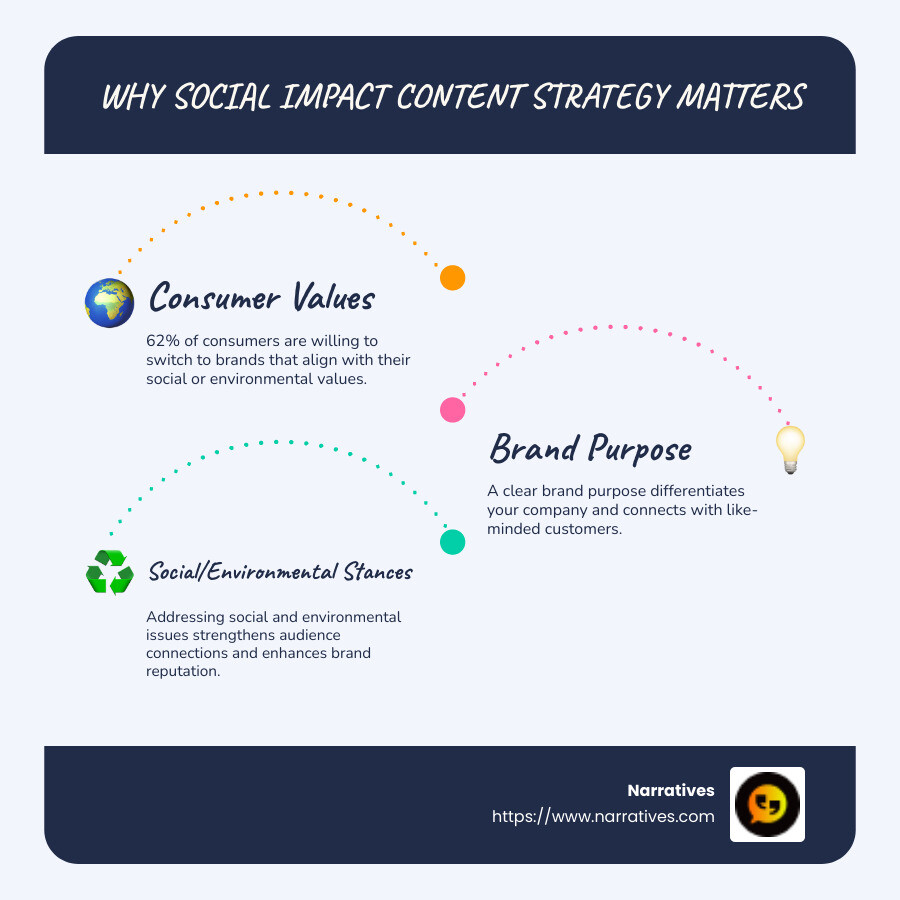
Why Social Impact Content Strategy Matters
In today's crowded marketplace, standing out is more challenging than ever. Social impact content strategy offers a unique way to differentiate your brand, connect with your audience, and improve your reputation.
Brand Differentiation
When everyone is selling similar products or services, how do you make your brand memorable? The key lies in showcasing a purpose beyond profit. Brands like Patagonia have successfully used their commitment to environmentalism to set themselves apart. Their "Don't Buy This Jacket" campaign, which criticized consumerism, resonated deeply with eco-conscious customers. This kind of authentic differentiation helps brands like Patagonia rise above the noise.
Audience Connection
Consumers today are not just buyers; they're partners in a shared mission. They want to support companies that reflect their values. By integrating social impact into your content, you create a deeper bond with your audience. This connection fosters loyalty and trust. People are more likely to stick with a brand they believe is making a positive difference in the world.
Improved Brand Reputation
A strong reputation is built on actions, not words. Actively contributing to social or environmental causes boosts how consumers see your brand. They perceive you as responsible and ethical. This perception can lead to increased brand advocacy, where your customers become your biggest promoters. They share your values and spread your message, helping to expand your reach organically.
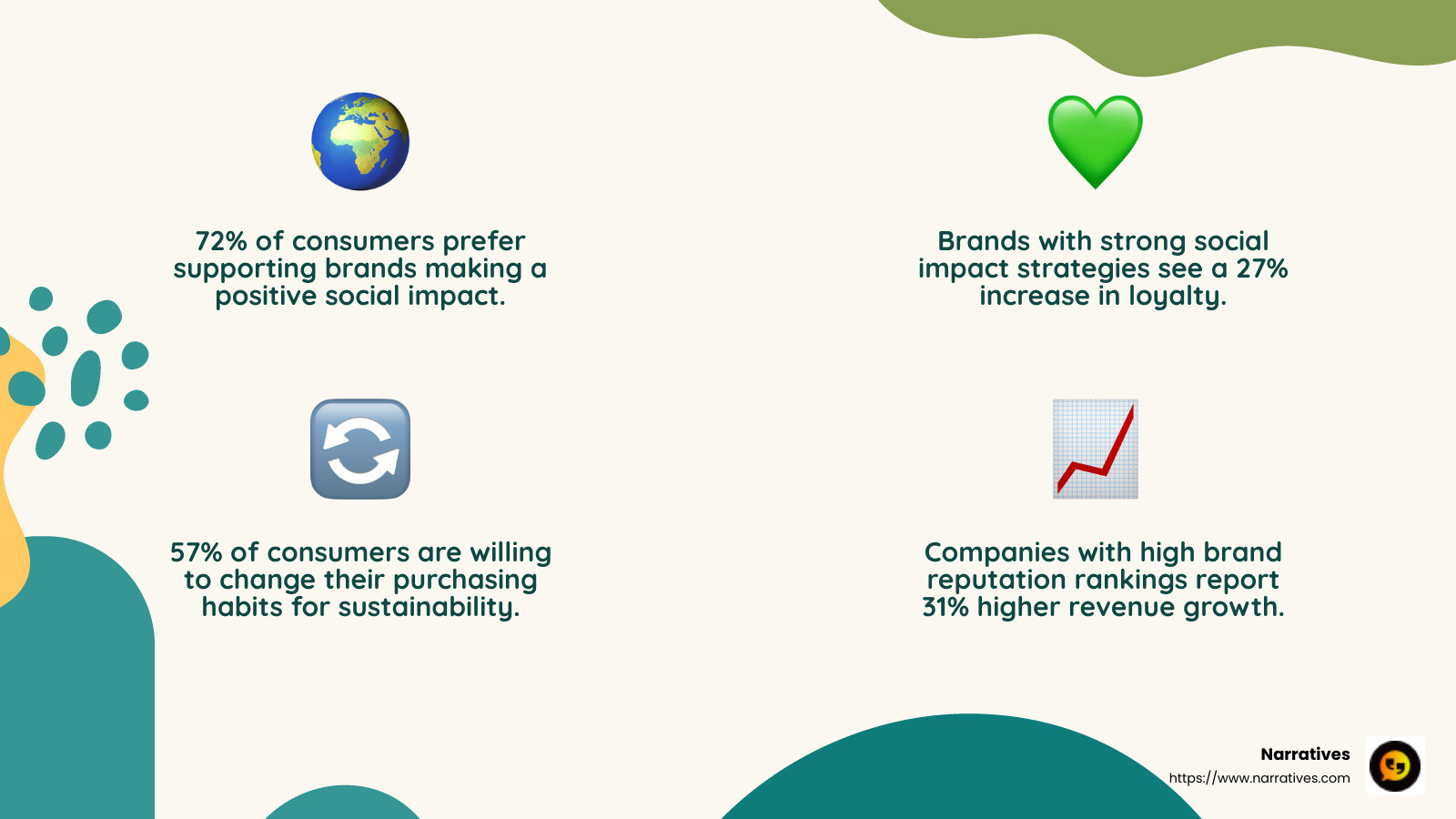
Incorporating social impact content strategy into your brand's DNA is more than just a marketing tactic. It's a way to build a legacy that resonates with both current and future customers. By focusing on genuine stories and real impact, you can lift your brand to new heights.
Next, we'll explore how to craft a compelling social impact content strategy, focusing on authenticity, storytelling, and partnerships.
Crafting a Social Impact Content Strategy
Creating a social impact content strategy involves more than just good intentions. It requires a thoughtful approach, focusing on authenticity, storytelling, and partnerships. Let's explore how you can craft a strategy that truly resonates.
Define Your Purpose
Start with your core values. What does your brand stand for? Align these values with broader social or environmental issues that matter to your audience. This alignment is essential for authenticity. Your audience can tell when a brand's purpose feels forced or insincere.
Example: Patagonia's commitment to environmentalism is not just a marketing angle—it's woven into their entire brand identity. From product design to marketing campaigns, their purpose is clear and consistent.
Choose Your Cause
Select a cause that connects authentically with your brand. Avoid greenwashing—where a company falsely claims to be environmentally friendly. Choose a cause you can genuinely support and make a real impact on.
Tip: Think about what your audience cares about. If your brand sells outdoor gear, environmental conservation might be a natural fit. If you're in the tech industry, consider digital literacy or data privacy.
Integrate Seamlessly
Your social impact efforts shouldn't feel like a separate entity. Weave them into your existing content themes and business practices. This means creating content that highlights how your products, services, and operations contribute to your chosen cause.
Storytelling: Use stories to create an emotional connection. Share real-life examples of how your brand's efforts are making a difference. Authentic stories build trust and engagement.
Partnerships: Collaborate with NGOs, experts, or influencers in your chosen field. These partnerships can improve credibility and expand your reach. Their expertise and established audiences can amplify your message.
Example: Narratives works with non-profits to highlight the communities they serve, creating content that connects with the public on a human level.
By defining your purpose, choosing the right cause, and integrating it seamlessly into your content, you can create a social impact content strategy that not only improves your brand but also makes a meaningful difference.
Next, we'll discuss key strategies for effective social impact content, including storytelling, SEO optimization, and content promotion.
Key Strategies for Effective Social Impact Content
Creating effective social impact content isn't just about sharing information. It's about connecting with your audience on a deeper level. Let's explore the key strategies you need to make your content resonate.
Use Storytelling
Storytelling is your most powerful tool. It's not just about facts—it's about creating an emotional connection with your audience. Use real stories that show how your brand is making a difference. This authenticity builds trust and engagement.
Example: The Michigan Department of Education used storytelling to educate families about early learning. By sharing stories of parents and children, they created content that was both informative and emotionally engaging.
Tip: Focus on authenticity. Share genuine stories that reflect your brand's values and mission. Avoid making your stories feel like ads. Instead, let them show your commitment to the cause.
Optimize for SEO
To reach your target audience, your content needs to be findable. Search engine optimization (SEO) is key. Use keywords related to your cause and brand to ensure your content appears in search results.
Tip: Research what your audience is searching for. Use tools like Google Keyword Planner to find relevant keywords. Incorporate these naturally into your content, including titles, headings, and body text.
Example: By optimizing their content for SEO, Narratives ensures that stories about underrepresented communities reach the right audience, driving more engagement and support.
Promote Your Content
Once your content is ready, it's time to share it. Use social media and email marketing to reach a wider audience. Each platform has its own strengths, so tailor your approach accordingly.
Social Media: Platforms like Instagram and Facebook are great for visual storytelling. Share engaging images and videos that highlight your impact.
Email Marketing: Use email to connect directly with your audience. Share updates, success stories, and ways they can get involved.
Tip: Create a content calendar to plan when and where you'll post. Consistency is key. Regular updates keep your audience engaged and informed.
By using storytelling, optimizing for SEO, and promoting your content effectively, you can create a powerful social impact content strategy that not only informs but also inspires action.
Next, we'll look at real-world examples of brands that have successfully implemented social impact content strategies.
Real-World Examples of Social Impact Content Strategy
To truly understand the power of a social impact content strategy, let's examine some real-world examples. These brands have successfully integrated social impact into their content, creating meaningful change and resonating with their audiences.
Narratives
Narratives, a content agency and multimedia network, focuses on humanizing the news and amplifying underrepresented voices. By partnering with non-profits, they create content that highlights the communities they serve, their challenges, and how the public can help. This approach not only informs but also inspires action, building a strong emotional connection with audiences.
One of their standout initiatives is their collaboration with the PARS Equality Center, which supports Persian-speaking immigrants. Narratives showcases impactful stories about legal assistance and cultural integration, emphasizing the center's meaningful contributions to the community. This storytelling not only raises awareness but also fosters support and engagement.
Patagonia
Patagonia is a prime example of a brand that seamlessly weaves social impact into its entire identity. Known for its environmental activism, Patagonia's "Don’t Buy This Jacket" campaign urged consumers to think critically about consumerism and sustainability. By highlighting their commitment to environmental causes, they attract eco-conscious consumers and build a loyal customer base.
TOMS
TOMS operates on the "One for One" model, donating a pair of shoes for every pair purchased. Through content that shares real stories of children receiving shoes, TOMS creates an emotional connection with their audience. This transparency and commitment to social good have cultivated a passionate community of brand advocates.
The Body Shop
Since its inception, The Body Shop has championed ethical sourcing and environmental sustainability. Their "Forever Against Animal Testing" campaign set industry standards for cruelty-free products. By consistently integrating their values into their content, The Body Shop attracts consumers who prioritize ethical consumption.
Ben & Jerry's
Ben & Jerry's uses its platform to address social issues like racial justice and climate change. Their bold campaigns, like "Save Our Swirled," involve creative partnerships and calls to action. This approach not only raises awareness but also encourages consumer activism, building a loyal and engaged following.
These brands demonstrate that a well-crafted social impact content strategy can differentiate a brand, foster deep audience connections, and drive meaningful change. Next, we'll address frequently asked questions about implementing such strategies effectively.
Frequently Asked Questions about Social Impact Content Strategy
Why is social impact important?
Social impact is crucial because it goes beyond just selling products or services; it focuses on making a positive difference in the world. Consumers today are more purpose-driven, seeking brands that align with their values and contribute to societal good. According to research, actively contributing to social causes improves a brand's reputation and builds trust with consumers. This is not just about ethics; it's about standing out in a crowded market by showing genuine commitment to positive change. Brands like Patagonia and The Body Shop have successfully used social impact to resonate deeply with their audiences, proving that doing good can also be good for business.
How does social impact content strategy build brand loyalty?
A well-executed social impact content strategy creates a strong emotional connection with your audience. When consumers see that a brand genuinely cares about issues they are passionate about, it fosters loyalty. For instance, Narratives, by partnering with organizations like the PARS Equality Center, tells stories that are not only informative but also emotionally engaging. This storytelling approach helps build a community of supporters who feel connected to the brand's mission. Additionally, transparency and authenticity in these efforts encourage consumers to become brand advocates, spreading the word organically and reinforcing their loyalty.
What are the best practices for measuring social impact?
Measuring social impact is essential to understand the effectiveness of your initiatives and to build credibility. Here are some best practices:
Define Clear Goals: Start by setting specific, measurable, and achievable goals for your social impact efforts. This clarity helps in tracking progress.
Use Impact Metrics: Use metrics such as the number of beneficiaries, community engagement levels, or changes in awareness. For example, Patagonia measures the success of its environmental campaigns by the amount of awareness raised and the actions taken by consumers.
Leverage Technology: Tools like the Impact Genome Registry can help verify and report outcomes against evidence-based standards. This makes it easier to demonstrate the real-world effects of your efforts.
Share Success Stories: Regularly publish stories, data, and testimonials that highlight the impact of your initiatives. This not only showcases success but also builds trust and inspires others to join your cause.
By following these practices, you can ensure that your social impact content strategy not only drives meaningful change but also improves your brand's reputation and influence.
Conclusion
Narratives is more than just a content agency; we are your partner in digital storytelling, especially for non-profits and purpose-driven organizations. Our focus is on elevating underrepresented voices through high-quality, emotionally resonant multimedia content. This approach helps non-profits share their impact stories in a way that inspires action, builds trust, and increases visibility.
By partnering with organizations like the PARS Equality Center, we help non-profits highlight the communities they serve, their challenges, and the solutions they offer. This storytelling is not just about sharing information—it's about creating a deep emotional connection with audiences. When people see the real impact of your work, they are more likely to support your cause and spread the word.
Our digital storytelling strategy is designed to differentiate your brand in a crowded market. We focus on non-profit partnerships and community-driven storytelling to create content that truly resonates. By establishing domain authority in storytelling and ranking for long-tail, high-intent keywords, we help increase your brand's visibility and drive organic traffic.
If you're ready to lift your voice and amplify your impact, partner with us to write the next chapter of your social impact story. Let us help you craft narratives that capture the essence of your mission and inspire meaningful change.


.avif)