Creating Change: How to Produce Impactful Social Justice Videos
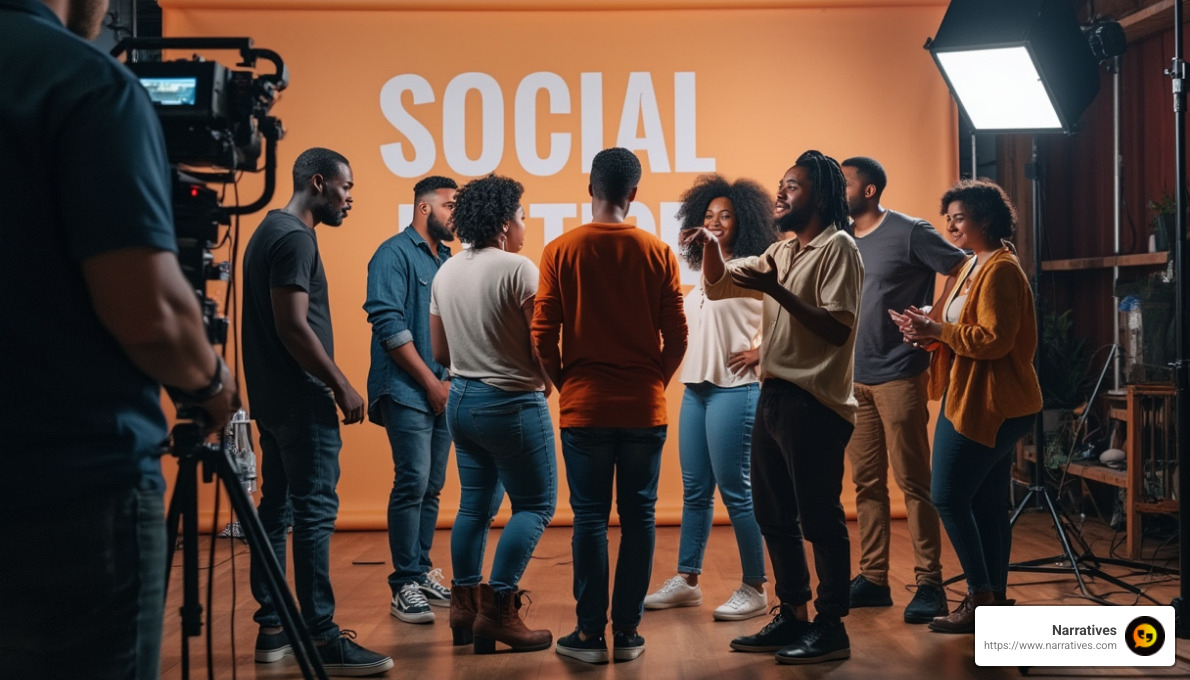
Social justice video production has become a pivotal tool in advocating for change and mobilizing support for vital causes. At its core, this form of storytelling leverages the immense power of video to foster emotional connections and inspire action. Here's a brief overview of why it's so effective:
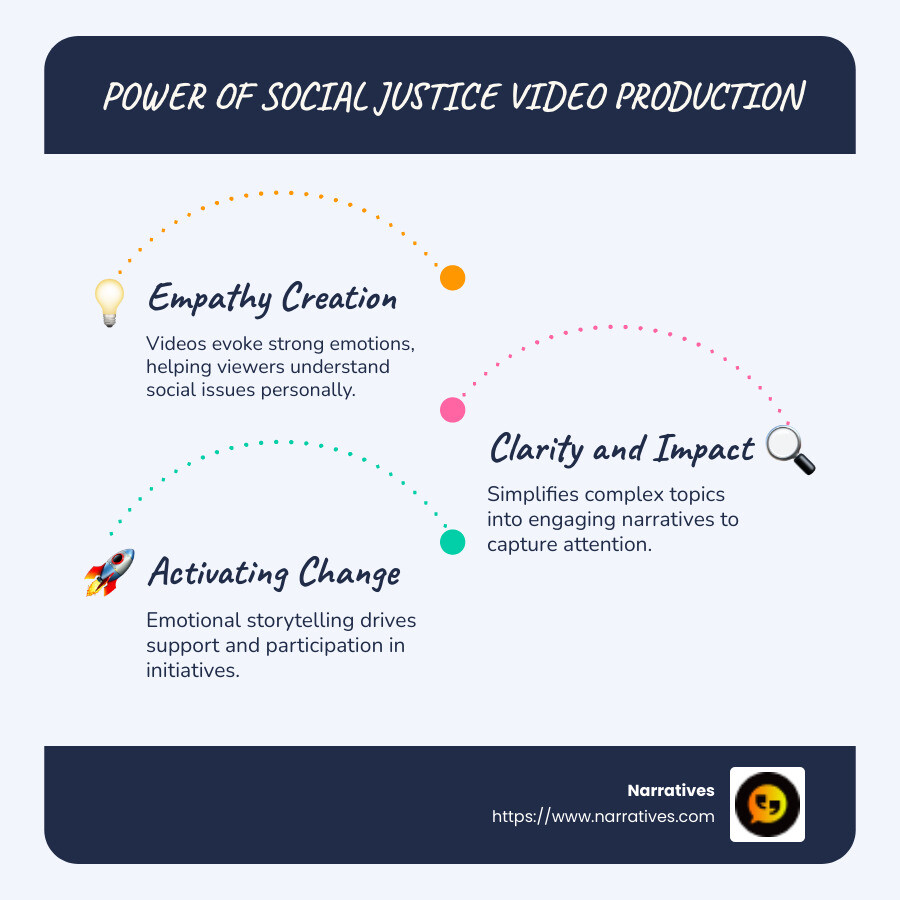
- Empathy Creation: Videos evoke strong emotions, helping viewers understand complex social issues on a personal level.
- Clarity and Impact: A well-crafted video distills complicated topics into accessible narratives that can grab attention and drive engagement.
- Activating Change: When people "get" the story emotionally, they're more likely to support and participate in social justice initiatives.
Storytelling through video goes beyond merely sharing facts. It crafts memorable narratives that resonate with audiences, leaving a lasting impression. As filmmakers who joined initiatives like the TWN Production Workshop have shared, video can transform not only their own beliefs in their ability but also the perception of their audience toward crucial social justice issues.
Producing impactful social justice videos isn't just about technique. It's about telling stories that matter, and crafting messages that inspire unity and action.
Understanding Social Justice Video Production
Social justice video production is a powerful way to address complex issues, engage emotionally with audiences, and devise a strategic approach for maximum impact. Here's how it works:
Tackling Complex Issues
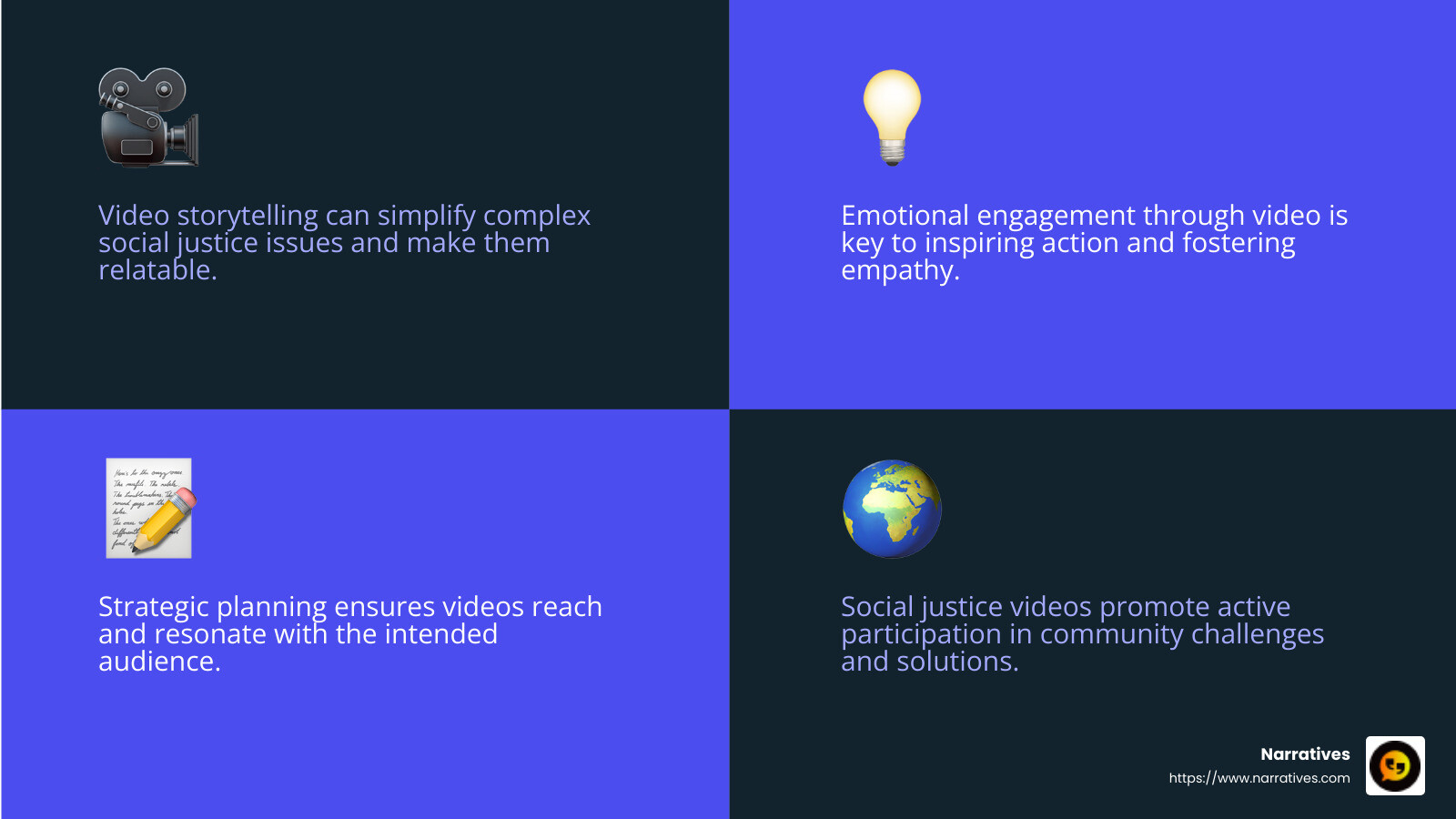
Social justice topics are often layered and multifaceted. To address these, videos must break down intricate details into clear, digestible pieces. This requires a deep understanding of the issues at hand.
For instance, the TWN Production Workshop empowers filmmakers from underrepresented communities to create films that highlight social justice themes. Participants learn to research, script, and produce content that makes complicated topics understandable and relatable.
Emotional Engagement
Engaging viewers on an emotional level is crucial. Videos can transcend mere information-sharing by connecting with viewers’ feelings, which is essential for inspiring action.
A well-designed video combines imagery, narration, and sound to create an emotional journey. This approach helps viewers feel the weight of the issues, fostering empathy and understanding. As noted in the research, people are more likely to act when they feel emotionally connected to a cause.
Strategic Video Creation
Creating impactful social justice videos requires strategic planning. This involves understanding your audience, crafting a compelling narrative, and choosing the right platforms for distribution.
Collaborating with experts, like those at Narratives, helps refine this strategy. They work with non-profits to produce content that highlights community challenges and solutions, ensuring the message reaches and resonates with the intended audience.
By focusing on these elements, social justice video production not only informs but also moves people to become active participants in creating change.
The Role of Video in Social Justice
Videos play a pivotal role in driving social justice by fostering empathy, raising awareness, and prompting action.
Building Empathy
Empathy is the cornerstone of social justice. Without it, change is impossible. Videos can humanize complex issues, making them relatable and personal. By showcasing real stories and emotions, videos help viewers see through the eyes of those affected by social injustices. This emotional connection is crucial. When people feel empathy, they are more likely to support a cause.
For example, Narratives collaborates with non-profits to create content that highlights the struggles and triumphs of underrepresented communities. These stories not only inform but also evoke a deep emotional response, encouraging viewers to care and act.
Raising Awareness
Awareness is the first step toward change. Videos can cut through the noise and capture attention in a way that few other mediums can. By simplifying complex issues, videos help audiences understand what's at stake and why action is necessary.
A compelling video can explain the intricacies of social justice issues quickly and clearly. As mentioned in the research, a well-crafted video acts like a guide, making complex topics accessible to everyone. This clarity helps build a broader understanding of the issues, which is vital for rallying support.
Inspiring Action
The goal of social justice videos is to inspire action. Videos have the unique ability to motivate people by combining facts with emotional storytelling. When viewers see the impact of social injustices and feel a personal connection to those affected, they are more likely to take steps to help.
Whether it's signing a petition, attending a rally, or donating to a cause, videos can be the catalyst for real-world change. By sharing powerful narratives, organizations can transform passive viewers into active participants in the fight for justice.
In summary, social justice video production is not just about telling stories. It's about creating a ripple effect of empathy, awareness, and action that can lead to meaningful change.
Key Elements of Impactful Social Justice Videos
Creating a powerful social justice video involves more than just capturing moments on camera. It's about weaving together narration, imagery, and sound design to tell a compelling story that resonates with audiences.
Narration
Narration is the backbone of any impactful video. It guides the viewer through the story, providing context and connecting the dots between the visuals and the message. A strong narrative voice can turn complex social justice issues into relatable stories that engage viewers emotionally.
For example, in the TWN Production Workshop, aspiring filmmakers are taught the art of storytelling. They learn how to craft narratives that not only inform but also inspire viewers to take action. As one graduate shared, “Technique for us is secondary. The people themselves have a rich life experience, a knowledge of history and their culture and community organization.”
Imagery
Imagery is what captures the viewer's attention and conveys the emotional weight of the story. Powerful visuals can make abstract issues tangible, showing the real-world impact of social injustices.
Consider the work done by Narratives in collaboration with non-profits. They use imagery to highlight the struggles and triumphs of underrepresented communities. This approach not only informs but also evokes a deep emotional response, encouraging viewers to care and act.
Sound Design
Sound design is often the unsung hero of video production. It sets the tone and mood, drawing viewers into the story. The right combination of music, sound effects, and ambient noise can amplify the emotional impact of the visuals and narration.
A well-designed soundscape can take viewers on an emotional journey, stirring them to action. As noted in the research, combining sensory-rich sound effects with beautiful imagery and neat narration can create a powerful call to action.
In summary, the key elements of social justice video production—narration, imagery, and sound design—work together to create videos that not only inform but also inspire. By focusing on these elements, filmmakers can craft compelling stories that drive empathy, awareness, and action.
How to Create Social Justice Videos
Creating impactful social justice videos is a collaborative journey that involves honing production skills and engaging deeply with communities. Let's explore how these elements come together to make a difference.
Collaboration
Collaboration is the heart of social justice video production. Working with diverse voices ensures that the stories told are authentic and inclusive. Collaborating with community members, activists, and subject matter experts can provide unique insights and perspectives.
For instance, Narratives partners with non-profits to create content that highlights the communities they serve. This partnership approach ensures that the videos reflect the true needs and narratives of the people involved, leading to more genuine and impactful storytelling.
Production Skills
Developing strong production skills is essential for creating professional and engaging videos. This includes mastering techniques in filming, editing, and sound design. The San Francisco Film School offers workshops that teach these skills, empowering filmmakers to tell stories with precision and creativity.
As Lyntoria Newton, an experienced documentary filmmaker, emphasizes, having a robust skill set allows filmmakers to focus on storytelling without being hindered by technical limitations. This ensures that the message remains clear and powerful.
Community Involvement
Community involvement is crucial for producing videos that resonate with viewers. Engaging with the community not only provides rich content but also builds trust and support for the project. By involving community members in the production process, filmmakers can ensure that the videos accurately represent the issues and solutions from the community's perspective.
A great example is the work done by Pigeon Studio, which engages clients throughout the animation process to ensure the final product aligns with their vision and values. This approach guarantees that the animations are not only visually appealing but also meaningful and relevant to the cause.
By focusing on collaboration, honing production skills, and involving the community, filmmakers can create social justice videos that not only inform but also inspire action. These elements work together to produce content that is not only technically sound but also deeply resonant and impactful.
Frequently Asked Questions about Social Justice Video Production
How can video production support social justice causes?
Video production is a powerful tool for social justice causes because it can simplify complex issues and engage viewers emotionally. Videos can explain why certain problems exist, what is at stake, and how people can help. For instance, organizations like Narratives use video to highlight the work of non-profits, making their missions more accessible and relatable to a broader audience.
Videos capture attention in a busy world by combining compelling imagery, sound, and storytelling. They can cut through the noise, helping to build empathy and inspire action. Well-crafted videos can increase visibility, establish trust, and even aid in fundraising efforts for social justice initiatives.
What are the benefits of using animation in social justice videos?
Animation offers unique benefits in social justice video production. It allows for creativity and clarity, making complex topics easier to understand. Animated explainer videos can break down difficult concepts into digestible pieces, engaging viewers in a way that live-action might not.
Narratives excels in creating animations that convey social justice messages effectively. Their work shows how animations can make a cause more visible and relatable, helping organizations reach wider audiences. Animations can also be custom to match an organization's style and tone, ensuring that the message aligns with its values.

How do you ensure your video reaches the right audience?
To ensure that a social justice video reaches the right audience, it's crucial to have a well-thought-out distribution strategy. This involves understanding who the target audience is and where they spend their time online. Platforms like social media, websites, and email newsletters are effective channels for reaching diverse audiences.
Collaborating with community organizations and influencers can also help spread the word. These partners can share the video with their networks, amplifying its reach. Additionally, using analytics tools to track engagement can provide insights into how the video is performing and whether it's reaching the intended audience.
By combining strategic distribution with engaging content, social justice videos can effectively reach and resonate with the right people, driving awareness and action.
Conclusion
At Narratives, we believe in the power of community storytelling to create change. By partnering with non-profits, we help lift underrepresented voices and amplify their stories through impactful social justice video production. Our approach focuses on building trust and increasing visibility for these organizations, enabling them to share their impact stories in a compelling way.
Non-profit partnerships are at the heart of what we do. We work closely with organizations to understand their missions and craft videos that resonate emotionally with their audiences. By highlighting the real stories and challenges faced by these communities, we aim to inspire action and foster a deeper understanding of social justice issues.
Our commitment to community storytelling ensures that the narratives we create are authentic and meaningful. We collaborate with local voices and experts to ensure that each video reflects the true experiences and aspirations of the people involved. This approach not only strengthens the message but also builds a network of support that can drive lasting change.
When attention is scarce, Narratives is dedicated to helping non-profits cut through the noise with high-quality, emotionally engaging content. By focusing on the unique stories within each community, we can help organizations connect with their audiences and inspire them to take action. Together, we can make a difference, one story at a time.


.png)