Acts of Kindness: Stories That Inspire Giving

Emotional Storytelling: The Heartbeat of Giving
Stories that inspire giving are powerful tools that bring communities together and encourage generosity. They touch hearts, build connections, and drive actions. Emotional storytelling, particularly those rich in impact and community-driven narratives, holds the potential to spark meaningful change.
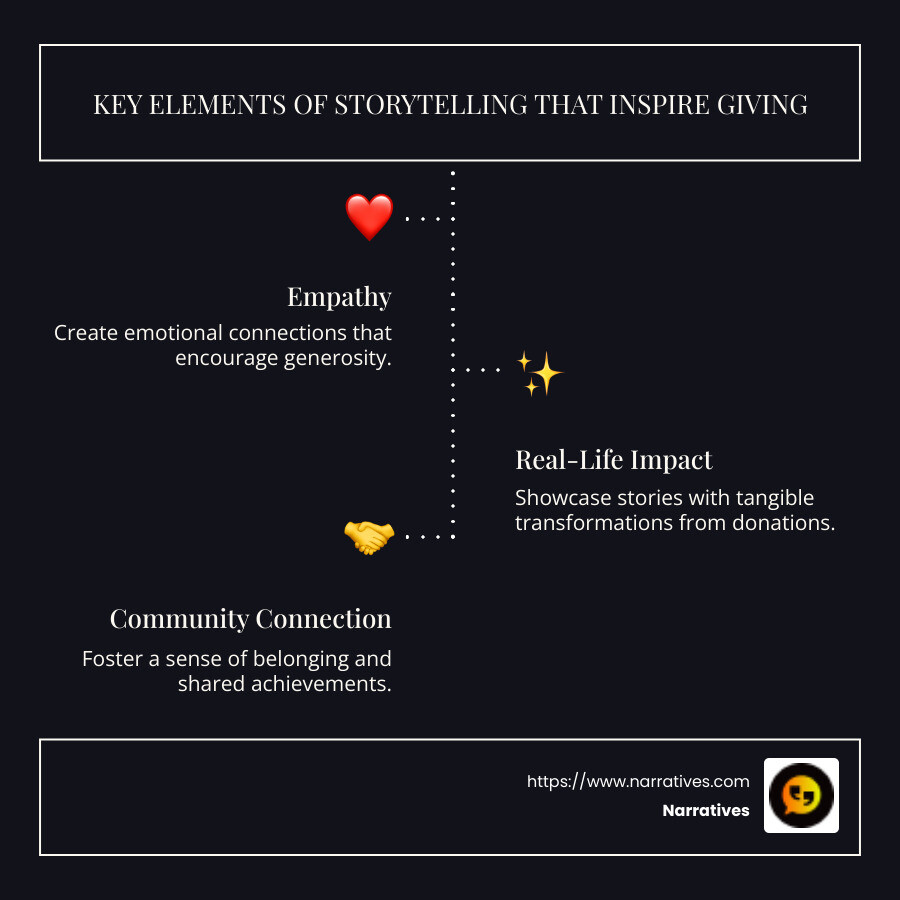
Here's how effective storytelling can inspire giving:
- Tugging at Heartstrings: Emotional stories can create empathy and understanding, urging people to open their hearts and wallets.
- Demonstrating Impact: Stories showcasing real-life changes illustrate how donations create tangible change, motivating further contributions.
- Building Community: Sharing stories of shared struggles and victories fosters a sense of belonging and collective action.
Accept the power of storytelling to ignite generosity and fuel your mission. Whether it's a tale of triumph over adversity or a quest for a better tomorrow, these narratives have the potential to inspire and transform.
Learn more about Stories that inspire giving:
The Power of Emotional Storytelling
Emotional storytelling is more than just sharing facts—it's about creating connections that resonate deeply with people. When stories touch on emotions, they become unforgettable and inspire action.
Emotional Resonance
Stories that evoke strong emotions can motivate people to give and support causes. For instance, ORGANIZE's campaign on #GivingTuesday, which encouraged organ donation, was a powerful example of emotional storytelling. By asking people to "Give with your Heart," they created a connection that led to over 40 million impressions and thousands of new organ donors.
Trust-Building
Trust is crucial when it comes to donations. People are more likely to give when they trust the organization. Emotional storytelling helps build this trust by showing transparency and authenticity. Randy Milanovic's story about his battle with cancer and his commitment to ethical business practices is a great example. By sharing his personal journey, Randy not only built trust but also inspired others to act with integrity and empathy.
Visibility
Stories that resonate emotionally are also more likely to be shared, increasing visibility for the cause. The Cleveland and Pratt Libraries' friendly rivalry on #GivingTuesday is a perfect example. Their story was not only engaging but also widely shared, leading to greater awareness and donations for both libraries.
By using the power of emotional storytelling, organizations can create a ripple effect of generosity and support. These stories are not just narratives; they are catalysts for change, driving social impact and community involvement.
Stories That Inspire Giving
Stories that inspire giving often come from underrepresented voices and purpose-driven organizations. These narratives shine a light on social issues and drive meaningful change.
Underrepresented Voices
Giving a platform to underrepresented voices can be transformative. For example, Project Awesome in Singapore uses stories of trailblazing women to inspire school children. This initiative highlights how women overcame barriers, encouraging young people to dream big and pursue their goals.
These stories are not just about individual achievements; they are about communities rising together. By showcasing diverse perspectives, we foster empathy and understanding, motivating people to contribute to causes that might otherwise remain unnoticed.
Social Impact
Purpose-driven organizations often focus on creating tangible social impact. Defy Ventures is a great example. They work to reduce recidivism by turning inmates into entrepreneurs, using storytelling as a tool for change. Narratives like Quan Huynh's, who transformed his life through entrepreneurship, highlight the potential for personal and societal change.
These stories are powerful because they show real-world impact. They illustrate how donations and support can change lives, making them compelling calls to action.
Purpose-Driven Organizations
Organizations with a clear purpose use storytelling to connect with their audience on a deeper level. Narratives, for instance, supports organizations that promote environmental sustainability and social justice. By sharing stories of their clients' successes, they not only raise awareness but also inspire others to join their mission.
These stories are more than just words; they are powerful tools that can inspire action and drive donations. By focusing on underrepresented voices and meaningful social impact, purpose-driven organizations can create a lasting change in the world.
Real-Life Acts of Kindness
In a world filled with challenges, real-life acts of kindness often come from unexpected places. These stories of community heroes and everyday philanthropy are not just inspiring; they show the incredible impact of compassion and generosity.
Community Heroes
Community heroes are individuals who make a big difference with small acts. Take, for example, the volunteers at the Pars Equality Center. They dedicate their time to support Persian-speaking immigrants, offering services like legal assistance and cultural integration. Their efforts are not just about helping individuals; they are about building a stronger, more inclusive community.
These heroes often work behind the scenes, quietly changing lives and inspiring others to do the same. Their stories remind us that anyone can be a hero, regardless of their background or resources.
Everyday Philanthropy
Philanthropy isn't just for the wealthy. Everyday philanthropy is about ordinary people making extraordinary contributions. Consider the story of Randy Milanovic, who, after recovering from a serious illness, chose to give back by offering his expertise for free. He shares his knowledge through his book, Building a Better Business Website, one chapter at a time on Google+. This act of sharing knowledge is a form of philanthropy that can inspire others to give in their own unique ways.

These everyday acts of kindness show that giving doesn't always mean donating money. It can be about sharing time, skills, or even a simple smile.
Inspiring Narratives
Inspiring narratives have the power to change lives. Project Awesome in Singapore is a prime example. By sharing stories of women from the Singapore Women’s Hall of Fame, they empower young people to dream big and overcome obstacles. These stories are not just about past achievements; they are about paving the way for future generations.
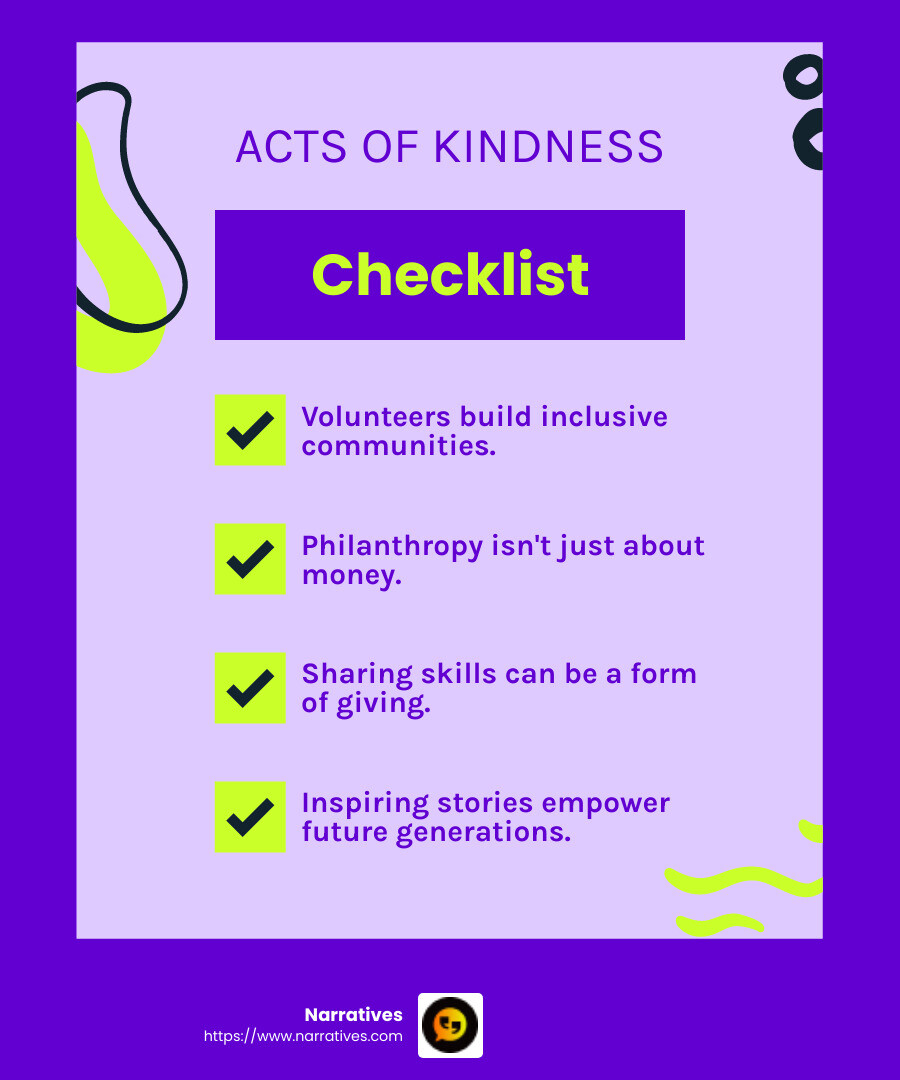
Inspiring narratives are a reminder that stories of kindness and courage can motivate others to act. They show us that change is possible, and that each of us has the power to make a difference.
As we continue to explore the impact of storytelling, let's dive into how these narratives drive social impact and inspire action.
How Storytelling Drives Social Impact
Storytelling is a powerful tool that goes beyond just sharing experiences. It can inspire action, change perceptions, and drive social impact. Here's how:
Non-Profit Partnerships
Partnerships between non-profits and content creators can amplify the reach and impact of stories. For instance, Narratives collaborates with organizations like the Pars Equality Center to highlight the struggles and triumphs of underrepresented communities. These partnerships ensure that stories are told authentically and reach audiences who can support and engage with the cause.
By working together, non-profits and storytellers can create compelling narratives that resonate with a broader audience, encouraging them to take action.
Multimedia Content
Multimedia content is key to engaging audiences. Using videos, podcasts, and interactive tools, organizations can bring stories to life. For example, the #GivingTuesday campaign encourages non-profits to explore new media like Facebook Live and Instagram Stories to connect with potential donors.
Multimedia storytelling not only captures attention but also makes complex issues more relatable and understandable. It allows people to see, hear, and feel the impact of their contributions, making them more likely to support a cause.
Action-Inspiring Stories
Stories have the power to inspire action by connecting with people's emotions. The narrative of Amazon's quest to become the world's largest online retailer, shared by its former CFO Joy Covey, is a classic example of how storytelling can motivate stakeholders to pursue ambitious goals.
Similarly, Project Awesome in Singapore uses stories of trailblazing women to inspire young people to dream big and overcome obstacles. These stories don't just inform; they empower individuals to make a difference in their own communities.
When stories are aligned with a clear purpose, they can rally people around a cause and drive meaningful social change.
By using the power of storytelling, organizations can mobilize support, inspire action, and create lasting social impact. As we explore further, let's address some common questions about how stories can inspire giving.
Frequently Asked Questions about Stories That Inspire Giving
How can storytelling increase donations?
Storytelling has a unique ability to connect with people's emotions, making them feel more engaged and invested in a cause. When a story is well-told, it can move people to take action, such as donating to a charity. Rags-to-riches and quest narratives are powerful storytelling structures that resonate with audiences. For example, Walmart's use of the rags-to-riches archetype positions it as an underdog, inspiring belief in perseverance and self-determination. This emotional connection can motivate people to support and donate, as they feel part of the journey.
Additionally, stories that highlight real-life impacts and successes can build trust and credibility. When people see tangible outcomes from their contributions, they are more likely to donate again.
What makes a story emotionally resonant?
An emotionally resonant story is one that connects deeply with its audience on a personal level. It involves relatable characters, clear challenges, and meaningful resolutions. For instance, Joy Covey's narrative about Amazon's quest emphasizes the importance of setting ambitious goals and challenging conventions. This story resonates because it not only highlights the company's journey but also reflects the personal struggles and triumphs of its stakeholders.
To make a story emotionally resonant, it should include:
- Relatable characters: People connect with stories that reflect their own experiences or aspirations.
- Clear challenges: Highlighting obstacles helps audiences appreciate the significance of the journey.
- Impactful outcomes: Showing the positive impact of actions can inspire hope and motivate change.
How do non-profits benefit from storytelling?
Non-profits can greatly benefit from storytelling by using it to raise awareness, build community support, and drive donations. Storytelling can transform complex issues into relatable narratives, making them easier for the public to understand and support. For example, Defy Ventures uses storytelling to show how entrepreneurship can reduce recidivism, effectively engaging supporters by illustrating real change.
By telling compelling stories, non-profits can:
- Increase visibility: Stories can spread awareness about the organization's mission and reach new audiences.
- Build trust and credibility: Authentic stories demonstrate transparency and accountability, fostering trust with donors.
- Mobilize action: Engaging stories can inspire people to volunteer, donate, or advocate for the cause.
Overall, storytelling is a vital tool for non-profits to connect with their audience, communicate their impact, and inspire ongoing support.
Conclusion
Narratives plays a pivotal role in changing how non-profits share their stories. By leveraging digital storytelling, we help purpose-driven organizations amplify their voices and showcase their impact in ways that resonate deeply with audiences.
Digital storytelling is more than just sharing facts; it's about creating a connection. Through emotionally engaging narratives, we bring underrepresented voices to the forefront, highlighting the social impact of their work. This approach not only builds trust but also increases visibility, making it easier for non-profits to reach and inspire wider audiences.
The impact of storytelling on non-profits is profound. It enables them to:
- Share their mission effectively: By telling stories that embody their values and goals, non-profits can convey their mission in a relatable and engaging manner.
- Engage supporters: Stories invite people to become part of the journey, encouraging them to support the cause through donations, volunteering, or advocacy.
- Showcase real-world impact: By illustrating the tangible outcomes of their work, non-profits can demonstrate their effectiveness and build lasting credibility with their supporters.
At Narratives, we are committed to being the go-to digital storytelling partner for non-profits and purpose-driven organizations. Our focus on high-quality, emotionally resonant content helps these organizations share their stories in a way that inspires action and fosters a deeper connection with their communities.
Find how we can help lift your organization's storytelling efforts by visiting our service page. Let's work together to make a difference through the power of storytelling.


.avif)