The Case for Storytelling: Engaging Your Audience with Case Studies

Storytelling case studies are powerful tools in creating engaging narratives that capture your audience's attention and resonate on an emotional level. By changing traditional project reports into compelling stories, you not only share information but also connect with your audience, making your mission memorable and impactful. Through the art of storytelling, case studies become more than just data; they become tales of challenges and triumphs, offering relatable insights and meaningful experiences.
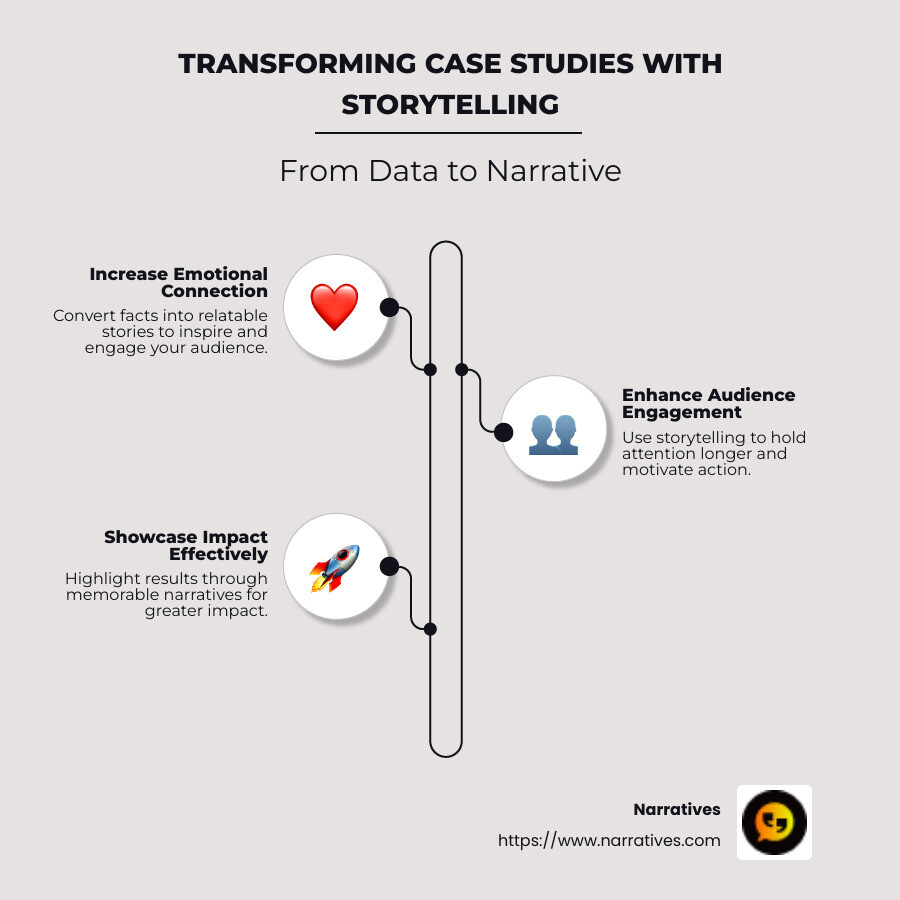
Increase Emotional Connection: Storytelling transforms facts and figures into human experiences, making your audience feel connected and inspired.
Improve Audience Engagement: Engaging stories hold attention longer and motivate action, whether it's raising awareness or driving donations.
Showcase Impact Effectively: By using narratives, the results and impact of your initiatives are highlighted more clearly and memorably.
This initial approach helps non-profits and socially-focused organizations transform their communications from mere narratives to stories that compel, inspire, and mobilize support.
Easy Storytelling case studies word list:
- Documentary storytelling techniques
- Impactful storytelling techniques
- Storytelling through digital media
The Power of Storytelling in Case Studies
When it comes to storytelling case studies, the power lies in their ability to forge emotional connections. This isn't just about relaying facts—it's about making those facts resonate on a human level. A well-told story can transform a simple case study into an emotional journey that your audience can relate to and remember.
Emotional Connection
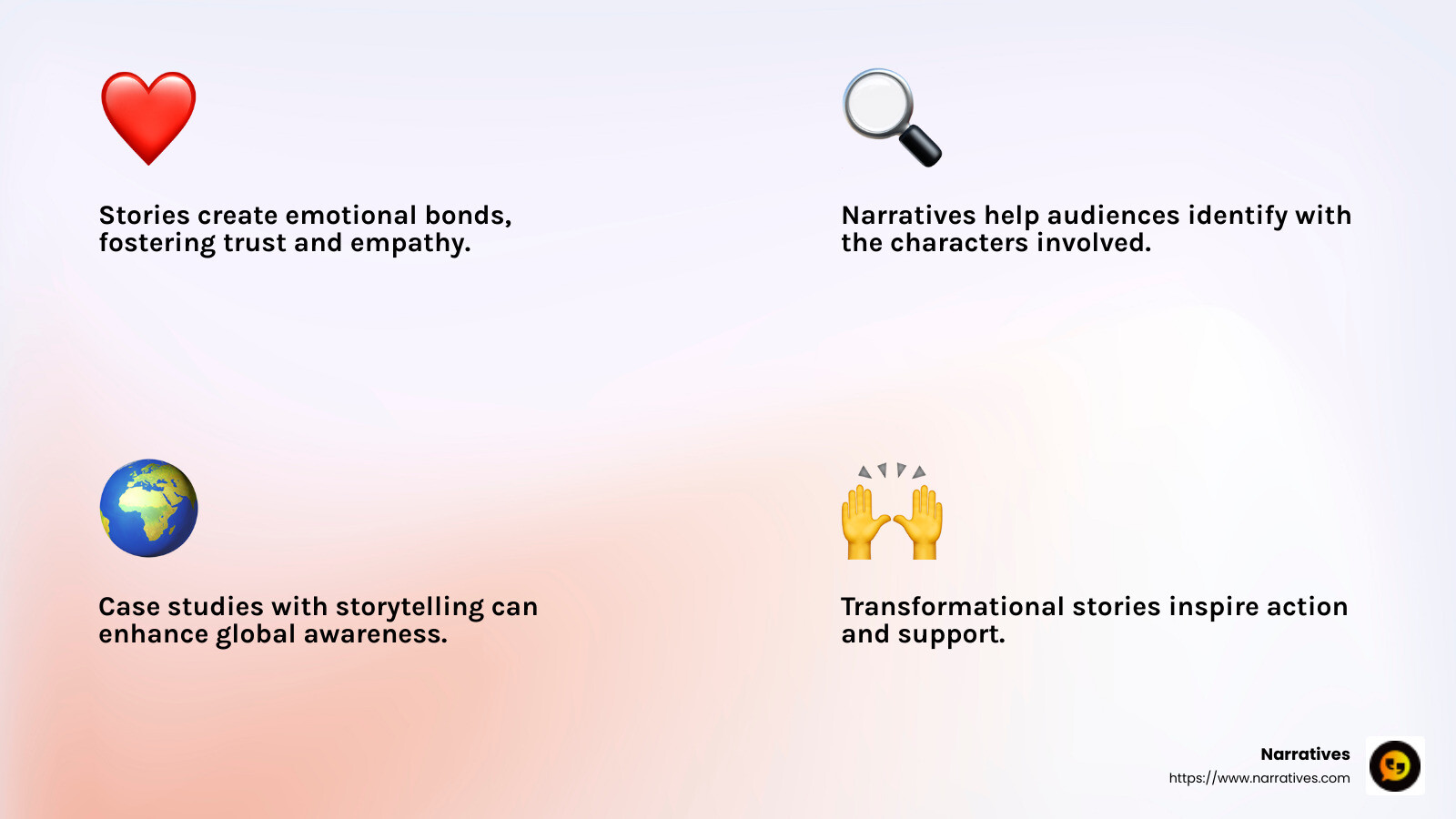
Stories tap into emotions. They allow your audience to see themselves in the narrative, creating a personal connection. This emotional bond is crucial because it builds trust and empathy. For example, Charity: Water uses storytelling to connect with donors by sharing real-life stories of communities gaining access to clean water. This approach not only informs but also engages supporters on a deeper emotional level.
Change and Change
At the heart of every great story is change. The narrative should focus on the change that occurs, whether it's a person overcoming a challenge or an organization achieving a milestone. People are naturally drawn to stories of change because they mirror our own experiences and aspirations. In your case study, highlight how your subject—be it an individual or a community—evolved through the process, and how your organization played a pivotal role in that change.
Storytelling Techniques
To craft compelling case studies, employ storytelling techniques that captivate your audience:
The Hero's Journey: Position your subject as the hero. Illustrate their journey from challenge to triumph with your organization as the guiding force.
Three-Act Structure: Break down the story into three parts: the setup, the confrontation, and the resolution. This classic structure keeps the narrative engaging and easy to follow.
Emotional Appeal: Use vivid descriptions and relatable scenarios to evoke emotions. Highlight the stakes and the impact of the change to keep the audience invested.
By integrating these storytelling techniques, you can turn your case studies into powerful narratives that not only inform but also inspire and motivate your audience to act.
Structuring Effective Storytelling Case Studies
Crafting a storytelling case study is like piecing together a compelling narrative. It requires attention to three key elements: the background, the process, and the outcome. Each plays a unique role in creating a story that feels complete and engaging.
Background
Your story begins with the background. This sets the stage by introducing the characters and the challenge they face.
Who is the story about? Identify the main characters—be it a company, a team, or an individual. Provide context about their environment or industry.
What is the problem? Clearly define the issue at hand. This is the conflict that needs resolution, akin to the antagonist in a novel.
Why does it matter? Explain the stakes involved. Why is this problem significant, and what are the potential consequences of not solving it?
Think of this section as the opening chapter in a book. It should grab attention and make the audience want to learn more.
Process
This is the heart of your case study. It covers the journey from problem to solution.
What steps were taken? Outline the actions implemented to address the problem. Be detailed but concise.
Who was involved? Highlight the roles played by different stakeholders. This adds depth and shows collaboration.
What challenges arose? Every story has obstacles. Discuss any problems and how they were overcome.
The process is where you can showcase your organization's expertise and creativity. It's where the story builds momentum.
Outcome
The outcome is the story's resolution. It shows the results of the actions taken.
What was achieved? Share the tangible benefits and improvements. This is your story's happy ending.
How did it impact the characters? Discuss the change experienced by the main characters. This is where the emotional connection deepens.
What are the broader implications? Consider how this case study might inspire others or lead to larger changes.
A great outcome section doesn't just celebrate success—it links back to the initial problem, showing a full-circle change.
By structuring your case study with a clear background, a detailed process, and a compelling outcome, you create a narrative that resonates and inspires action. This approach not only informs but also leaves a lasting impression, making your audience eager to engage with your organization.
Storytelling Case Studies for Non-Profits
Non-profits have a unique opportunity to harness storytelling case studies to highlight their social impact. These stories are not just about showcasing success; they're about connecting with audiences on an emotional level and driving change.
Social Impact
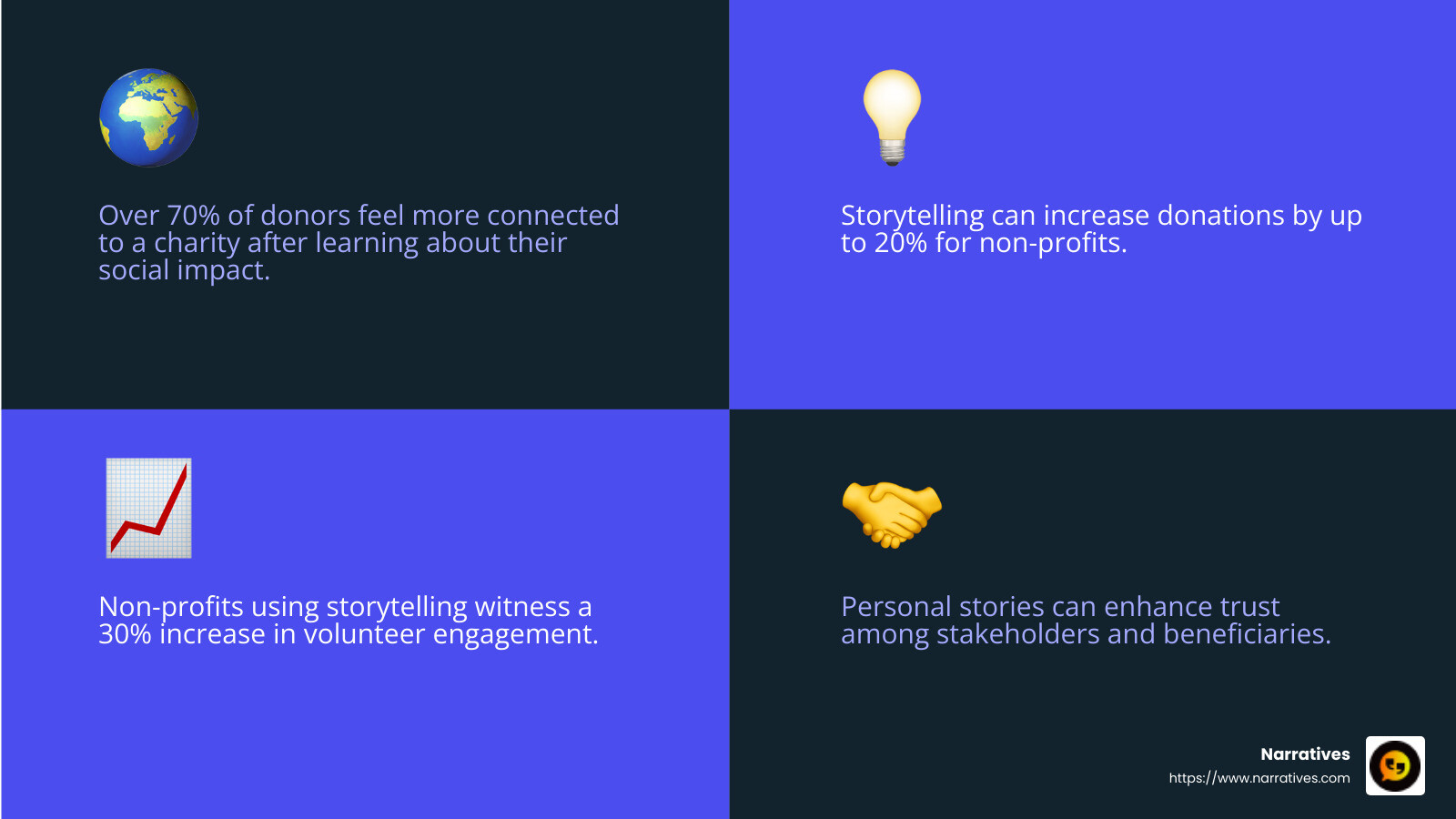
The heart of non-profit storytelling lies in social impact. It's about showing how an organization makes a difference in the world.
Real-Life Changes: Use stories of individuals or communities who have been positively impacted. This personalizes the narrative and makes the cause relatable.
Quantifiable Results: While emotions are key, numbers can also be powerful. Share statistics that demonstrate the scale of your impact.
Community-Driven Storytelling
Community-driven storytelling is about amplifying the voices of those you serve. It's not just about what the organization does; it's about who benefits and how.
Highlight Local Heroes: Focus on community members who play a pivotal role in the story. This could be volunteers, beneficiaries, or local leaders.
Collaborative Narratives: Involve the community in creating the story. This not only enriches the narrative but also fosters a sense of ownership and pride.
Purpose-Driven Organizations
Purpose-driven organizations have a clear mission. Their stories should reflect this mission and show how every action aligns with their goals.
Mission Alignment: Clearly link the story to the organization's mission. This helps reinforce the purpose behind the actions.
Inspire Action: Use stories to motivate others to join the cause. Whether it's through donations, volunteering, or advocacy, the story should inspire action.
By focusing on social impact, community-driven storytelling, and the mission of purpose-driven organizations, non-profits can craft storytelling case studies that not only inform but also inspire. These stories are powerful tools for building connections, driving engagement, and ultimately making a greater impact.
How to Use Storytelling Techniques in Case Studies
Crafting a storytelling case study is like taking your audience on a journey. It's more than just facts and figures—it's about weaving a narrative that captivates and engages. Let's explore some storytelling techniques that can transform your case studies.
Hero's Journey
At the heart of every great story is a hero. In your case study, the hero is your customer or client. They start with a challenge or problem, much like the beginning of any hero's journey.
Identify the Hero: Clearly define who your hero is. It could be an individual, a team, or even an entire organization.
The Challenge: What problem did they face? Describe it in relatable terms. Think of it as the dragon they need to slay.
Change: Highlight the journey they took to overcome the challenge. This is where your product or service comes in as the guiding tool or ally.
Three-Act Play
A classic structure for storytelling is the three-act play. This can be a powerful way to organize your case study.
Act One - The Setup: Introduce your hero and their world. What is their situation before the change? This sets the stage and draws your audience in.
Act Two - The Conflict: This is where the tension builds. Describe the obstacles your hero faces and the turning point that leads them to seek a solution.
Act Three - The Resolution: Here, the hero finds success. Show how your product or service helped them achieve their goal. Highlight the positive outcomes and any lessons learned.
Emotional Appeal
Emotion is a key driver in storytelling. It helps your audience connect on a personal level.
Empathy: Use language and imagery that evoke empathy. Describe the hero's emotions and challenges vividly.
Relatability: Make the story relatable to your audience. Use scenarios and language they can see themselves in.
Inspiration: End on an inspiring note. Leave your audience feeling uplifted and motivated to take action.
By using the hero's journey, structuring your story into a three-act play, and appealing to emotions, you can create storytelling case studies that are not just informative but also compelling and memorable.
Frequently Asked Questions about Storytelling Case Studies
How can storytelling improve case studies?
Storytelling can transform case studies from dry, data-heavy documents into engaging narratives that capture attention and inspire action. When you weave a story into your case study, it:
Creates Emotional Connections: People connect with stories on an emotional level. By presenting relatable characters and situations, you can help your audience see themselves in the story, fostering empathy and trust.
Improves Understanding: A well-told story can simplify complex information, making it easier for your audience to grasp key points and remember them.
Increases Engagement: Stories are more interesting than plain facts. They keep your audience engaged from start to finish, increasing the likelihood of your message being heard and acted upon.
Illustrates Impact: Storytelling highlights the real-world impact of your solutions, showing how they lead to positive change and success.
What are the key elements of a storytelling case study?
To craft an effective storytelling case study, focus on these key elements:
The Hero: Identify the protagonist of your story. This could be a customer, a team, or an organization facing a challenge.
The Conflict: Clearly define the problem or obstacle the hero is up against. This sets the stage for the story and creates tension.
The Solution: Show how your product or service helped the hero overcome their challenge. Detail the steps taken and decisions made along the way.
The Change: Highlight the change or improvement that resulted from using your solution. This is where the hero's journey culminates in success.
The Emotional Arc: Weave in emotions throughout the story. Use language that evokes feelings of empathy, hope, and inspiration.
How do storytelling case studies benefit non-profits?
Non-profits can greatly benefit from storytelling case studies by:
Showcasing Impact: Stories can vividly illustrate the positive changes their initiatives bring to communities, making their work more tangible and relatable.
Building Trust and Credibility: By sharing authentic stories of real people and communities, non-profits can build trust with donors and supporters.
Inspiring Action: Emotional stories can motivate individuals to get involved, donate, or support the cause in other ways.
Highlighting Purpose: Storytelling allows non-profits to convey their mission and values in a compelling way, aligning with the aspirations of potential supporters.
By incorporating these elements and focusing on emotional connections, non-profits can create storytelling case studies that not only inform but also inspire and engage their audience.
Conclusion
At Narratives, we believe that storytelling is more than just a tool—it's a powerful way to connect, engage, and inspire. As a digital storytelling partner, we specialize in helping non-profits and purpose-driven organizations tell their stories in a way that resonates with audiences and drives meaningful change.
Why choose Narratives for your storytelling needs?
Elevating Underrepresented Voices: We focus on amplifying the stories of those who often go unheard, ensuring their experiences and struggles are shared with empathy and impact.
Creating Emotional Connections: Our storytelling approach prioritizes emotional resonance, allowing audiences to connect deeply with the stories of real people and communities.
Highlighting Social Impact: Through our work, we help non-profits showcase the tangible, positive changes they bring about, making their mission more relatable and inspiring.
Inspiring Action: Our storytelling not only informs but also motivates people to act, whether by donating, volunteering, or advocating for a cause.
By partnering with us, non-profits can leverage the power of storytelling to build trust, increase visibility, and inspire action. Our commitment to high-quality, emotionally resonant content ensures that your organization's impact stories are told in a way that truly matters.
Find how we can help you tell your story. Learn more about our services.


.avif)