Unleash Your Brand's Potential with These Storytelling Ideas

Storytelling content ideas are the secret sauce to open uping your brand's full potential. In today's digital world, where everyone is vying for attention, storytelling can set you apart. Whether you're looking to amplify your mission, resonate with your audience, or simply convey your values, effective storytelling is your key tool.
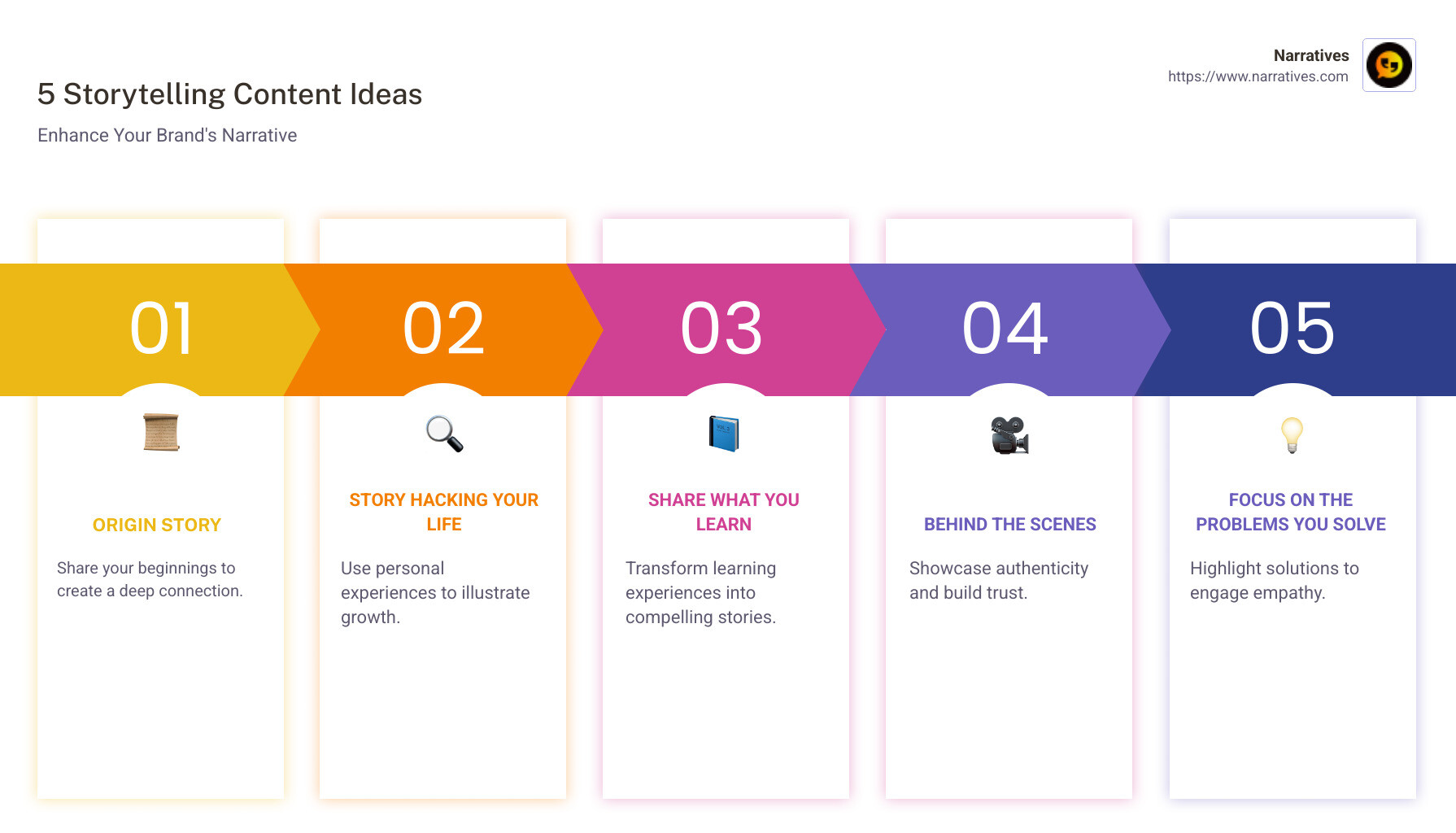
Here's a quick glance at actionable storytelling content ideas to lift your brand:
- Origin Story - Share your beginnings to create a deep connection.
- Story Hacking Your Life - Use personal experiences to illustrate growth.
- Share What You Learn - Transform learning experiences into compelling stories.
- Behind The Scenes - Showcase authenticity and build trust.
- Focus On The Problems You Solve - Highlight solutions to engage empathy.
Storytelling not only makes your content memorable but also boosts your brand's image. Whether you're a non-profit wanting to amplify your mission or a brand focusing on social impact, great stories help to bridge the gap between your values and your audience.
Simple guide to Storytelling content ideas:
Understanding Storytelling Content Ideas
Storytelling is more than just sharing a story. It's about crafting a narrative that resonates, engages, and inspires action. When it comes to storytelling content ideas, there are countless ways to make your brand's voice heard. Let's break down some key concepts.
Creative Storytelling
Creative storytelling is about thinking outside the box. It's not just about what you say but how you say it. Consider using a mix of formats like videos, infographics, or interactive content to engage your audience. Think of storytelling as an art form where you paint a picture with words and visuals. The goal is to make your audience feel something and, in turn, remember your message.
Storytelling Techniques
Understanding storytelling techniques is crucial. Here are a few to consider:
The Hero’s Journey: This technique involves a protagonist who overcomes challenges to achieve a goal. It's a classic narrative that can be custom to fit any brand story. For instance, position your customer as the hero and your product as the tool that helps them succeed.
Before-After-Bridge: This technique showcases the change your product or service provides. Start with the problem (Before), show the solution (After), and explain how your product bridges the two.
AIDA (Attention, Interest, Desire, Action): This model is about capturing attention, sparking interest, creating desire, and prompting action. It's a straightforward way to structure your stories to lead your audience through a journey.
PPPP (Picture, Promise, Prove, Push): Begin with a vivid picture, make a promise, prove it with facts or testimonials, and push the audience towards action.
These techniques are not just theoretical; they are practical tools that can transform your content into compelling narratives that captivate and convert.
Why Storytelling Matters
Stories are powerful because they trigger emotional responses. They release brain chemicals like oxytocin, which fosters trust and connection. This emotional engagement makes your content memorable and impactful. In a world flooded with information, storytelling can cut through the noise and make your brand stand out.
Incorporating these storytelling content ideas and techniques into your strategy can lift your brand and deepen your connection with your audience. Whether you're a non-profit or a business, storytelling is a tool that can amplify your mission and drive real impact.
5 Storytelling Content Ideas for Non-Profits
Your Origin Story
Every non-profit has a unique beginning, a story that sparked its mission. Sharing your origin story isn't just about narrating history; it's about connecting with your audience on a human level. Highlight the challenges and triumphs that shaped your organization. By doing so, you build a bridge of empathy and understanding. People love to know why you started and what drives your passion. This connection can turn casual followers into dedicated supporters.
Story Hacking Your Life
From personal experiences can be incredibly powerful. "Story hacking" involves turning personal moments into narratives that teach and inspire. Whether it's the founder's journey or a pivotal moment that changed the course of your organization, these stories can serve as teachable moments. Sharing these insights not only humanizes your brand but also positions you as a relatable and trustworthy entity.
Share What You Learn
Take your audience on a learning journey. Sharing lessons learned along the way demonstrates growth and transparency. This "zero-to-hero" narrative can be particularly engaging. It shows that your organization is constantly evolving and adapting. Whether it's a new strategy that worked or a lesson from a failed attempt, sharing these stories can inspire and educate your audience.
Behind The Scenes
People are naturally curious about what happens behind closed doors. Behind the scenes content offers a glimpse into your daily operations, fostering authenticity and trust. Showcasing the hard work and dedication of your team can humanize your organization. This type of content builds a more personal connection with your audience, making them feel like insiders.
Focus On The Problems You Solve
Non-profits exist to address specific challenges. Highlighting these problems and your solutions is crucial. Start by identifying a relatable protagonist—this could be a community member or a beneficiary of your services. Use empathy to connect with your audience. Describe the problem, evoke the emotions surrounding it, and present your organization as the solution. This approach not only informs but also motivates your audience to support your cause.
By weaving these storytelling content ideas into your narrative, non-profits can effectively engage and expand their audience. Each story you tell is an opportunity to deepen the connection with your supporters and amplify your mission's impact.
The Science Behind Storytelling
Let's explore the fascinating science of storytelling. Why does it work so well in engaging people and driving action?
Brain Chemicals
When you tell a story, you're not just sharing information. You're engaging your audience's brain in a unique way. Storytelling releases chemicals like dopamine, oxytocin, and endorphins in the brain.
- Dopamine helps with focus, motivation, and memory. When a story has a suspenseful or exciting moment, dopamine is released, making the story more memorable.
- Oxytocin, often called the "love hormone," is released when we feel connected to a story or its characters. It improves feelings of trust and empathy.
- Endorphins bring about feelings of pleasure and can make your audience feel more relaxed and open to your message.
This chemical cocktail makes storytelling a powerful tool for creating strong emotional connections with your audience.
Emotional Connection
Stories have the power to create deep emotional bonds. When you share a narrative filled with relatable characters and situations, you invite your audience to see themselves in the story. This emotional connection is what makes storytelling so effective in marketing and communication.
As Lisa Cron notes in Wired for Story, stories allow us to experience the world before we actually have to face it. This vicarious experience can inspire empathy and understanding, which are crucial for building lasting relationships with your audience.
Action-Oriented
A good story doesn't just entertain; it motivates action. According to Gary Klein in Made to Stick, stories provide both contextual simulation (knowledge about how to act) and inspiration (motivation to act). This dual aspect is designed to generate action.
When your storytelling is action-oriented, you guide your audience through a journey that not only informs but also inspires them to take steps towards a desired outcome. Whether it's supporting a cause, buying a product, or engaging with your content, storytelling can be a catalyst for change.
By understanding the science behind storytelling, you can craft narratives that not only capture attention but also create meaningful connections and drive action.
Storytelling Techniques for Impact
Crafting impactful stories is an art, and there are a few techniques that can help you master it. Let's explore some of the most effective storytelling methods: Hero’s Journey, Before-After-Bridge, AIDA, and PPPP.
Hero’s Journey
The Hero's Journey is a timeless storytelling structure that resonates across cultures. It's about change and triumph. Your customer is the hero, facing a challenge. Your product or service is the tool that helps them succeed.
Think of Frodo in The Lord of the Rings. He starts on a journey, overcomes obstacles, and returns victorious. In marketing, this means showing how your offering guides the customer to overcome their challenges and achieve their goals.
How to use it: Create a narrative where your customer is the hero. Show how they face a problem and how your product helps them return victorious.
Before-After-Bridge
The Before-After-Bridge technique is a powerful way to highlight change. You start by illustrating the problem (Before), show the improved situation (After), and introduce your product as the Bridge between the two.
Imagine starting a story with a cluttered, chaotic kitchen (Before) and ending with a spotless, organized space (After). Your product is the organizer that made it possible.
How to use it: Paint a clear picture of the problem and the desired outcome. Then, position your product as the essential bridge that connects the two.
AIDA
AIDA stands for Attention, Interest, Desire, and Action. It's a step-by-step formula to guide your audience from awareness to action.
- Attention: Capture interest with a compelling hook.
- Interest: Provide relevant and engaging information.
- Desire: Create a longing for your solution.
- Action: Encourage the audience to take the next step.
Consider how Apple grabs attention with sleek ads, builds interest with innovative features, creates desire with aspirational messaging, and prompts action with a clear call-to-action.
How to use it: Structure your story to lead the audience through these four stages, ensuring each step is clear and persuasive.
PPPP
The PPPP technique stands for Promise, Picture, Proof, and Push. It's about building trust and encouraging action.
- Promise: Start with a compelling promise of what your product can deliver.
- Picture: Paint a vivid picture of the benefits.
- Proof: Offer evidence to back up your claims.
- Push: Encourage the audience to take action.
This method is similar to AIDA but adds an emphasis on proof, which can be powerful for skeptical audiences.
How to use it: Use customer testimonials, case studies, or data to support your claims and push the audience towards action.
By incorporating these techniques, you can craft stories that not only grab attention but also inspire action. Whether it's through the heroic journey, transformative storytelling, or strategic persuasion, these methods can help you connect with your audience on a deeper level.
Frequently Asked Questions about Storytelling Content Ideas
What makes a good storytelling content idea?
A good storytelling content idea is one that resonates with your audience and aligns with your brand's message. It should be authentic, engaging, and relevant. Changes are at the heart of effective storytelling. Whether it's a personal change, a customer's success story, or a brand's journey, showing change is key.
To craft a compelling content idea, start by identifying the problems your audience faces. Then, think about how your story can offer solutions or insights. It's not just about selling a product; it's about creating an emotional connection. Your story should inspire, educate, or entertain, ultimately leading your audience to take action.
How can storytelling benefit non-profits?
Storytelling is a powerful tool for non-profits because it humanizes their mission and connects with people on an emotional level. By sharing personal stories of those impacted by their work, non-profits can foster empathy and inspire action. This approach helps in building trust and loyalty among supporters.
For instance, a non-profit focused on education might share a student's journey from struggling to thriving, thanks to their programs. This not only highlights the impact of their work but also motivates potential donors to contribute.
Additionally, storytelling can help non-profits stand out in a crowded space. By crafting unique and memorable narratives, they can attract more attention and support.
What are some examples of storytelling techniques?
There are several storytelling techniques that can improve your content:
Hero’s Journey: This classic structure involves a hero overcoming challenges with the help of a guide (your product or service). It's about change and triumph.
Before-After-Bridge: Start with a problem (Before), show the improved situation (After), and introduce your product as the solution (Bridge).
AIDA: Guide your audience from Attention to Action with a structured approach—capture Attention, build Interest, create Desire, and prompt Action.
PPPP: Focus on Promise, Picture, Proof, and Push. Start with a Promise, paint a Picture of benefits, provide Proof, and Push for action.
Using these techniques can help you create stories that captivate and motivate your audience. Whether you're aiming to inspire, educate, or entertain, these methods provide a framework for effective storytelling.
Conclusion
At Narratives, we believe in the transformative power of storytelling, especially when it comes to community-driven narratives. By focusing on community-driven storytelling, we can lift underrepresented voices and make a real social impact.
Our goal is to partner with non-profits and purpose-driven organizations to help them share their impact stories in a way that resonates with their audience. Through high-quality, emotionally engaging content, we aim to inspire action and build trust.
Social impact storytelling isn't just about sharing facts and figures. It's about creating a connection. By highlighting personal stories and the real-world changes brought about by these organizations, we can foster a deeper understanding and empathy among audiences.
Narratives is committed to being the go-to digital storytelling partner for those who want to make a difference. We aim to create content that not only informs but also inspires and empowers communities.
Ready to release your brand's potential through storytelling? Learn more about our services and how we can help you tell your story.


.avif)