Crafting Stories for Change: A Guide to Storytelling for Good

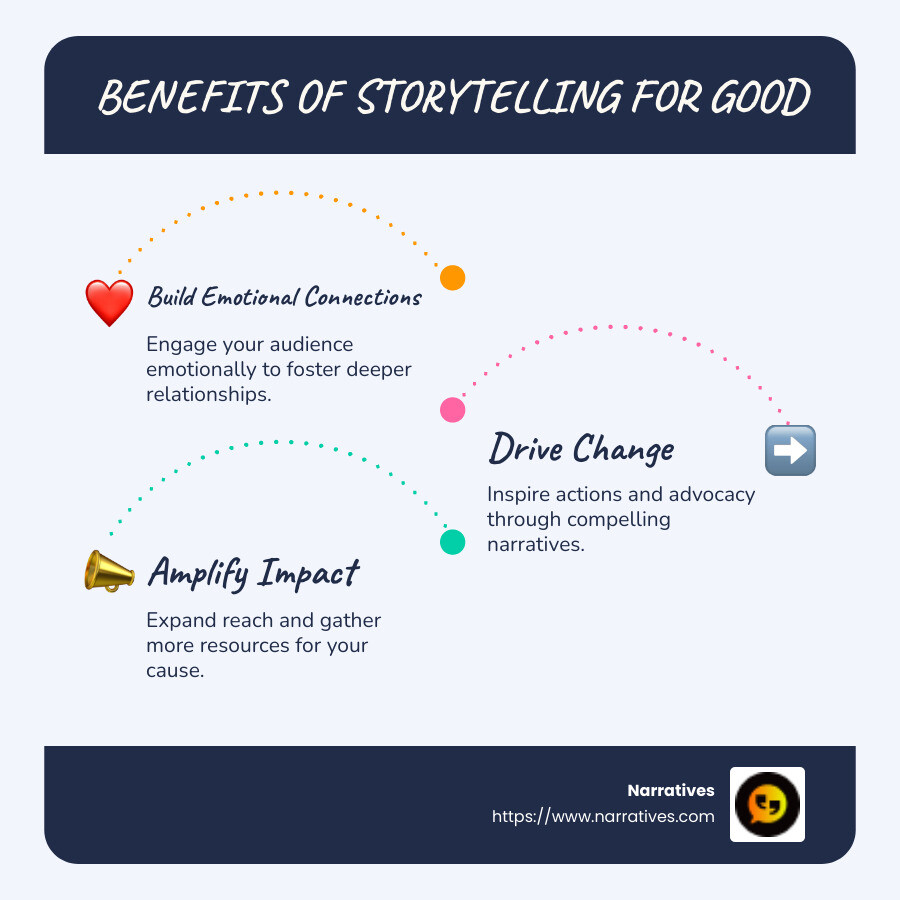
Storytelling for good is a potent tool for creating connection and driving impact. By weaving narratives that resonate with audiences, organizations can amplify their mission and foster real change. Here’s how storytelling for good can benefit your cause:
- Build Emotional Connections: Stories evoke emotions, helping audiences relate more deeply to your mission.
- Drive Change: Compelling storytelling can inspire action and advocacy.
- Amplify Impact: Well-told stories can expand your reach, bringing more awareness and resources to your cause.
Storytelling isn’t just about telling tales—it's a strategic asset that, when done right, can significantly improve your organization’s impact. As highlighted by expert Nick Morgan, even the most natural storytellers need to practice and hone their skills to avoid losing their audience with too much detail or the wrong context. The art lies in simplicity, clarity, and a well-crafted hook that captivates from the start.
To succeed in storytelling for good, consider your audience and objectives. Choose the right time and setting, be concise, and integrate personal experiences to create authentic connections. By doing so, your stories can motivate and persuade, mobilizing support for your mission in meaningful ways.
Quick look at storytelling for good:
The Power of Storytelling for Good
Storytelling for good is more than just sharing tales; it's about creating emotional connections that inspire action and drive change. Here's how it works:
Building Emotional Connections
Stories have the unique ability to make people feel seen and understood. They tap into universal emotions, creating a bridge between the storyteller and the audience. For instance, when Maggie Doyne shared her journey in Between the Mountain and the Sky, readers felt her experiences deeply, even if they had never been to Nepal. This emotional connection is powerful—it makes people care.
Inspiring Action
A compelling story can move people to act. When audiences feel emotionally invested, they're more likely to support a cause. Consider how Maggie Doyne used her storytelling to raise funds for her nonprofit. Her heartfelt narrative not only informed but also motivated people to contribute to her mission. This is the essence of storytelling for good: turning empathy into action.
Mobilizing Change
Stories can be a catalyst for change, challenging perceptions and inspiring new ways of thinking. They can highlight issues, showcase solutions, and mobilize communities. For example, Defy Ventures uses storytelling to share how they transform inmates into entrepreneurs, reducing recidivism. These stories not only inform but also inspire systemic change by showing what's possible.
To harness the power of storytelling for good, focus on authenticity, empathy, and clarity. Understand your audience and tailor your message to resonate with their values and emotions. By doing so, you can create stories that not only engage but also inspire and mobilize for lasting impact.
Key Elements of Effective Storytelling
To craft compelling stories, especially in the field of storytelling for good, certain elements are essential. These elements help ensure that stories resonate, inspire, and drive change.
Authenticity
Authenticity is the backbone of effective storytelling. When storytellers share their true experiences and emotions, they become relatable and trustworthy. This openness fosters a genuine connection with the audience. As noted in the research, vulnerability and authenticity make storytellers more human and relatable. Audiences are drawn to stories that feel real and honest.
Empathy
Empathy allows storytellers to deeply understand and convey the emotions of their characters and audience. By tapping into shared feelings and experiences, storytellers can make their narratives more impactful. This is crucial in storytelling for good, as it helps audiences connect with the cause on a personal level. Pixar's storytelling success is rooted in their ability to appeal to our deepest emotions, making their stories universally relatable.
Clarity
Clear communication is key. A story should be easy to understand, without unnecessary complexity. This ensures that the message is received as intended. Clarity in storytelling helps maintain the audience's attention and ensures that the core message isn't lost. As highlighted in the research, great storytellers communicate ideas effectively, making their stories memorable and impactful.
Enthusiasm and Energy
A storyteller's enthusiasm and energy can be contagious. When a storyteller is passionate about their narrative, it shows. This enthusiasm can engage and energize the audience, making them more receptive to the story's message. As noted in the research, incorporating humor and energy can make a story more engaging and memorable.
Incorporating these elements—authenticity, empathy, clarity, enthusiasm, and energy—into your storytelling can transform a simple narrative into a powerful tool for change. By focusing on these key elements, your stories can not only engage but also inspire and mobilize your audience for a greater cause.
Storytelling Techniques for Non-Profits
For non-profits, storytelling for good is more than just sharing information. It's about creating an emotional connection that inspires action and fosters change. Here are some techniques to improve your storytelling approach:
Personal Experiences
Sharing personal experiences is a powerful way to connect with your audience. These stories bring authenticity and emotional depth, making your message more relatable and impactful. Consider the example of a fundraiser for NAMI, where personal stories about mental health struggles led to increased donations and deeper connections. When people hear real stories, they're more likely to empathize and take action.
Audience Engagement
Engaging your audience is crucial in storytelling. It's not just about talking at them but involving them in the narrative. Ask questions, invite feedback, and encourage interaction. This can be done through social media platforms, live events, or community forums. Remember the story of a wedding in Boston where a family member's off-topic story created awkwardness? It's a reminder of the importance of relevance and timing in keeping your audience engaged.
Multimedia Content
Incorporating multimedia elements like videos, images, and infographics can lift your storytelling. These tools make your stories more dynamic and accessible, especially in a digital age where visual content reigns supreme. As Brené Brown said, “Stories are data with a soul.” Using multimedia can add that soul, making your facts unforgettable. For example, a short video clip or a powerful infographic can convey your message more effectively than words alone.
By focusing on these storytelling techniques—personal experiences, audience engagement, and multimedia content—you can create compelling narratives that not only resonate but also drive social impact. These strategies can help your non-profit amplify its message and inspire meaningful change.
How to Become a Better Storyteller
Becoming a better storyteller involves practice, feedback, creativity, and adaptability. These elements can transform your storytelling skills, making your narratives more engaging and impactful. Let's break down each of these components.
Practice
Practice is key to mastering storytelling. Just like learning a musical instrument or a new language, storytelling requires regular practice. The more you tell stories, the better you become at identifying what resonates with your audience. Try different styles and formats until you find what works best for you. Even the best storytellers started somewhere, and they improved by telling stories often.
Feedback
Seeking feedback is crucial for growth. It can be intimidating, but it’s one of the best ways to improve. Ask a trusted friend, mentor, or colleague to listen to your story and provide honest feedback. They might point out areas you hadn’t considered, or suggest improvements that can make your story more compelling. Feedback helps you see your blind spots and refine your storytelling techniques.
Creativity
Creativity is the heart of storytelling. It's about finding new ways to present your message and capture your audience's attention. Don't be afraid to experiment with different formats, like using humor or suspense. Creativity can also mean drawing inspiration from other storytellers. Watch how skilled speakers use pacing and conflict to craft their stories. Learning from others can spark new ideas and approaches for your own storytelling.
Adaptability
Finally, adaptability is essential. Every audience is different, and so is every story. Being adaptable means adjusting your story to fit the audience and context. Pay attention to their reactions and be ready to tweak your delivery on the spot. This flexibility ensures that your story remains engaging and relevant, no matter who you're speaking to.
By focusing on practice, feedback, creativity, and adaptability, you can improve your storytelling skills and create narratives that inspire and mobilize change. Whether you're sharing personal experiences or crafting stories for a cause, these elements will help you connect with your audience on a deeper level.
Frequently Asked Questions about Storytelling for Good
What makes a good storyteller?
A good storyteller possesses a mix of enthusiasm, confidence, and vulnerability.
Enthusiasm and energy bring stories to life. They captivate audiences and make the storytelling experience engaging. A storyteller's passion can be contagious, drawing listeners into the narrative.
Confidence is crucial. It helps the storyteller deliver their message clearly and persuasively. This assurance fosters trust with the audience, making the story more believable and impactful.
Vulnerability allows storytellers to connect on a human level. Sharing personal experiences and emotions can make stories more relatable and powerful. It opens the door for genuine connections with the audience.
How can storytelling drive social impact?
Storytelling has the power to mobilize action, amplify impact, and build trust.
By telling compelling stories, organizations can mobilize action. Narratives that highlight challenges and triumphs can inspire people to get involved and make a difference. For instance, Maggie Doyne's story in Between the Mountain and the Sky moved readers to support her nonprofit work in Nepal. Her storytelling was a key tool in driving engagement and support.
Stories can amplify impact by spreading messages far and wide. A well-told story can reach diverse audiences, crossing cultural and social boundaries. It can make complex issues accessible and understandable, increasing their reach and impact.
Building trust is another crucial aspect. Authentic stories help establish credibility and strengthen relationships with audiences. When people trust the storyteller, they are more likely to support their cause or mission.
Why is storytelling important for non-profits?
For non-profits, storytelling is essential for connection, visibility, and fundraising.
Connection is at the heart of storytelling for good. It helps non-profits relate to their audience, creating a sense of belonging and shared purpose. This connection is vital in fostering long-term relationships with supporters.
Visibility is improved through storytelling. Non-profits can use stories to highlight their mission, achievements, and the communities they serve. This increased visibility can attract new supporters and partners.
Fundraising efforts benefit significantly from storytelling. A compelling narrative can encourage people to donate by illustrating the tangible impact of their contributions. Maggie Doyne's storytelling, for example, was instrumental in raising funds for her school and community projects in Nepal.
By leveraging storytelling, non-profits can effectively engage their audience, drive change, and achieve their mission.
Conclusion
Where stories shape perceptions and drive actions, Narratives stands as a guide for non-profits and purpose-driven organizations. Our mission is clear: to lift voices that often go unheard and to inspire change through powerful storytelling.
Narratives is more than just a digital storytelling partner. We are committed to elevating underrepresented voices by creating high-quality, emotionally resonant content. Our approach is rooted in the belief that every story has the potential to inspire action, build trust, and increase visibility for the causes that matter most.
By partnering with us, non-profits can harness the true power of storytelling. Together, we can craft narratives that not only engage but also mobilize communities to take action. Our commitment to authenticity and empathy ensures that each story resonates deeply, fostering genuine connections and driving meaningful change.
Explore how we can help your organization tell its story and make a lasting impact. Find more about our services and join us in our mission to transform the world, one story at a time.


.avif)