Storytelling for Impact: Transform Your Fundraising Efforts

Why Storytelling Matters in Fundraising
Storytelling in fundraising is a game-changer. It turns your cause into something relatable and emotionally engaging, drawing people into your mission and inspiring them to take action. When charities weave compelling narratives, they ignite empathy, which is a powerful motivator for donors.
Here's why storytelling is crucial:
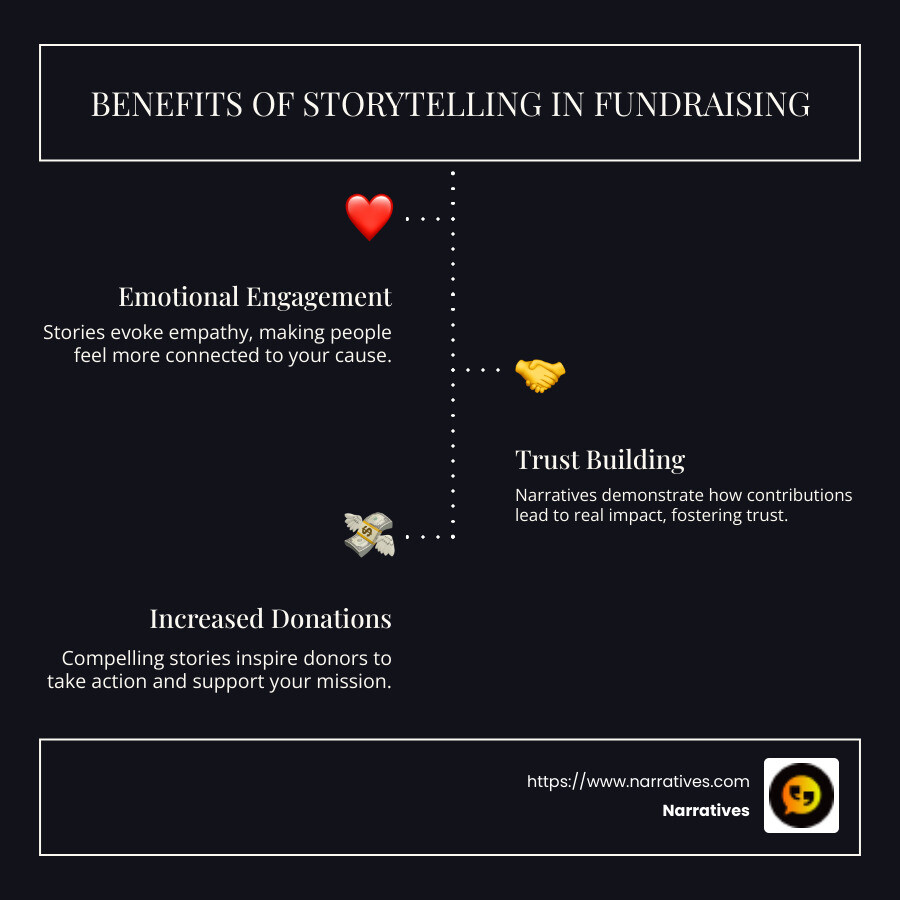
- Creates emotional connections—Stories evoke empathy, making people feel more connected to your cause.
- Engages potential donors—Narratives capture attention, making people more likely to support your mission.
- Demonstrates impact—Sharing success stories shows donors their contributions make a real difference.
In nonprofits, storytelling isn't just a tool; it's a necessity. Donors want assurance that their contributions lead to meaningful change, and a well-told story delivers this assurance.
Much like the wise businessman who knew how to transform a simple sign to evoke empathy ("It's springtime and I won’t be able to see it"), using the right words and structure in your storytelling can significantly improve your fundraising efforts.
Storytelling in fundraising terms to know:
The Power of Storytelling in Fundraising
Storytelling in fundraising is more than just a buzzword—it's the heart of donor engagement and emotional connection. When done right, it can transform a simple ask into a compelling call to action.
Emotional Connections
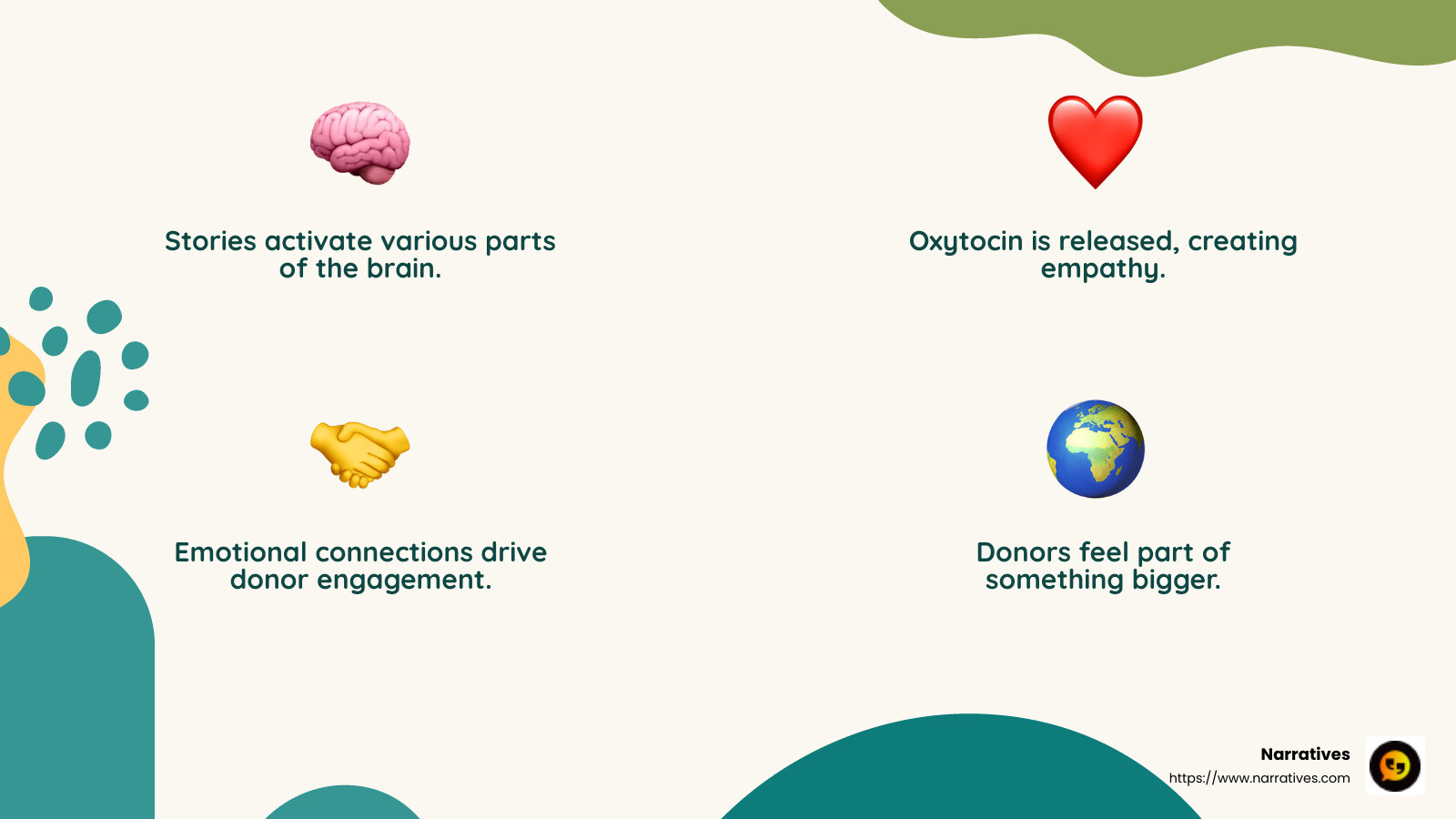
Humans are wired for stories. They activate our brains, release hormones like oxytocin, and create empathy. This emotional connection is essential because it makes donors feel like they're part of something bigger. They aren't just giving money; they're changing lives.
Take the example of Wag Love Fest, which targeted pet owners. By creating a touching video, they made potential donors feel the bond between humans and their pets. This emotional appeal is what drives donations, as people want to contribute to stories they feel part of.
Donor Engagement
Engaging donors is about making them the hero of your story. As seen with Miriam’s House, which tells supporters, "You can help end the cycle of homelessness," this approach makes donors feel essential. They're not just supporters; they're partners in creating change.
Stories also make data digestible. Instead of overwhelming donors with stats, use stories to show impact. For example, instead of saying, "We helped 1,000 people," tell the story of one person whose life was transformed.
Nonprofit Storytelling
Nonprofit storytelling is about more than sharing facts—it's about creating a narrative that resonates. Whether you use a donor-based or mission-based approach, the key is to make it relatable.
- Donor-Based: Focus on how the donor's contribution makes them a hero.
- Mission-Based: Highlight the beneficiaries and the impact of the nonprofit's work.
The right story can change how people perceive your cause. It can turn a passive observer into an active donor.
In summary, storytelling in fundraising is crucial for creating emotional connections and engaging donors. It transforms data into meaningful narratives that inspire action. Whether through heartwarming videos or personal stories, the right approach can make all the difference in your fundraising efforts.
Key Elements of Effective Storytelling
To create stories that resonate and inspire action, focus on four key elements: relatable characters, emotion, problem-solution, and a clear call to action.
Relatable Characters
Characters are the heart of any story. They give your audience someone to connect with. In fundraising, these characters could be beneficiaries, donors, or even volunteers. The goal is to make them relatable and real.
Take Hadjara from charity: water's campaign. She's a young girl facing challenges that many can relate to—like wanting a healthier life for her family. By introducing her as the protagonist, the audience can see themselves or someone they know in her shoes.
Emotion
Emotion is the glue that holds your story together. It's what makes your audience care. Whether it's anger over an injustice or hope for a solution, emotion drives action.
Research shows that stories trigger the release of oxytocin, a hormone that improves feelings of trust and empathy. This is why stories are powerful tools for fundraising. They make people feel connected and inspired to help.
Problem-Solution
Every good story has a problem and a solution. This structure not only keeps your audience engaged but also clearly shows the impact of their support.
For example, instead of just stating that your organization provides meals, tell the story of a single family struggling with hunger and how a simple meal changed their lives. This makes the problem tangible and the solution impactful.
Call to Action
A story without a call to action is like a book without an ending. Your audience needs to know what to do next. Make your call to action clear and compelling.
Whether it's donating, volunteering, or spreading the word, ensure your audience knows how they can be part of the solution. Highlighting the impact of their actions can make the call to action even more effective.
Incorporating these elements into your storytelling can transform your fundraising efforts. By focusing on relatable characters, emotion, problem-solution, and a clear call to action, you can craft stories that not only engage but also inspire action.
How to Craft a Compelling Fundraising Story
Creating a compelling fundraising story involves more than just words. It’s about crafting an experience that resonates and inspires. Here’s how you can do it effectively:
Visual Storytelling
Visuals are powerful. They can convey emotions and messages faster than text. Use images and videos to bring your story to life. A photo of a beneficiary or a short video clip can make your audience feel connected immediately.
Take, for example, the success of CMMB (Catholic Medical Mission Board) using photos and words from beneficiaries themselves. This approach not only captures attention but also builds a deeper connection with the audience.
Emotional Impact
Emotion is the driving force behind action. Your story should evoke empathy and inspire your audience to care. Share personal stories that highlight real struggles and triumphs. This makes the cause relatable and urgent.
Research shows that emotional stories can trigger the release of oxytocin—a hormone that improves trust and empathy. This is why storytelling in fundraising is so effective. It makes people feel like they’re part of something bigger.
Transparency
Transparency builds trust. Be open about your organization’s work, both the successes and the challenges. Share real stories from beneficiaries, volunteers, or staff members. This openness shows that you’re genuine and committed to making a difference.
In our 2023 CauseVox Giving Study, 39% of donors stated that testimonials from beneficiaries would boost their likelihood to donate. This demonstrates the power of transparency in building donor confidence.
By combining visual storytelling, emotional impact, and transparency, you can create fundraising stories that not only engage but also inspire action. These elements work together to make your narrative authentic and compelling, driving more support for your cause.
Storytelling in Fundraising: Best Practices
To make storytelling in fundraising truly impactful, focus on humanizing your work, empowering your advocates, and utilizing visual content effectively.
Humanizing Your Work
Humanizing your nonprofit’s work means putting a face to the cause. People connect with people, not statistics. Share stories of individuals who have been directly impacted by your work. This not only builds empathy but also creates a personal connection between the donor and the cause.
For instance, Miriam's House uses donor-based narratives by highlighting how supporters can help end the cycle of homelessness. This approach makes the issue relatable and personal, inviting donors to be part of the solution.
Empowering Advocates
Your advocates are your storytellers. Empower them by sharing their stories and experiences. This could be a volunteer sharing their journey or a beneficiary talking about how their life has changed. These narratives can inspire others to join and support your mission.
Consider the impact of social media takeovers, which allow beneficiaries or advocates to share their day-to-day experiences. This not only provides authentic content but also empowers those involved to be active participants in your storytelling efforts.
Visual Content
Visual content is a powerful tool in storytelling. It grabs attention and conveys messages quickly. Use photos, videos, and infographics to illustrate your narrative.
The SPCA’s heart-wrenching video is a prime example of how visuals can evoke strong emotions and drive people to act. Similarly, an infographic showing the gap between reported and unreported cases of sexual violence can visually convey the urgency and scale of an issue.
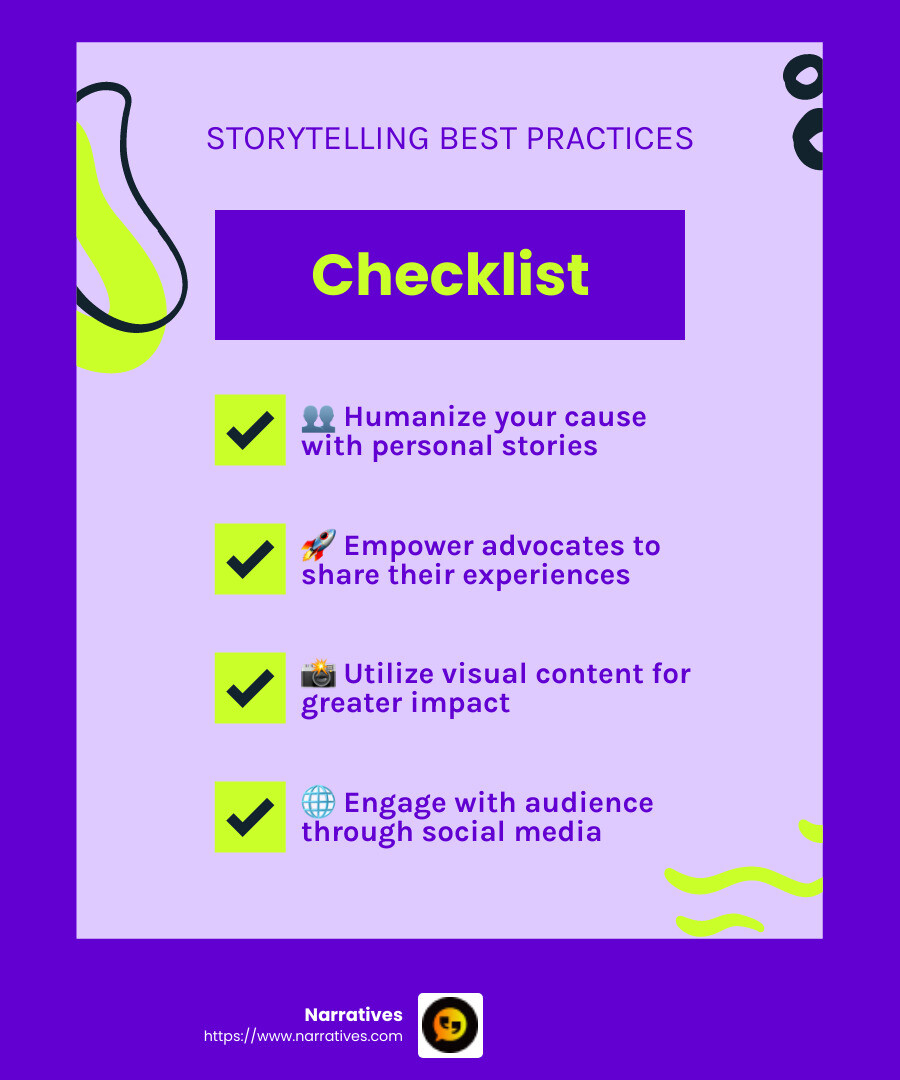
Incorporating these best practices into your storytelling strategy can transform your fundraising efforts. By humanizing your work, empowering your advocates, and using visual content, you create a narrative that resonates, engages, and inspires action.
Frequently Asked Questions about Storytelling in Fundraising
How can storytelling improve donor retention?
Storytelling can significantly boost donor retention by creating emotional connections. When donors feel emotionally invested, they are more likely to continue their support. According to research, the average donor retention rate is only 45%, but storytelling can help improve this by showing donors that their contributions truly matter.
Three key reasons storytelling improves donor retention:
- Emotional Connection: Stories connect with emotions, making donors feel appreciated and valued.
- Impact Visibility: By sharing stories of change, donors see the tangible impact of their support.
- Personal Engagement: Storytelling gives donors a personal stake in the cause, encouraging ongoing involvement.
What are the benefits of using visual storytelling?
Visual storytelling is a game-changer for fundraising. It makes complex information easy to understand and helps convey emotions that words alone might struggle to express.
Benefits of visual storytelling include:
- Improved Engagement: Photos and videos capture attention and make stories more memorable.
- Emotional Resonance: Visuals, like the SPCA’s touching videos, evoke strong emotions, prompting action.
- Clarity and Impact: Infographics, such as those illustrating unreported cases of sexual violence, clearly highlight issues and drive home the urgency.
How do nonprofits measure the impact of storytelling?
Measuring the impact of storytelling is crucial to understanding its effectiveness in fundraising. Nonprofits can track various metrics to gauge success.
Ways to measure storytelling impact:
- Donor Feedback: Collect testimonials and feedback from donors to see how stories influenced their decision to give.
- Engagement Metrics: Monitor website traffic, video views, and social media interactions to assess how stories resonate with audiences.
- Retention Rates: Track changes in donor retention rates after implementing storytelling strategies to see if there's an improvement.
By focusing on these aspects, nonprofits can refine their storytelling approaches, ensuring they engage and retain their donor base effectively.
Conclusion
At Narratives, we believe in the transformative power of storytelling to drive social change. Our mission is to help non-profits and purpose-driven organizations lift their impact through community-driven storytelling. By partnering with us, organizations can share their stories in a way that not only informs but also inspires action.
Community-driven storytelling is about more than just sharing facts; it's about connecting with people on a human level. This approach allows organizations to highlight the voices of those they serve, creating a deeper connection with their audience. When people see the real impact of their contributions, they are more likely to become long-term supporters.
Through our expertise in producing high-quality, emotionally resonant video and multimedia content, we help organizations build trust and increase their visibility. This is crucial in today's digital age, where attention spans are short, and competition for donor dollars is fierce.
Social impact is at the heart of what we do. By focusing on stories that matter, we empower organizations to make a meaningful difference in their communities. Whether it's showcasing the journey of a beneficiary or highlighting the dedication of volunteers, our storytelling approach ensures that the true essence of an organization's mission shines through.
We invite non-profits and purpose-driven organizations to learn more about how Narratives can support your storytelling efforts. Together, we can create stories that not only engage but also drive real change.


.avif)