The Art of Storytelling: A Guide for Social Workers

Storytelling in social work is a powerful therapeutic tool that transforms lives. By sharing stories, individuals and communities can find healing and connection, leading to personal growth and social change.
- Heals Emotional Wounds: Sharing stories allows clients to explore their emotions and experiences in a safe and supportive environment.
- Builds Connections: Stories foster understanding and empathy, strengthening the bonds between social workers and clients.
- Promotes Resilience: By highlighting strength and courage, storytelling encourages clients to overcome adversity.
In social work, storytelling isn't just a method—it's an art that amplifies voices, particularly those that are marginalized or silenced. It aids in reauthoring narratives to open pathways for more hopeful futures. This approach is not only meaningful but essential for creating change and fostering individual and community well-being.
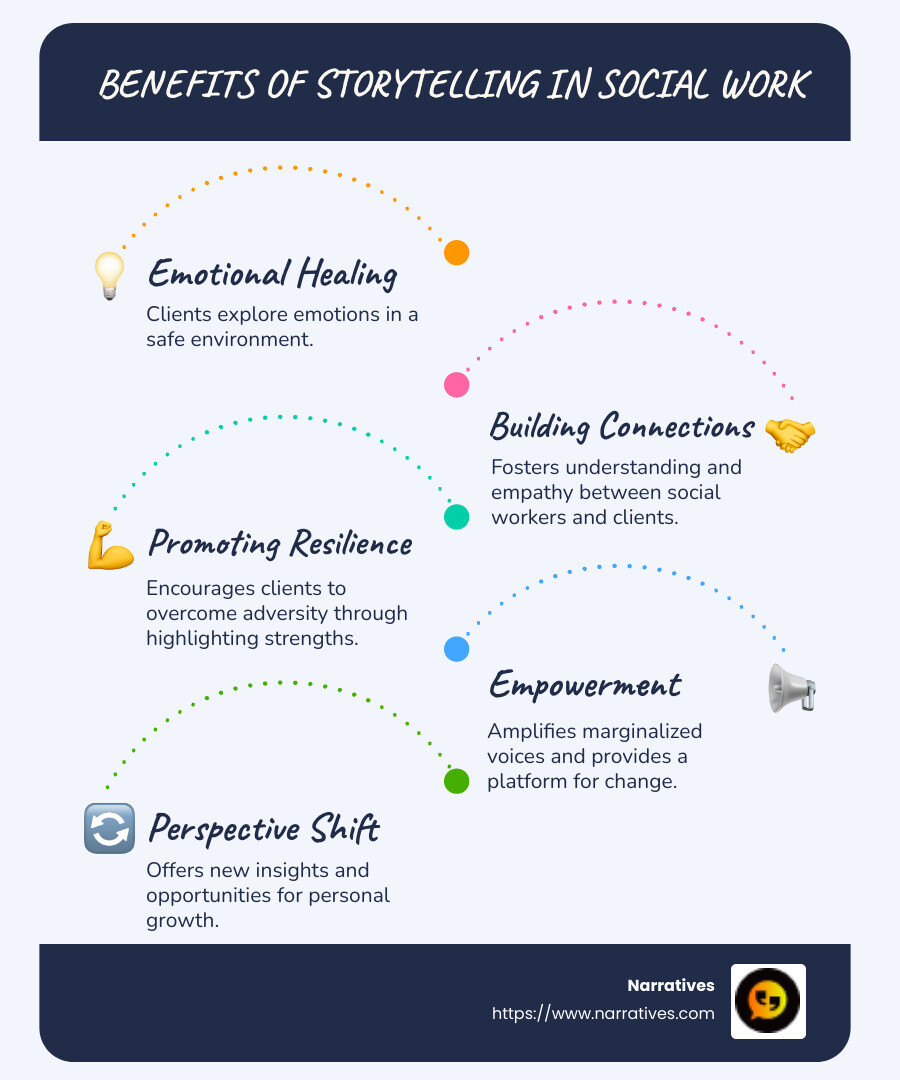
Handy Storytelling in social work terms:
The Role of Storytelling in Social Work
Storytelling in social work plays a crucial role in healing, building connections, providing insight, and fostering resilience. It's more than just a tool—it's a bridge to understanding and empowerment.
Healing Through Stories
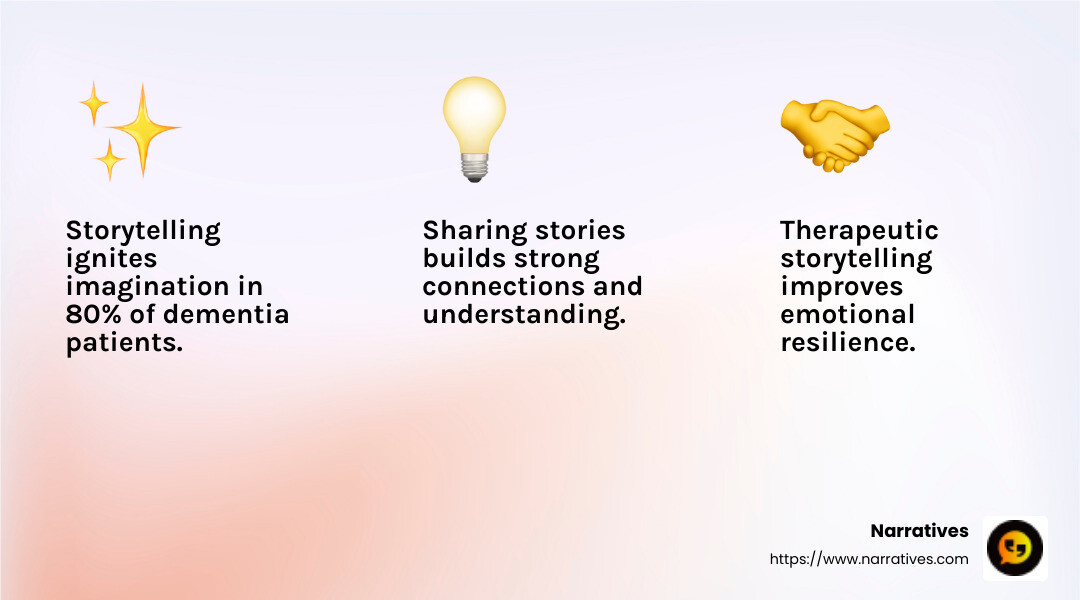
Stories offer a unique path to healing. They allow clients to explore their emotions in a safe space, helping to process trauma and find closure. Dan Yashinsky, a professional storyteller, highlights how storytelling can spark imaginative responses in dementia patients and reignite the desire to live in those battling severe depression.
Building Connections
At its core, storytelling is about connection. When social workers and clients share stories, they build trust and empathy. This connection strengthens the therapeutic bond, making clients feel heard and validated. It's a way to bridge gaps between different backgrounds and experiences, fostering a sense of belonging and understanding.
Providing Insight
Stories are powerful tools for insight. They help clients see their lives from new perspectives, often revealing patterns or beliefs that were previously hidden. By engaging with stories, clients can gain a deeper understanding of themselves and their circumstances. This insight is crucial for personal growth and overcoming challenges.
Fostering Resilience
Storytelling highlights strength and resilience, essential qualities for overcoming adversity. By focusing on narratives of courage and persistence, clients are inspired to face their challenges head-on. Narrative therapy, a storytelling-based approach, emphasizes reauthoring personal stories to enable more positive life outcomes. This process helps clients build the resilience needed to steer life's difficulties.
In summary, storytelling in social work is a multifaceted approach that promotes healing, connection, insight, and resilience. It's an art form that transforms lives and communities, paving the way for personal and social change.
Techniques for Effective Storytelling
Effective storytelling in social work involves a blend of therapeutic metaphors, narrative crafting, and audience engagement. These techniques are essential for creating meaningful and transformative experiences for clients.
Therapeutic Metaphors
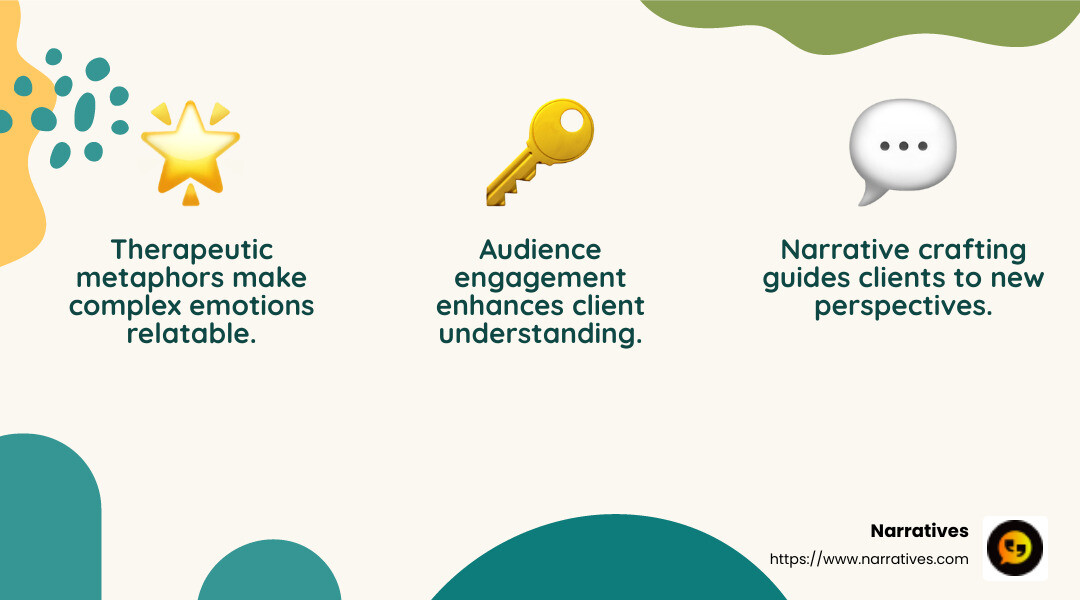
Therapeutic metaphors are powerful tools in storytelling. They allow social workers to communicate complex ideas in a relatable way. By asking, “What is this like in my experience?” social workers can create metaphors that resonate with clients' lives. This approach helps clients see their situations from a new perspective, making difficult concepts easier to understand and relate to.
Narrative Crafting
Crafting a narrative involves more than just telling a story. It's about constructing a coherent and compelling story that reflects the client's journey. This process includes identifying key themes, structuring the story for impact, and ensuring it aligns with the client's goals. Narrative therapy emphasizes reauthoring personal stories to foster positive change. By reshaping narratives, clients can redefine their identities and envision a brighter future.
Audience Engagement
Engaging the audience is crucial in storytelling. Social workers must be attentive to the client's responses and adjust their storytelling techniques accordingly. Observing body language and emotional cues helps tailor the story to meet the client's needs. Flexibility is key, as each client is unique, and their engagement level can change throughout the session.
By starting where the audience is, social workers can create a safe and inviting space for storytelling. This approach fosters trust and openness, allowing clients to fully immerse themselves in the story.
Incorporating these techniques into storytelling not only improves the therapeutic process but also empowers clients to take an active role in their healing journey. By using therapeutic metaphors, crafting meaningful narratives, and engaging clients effectively, social workers can harness the full potential of storytelling in their practice.
Storytelling in Social Work Practice
Storytelling in social work is a versatile tool, especially when combined with digital platforms, trauma prevention strategies, and cultural sensitivity. These elements can significantly improve the impact of storytelling in therapeutic settings.
Digital Storytelling
Digital storytelling leverages technology to create and share personal narratives. This approach can be particularly effective in social work practice, as it allows clients to express their stories through multimedia formats like videos, podcasts, and digital journals.
Digital storytelling provides a platform for voices that might otherwise go unheard, especially in marginalized communities. By using digital tools, social workers can help clients craft and share their stories in a way that feels authentic and empowering.
Trauma Prevention
Storytelling is a powerful method for trauma prevention and healing. It allows clients to process and make sense of their experiences in a safe and supportive environment. By narrating their stories, individuals can gain control over their narratives, reducing the impact of trauma.
For instance, sharing stories about overcoming adversity can inspire resilience and hope. It helps clients reframe their experiences, shifting from a victim perspective to one of empowerment and growth.
Cultural Sensitivity
Incorporating cultural sensitivity into storytelling is crucial. Social workers must be aware of the cultural backgrounds and values of their clients. This understanding helps in crafting stories that resonate deeply and respectfully with the client's cultural identity.
Culturally sensitive storytelling acknowledges and honors diverse traditions and narratives. It fosters a sense of belonging and validation for clients from different cultural backgrounds, enhancing the therapeutic alliance.
By integrating digital storytelling, trauma prevention, and cultural sensitivity into their practice, social workers can create meaningful and transformative experiences for their clients. These elements not only enrich the storytelling process but also empower clients to take charge of their narratives and start on a path of healing and growth.
Benefits of Storytelling for Clients
Storytelling in social work offers numerous benefits for clients, helping them find emotional resonance, empowerment, and a shift in perspective.
Emotional Resonance
Stories have a unique ability to resonate emotionally with listeners. When clients hear or tell stories, they often find connections to their own experiences. This can provide comfort and understanding. For example, Dan Yashinsky, a professional storyteller, notes that storytelling can spark imaginative responses even in individuals with dementia, offering a sense of connection and engagement.
Empowerment
Storytelling can be a powerful tool for empowerment. It allows clients to take control of their narratives, changing their self-perception. As clients re-author their stories, they can move from seeing themselves as victims to recognizing their strengths and resilience. This shift can lead to increased self-esteem and a sense of agency. According to research, storytelling in therapeutic contexts can activate a client's resilience and creativity, fostering a sense of empowerment.
Perspective Shift
A well-told story can shift a client's perspective, opening new ways of thinking and seeing. This shift is crucial for clients feeling stuck or overwhelmed by stress, depression, or illness. Hearing stories that mirror their struggles can help them see their situations differently, uncover strengths, and consider novel solutions. This perspective shift not only alleviates feelings of isolation but also inspires hope and motivation to move forward.
By using the emotional, empowering, and perspective-shifting power of storytelling, social workers can create a supportive environment that encourages clients to explore their narratives and start on a journey of healing and growth.
Frequently Asked Questions about Storytelling in Social Work
How can storytelling be used in therapy?
Storytelling is a versatile tool in therapy. It helps clients express emotions and explore their experiences safely. When clients share their stories, they gain insight into their feelings and behaviors.
Therapeutic Metaphors: Therapists often use metaphors to help clients understand complex emotions. For instance, comparing life's challenges to climbing a mountain can help clients visualize overcoming obstacles.
Narrative Crafting: Clients are encouraged to reframe their personal stories. This process can transform their view of themselves, shifting from victimhood to resilience.
Safe Space: Storytelling creates a safe environment where clients can explore difficult topics without judgment. This can lead to breakthroughs in therapy.
What are the benefits of storytelling for social workers?
For social workers, storytelling is not just a tool for clients. It also improves their practice.
Building Connections: Sharing stories helps social workers build rapport with clients. It fosters trust and openness, which are crucial for effective therapy.
Cultural Sensitivity: Understanding a client's cultural background through their stories can improve the social worker's ability to provide custom support.
Advocacy and Persuasion: Stories are powerful in advocacy. They humanize issues, making them relatable and urgent. This is especially important when advocating for policy changes.
How does digital storytelling improve social work practice?
Digital storytelling is an emerging trend in social work, offering unique advantages.
Accessibility: Digital platforms make it easier to share stories widely, reaching audiences who may not have access to traditional therapy.
Engagement: Multimedia elements like videos and images can make stories more engaging and impactful.
Trauma Prevention: Digital storytelling can be used in programs aimed at preventing trauma by sharing stories that educate and inform communities.
Incorporating digital storytelling into practice not only improves client engagement but also broadens the reach and impact of social work initiatives.
Conclusion
In the field of social work, storytelling is more than just a therapeutic tool; it's a bridge that connects communities, fosters partnerships, and amplifies underrepresented voices. At Narratives, we believe that community-driven storytelling is the key to making a lasting impact.
Non-profit partnerships are at the core of our mission. By collaborating with purpose-driven organizations, we create high-quality, emotionally resonant content that brings real stories to the forefront. These stories not only inspire action but also build trust and increase visibility for causes that matter.
Community-driven storytelling empowers individuals and groups to share their unique experiences. This approach not only lifts voices but also unites communities around shared narratives. It's about creating a mix of stories that reflect the diverse fabric of society.
At Narratives, we are committed to being the go-to digital storytelling partner for non-profits. Our expertise in crafting powerful narratives helps organizations share their impact stories effectively, inspiring change and driving social impact.
Want to learn more about how we can help your organization harness the power of storytelling? Explore our services here. Let's work together to lift the voices that need to be heard.


.avif)