Impactful Narratives: Using Storytelling for Social Change

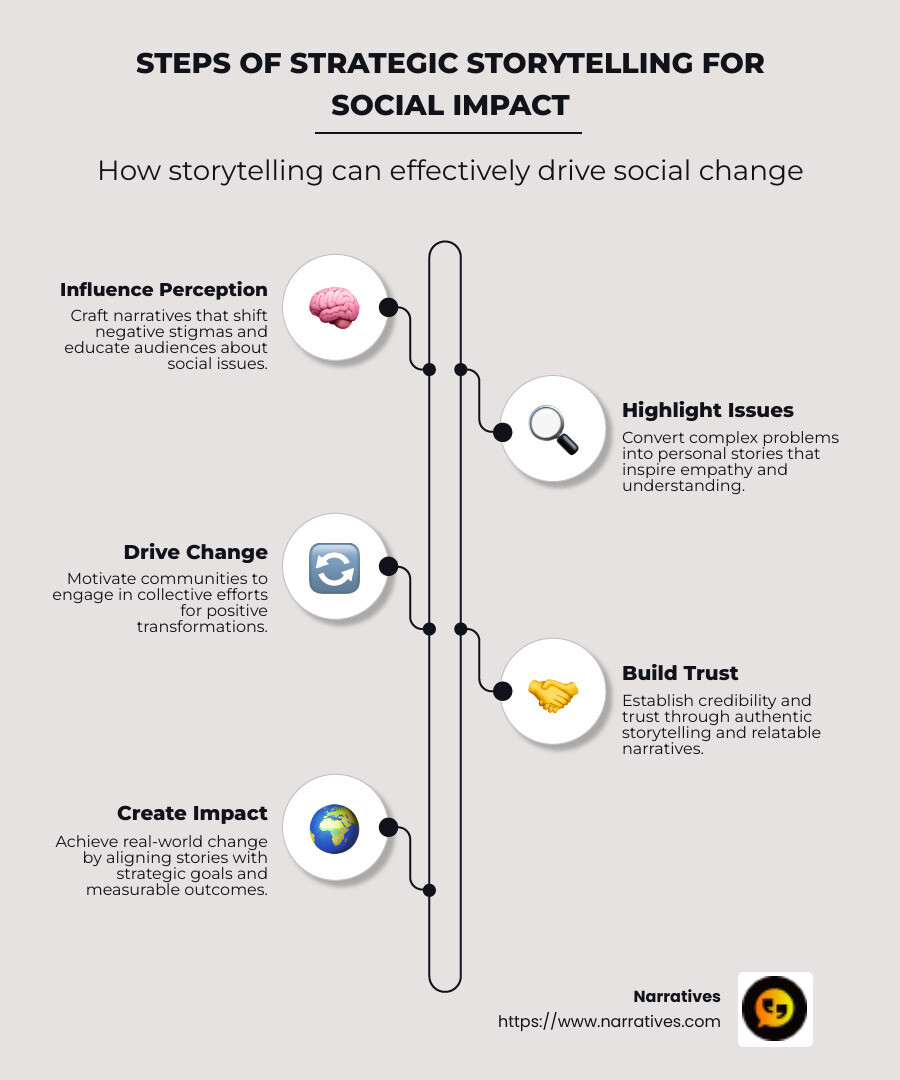
Strategic storytelling for social impact is a powerful tool that organizations can use to inspire change and drive action. Whether it's influencing public perception, highlighting pressing social issues, or motivating communities to take collective action, storytelling transforms complex challenges into relatable narratives.
- Influences public perception: By sharing authentic stories, organizations can shift negative stigmas and educate audiences.
- Highlights social issues: Converts complex problems into personal stories that inspire empathy and understanding.
- Drives societal change: Motivates people to participate in collective efforts and make positive changes.
In the field of social impact, storytelling is more than just a method of communication—it is a strategic approach to achieving real-world change. By artfully crafting narratives that resonate, organizations can awaken empathy, build trust, and ultimately, create a significant impact.
Strategic storytelling for social impact word roundup:
The Power of Strategic Storytelling for Social Impact
Strategic storytelling for social impact is like a magic tool. It helps organizations not just talk about their work, but make people care and act. Let's explore how this works.
Active Agents of Change
Stories turn listeners into active agents of change. When people hear a compelling story, they often feel a strong urge to do something about it. Imagine a story about a community coming together to clean a polluted river. This narrative can inspire others to join the effort or start similar projects in their own areas.
Raising Awareness
Stories are powerful in raising awareness. They make complex issues easy to understand by framing them in a personal way. For example, a story about a single mother struggling to access clean water can highlight broader issues of water scarcity. This approach helps people see the problem clearly and feel connected to it.
Shaping Attitudes
Strategic storytelling can change how people think and feel about an issue. Through real-life examples, stories can dismantle stereotypes and encourage empathy. For instance, sharing the journey of a refugee can help shift attitudes from fear to understanding and compassion.
Motivating Action
The ultimate goal of storytelling for social impact is to motivate action. When people see the positive changes that result from others' actions, they are more likely to get involved themselves. For instance, a narrative about a successful community garden project can inspire others to start their own, leading to broader environmental benefits.
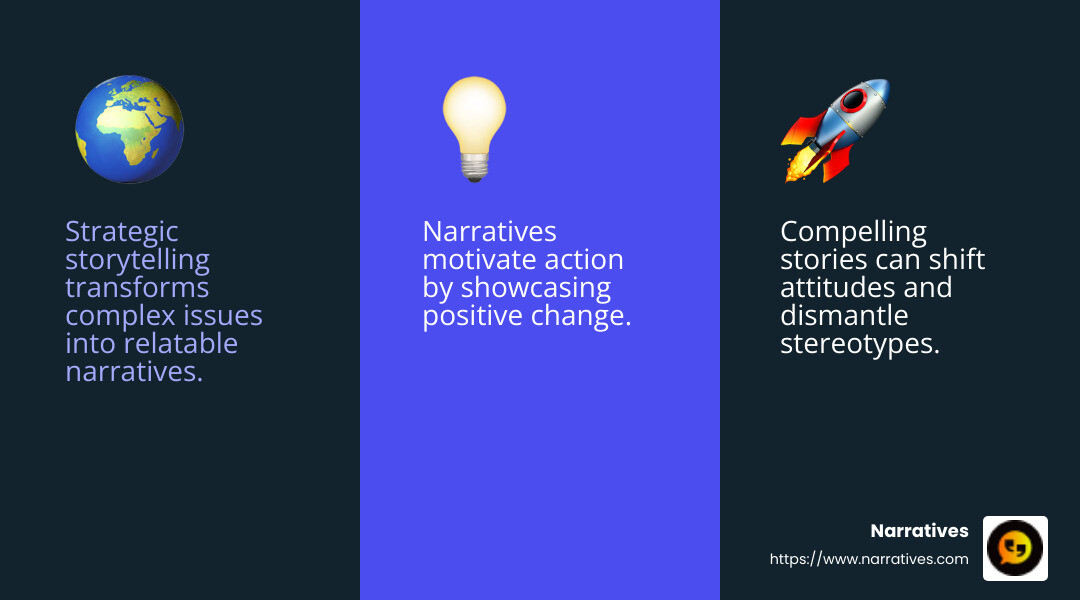
In summary, strategic storytelling is not just about telling a story—it's about creating a narrative that moves people to act. By turning listeners into active agents, raising awareness, shaping attitudes, and motivating action, stories have the power to drive real social change.
Crafting Compelling Stories
Creating a story that inspires and drives action begins with a solid foundation. Strategic storytelling for social impact involves crafting narratives that are not only engaging but also purposeful. Let's explore the key components that make a story compelling.
Problem Statement
Every impactful story starts with a clear and concise problem statement. This is the heart of your narrative. It explains the core issue your organization is addressing. For instance, if you're working on improving access to education for girls, your problem statement might be: "Millions of girls are denied education due to cultural norms and poverty, limiting their future opportunities."
A strong problem statement sets the stage for your story. It gives your audience a reason to care and understand why your work is crucial.
Theory of Change
The Theory of Change framework guides your storytelling by linking activities to desired outcomes. It paints a clear picture of how your efforts lead to tangible results. Here’s how it works:
- Identify the Problem: Start with your problem statement.
- Outline Activities: Describe the actions you are taking to address the problem. For example, providing scholarships and mentorship programs for girls.
- Define Outcomes: Specify the changes you expect to see. This could be increased school attendance and improved academic performance.
- Demonstrate Impact: Highlight the long-term effects, like more women entering the workforce and contributing to economic growth.
By following this framework, your story becomes more than just words. It becomes a roadmap for change.
Narrative Framework
A well-structured narrative framework ensures your story is coherent and impactful. Here are the key elements:
- Introduction: Introduce the issue and the characters involved.
- Conflict: Highlight the challenges and obstacles faced.
- Resolution: Show how your organization is making a difference.
- Call to Action: Encourage your audience to get involved or support the cause.
For example, a story about a young girl overcoming barriers to education can captivate audiences. It begins with her struggles, follows her journey through the support she receives, and ends with her success and how others can help replicate this success.
By integrating a clear problem statement, a Theory of Change, and a structured narrative framework, your stories can inspire empathy and drive action. This approach transforms storytelling into a strategic tool for social impact, compelling audiences to become part of the solution.
Next, we'll explore how storytelling can highlight key social issues, influence public perception, and drive societal change.
Objectives of Social Impact Storytelling
Once you have a compelling story, the next step is to understand the objectives of Strategic storytelling for social impact. Let's explore how storytelling can highlight issues, influence perception, and drive change.
Highlighting Issues
Storytelling transforms complex social issues into relatable narratives. By putting a human face on problems, stories evoke empathy and awareness. For example, instead of just stating statistics about homelessness, sharing a story about a single mother's struggles can make the issue more tangible and urgent.
This approach helps audiences connect emotionally with the issue, making them more likely to engage and take action. Stories make social issues feel real and urgent, turning abstract problems into personal ones.
Influencing Perception
A powerful story can change how people view an issue. Real-life examples and authentic experiences challenge stereotypes and misconceptions. For instance, a story about a refugee's journey can shift perceptions from fear and misunderstanding to compassion and support.
By influencing public perception, storytelling can dismantle negative stigmas and encourage a more informed and empathetic society. This shift in perception is crucial for creating an environment where change is possible.
Driving Change
The goal of social impact storytelling is to drive change. When audiences see the impact of an organization's work, they are inspired to act—whether by donating, volunteering, or advocating for policy changes.
For example, a story about a community transformed by clean water access can motivate others to support similar projects. Seeing tangible results encourages people to believe in the possibility of change and to contribute to the cause.
In summary, Strategic storytelling for social impact is not just about telling a story—it's about making a difference. By highlighting issues, influencing perception, and driving change, storytelling becomes a powerful tool for social impact.
Next, we'll dig into how to measure and demonstrate the impact of your storytelling efforts.
Measuring and Demonstrating Impact
To truly harness the power of strategic storytelling for social impact, measure and demonstrate the impact of your narratives. Let's explore how we can use metrics, quantitative data, and qualitative anecdotes to showcase real change.
Metrics that Matter
Metrics are more than just numbers—they're a way to tell a story. Instead of focusing on superficial metrics like "number of stories shared," aim for those that reflect real-world change. Consider metrics such as:
- Coding Confidence: How confident are participants in applying their new skills?
- Career Outcomes: How many participants secure jobs or internships in their field?
- Long-term Impact: Are participants experiencing career growth and better pay?
These metrics provide evidence of progress and demonstrate the true value of your program to stakeholders. They help show not just what has been done, but also why it matters.
The Balance of Quantitative and Qualitative Data
Numbers alone don't tell the full story. Pair quantitative data with qualitative anecdotes for a richer narrative. For example, you might report that "80% of participants gained employment," but also share testimonials from participants about how the program changed their lives.
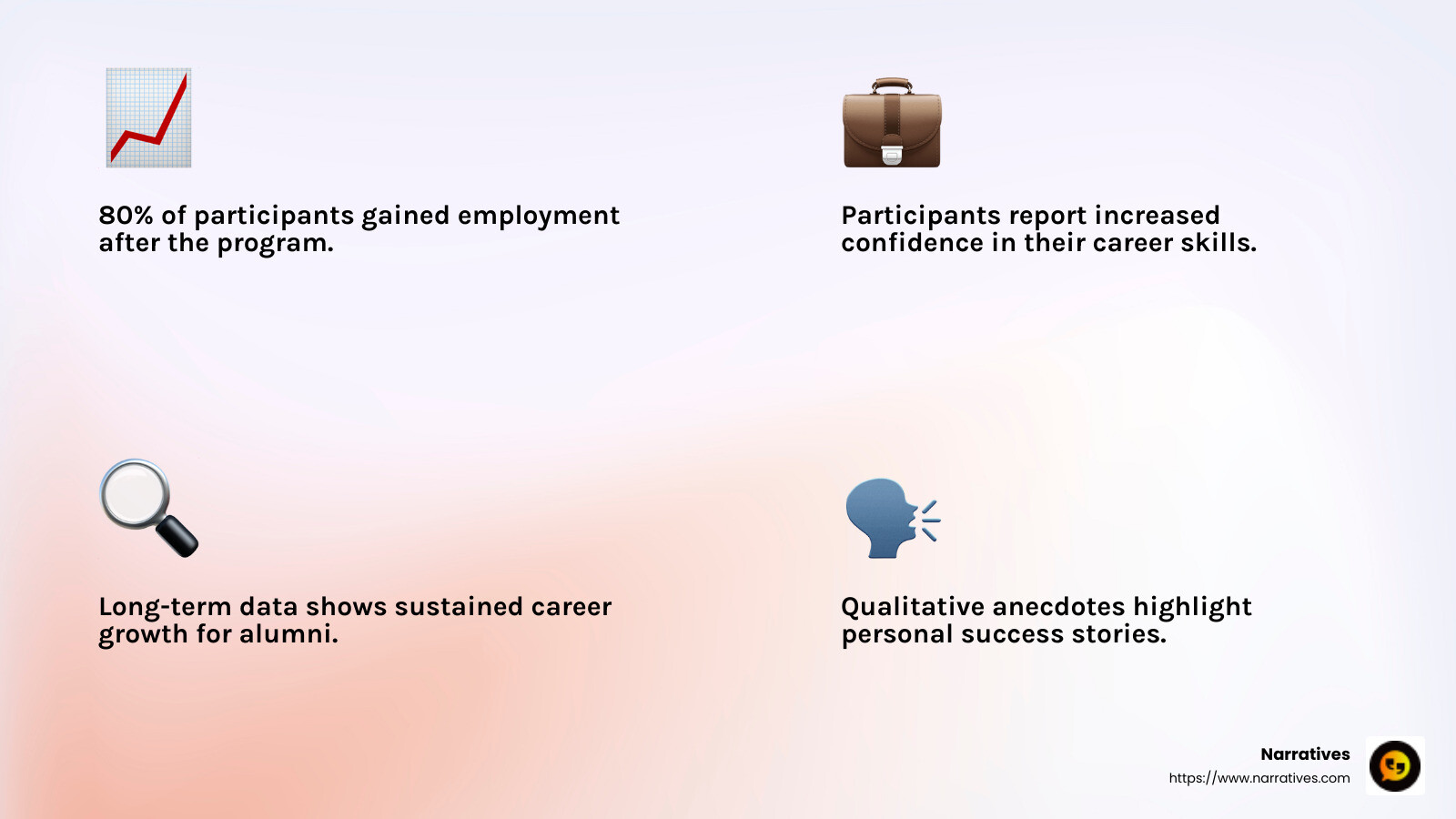
This combination of data and personal stories creates a compelling narrative that engages audiences on both an intellectual and emotional level.
Telling the Story of Impact
When you share the impact of your work, use a structured narrative framework like the Theory of Change. Start with a clear problem statement, outline your approach, and showcase the outcomes.
For instance, if your organization provides clean water access, you could share how many communities now have clean water, and also include stories of individuals whose lives have been improved. This not only demonstrates impact but also inspires others to join your cause.
In summary, measuring and demonstrating impact is about more than just numbers. It's about weaving together data and stories to create a narrative that resonates, inspires, and drives action.
Next, we'll address some frequently asked questions about strategic storytelling for social impact.
Frequently Asked Questions about Strategic Storytelling for Social Impact
How can storytelling raise awareness of issues?
Storytelling is a powerful tool for raising awareness because it makes complex issues relatable and personal. By sharing stories, organizations can transform abstract problems into narratives that capture attention and evoke empathy.
Community Connection: Stories help build a sense of community. They show that others care and are working towards the same goals. This can motivate people to get involved and spread the word.
Global Reach: With digital platforms, stories can travel far and wide. They can reach global audiences, bringing attention to issues that might otherwise go unnoticed.
For example, the "Voice of Witness" project uses oral histories to highlight human rights abuses. These personal stories bring attention to critical issues and inspire global conversations.
What is a Theory of Change in storytelling?
A Theory of Change (ToC) is a framework that helps storytellers link their activities to desired outcomes and impacts. It provides a clear roadmap for how change will happen through storytelling.
Framework: Begin with a clear problem statement. Identify the activities that will address the problem, and outline the expected outcomes.
Outcomes and Impact: Use the ToC to demonstrate how your storytelling efforts lead to real-world changes. For instance, if you're focusing on education, your ToC might show how storytelling about access to education leads to increased enrollment and improved literacy rates.
The "Stories of Change" initiative by the Skoll Foundation and Sundance Institute uses ToC to illustrate how storytelling can drive social change. By mapping out the journey from narrative to impact, they showcase the power of storytelling in creating real, lasting change.
How does storytelling motivate people to take action?
Storytelling can be a catalyst for change by motivating people to take action. Here's how:
Emotional Engagement: Stories connect with people on an emotional level, making them more likely to care about the issue and want to help.
Inspiration and Motivation: When people see examples of positive change, they feel inspired to join the cause. Stories about individuals or communities overcoming challenges can motivate others to take action.
Clear Calls to Action: Effective stories include clear messages about how audiences can get involved. Whether it's volunteering, donating, or spreading the word, a strong call to action can turn passive listeners into active participants.
For instance, "Defy Ventures" shares stories of inmates turned entrepreneurs. These narratives not only highlight the impact of the program but also inspire others to support efforts to reduce recidivism.
In the next section, we'll explore how to conclude your storytelling efforts with impact and insight.
Conclusion
When stories shape perceptions and inspire change, Narratives stands as a guide for non-profits seeking to amplify their voices through multimedia content. We believe that every story has the power to make a difference, and our mission is to help organizations harness that power for social good.
Narratives partners with non-profits to create compelling, emotionally resonant content that highlights the impact of their work. By focusing on underrepresented voices, we ensure that the stories we tell are not only heard but felt, driving real engagement and action. Our approach combines high-quality video, photography, and written narratives to create a mix of content that resonates with audiences on multiple levels.
Why Choose Narratives?
Expertise in Storytelling: Our team is skilled at crafting narratives that not only inform but also inspire. We work closely with non-profits to understand their unique stories and tailor content that reflects their mission and impact.
Comprehensive Multimedia Solutions: From video production to social media campaigns, we offer a full suite of services designed to lift your storytelling efforts. Our multimedia content is crafted to capture attention and foster a deeper connection with your audience.
Focus on Social Impact: We are committed to using storytelling as a tool for positive change. By highlighting the challenges and triumphs of communities, we help drive awareness and inspire action.
By partnering with Narratives, non-profits can leverage the power of storytelling to build trust, increase visibility, and inspire action. Together, we can create stories that not only inform but transform, making a lasting impact on the world.
Ready to lift your storytelling? Learn more about how we can help and start making a difference today.


.avif)