Crafting Compelling Stories: Essential Video Storytelling Techniques

Crafting compelling stories through video is no small feat, yet it's more important than ever to master video storytelling techniques. Why? Because a well-told story has the power to captivate audiences, evoke emotions, and drive meaningful action.
Here are key techniques to consider:
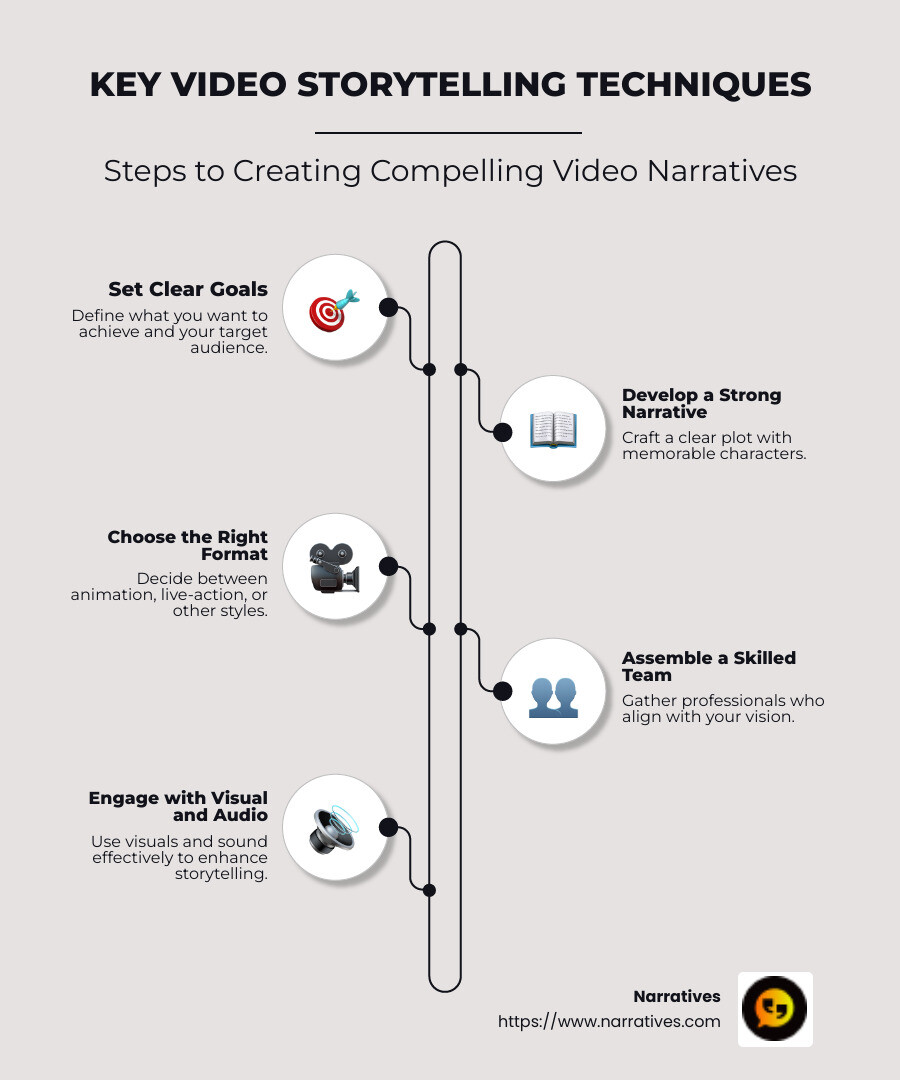
- Identify your goal and target audience: Determine what you want to achieve and who you intend to reach.
- Create a narrative: Develop a clear plot and memorable characters.
- Decide on a format: Choose between animated, live-action, or other styles based on your budget and timeframe.
- Assemble a team: Gather skilled professionals who align with your vision.
Video storytelling combines the art of storytelling with the engaging potential of visuals and sound. This nexus not only improves engagement but also deepens emotional connections with audiences. With narratives that resonate, marketers and organizations can transform abstract missions into relatable, impactful stories.
In storytelling, both visual and verbal, there is a consistency that extends across cultures and generations. A classic narrative structure can still deliver a strong message, but today's storytellers continually explore and innovate new methods. Video marketers, therefore, are increasingly deploying these time-honored techniques with a contemporary flair, aiming for stories that their audiences won't just remember; they'll cherish them.
The Importance of Video Storytelling
Video storytelling is more than just a trend; it's a powerful tool for engaging audiences and creating emotional connections. Capturing and maintaining attention is a challenge, but video storytelling has the unique ability to cut through the noise and resonate with viewers on a deeper level.
Engagement: Capturing Audience Attention
Why does video storytelling work so well? It starts with engagement. Videos that tell a story are more likely to be shared, liked, and commented on. This is because stories are a universal language that everyone understands. They have been used for centuries to pass down information and connect people.
A compelling story grabs attention from the start. It hooks the audience in the first few seconds, making them want to watch till the end. By using video storytelling techniques, such as intriguing openings and relatable characters, creators can ensure their content stands out.
Emotional Connection: The Heart of Storytelling
At its core, storytelling is about emotion. A well-crafted narrative can evoke feelings of joy, sadness, anger, or inspiration. This emotional connection is what makes stories memorable. When viewers feel something, they are more likely to remember the message and take action.
Consider the impact of a story that highlights the struggles and triumphs of individuals within a community. Such narratives can transform abstract concepts into relatable experiences, stirring emotions and fostering empathy. This connection is what makes video storytelling an essential tool for marketers and non-profits alike.
Audience: Understanding and Resonating
Knowing your audience is crucial in video storytelling. It's about understanding who they are, what they care about, and what motivates them. By tailoring stories to meet the interests and values of the audience, storytellers can create content that resonates on a personal level.
This understanding allows for the creation of stories that not only engage but also inspire action. Whether it's raising awareness for a cause or promoting a product, a story that aligns with the audience's beliefs and experiences is more likely to succeed.
In summary, the importance of video storytelling lies in its ability to engage, connect emotionally, and resonate with audiences. By mastering these elements, storytellers can craft narratives that are not only compelling but also impactful.
Essential Video Storytelling Techniques
Creating an engaging video story involves more than just turning on a camera. It requires a thoughtful approach to visual storytelling, a well-structured narrative, and the strategic use of emotional triggers. Let's explore these key elements.
Developing a Clear Story Idea
Before filming begins, it's crucial to have a clear story idea. This starts with storyboarding and scriptwriting.
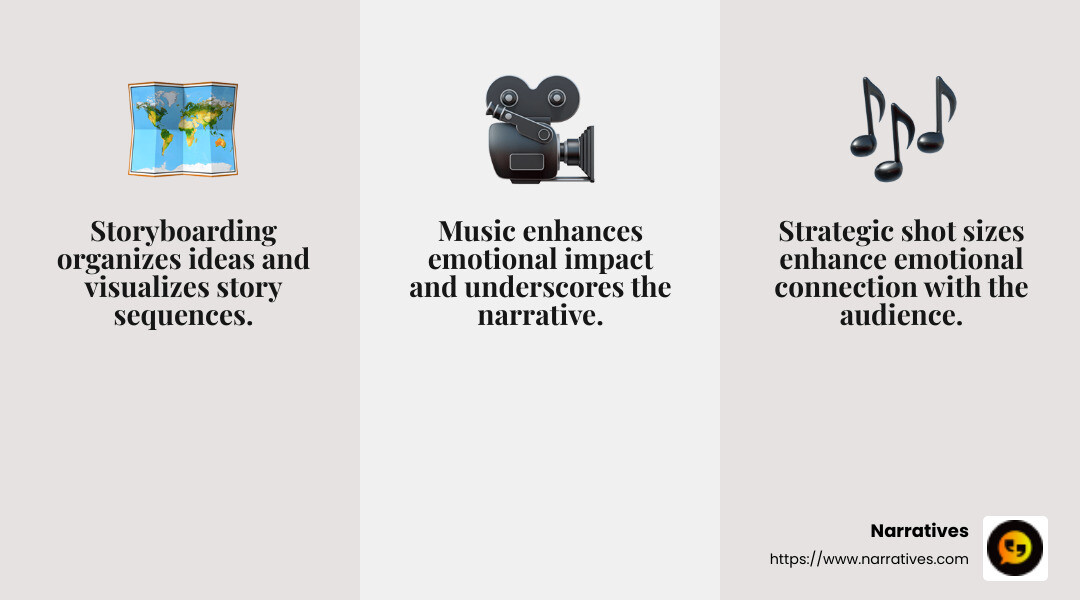
Storyboard: Think of a storyboard as your roadmap. It organizes your ideas and visualizes the sequence of your story. By sketching out scenes, you can plan camera angles, shot sizes, and transitions. This preparation ensures a smooth filming process and helps maintain narrative flow.
Scriptwriting: A well-written script is the backbone of any video. It outlines the dialogue, actions, and emotions that will be portrayed. A compelling script keeps the story focused and ensures that every scene contributes to the overall message.
Utilizing Visual Elements
Visual elements play a significant role in capturing and retaining viewer attention. Effective use of camera angles, shot sizes, and visual appeal can lift your story.
Camera Angles: Different angles can convey various emotions and perspectives. For instance, a low angle can make a character appear powerful, while a high angle might suggest vulnerability.
Shot Sizes: Each shot size serves a purpose. Close-ups capture emotions, making the audience feel connected to the characters. Medium shots provide context by showing characters in their environment. Wide shots establish the setting and can convey isolation or grandeur.
Visual Appeal: The overall look of your video should be engaging. Consider lighting, color schemes, and composition to make your story visually striking. A beautiful visual experience encourages viewers to keep watching and can make your story more memorable.
Incorporating Sound and Music
Sound is a powerful tool in storytelling. The right soundtrack can improve the emotional impact of your video.
Soundtrack: Music sets the mood and underscores the narrative. An upbeat track can create excitement, while a slower melody might evoke melancholy. Choose music that complements the story and amplifies its emotional core.
Emotional Impact: Sound effects and music work together to trigger emotions. A crescendo can heighten tension, while silence can emphasize a poignant moment. Use sound strategically to guide the audience's emotional journey through your story.
Incorporating these video storytelling techniques—from planning with storyboards and scripts to using visual and auditory elements—helps create a compelling and emotionally resonant video. By mastering these techniques, storytellers can craft videos that not only captivate but also inspire and move audiences.
Video Storytelling Techniques for Non-Profits
Elevating Underrepresented Voices
Non-profits have a unique opportunity to use video storytelling techniques to shine a light on stories that often go unheard. By focusing on social impact and being community-driven, these organizations can create content that resonates deeply with their audience.
Emotional resonance is key. Telling impact stories that highlight the struggles and triumphs of underrepresented groups can create a powerful connection with viewers. For instance, the Pars Equality Center uses video to showcase the experiences of Persian-speaking immigrants, helping to humanize their challenges and achievements.
When crafting these stories, let the subjects speak for themselves. Authentic voices drive audience engagement and foster empathy. This approach not only raises awareness but also encourages support and involvement from the community.
Building Trust and Inspiring Action
For non-profits, building trust is crucial. Video storytelling can play a significant role in achieving this by focusing on purpose-driven narratives that demonstrate transparency and commitment to their cause.
One effective technique is to show the direct impact of donations or volunteer efforts. This transparency builds credibility and encourages viewers to take action. A well-crafted video can move people from passive observers to active participants in the cause.
Storytelling impact is amplified when viewers see real-life examples of change. Consider featuring testimonials from beneficiaries or showcasing behind-the-scenes footage of the organization's work. These elements not only build trust but also inspire viewers to contribute their time, money, or voice.
By leveraging video storytelling techniques, non-profits can lift their message, engage their audience, and drive meaningful change. The next section will dig into frequently asked questions about these techniques, providing further insights into crafting compelling video stories.
Frequently Asked Questions about Video Storytelling Techniques
What are the key elements of a compelling video story?
A compelling video story hinges on a few essential elements:
Clear Narrative Structure: Every good story needs a beginning, middle, and end. Start with an engaging introduction, present a conflict or challenge, and conclude with a resolution. This structure keeps viewers hooked and makes the message memorable.
Emotional Triggers: Emotions are powerful motivators. Use relatable characters and real-life situations to evoke feelings such as empathy, joy, or even outrage. According to research, emotional connections can significantly improve audience engagement.
Visual Storytelling: Use visuals to show, not just tell. Incorporate a variety of camera angles and shot sizes to maintain interest and convey meaning. Close-ups can capture emotions, while wide shots can set the scene and context.
Authentic Voices: Authenticity is key. Let the people in your story speak for themselves. This builds trust and credibility, making the story more relatable and impactful.
How can non-profits effectively use video storytelling?
Non-profits can leverage video storytelling to amplify their mission and connect with audiences:
Highlight Social Impact: Focus on the real-world effects of your work. Share stories of individuals or communities who have benefited from your efforts. This not only raises awareness but also humanizes the cause.
Community-Driven Content: Engage with the community you serve. Use their voices and stories to drive the narrative. This approach fosters a sense of ownership and pride among participants.
Purpose-Driven Narratives: Clearly articulate your mission and the impact of donations or volunteer efforts. Transparency builds trust, encouraging viewers to support your cause.
Call to Action: Every video should end with a clear call to action. Whether it’s donating, volunteering, or simply sharing the video, guide viewers on how they can contribute.
What role does music play in video storytelling?
Music is a powerful tool in video storytelling, influencing the mood and emotional impact:
Setting the Tone: Music can set the mood right from the start. A well-chosen soundtrack can evoke specific emotions, whether it's hope, tension, or excitement.
Enhancing Emotional Impact: Music complements visuals and dialogue, enhancing the emotional depth of a scene. It can amplify feelings and make moments more memorable.
Smooth Transitions: Music helps in transitioning between scenes, maintaining the flow and coherence of the story. It can signal shifts in tone or pace, guiding the viewer’s emotional journey.
Creating a Lasting Impression: A catchy or meaningful tune can linger in the minds of viewers, reinforcing the message long after the video has ended.
By understanding and applying these video storytelling techniques, creators can craft stories that not only captivate but also inspire action.
Conclusion
As we wrap up our exploration of video storytelling techniques, it's clear that storytelling isn't just an art—it's a powerful tool for connection and change. At Narratives, we pride ourselves on being a digital storytelling partner for non-profits and purpose-driven organizations. Our mission is to lift underrepresented voices and share their impact stories in a way that inspires action and builds trust.
Why Choose Narratives?
Expertise in Emotional Resonance: We understand that the heart of a compelling story lies in its emotional impact. Our team crafts narratives that resonate deeply, ensuring that your message not only reaches but moves your audience.
High-Quality, Purpose-Driven Content: We focus on creating high-quality video content that highlights the social impact of non-profits. By showcasing real stories and authentic voices, we help organizations build credibility and foster community engagement.
Partnerships for Lasting Impact: Our approach is collaborative. We work closely with non-profits to understand their goals and tailor our storytelling techniques to amplify their mission. This partnership ensures that the stories we tell are not just heard but remembered.
Inspiring Action and Building Trust: Through strategic storytelling, we aim to inspire viewers to take meaningful action—whether that's donating, volunteering, or simply spreading the word. Trust is at the core of every story we tell, and we strive to maintain transparency and authenticity in all our content.
When digital content is abundant, crafting stories that stand out and make a difference is more important than ever. At Narratives, we are committed to using the power of storytelling to drive positive change and support the incredible work of non-profits around the globe.
Ready to share your story? Learn more about how we can help.

.avif)