Workshop Wonders: Elevate Your Video Storytelling Skills
The Power of Video Storytelling Workshops
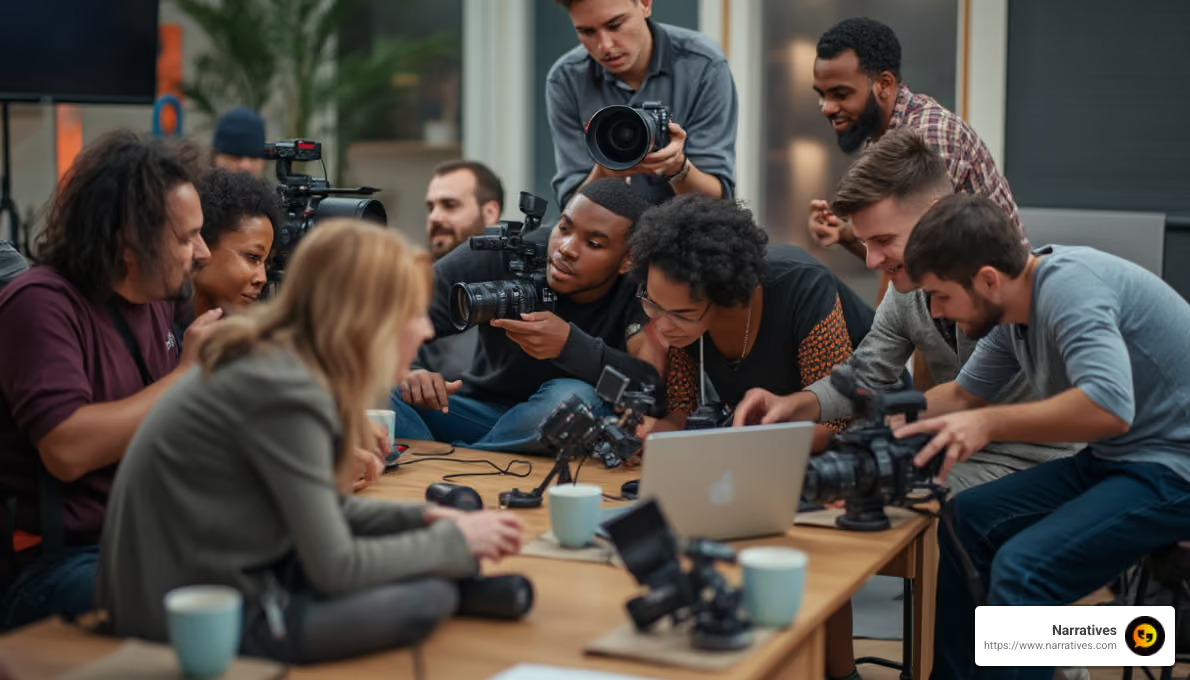
Video storytelling workshops offer non-profit marketing leaders, social impact organizations, and advocacy-focused brands the chance to transform their messages into compelling visual narratives. These workshops focus on key aspects such as storytelling techniques, video production, and social media to create engaging content. Here's why these workshops are essential:
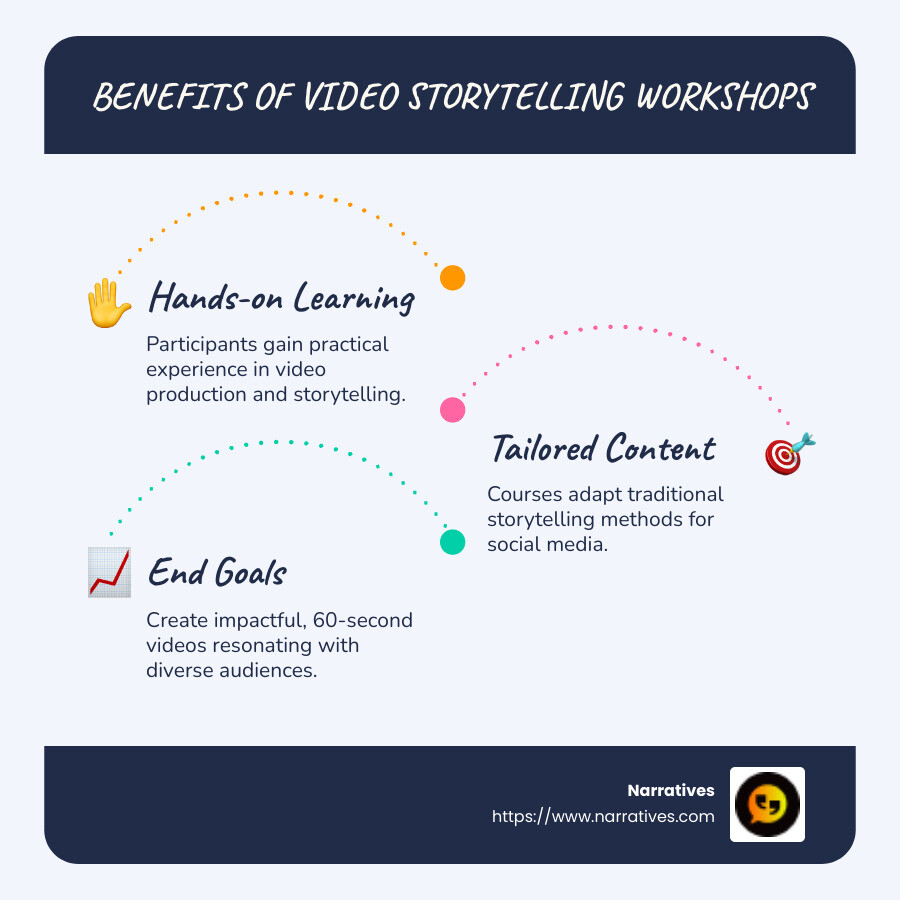
- Hands-on Learning: Participants gain practical experience in video production and storytelling.
- Custom Content: Courses adapt traditional storytelling methods to the social media landscape.
- End Goals: Create impactful, 60-second social media videos that resonate with diverse audiences.
The increasing importance of videos as storytelling tools is changing how organizations communicate their missions. By attending a storytelling workshop, your team can harness the fundamental techniques needed to amplify their stories.
Video has become a powerful medium in today's digital landscape. It captures attention and tells stories that resonate on social media platforms. With workshops led by experienced guides like National Geographic Explorers, participants learn to combine elements like characters, conflict, and setting with visual and audio components. This creates immersive and emotionally impactful content.
Workshops provide the flexibility to accommodate busy professionals. They typically blend asynchronous learning with live Zoom sessions. This balance ensures participants can refine their projects with expert guidance while managing their own schedules. You'll find specific modules on everything from pre-production planning to post-production editing.
Considering accessibility and optimization is also crucial. Learning how to implement closed captioning and optimize videos for various platforms can significantly increase reach and engagement.
Register for a workshop to explore the transformative power of video storytelling. It's an investment in authentic, ethical, and effective storytelling that drives real change.
Video storytelling workshops terms to remember:
Understanding Video Storytelling
Visual storytelling is the art of conveying a narrative through images, sounds, and sequences. It's about more than just capturing footage; it's about creating an experience that resonates emotionally with the viewer. This approach is especially powerful on social media, where attention spans are short and competition for engagement is fierce.
Narrative Elements
At the heart of any great video story are its narrative elements. These include:
- Characters: The people or personas in your story. They drive the plot and give viewers someone to connect with.
- Setting: The backdrop against which your story unfolds. It provides context and can evoke particular moods or emotions.
- Conflict: The challenge or problem that your characters face. It's the engine of your story, creating tension and interest.
- Resolution: How the conflict is resolved. It brings closure and delivers the story's message.
These elements work together to craft a story that feels complete and satisfying. In a workshop setting, participants learn to weave these components into their videos, ensuring that their narratives are clear and engaging.
Emotional Impact
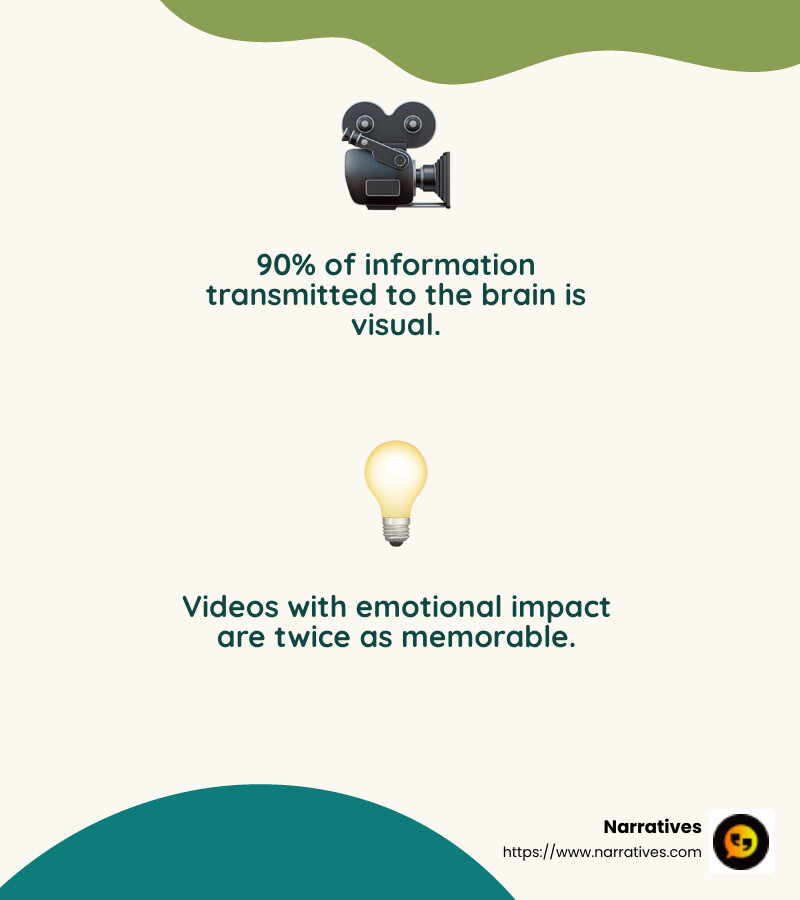
Emotional impact is crucial in video storytelling. People remember how a story makes them feel more than the specific details. By tapping into emotions such as joy, surprise, or empathy, your videos can leave a lasting impression. This emotional connection is what makes viewers more likely to share your content, increasing its reach and effectiveness.
Crafting Your Story
Creating an impactful video story involves several stages:
- Preproduction Planning: This is where you decide on your story's message, outline your narrative elements, and plan the logistics.
- Scriptwriting: A well-written script ensures your story flows naturally and maintains viewer interest.
- Production: Capturing your footage with attention to detail in visuals and audio.
- Postproduction Editing: Refining your video to improve storytelling and emotional impact.
By understanding these aspects, attendees of video storytelling workshops can create videos that not only inform but also inspire and engage their audiences.
In the next section, we will explore how video storytelling workshops provide a comprehensive guide to mastering these skills, offering a structured yet flexible learning experience.
Video Storytelling Workshops: A Comprehensive Guide
Video storytelling workshops are the perfect avenue for those looking to hone their skills in crafting compelling narratives through video. These workshops offer a structured approach, combining both theoretical knowledge and practical application to ensure participants leave with a well-rounded understanding of video storytelling.
Course Structure
Typically, these workshops span several weeks, blending synchronous and asynchronous learning. For instance, a six-week course might include weekly 90-minute Zoom sessions for face-to-face interaction, coupled with 2-3 hours of self-paced work. This format allows participants to engage with instructors and peers, while also providing the flexibility to work on projects at their own pace.
Each week often focuses on a different aspect of video production. Here's a simplified breakdown:
- Week 1: Introduction to visual storytelling and the techniques of video production.
- Week 2: Developing ideas into stories, with a focus on accessibility.
- Week 3: Planning logistics, such as time management and budgeting.
- Week 4: Transitioning from planning to production.
- Week 5: Peer review and feedback on the first cut.
- Week 6: Finalizing and optimizing the video for various platforms.
Hands-On Experience
A key feature of these workshops is the hands-on experience they provide. Participants are encouraged to actively work on their projects, applying the concepts they learn in real-time. This experiential learning ensures that attendees not only understand the theoretical aspects but also gain practical skills that they can apply immediately.
Workshops often include activities such as:
- Storyboarding and scriptwriting exercises
- Filming and editing sessions
- Peer reviews and collaborative feedback
These activities help participants develop a deeper understanding of the storytelling process, from conception to completion.
Learning Outcomes
By the end of a video storytelling workshop, participants can expect to achieve several key learning outcomes:
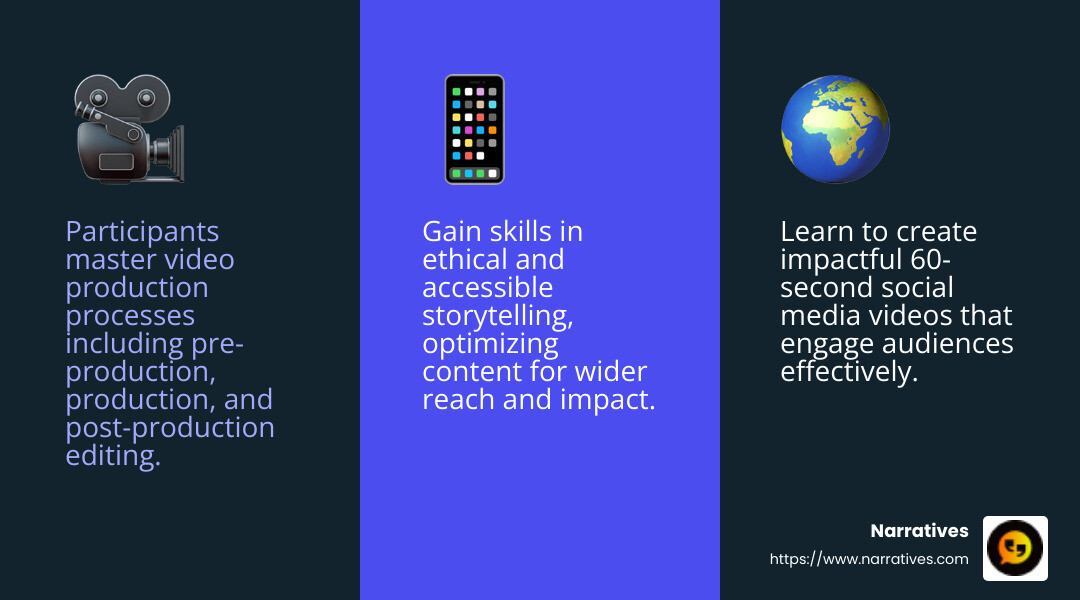
Mastery of Video Production Processes: This includes pre-production planning, production, and post-production editing.
Ability to Create Impactful Social Media Videos: Participants learn to craft 60-second videos that effectively communicate their message and engage their audience.
Ethical and Accessible Storytelling: Emphasis is placed on creating content that is ethical and accessible, ensuring it resonates with a broad audience.
Optimization Skills: Attendees learn to optimize their videos for different platforms, increasing their reach and impact.
With these skills in hand, participants are well-equipped to create videos that captivate and inspire. In the following section, we'll dig into the key components of effective video storytelling, exploring the elements that make a video truly stand out.
Key Components of Effective Video Storytelling
Creating a compelling video requires more than just hitting the record button. It's about weaving together visuals, sound, and narrative to create a story that resonates. Let's break down the essential components of effective video storytelling: preproduction planning, scriptwriting, and postproduction editing.
Preproduction Planning
Before you start filming, preproduction planning sets the stage for success. This phase involves:
Defining Your Story: What message do you want to convey? Identify the core elements like characters, setting, and conflict. This forms the backbone of your narrative.
Creating a Shot List: Plan each scene and shot to ensure you capture everything needed. A detailed shot list saves time and reduces stress during filming.
Budgeting and Scheduling: Determine your budget and create a timeline. This helps manage resources effectively and keeps the project on track.
Scouting Locations: Choose locations that improve your story. Consider lighting, sound, and accessibility.
Scriptwriting
Once your plan is in place, it's time to craft the script. Scriptwriting involves:
Developing Dialogue and Action: Write clear dialogue and action sequences. Keep it simple and concise to maintain viewer engagement.
Focusing on Accessibility: Use language and visuals that are inclusive. Consider adding closed captions for a broader reach.
Storyboarding: Visualize the script with a storyboard. This helps in understanding the flow and making necessary adjustments before filming.
Postproduction Editing
After filming, postproduction editing brings your story to life. Key tasks include:
Assembling the Footage: Organize and cut footage to create a cohesive narrative. This is where the story truly takes shape.
Adding Music and Sound Effects: Improve the emotional impact with appropriate music and sound effects. Ensure they complement the visuals and don’t overpower the dialogue.
Applying Visual Effects and Transitions: Use effects and transitions sparingly to maintain a professional look. They should improve, not distract from, the story.
Optimizing for Platforms: Tailor your video for different platforms. This might include adjusting the aspect ratio or adding subtitles for accessibility.
By mastering these components, you'll be able to create videos that not only tell a story but also captivate and move your audience. Next, we'll explore the tools and technology that can aid in this creative process.
Tools and Technology for Video Storytelling
Creating captivating videos requires the right tools and technology. Let's explore some key resources that can improve your video storytelling skills.
Adobe Rush
Adobe Rush is a powerful yet user-friendly tool for video editing. It's perfect for beginners and those looking to create professional-quality videos without a steep learning curve. With Adobe Rush, you can:
Edit on the Go: Available on both desktop and mobile, you can edit videos anywhere. This flexibility is perfect for quick edits and social media content.
Seamless Integration: Easily integrate with other Adobe products like Photoshop and Premiere Pro. This allows for a smooth workflow if you decide to advance your editing skills.
Quick Export: Optimize videos for various platforms with a few clicks. This ensures your content looks great whether it's on Instagram, YouTube, or TikTok.
For those enrolled in video storytelling workshops, downloading the Adobe Rush Starter version is recommended. It's free and provides all the essential features needed for your projects.
Smartphone Filming
Your smartphone is a powerful tool for video storytelling. Most modern smartphones can film in 1080p HD or even 4K, providing high-quality footage. Here are some tips for effective smartphone filming:
Steady Shots: Use a tripod or stabilizer to avoid shaky footage. Smooth shots are crucial for maintaining viewer engagement.
Good Lighting: Natural light is your best friend. If filming indoors, ensure your subject is well-lit to improve video quality.
Sound Matters: Consider using an external microphone for clearer audio. Good sound quality is as important as video quality.
Smartphones are incredibly versatile, making them ideal for capturing spontaneous moments or planned shoots.
Video Optimization
Video optimization is the process of enhancing your video to reach a wider audience. This involves:
Accessibility Features: Add closed captions to make your videos accessible to all viewers. This small step can significantly increase your reach.
Platform-Specific Adjustments: Tailor your video for different social media platforms. For example, use a vertical format for Instagram Stories and a horizontal one for YouTube.
Metadata: Use relevant keywords in your video titles and descriptions. This helps with searchability and ensures your content gets noticed.
By utilizing these tools and techniques, you'll be well-equipped to create engaging and impactful videos. Whether you're a beginner or looking to refine your skills, the right technology can make all the difference in your storytelling journey.
Frequently Asked Questions about Video Storytelling Workshops
What are the benefits of attending a video storytelling workshop?
Attending a video storytelling workshop offers numerous benefits that can improve both personal and professional skills. Participants will gain a solid understanding of the entire video production process, from preproduction to postproduction. This includes learning how to plan, script, film, and edit videos effectively.
Skill development is a key outcome. Workshops provide hands-on experience, allowing you to practice and refine your storytelling techniques. You will learn to create compelling narratives that resonate with audiences, adapting traditional storytelling methods to suit social media environments.
Additionally, workshops often focus on ethical storytelling and accessibility. This ensures that your videos are inclusive and impactful, reaching a diverse audience.
How do I choose the right workshop for my needs?
When selecting a workshop, consider the course format and your specific goals. Some workshops, like the one offered by Narratives, blend asynchronous and synchronous components. This provides flexibility for self-paced learning while offering face-to-face interaction with instructors and peers via Zoom.
Identify your target audience and the platforms you want to focus on. For instance, if you're interested in creating content for social media, look for workshops that emphasize short, impactful video formats and platform-specific strategies.
Lastly, assess the learning outcomes. Make sure the workshop aligns with your objectives, whether it's building a portfolio, gaining certification, or learning specific skills like scriptwriting or video optimization.
What equipment do I need for a video storytelling workshop?
To make the most of a video storytelling workshop, having the right equipment is crucial. Here's what you'll typically need:
Filming Devices: A modern smartphone can be an excellent starting point. Most smartphones today offer high-quality video capabilities, such as 1080p HD or 4K resolution.
Editing Software: Tools like Adobe Rush are recommended for beginners. It's user-friendly and allows you to edit videos on both desktop and mobile devices.
Additional Accessories: Consider investing in a tripod or stabilizer for steady shots, and an external microphone for better audio quality.
Internet Connection: A reliable internet connection is essential for participating in online workshops and accessing digital resources.
By ensuring you have the right technology and tools, you'll be prepared to dive into the creative and technical aspects of video storytelling. This setup will help you produce professional-quality videos that effectively convey your message.
Conclusion
At Narratives, we believe in the power of stories to transform communities and inspire change. Our mission is to amplify underrepresented voices through impactful video storytelling, particularly for non-profits and purpose-driven organizations. This commitment to community-driven storytelling not only lifts the stories of those who might otherwise go unheard but also fosters human connection and empathy.
Our partnerships with non-profits are at the heart of what we do. By collaborating closely with these organizations, we create high-quality, emotionally resonant content that highlights their impact and inspires action. This approach helps build trust, increases visibility, and encourages community engagement.
Through our video storytelling workshops, we equip participants with the skills needed to craft compelling narratives that resonate with audiences. These workshops provide hands-on experience in video production, from preproduction planning and scriptwriting to postproduction editing and optimization. Our focus on ethical storytelling and accessibility ensures that the stories we help tell are inclusive and impactful.
We invite you to join us in this journey of storytelling for social impact. By partnering with Narratives, you can help shine a light on the stories that matter most, making a meaningful difference in the world.
Explore how we can help your organization share its story by visiting our Narratives service page. Let's create videos that not only inform but also inspire and connect communities.
.avif)