Behind the Lens with Eric Jeng: How He Brings Empathy to the Streets
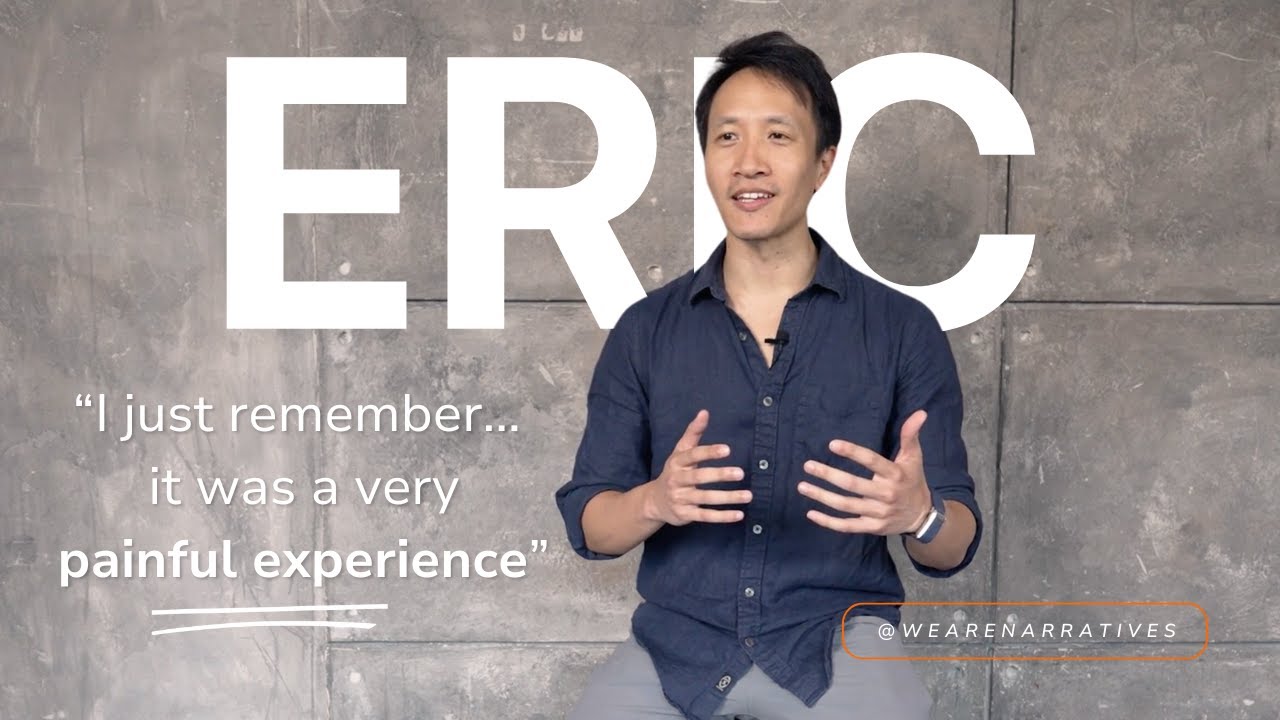
This story is the transcript of a Narratives video interview, lightly edited for clarity.
From Cupertino to content
Are we doing the drug segment now?
Well, if you'd like to tell us about your psychedelic use, we totally welcome that.
Sure.
But I figured we would start with where you're from, and maybe a little bit about your childhood, or some moments from your childhood, stories that are impactful to you when you look back. But first, I wanted to give a little bit of a preview: there are very few creators on the internet who are genuinely creating value and empathy in the world, and I find that your content does that. I'm grateful for your content. It inspires me. So I want to learn a little bit more about you and share your story with the world.
Well, thank you for having me, and thank you for being here. I appreciate that, and part of the reason I'm here is that I feel the authenticity of what you're saying. I remember when we first chatted, a year ago or whatever, it did feel like you were genuinely trying to help creators, and that's not always the case. So I appreciate that.
My name is Eric. I'm from Cupertino, California, where Apple's headquartered; that's what we're known for. Only child. My mom was a pianist, and my father was an engineer. I always had this struggle between my creative side and my, I'll say, analytical, and maybe ambitious, entrepreneurial side, and it finally all came together with content creation about four years ago.
I'm also from the Bay Area, Silicon Valley, and I find there's a pressure there to go create a startup, to become an engineering type, to go into software. I know you're in more of a creative field now, but was there that for you early on? Did you ever feel that pressure from the area?
Yeah. I feel like the startup stuff came after my childhood, because I grew up in the '90s and early 2000s, and that was still before the huge startup tech boom. But growing up at that time, we did have this sensibility that everyone's got to save the world. And then you pile that on with the love I got from my parents as an only child, and there was a strong sense of, hey, I don't want to just do whatever in this world. So that was there.
Actually, yeah, it was kind of a pressure. I spent a lot of my life, you know, I started out working as an accountant at a Big Four firm, and it was painful to be like, oh, I want to do something big, but I'm an auditor. Not that... God bless their souls, auditors are doing God's work. But it took a while for me to find my path, and it was stressful to not be on that path for a while.
What sent you down the path of becoming an accountant first? Tell the whole story of you going from the Bay Area to UCLA, right?
Yeah. I remember the first video I made was in high school, senior year, back when YouTube was just starting, and I was like, oh, this looks fun. I'm going to give it a shot. The first video I made was a Maroon 5 video, to "She Will Be Loved." It's still online. It's classic. That's when I began to fall in love with making videos, but it never crossed my mind that I could actually do this as a career, because growing up as an Asian person in the Bay Area, it was engineer, doctor, lawyer. That was it. I went into business and finance because I didn't want to be a lawyer, I didn't want to be a doctor, and I didn't want to be an engineer, so that was really the only career path remaining.
Faith first, then fearlessness
From there, when did you do your first street interview, and what led you to that?
The way I began finding my purpose and going about my calling, and my first street interview, came down to two things. First, it was coming back to my faith, and part of that was coming to a place of figuring out who I was and what I wanted, what my values were and what my worldview was. For me, coming back in touch with my faith and my inner self and being was a strong part of that. So once I had that in place, I had a sense of, OK, this is what I think is going on in the world, and this is how I want to participate in making things better, just a little bit. That was the first orientation. I didn't always have that in the past. I wanted to make money, or I just wanted to be popular and get a lucrative job to look cool, all the other things I wanted. But once that went away, and I was like, OK, this is a more purpose-driven life, then the question was, how do I do that?
And then the second part that had to happen was that I needed to come to a place where I wasn't afraid. I think the big problem when you're starting new endeavors is that you're afraid, because anytime you're starting anything new, there's always a huge hurdle. Is it going to fail? Are people going to think I'm stupid? There's going to be a lot of work involved. All these little resistances. So I had to come to a place, and it was through a little retreat, where I was just like, OK, if I were no longer afraid of failure, what would I do? And I sat in that space for a month, and one day a little quiet voice was just like, start a YouTube channel. I was like, OK. Because I'd always been interested in videos, since high school, but I don't know why I never thought about starting a YouTube channel earlier. Only 15 years after the fact. So I was like, all right, I'll start a YouTube channel. And then the pandemic hit, and I was unemployed at the time, so I had a lot of free time on my hands, and that's when the street interviews began.
Is it only by looking back that you can say, oh, I was afraid then? Or was it very conscious, like, I feel like I'm afraid of something and I'm holding back, and then you took time to reflect, and then, ah, yes, a YouTube channel?
Why are you curious about that?
I'm curious whether you were able to recognize the fear in the moment, or whether that clarity came with age. Because I know a lot of people are searching: ah, what should I do? And they don't know what it is that's holding them back.
I find it's hard to recognize. It's about 50/50. To a certain extent, I wasn't even aware how afraid I was, because once I started, I was even more afraid, and other fears arose. So it was a process. It wasn't like I was instantaneously ready to go. First you make that first video, and then there's a whole process.
A lukewarm Christian
And from a faith perspective, did you grow up with the same faith you have now? What took you away from it, and then what made you come back to it?
So, I was what you would call a lukewarm Christian. Someone who generally believes in the concept of God, but is like, man, I still want to do the things I want to do: party, smoke, drugs, have sex, whatever, all the things of living in the world. Once I hit college, I was just like, man, I just want to do my own thing. So basically I did my own thing until 25, 26.
And then one day I was like, dude, I'm not on the path I wanted to be on. I'm working this job I don't care for. I had just had a seven-year relationship come to an end. It was basically a really bad quarter-life crisis, where I had this realization: OK, God, I've been doing things my way, and I'm in deep doodoo. So let me come back. There's nothing that leads more easily to repentance than pain. I was in a lot of pain, and that's when a slight pivot in my heart happened, of being willing to surrender and let him lead. But it came from doing it my way for a long time. That was a little pivot, and from then on it's just kind of grown, like a plant, like a mustard seed.
So that was when you were around 25, 26. When did you start making the content, doing the street interviews? Was it around the same time?
32.
32. So what were you doing in that gap of time, between coming back to the faith and the realization of, this is how I'm going to live out my values in the world?
I was doing the work. Smoking a lot of pot in the beginning, just because I was so depressed or whatever. But I was doing the work. I was seeing therapists, seeing life coaches, being part of men's groups, sharing stuff about myself, getting self-aware, starting a journal, doing stuff I'd never really done before. Just being a human being, basically.
It was a refining process by which I was able to identify, oh, OK, these are the little attachments or hiccups I had. Like, oh, the way my parents raised me: my parents coddled me a little bit, so I had to be aware of that, and recognize how sometimes I don't take full responsibility for my own life. That's just one example, but there were many other things: my relationship with my mom, with my dad, all that stuff. And then there was just working through insecurities, working through 26 years of living. It was kind of like going to the dentist and getting your teeth cleaned. That process is still ongoing. It won't stop till I die. But the major parts of it went on for about five years. That was a formative time, because I came out of it able to serve, having the capacity to do what I do now. I wouldn't be able to do what I do now had I not done the work then.
Like a metaphorical filling of your own cup, to be able to pour into others.
Yep. Well, first I had to empty the cup of all the stuff that was inside, and then, yes, receive the better water.
What was all the stuff?
Some of it I've talked about a little bit, but at the fundamental level, and I think this is something we all have, it was feeling like I'm not loved. Feeling alone in the world. There was a visual I got one time in my head: I was a little orphan boy in a dark alleyway, rocking back and forth, and it was raining. Whatever that is, I wasn't giving it space, not even realizing it was there. It was just a fundamental sense of brokenness that I had to pay attention to.
The Bible, then therapy
And what was the first resource you reached out to? Was it going to church, finding a therapist, a friend who directed you?
It was the Bible.
The Bible? You just found the Bible?
It was dusty, but I took it out. I was in a lot of pain at the beginning, when it all hit the fan. So I looked to the Bible for pain relief. I looked to the Bible like, hey God, I'm really scared. I don't know how my life's going to turn out. I need help. I need some sort of reassurance, presence, pain relief. So for about six months, it was just me rereading the Bible. I had read the Bible before, but never from that kind of desperate state. And after that, it was joining a church, being in communion and community with other believers, and that was its own growth process as well. There's a lot of solo stuff you do, but there's a lot of growth that comes from relating with others as they're on their own faith journey.
So there's one part, which is faith, and then you mentioned therapy as well. When did that come in? What is the relationship with therapy like, and the balance of those two things?
There's no balancing. Faith is at the heart of things. It's the compass, the leading direction. Therapy and life coaching and whatever are just tools. It's almost like holding a mirror to yourself, having someone who understands psychology or has a professional background. I don't know, we just talked a lot about stuff. I'm not exactly sure what happened. I feel like a lot of the time it was like, dude, this feels like a waste of time. But after years, something does... You know what it was? The first three or four years were just, OK. And then one day it began to click. Things began to be like, oh, I'm starting to see this. Oh, I'm starting to not do the stuff I used to do. So that took a while.
But anyway, to your question: therapy helped me dive deeper into my inner being, my inner psyche, my inner world, which then gave me more material to work with with God. Like, hey, there's more stuff here, right? Hey, I pulled this out. Can you work on this with me? So therapy was a good tool.
Among those tools for therapy, I'm most interested in psychedelics, so I have to ask: any experience with psychedelics, or psychedelic-assisted therapy?
I've never used it as therapy. I have done psychedelics, not a ton. A little bit of LSD and shrooms back in the day. I'm not feeling a strong push toward doing anything.
Any mystical or spiritual experiences that you remember?
No. I was just seeing objects coming at me. Just hallucinating.
That's fair.
Baptized by the Holy Spirit
What about without those? Are there moments in your life where you can remember spiritual or mystical experiences that were really compelling for you?
All the time. Well, no, not all the time. There was a period in my life, for a couple of years, when it was heavier, and that was when there was a lot of inner turmoil. Now it's more like little bits of serendipity here and there throughout the day. It's more of a constant, underlying sense of serendipity and peace, overflowing throughout the day.
But my most tangible moment of feeling the presence of God was what is called baptism by the Holy Spirit. And I feel weird talking about this, because it's not stuff that's talked about commonly, and for someone who isn't in this world, it could sound strange. So that's just me putting it out there for myself.
It's called baptism by the Holy Spirit, and what that means is, in the Bible, Jesus was baptized by the Holy Spirit when he was baptized by John in the water, and a dove descended, and God was like, "This is my son, with whom I am well pleased." Usually there's a baptism by water, which I had at birth, but then there's a baptism by the Spirit, which is usually done before you're commissioned to go off and do work for the Kingdom.
So I was at church one day, and this woman came up to me and tapped me on the shoulder, and she was like, "Excuse me, have you been baptized by the Holy Spirit?" I didn't even know what that was at the time. I said, "No, I've been baptized by water." She said, "Well, God told me to ask you if you've been baptized by the Holy Spirit, so maybe you should go look it up." I was like, OK. So I went home and looked on Wikipedia, and I was like, oh, shoot, there's this whole thing of baptism by the Holy Spirit before you go off to serve. This was a year before I started my first video, so I was already thinking about how to serve the Kingdom. So that night I was just like, OK, God, baptize me by the Holy Spirit. And I'm just waiting there. Nothing happens.
Then sometime later there was a sermon on the Holy Spirit. I was like, OK, I want to get baptized by the Holy Spirit, and I went down, and this is why community is so essential to one's faith journey. I don't think you can do it alone. Jesus had 12 disciples. I went down to get prayer, and I'm receiving prayer; there are people praying over me. And all of a sudden my right hand begins to shake, and I'm like, my arm's probably just getting tired. It's fine. It's even shaking a little bit right now. But then it just started increasing. It was just like this, my arm, and then eventually, it's kind of embarrassing, I'm literally scrunched up and shaking, my whole body shaking. There's worship music playing. That was my psychedelic experience, without psychedelics.
And people are praying over me, and I remember thinking in my head, what the freak is going on? Actually, no, I wasn't thinking that. What I was thinking was, wow, I feel so lucky to be receiving the presence of God right now. I kind of hope this never stops, because when you feel his presence, you don't want to leave. But also, I'm getting really tired, because I've been shaking like that for 15 minutes.
And I remember a really specific vision I got during that time. I've never shared this on camera before. There was a complete black space, almost like outer space or the universe or something, and there was a single door on the wall of this completely black entity, a single brown door. It was shut, and it was shaking, and light was seeping through the crevices of the door, and it was trying to blow open, and the door was just barely holding it together. And it felt like God was saying, that light behind the shaking door, trying to burst out, that's my love trying to come out into the world. One day it will, but right now I'm withholding it. It's so powerful that I'm withholding it.
At that time, I was kind of struggling with, God, I don't know if you really do love me, because I've done a lot of bad stuff and I'm not the best person. I doubted that he loved me. But then I felt that, and I walked away from that experience thinking, that's always there. This door is constantly shaking, right there, at all times. There's a song called "The Reckless Love of God." God's love is just reckless. I remember feeling that love and thinking, dude, this is outrageous. That love is so powerful and so strong, and it doesn't make sense. It's unfathomable, you know what I mean? And I'm just shaking right there. Eventually I was like, OK, God, I believe you. I believe you. I believe you love me. I believe you love me. I think it's time to make this stop, because this is a little too much. And then slowly it stopped, and it felt like electricity had gone through my body.
That's pretty wild. If I had met you and done this interview two weeks ago, I probably would have been a little more skeptical of that story. But what's wild is that on the way to this interview, we did an interview with two researchers of psychedelics, and one of them had a background in religion and mysticism. He taught us, and I'm going to butcher it, I can't explain the exact details, but mystical experiences can be quantified by science, and they're exactly the way you described that experience. Do you find that you're able to meet other people who have similar experiences, and a similar level of faith to yourself, in the modern world, or in New York City?
I do, through my church. I think when people share mystical experiences like the one I just described, and I've heard mystical experiences from other people, people will hear it and be like, OK, that's cool, and then they just go on eating their burrito. Because unless you experience it for yourself, it's not really going to impact you that much. Someone will tell me about their near-death experience, and I'm like, that's cool, but it doesn't really hit my heart. So I can appreciate that this thing I'm sharing, even if it was a real experience to me, isn't going to fully impact other people, at least not on the level it impacted me.
Christian in New York
But at the church I go to, Church of the City in New York, I've been part of that church for seven years. If there's one thing about being Christian in New York, it's that people who call themselves Christian in New York aren't doing it to be cool, or because it's culturally appropriate, like it is in certain parts of the country where it's like, OK, everyone's Christian, whatever. And this goes for anything in New York: if you call yourself anything in New York, it's because you genuinely, authentically are that, because everyone has a place in New York. So if you're a Christian in New York and you're genuinely seeking Jesus and God in New York, chances are it's going to be pretty real faith, because you're doing it from an authentic place.
And you're also doing it in a city that's very raw, where there's life and death at every corner, where there's pain and suffering and tears and joy and hope and peace. There's the whole gamut of human experience in New York City, so that makes for a very lively faith, in my experience and in my opinion, which makes it easy to connect with people. There are people in my church who build me up, people in my church who I look to for guidance on how to navigate the faith journey. I wouldn't be able to get to where I am in my faith without the people God has brought into my life.
As a content creator, how do you balance how much of that you want to show and bring into the content and the message you put out into the world? There's the version of it that's living out the values, being an empathetic person, all of the value you create with your content. But specifically bringing religion into it: how do you decide how much to include or not?
I'm still figuring it out. Something that for whatever reason I've always had is that talking about God is not a big deal to me. I feel like God is almost like Voldemort, like he who should not be named or something. People are so uncomfortable with the word God. They use the word universe. For me, I've always felt like talking about God isn't really that big of a deal. So that's the place I come from, and I think you can kind of feel that in my videos. I'm just like, oh, do you believe in God? No? Cool. OK, whatever, blah, blah, blah.
You can tell from my stories that I have an authentic heart for this, so it would be hard for me to not share it. It would be hard for me to not see how other people relate to it, to not try to see how God is operating in other people. So it's just embedded in my content. But something I am trying to be more cognizant of is, hey, when I'm talking about the gospel or God or faith, how much of it is about me? How much of it is about trying to persuade this person to believe in this thing so that I feel seen and I feel better about myself, and I feel like what I'm doing is the right thing? Versus how much of it is coming from a place of love, from a place of, I just want to help this person, or listen to this person? That's been a learning experience for me, because after the fact I can realize, oh, that conversation turned into a bit of a debate, and that was unnecessary. So I'm still learning, but I do try to notice when it feels like it's coming more from a place of ego rather than love.
Love in the Time of Corona
What were some of the first videos you made? Talk to me about experimentation, early on in creating content.
My first video was asking people what their love language was and then trying to fulfill their love language on the spot. It was actually a pretty good first video. I looked back and was like, dang, I really went for it.
You tried to fulfill their love language?
Yeah. If their love language was words of affirmation, I'd give them words of affirmation. If it was gifts, I had roses on me. It was Valentine's Day, so I just gave them roses.
But actually, there was a period of about six months to a year, when I first started, where I had a whole series called Love in the Time of Corona. That was a series I started in July of 2020, because, you know, it was the middle of the pandemic shutdown, and it was a little bit weird to interact with people at the time. So it was just, OK, what content can I make? I ended up making a lot of videos about my own dating life, what dating life was like in New York City, which, looking back now, was me processing my own hiccups in dating, past breakups and insecurities that arose during relationships. It was more like a video diary that some people watched. I'm never going to do that again. It was revealing. But there was a place for that. Now I'm more interested in other people's stories.
Did any of that content make you jaded about dating in New York City? Did it bias you at all?
I didn't need that content to make me jaded about dating in New York City. I think that just comes from being in New York City. No, I'm kidding. Look, jaded? It's probably a little bit of jadedness. I remember when I first came to the city, I was super like, oh, go on as many dates as possible, and run down that subway platform to go talk to that cute girl. I was very gung-ho about things, and now I'm less so. And I'm not sure if that's jadedness, or if that's just being more comfortable with my singleness, or in my own skin, or whatever. Probably it's like 20 percent jadedness and 80 percent just being happier with myself.
Facing loneliness
And what led you to that? You found your faith, and you started making the content, but you were still, I don't know, maybe not satisfied with being single, or content being independent. What was the moment where you were like, wait a minute, it's not so bad being alone? I love myself, and I don't need to keep chasing people who might not even be a good fit, just for the sake of chasing someone.
Oh yeah, I forgot about that memory. When I first moved to the city, I was really afraid of being alone. I'd just come out of a seven-year relationship, and I was constantly lonely. It was so bad. It was painful. I remember Friday and Saturday nights: you run around and see everybody going on dates at coffee shops or restaurants, and I just remember it being a very painful experience. And I would smoke pot to numb that pain, which might have been appropriate in the very beginning, just because the pain was so big. But at some point it wasn't serving me anymore, and it was actually holding me back. The part where I began to realize, oh, I'm actually OK being alone, was when I began to face that pain, or that fear, because I was afraid of being alone.
This is another God moment. I was in the midst of smoking too much pot and numbing my pain away, going on these dates that weren't really going anywhere, and feeling really frustrated. I remember going to church one morning, and already in the Uber there I felt this weight, and I could already begin to feel his presence. Then the first worship song came on, and I was already starting to tear up. That doesn't happen normally, but something was going on in my heart. Then the sermon happened, and then the closing worship set played, and it just came down. Luckily this was when we still wore masks, so I just put my mask over my face, but I was bawling. I was straight bawling, because I think the Spirit had hit a nerve in my heart. I was just like, God, I am so afraid of being alone. I'm so afraid of how my life's going to turn out. Is everything going to be OK one day, or am I just going to be lonely and depressed? As I'm saying this, it sounds so pathetic, but that's where I was. That was my thought process.
And I had to go there and meet that fear face to face, and it just broke me down. It was very cathartic. It was similar to the other experience, but it was a little bit different. It was a releasing. I was able to release that burden and that weight of, I need to make my life OK, whatever that weight was. It just released, and I was like, OK, God, I'm so afraid, and I give this to you. And from that day on, something happened where I just didn't turn to weed for that numbing anymore. That was really when the substantial healing of that loneliness began. And I'd say about two years after that, I don't think I was afflicted by loneliness anymore. Not in that way. There's a healthy loneliness, right? Sometimes we do feel lonely, and that means, hey, we should probably talk to some more women, or do a few things, or reach out to friends. But some sort of attachment got hit that day, and then it was a two-year process of healing after that.
I like the cyclicality of it: you return to church, and you gain these different lessons at different points throughout your life.
Every stepping stone
You talk a lot about the community church has given you here in New York, but you weren't handed this community the way you described most Christians, who have it passed on from their parents and are just a part of it. How did you find the community you're in now? And was there ever a point where you felt you were part of the wrong communities, or maybe not wrong, but the wrong fit?
I found this community by joining the church. It's the only church I've been part of. I just asked people what the biggest churches in New York City were, and this was one of them, and I joined it. And I have other communities. I went to business school, so there's the MBA community. I have high school friends who are here, college friends. I used to be part of this seduction group, where we would go around the city and talk to women and try to get their numbers.
What is that story? How did you end up in this group?
It was completely random. I saw a random post on Reddit. This was right when I first came to the city, and I was deathly afraid of talking to strangers when I first came to the city.
Really?
Yeah. New York City is an intimidating place when you first get here. People seem so on purpose and confident and don't-mess-with-me, women especially. So it was tough, and it still is tough sometimes. But I was very afraid of talking to strangers back then, so I was like, I need some help, and this group was a way for me to practice doing that. That was its own whole journey, which I'm a little reticent to share, because I know pickup has a bad connotation, and there are parts of it that are not the best. But I did gain a lot of skills, mindsets and learnings that I apply to my work today. I wouldn't be able to do what I do today if I hadn't gone through all the stuff I went through. So it was a good stepping stone. Everything has been a stepping stone.
It's really interesting to see how my life has come together, and it sounds almost pompous to say, in a way that allows me to do this content now. The skills I picked up, the formation, the work, the faith, and then the video skills. I made my first video in high school, and I was like, God, I really enjoyed doing this, but I don't know how I'm ever going to use it. And then other skills that are coming into place too. I'm starting an online community, which I'm pretty excited about, to try to do what I do in my videos between me and the interviewee, but in a group setting. I used to be a community organizer back in the day, in high school and college. I was president of my fraternity, and in high school I was president of organizations. I used to throw these huge yacht parties for New Year's Eve, and I was like, where is that ever going to come into play? And now it's coming into play here. A little bit of public speaking skills, too. It's all coming together in a way I was always so desperate for: when is this going to come together? But it didn't start coming together until I started to do things God's way, which is a cliche thing to say.
Are there ever alternate realities you imagine, where you could have been this whole other person?
Yeah. If I had stayed with my previous girlfriend, I would have just been a finance guy.
Really?
I was working in finance. Let's just say she got pregnant or something.
And that could have been the whole rest of your life. What do you think would have happened?
I would have hit a really bad midlife crisis and possibly cheated on her, and bought a Porsche, not that I could even afford a Porsche, some cliche thing like that. That would have definitely happened, and it would have been tragic for my family.
But is there an alternate reality where your skills of talking to people, of creating empathy with people, of helping them gain awareness, took you somewhere else? Could you have been a therapist? Could you have been a priest? Do you ever think about those?
No. I don't know. I feel like, with 20 different things coming together, I just can't really see another alternate reality. There's no Infinity War, 15 billion outcomes. It feels like it's just this one.
What if you're maybe a version of all those things right now?
Yeah. But I feel like my brain has too many things to think about in the present moment to entertain the alternatives.
What strangers have taught him
What do you feel you've learned about humanity in the process of interviewing all these different types of people?
I've thought about this one, and I really want to come up with a good answer, because I feel like there's something in there, but it may take some time to get a really good answer. I'll give you what I have now. Humans are complex creatures. They're good and they're bad. Everybody's got a good side and a bad side. I have a lot of compassion for them, for us. Some of us are trying to do the right thing, but we're all trying to live, and the simple act of living is a challenging thing in itself. Everyone has struggled, or is battling with something, and there is a hero's journey, a story being written, for each person. Some of them aren't necessarily articulate enough or self-aware enough to tell it in a short video format that will generate millions of views. But everyone's going through something, and there's an honor in being able to see that.
Nobody's perfect. No good person is so good, and no bad person is so bad. What I'm saying is, in my videos, I'll make a video, and I generally make people look pretty good. I think that's just my editing, and the little beauty filter. But I know things about that person that the audience doesn't know, because I'm cutting something. They're seeing a truthful story, but it's just one side of a polygon, right? And having seen all the different sides of people, I'm like, OK, there truly is no perfectly good or perfectly bad person in this world. Everyone's just being human and doing, I don't know, human things.
I normally ask who the role models in your life were that led you to become the person you are now. I'm curious if there are those people for you, but I also want to know if there are present role models in your current life who you look up to.
Obama. No, I'm kidding. No, actually, a little bit. He's got a lot of swag and leadership ability. I mean, Jesus. Sorry, I'm not... But Jesus, obviously. Jesus, Obama, swag, Steph Curry. I don't know if I have anyone. It's a lot of people.
From these interviews you've done, is there a lesson you feel you've gained about society, and how it could be improved?
Everybody just start loving Jesus. Actually, that kind of is the answer. I don't know anything about society, but I feel like if the people themselves get better, society would be OK. If people themselves begin to choose to be curious rather than judgmental, to be open-minded, to work through their stuff, to do the work. If everyone is healthy and, for some reason the word I'm coming up with is pure, within themselves, I think society will be OK. I don't know if I have a piece of legislation or whatever. I think if people's hearts are healed, society will be just fine.
Magical people
In the process of creating content, I find there are people we describe as magical. I have no other word for them. I find other people who create content or do street interviews tend to understand this: there are people who, when you talk to them, are high on life, and when they tell a story, you feel it, you see it. It's almost a mystical experience, but it's not. They draw you in, and they're rare. When we talk to people on the street, sometimes we'll go days or weeks without encountering one of those people, and you think, well, today was an OK day, I had someone, but it didn't scratch that itch. And then when you finally find another one of those people, you're like, that was it. What is it about those people? Is there a motif? Is it something in their habits? Is it the way they were raised? I'm curious what you've discovered about these magical people.
They somewhat seem to walk on water, metaphorically. They just have character. There's a personality there. There's substance. There's depth. There's color with these people. I don't know if it's a function of their family, or life experiences, or it could just be a function of God giving them some more swag.
Are they more confident? Is there more love in them?
Yeah. There's more self-awareness. There's definitely more self-acceptance. Contrast that with the person who's like, no, I don't want to talk to you. But even the people who don't want to talk to you have the same thing. I think we prioritize outward beauty. We prioritize people who are really eloquent. We prioritize people who are funny, for reasonable means, because it is entertaining. But you have that same thing, if we could get it out of you. Everyone's got it. Some people probably have a little bit more, and some people are able to channel it right on the spot. This goes back to me saying that nobody's perfectly good and nobody's perfectly bad. These people are special, but they're not so special.
Is there anyone who has left a mark on your life, who changed your life? Maybe not an insanely incredible person, but that moment was incredible?
All of them. All of them. OK, sorry, not all of them, but a lot of them. Even the conversations I don't use. Just being able to dive into someone's psyche, some of their essence will rub off on me. There are some conversations that have been more meaningful and impactful, but it feels more like a journey for myself: OK, that year, or in that moment, I was feeling like this, and that person really did this. And more recently it's this conversation. So it's its own flow, rather than one specific thing. More an amalgamation of different narratives coming together. It could be little moments. For example, you were saying earlier something about the mystical experiences you were learning about. That wasn't a huge thing in your grand life, but in this moment in time it was very impactful, for just this one-week window. That's how it is for me as well.
Stories that stay with him
Are there moments that have been very tough for you, mentally, where the stories or the situations you're in are almost too much to bear?
The emotional stories? Never too much to bear, at least in the moment. Afterwards, I'm lying on my couch. I appreciate the emotional moments. In almost a sort of sick way, I kind of want that, because it makes me feel like, oh, this is real. This is what's going on in life, and this is what's important.
Do you have an example you can share?
Yeah. Recently I talked with this woman. She had recently opened a restaurant in Park Slope, so we met up to talk about that, and I was like, whatever. And then all of a sudden, she talked about immigrating from China to Brooklyn and being the only Asian people in the neighborhood, and I was like, oh, were you ever bullied? And she was like, yeah. And boom, just a whole story. Have you ever seen Gran Torino, with Clint Eastwood, with the Hmong family? It was just like that. It was the story of this woman growing up through high school, an Asian woman who was basically physically and emotionally assaulted, bullied, throughout high school and growing up, by people in her neighborhood. And I just remember feeling so angry. I remember feeling like, dude, I wish I could teleport back in time and go down to that basement where you got trapped and at least get you out. I don't know if hitting bullies is really going to do anything.
But sometimes it just creates in me this feeling of, I wish I could do something about this. And it's not just a story of being bullied; it's anybody's story, right? That further feeds my desire to make content. Whenever I have stories like that, where I'm like, oh man, I wish I could do something about this, that's fuel that gets me going: hey, this stuff I'm doing is not just about the likes and the views. We've got to fix some stuff. We've got to heal some hearts. We've got to fix some stuff. We've got to bring some people together. It just sets my eyes.
Do you ever feel like you're not doing enough? I know there are moments when you go out of your way. There's an individual you could really help, and you could leverage your community to raise money for this person who's going through a hard time. But you can't do that for everyone. So I'm curious: does it ever feel like you can't do enough, and what do you do when that happens?
There isn't the time, because I recognize my own limitations. I just thought of this: I don't know if there's ever a feeling of not doing enough, but there's always a desire to want to help. I don't know if that's different from feeling like I'm not doing enough. I feel like, if I'm feeling like I'm not doing enough, I'll just pray for this person, and to me that feels more useful than anything I could ever do. I mean, if I do believe in a God, surely God could do more for this person than I ever could. So I'll pray for them. And if it feels right, raise money. If it feels right, maybe I'll pray for them on the spot. I'll do whatever I feel like God wants me to do for them in the moment or afterwards, and just follow the journey, and that sometimes takes me on its own little journey after the content's been created.
There was this man I interviewed last year. His name was Blue. He's a vagabond. He was with his friend, Phil, basically on the streets, and that relationship and story has evolved; it's still going on. It's been a whole saga of me trying to help this disadvantaged man, to give him life again. He's currently behind bars. That's a whole video. I think that's going to be a legit video, maybe my best long, actual story video, once it's finished. So I don't want to say too much.
All right, fair enough. A little movie coming out.
Yeah.
Are you interested in doing more longer-form content like that, movies, maybe TV?
You know, the thought I had walking here was that I don't go looking for my content. My content finds me. These stories find me. The little redheaded boy on the street, the bottle collector, the woman who lost her son. I do approach them and talk to them, but in a way it feels like I'm telling the stories God wants me to tell. If it's long form, great. If it's short form, great. I just have to be open and willing, which I am. Whether that's a story in a community setting, a story in a newsletter or a story on stage one day, I'm open. At the end of the day, they're all different avenues for doing the same thing: bringing a little bit of light into the world.
Edgy, wholesome
I love that. One of the last questions I'll ask is about religion and format. You publish mostly on YouTube and social media. What does the demographic of your audience look like? I asked you a little version of this before, about how they resonate with the religious aspect. Not just from a God standpoint, because I think a lot of people can relate to God, but from a religion standpoint, and specifically a Christianity standpoint: how do you see your audience's response to that?
My audience is like 50 percent, maybe 60 percent, 21 to 45 or something. It's about 50/50 male and female, a little bit different between platforms. YouTube is a little more male dominated; Instagram is a little more female dominated. But it runs the whole gamut. About half is US and half is worldwide, so it's an international audience spanning different ages, which is really cool. Not everyone is Christian. A lot of them are Christian or spiritual or religious, but a lot of them aren't. Maybe 50/50.
It's interesting. I kind of look at it like, when you want your kid to eat broccoli, you hide it in a piece of cheese and give it to them. That's kind of how my content is. One minute it's a fun, entertaining video with some random character, and then all of a sudden the next one's like, Jesus. And people are like, what? I don't remember signing up for this channel. I'll see comments like that. But some of them choose to stay, and I really appreciate those people.
The original name for my channel was Edgy Wholesome, which is kind of how I like to view myself: fundamentally wholesome, but I like to push things. So I like to post content that's going to push Christian people's buttons and get them riled up, and I like to post content that will rile up non-Christians, whatever. It can be challenging for some, and they'll leave. But the people who stay, I really appreciate, because they're kind of doing the work a little bit. They're willing to watch content that doesn't cater to their worldview, or whatever truth they have at the moment, and I think that's a great thing for people to do. I think it's very rare.
But again, this isn't super intentional on my end. I'm posting the stories that come. I met a porn star, right? I made a video with a porn star. I didn't hit her up and say, "Yo, let's do this." It just came about, and I made that story. I'm working on a video of a woman talking about being pro-choice, and I don't know if it's going to be released, but if it is, that's going to possibly lead to a large follower loss as well.
So you balance that a lot. How often do you think about content you want to put out in the world? Because you say, I'm OK pushing buttons, I'm OK with stuff that makes me uncomfortable, but my audience...
I've thought about this. I kind of feel like, if I'm not posting at least two, maybe three videos a year that stir some stuff up, where I lose followers, am I actually doing something worthwhile? But it's not an enjoyable process to lose followers you've worked so hard for. And not just to lose followers, but for people to leave comments that are negative. It's not enjoyable to read. But if the video feels truthful to me, and if it feels like something God would either be OK with or wants me to tell, I think in the long run it will actually help me. Maybe in the short run I'll lose some followers. Even the porn star video, for example: I think I lost like 3,000 followers from that. But I did get a couple of people who were like, "Hey, I agree," and it improved the relationship with a smaller group of folks. So whatever. Honestly, it's not about the followers. I don't know why I talk about followers so much. I get caught up in all that stuff. At the end of the day, you just keep telling stories, keep creating content, keep following your own journey and your path, and it'll all be fine.
But you've made a full-time living doing this, so the followers matter a little bit, right?
"Full-time living" is a strong word. Let's say I'm not on the streets.
Fair enough. A little bit above a struggling artist.
Yes, yes.
But you love what you do.
But I love what I do, so no complaints.
Cool. Well, thank you so much. My last question for you: what piece of wisdom would you give to a younger version of yourself, an aspiring content creator, and maybe someone who has lost their faith a little bit, or maybe is even anti-religion?
Be honest with yourself and with God, and just keep going.