Denied Asylum: The Urgent Story of Haris Shirzai and His Family
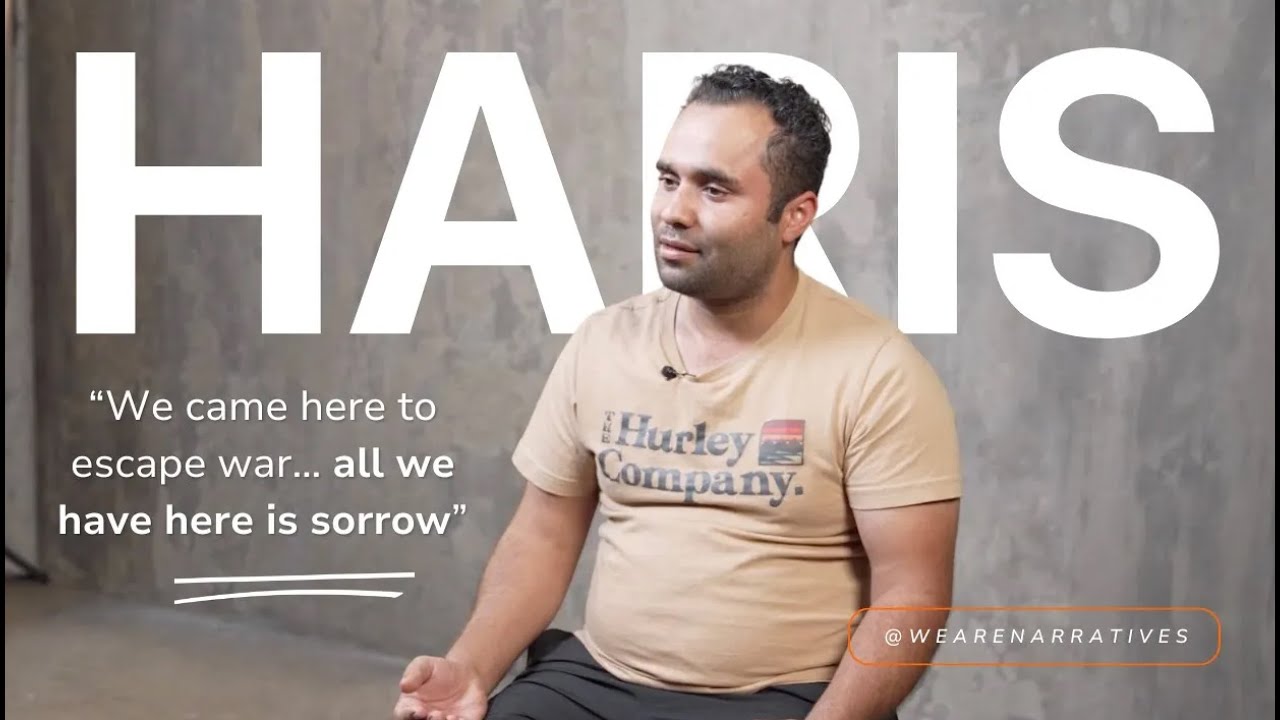
This story is the transcript of a Narratives video interview, translated from Dari and lightly edited for clarity.
Update from Narratives: since this interview was filmed, Haris Shirzai's asylum application has been denied.
Working on a US base
Hello, Haris jan. Thank you for making the time to talk with us. My name is Milan, and this is my colleague, Azita jan. We wanted to start with your story. The first question: when did you come to America? America promised you, it seems, an SIV visa, the visa for the immigration of Afghans and Iraqis who worked for the American military during the war. Can you tell us about the work you did for the American military, please?
When we were in Afghanistan, we worked on a military base. I was in their system from 2008, I think, '08 or '09, I don't know exactly. We were in the system for about 10 years. We weren't interpreters. We were employees, shopkeepers. We had a business. At that time we weren't allowed to come here. And we also had another job: we had a construction company, and through the company we applied for the SIV. The supervisor who gave us the contracts gave us a recommendation letter; we got it from the company itself. We applied, and then when the Taliban came into our country, we came here with the Americans.
When we came here, the SIV was in process until 2022. In 2022 the rejection came. There were some problems. The person who had written the paper had made a mistake, and that's why it was rejected. After it was rejected, I went and applied for asylum. We applied for asylum, and in November 2022 we had the interview. November 2022. Now it's '24, and in two or three months, in November, it will be two years. We've had no answer at all. On the paper they gave us, they said it would be decided after 150 days. 150 days, and it's two years. No information. Only a month ago, a month and a half ago, a letter came to us from USCIS itself saying, "You made these two or three mistakes in your interview."
What were the mistakes?
One mistake was that I said the year wrong. Another mistake: I said I have one name, but I have two names. And another one is that I was born in Pakistan, but I say Afghanistan. Well, we were born in Pakistan. But being born in Pakistan, Iran or Saudi Arabia doesn't make you a citizen, the way it does in America and the European countries and, for example, Canada, where a child born in the country becomes a citizen. In Afghanistan, Iran, Saudi, it doesn't count for anything. You go back to wherever your father and mother are from and get documents in your own country. They don't give you that country's documents.
I'm saying that the person who works in this section should be someone who knows this system, who is informed. You don't know whether Pakistan gives citizenship or not? You say, "You were born in Pakistan. Why do you say you're Afghan?" Well, this isn't my problem; it's about other documents. We went back to our homeland, and they gave me documents in my father's name.
And the year: he says I said the year wrong. Well, in Afghanistan there are a lot of people who don't know their date of birth. That's right. Even before we worked with the military, I knew that the birth date I have now isn't my exact date of birth. It should be whatever day I was actually born. They just put down a date.
So you were born in Pakistan?
Yes.
And your father was born Afghan?
Yes. My mother had some health problems that couldn't be treated here, so they took her to Pakistan, where the doctors were better. I was born there.
And this year, in 2025, I don't know the exact date, it's going to end. When it ends, we'll be without documents.
What will end?
In 2025, the documents we have now, the permit we have now: when that ends, we won't be able to get a license or to work. Everything we have will be canceled. No help.
So at the start of 2025 you'll be illegal?
Not at the start. In the seventh month, July 2025.
So exactly next year, around this time?
Yes, next year.
But right now, you're here on a visa?
Yes. When we were at the base here, in New Mexico, they brought our work permit cards there. Then from there we went to a hotel. At the base where they took us, they gave us our papers, like the visa they stamp in a passport.
And about the name, did you tell them you have two names?
Yes, I showed them the documents too. There were two certificates. On one of them, my name was written as Ahmad Haris. Ahmad Haris. On the other it was written Haris Shirzai. Haris Shirzai. Only one of them said Ahmad Haris, and he found fault with that. He found fault with that. I said, "My name is Haris. I don't have any other name." "No, here it says Ahmad Haris." I said the person who gave me this, in Afghanistan, there were a lot of other people named Ahmad, Ahmad so-and-so, Ahmad so-and-so. He added it to my name himself: Ahmad Haris. He just did it on his own. I said, on my Tazkira, my ID, there's one name. Whatever you look at, it's one name. This was written only on this one paper. It isn't important. But he made it important.
But in Afghanistan, nobody ever called you Ahmad as a first name. So that man just named you Ahmad on his own?
He was American. An American did this.
Growing up in Kabul
OK. You said you were born in Pakistan, but what's your story? After you were born in Pakistan, where did you grow up? Where was your childhood?
I don't remember anything of where I was born. I remember Afghanistan.
Were you in a city in Afghanistan? Which one?
Yes, the capital. Kabul. We were in Kabul.
And did you have brothers and sisters?
I have 4 brothers and 1 sister.
Are you the youngest or the oldest?
I'm the oldest. The oldest child.
And what was your childhood like in Afghanistan, in Kabul, at that time?
It was good.
Your relationship with your family, your friends, your brothers and sister?
Very good. It was a good childhood. There were hardships.
When you were little, what did you want to become when you grew up? What plans did you have?
No plans.
You didn't have any dream in your heart at all, about what you'd like to do, what job you'd like to have?
No. I'd have liked to be a trader. But a person doesn't get what he wishes for.
When you were a child, was there a lot of war around you?
Yes. I don't remember exactly how old I was. Before 2014 it was better. After 2014, there were more and more explosions, explosions, explosions, more suicide attacks. Several times we'd pass through an area, and right behind us, behind our car, there'd be a roar, an explosion.
This was 2014, in Kabul? After 2014?
After 2014.
In that year, 2014, how did it happen that the environment, the feeling, the atmosphere, even the culture, suddenly changed? Why did it change?
Because they said the Americans were leaving. The Americans are leaving; the Americans are abandoning Afghanistan. And after that, I don't know how, there were so many explosions.
Was it the Taliban?
Well, it wasn't exactly clear to us whether it was the Taliban or ISIS. Just explosions, explosions.
What was your family's relationship with the American military at that time? What was your family's life like?
Our whole family was in contact with these soldiers. When I went to the base, I was the youngest in the family there. I have 7 uncles. 7 uncles, yes. One of them was abroad, and the other 6 all worked at the base.
So you were the youngest one in the family working there?
When I went to the base, yes.
How old were you when you went to the base?
When I went to the base, it was 2008. Because I was young, they gave me an ID that was completely different from the others. Theirs were red or yellow, and they gave me blue. They said, "You're young. You can't work." They gave me blue because I wasn't a worker. I'd just walk around. That's why they gave different colors.
I understand. How old were you when they gave you the blue card?
I was a bit under 18. Under 18.
Did your family want you to start working and making money, or was it you?
It was me. I'd say, "I'm going too. I'm going." They'd say, "Don't go." I'd say, "No, I want to learn English." I'd go just to walk around, for fun.
When you went there at that time, did you dream of coming to America?
At that time I was more interested... I hadn't married yet. I was single. I was more interested.
How old were you when you got married?
I think when I got married I was 21. 21... no, 20. I was 20.
So you're 30 now?
In November I'll be 30, God willing.
The case
Were your wife and children able to come to America?
Yes. They're here with us.
Were they able to come on your case? How were they able to come?
They came with me. We were together.
So all these permits and the visa you got cover your wife and children too?
My wife and children, all together. They're all on the case.
If I had said in the interview that I'd never seen an American, never worked with them, my case would have been accepted. The mistake was that I said I worked with the Americans: "I have this paper. I have this paper." If I had said I didn't know anyone, it would have been accepted.
And this was when you applied for asylum?
Yes.
Why do you think that?
Because I know people who have never seen an American up close, and their cases, several friends I got to know at the base, their cases have been accepted. Approved. I said that we worked with the military, that I was in the system, and none of ours has been approved. If I had said no, ours would have been accepted too.
So, in general, everything you saw in your life was war and conflict?
Yes. We hadn't seen any happy paths that would have given us bigger dreams. We were always in war. And now, since we came here, for a year my wife has been worrying, heartbroken: why isn't our case accepted? She gets sick. She's gotten depression. And my own hair has turned white, and I've gone bald. It's all from worry.
And your children? Are they in school here?
Yes. One son is in school, and for another one, school is starting. The new school year is beginning.
Ah, the little one who is about to start school.
One of them doesn't understand Dari. He speaks English. My second son turned four and didn't speak at all, not in our own language. For several months we took him to a doctor. Now that he talks, he speaks English too. At home we speak Dari. "Why do you speak English?" Well, it's better, too.
So your second son started talking late?
Yes.
People in Afghanistan, friends or others, know that you worked with the Americans and the military, and then came here and got an SIV. If you ever wanted to go back, how would they see you? Would they think you were a spy, that you once worked for the Americans? We want to know how Afghans think about people like you who helped so much.
When we were there, there were people we knew, from where we're from. We knew others too. They'd go from one city to another to do business at a base, and on the way back, the Taliban would stop them on the road and behead them. Because of this, we... They'd say they killed him: "Why do you work with the Americans?" Sometimes they didn't even know whether he worked at the base or not. The point is, whoever went back and forth, they'd kill. And now the Taliban are the same Taliban. It's not some new Taliban. The same Taliban, the same name. They're all one. I don't know what will happen. We worked with them to earn our living. We worked. We made a living.
The base was like a home to us. Like our home, where we lived with our family. When we went to the base, everyone was friends, like a family. The soldiers would come and sit with us. We were very friendly. We'd go at 8 o'clock and stay until 5, sometimes until 8, sometimes until 10 at night.
Was your home far from the base? How far?
If we went at 8 in the morning, we'd stay until 5 in the afternoon. In terms of here, let's say about 6 or 8 miles away.
In the town where you lived, away from the base, didn't the Afghans who lived there have a bad opinion of you?
They didn't know where we worked. That wasn't known.
Didn't friends and family say anything?
Well, the families, our own family, all worked there; they knew. But neighbors, for example, didn't know what we did. We had a shop on Chicken Street. We had this shop on Chicken Street. When people asked what we did, we'd say, "We have a shop here." To strangers we wouldn't say that we worked with the Americans. When we went to the base, we had an ID. We'd go inside the base with it, and when we came out, we'd put the ID away again. We didn't show it to anyone.
What did you tell people you did?
We'd say, "We have a shop on Chicken Street. We sell carpets, or we sell antiques."
Chicken Street to the base
When you started your shop on the military base, how did it happen? You started going when you were young, working with the Americans, and then you built your own shop. How long did that take, and how did the shop come about?
We'd get shipping containers set up outside, and then we'd take the containers inside, inside the base.
So you were in the container business, and you were setting up containers there, and the Americans noticed you, and then you decided...?
Well, you said... We worked on the base, yes. Before that, we had a shop on Chicken Street. Tourists used to come there, and soldiers used to come out there. "What do you sell?" They'd say, "Do you want to come work properly, on the base?" We'd say yes. There we sold carpets and antique things.
Then the soldiers came back and said, "Do you want to set up a bazaar?" At the start, we'd come one day a week for a market. We'd take our goods inside the base, from morning to evening, and whoever wanted to buy, bought, and the goods that were left, we'd take back. Once a week we went, like that. Then, inside the base, we talked with the head of the base: "Give us a place right here." And like that, they gave us a place.
So you yourself asked the man in charge of the base if you could come?
Not me. It was my uncles. At that time I was young.
Can I ask why your uncle wanted to do this? Did you make more profit at the base?
Because of the buyers. The Americans bought more. The goods we had were all goods that tourists bought, soldiers bought, foreigners bought. The carpets we sold, local people couldn't buy because of the price. They were all handwoven, good material. Because of the price, people wouldn't buy them; people buy cheap. The shawls we sold were silk. People couldn't buy them; they were expensive.
Her question is: when the situation was so unstable, with the war, how was there any tourism at all?
At that time there was no war. When America came, it cleared all of that. At that time there was no war.
What time was that? Do you remember the year?
2001, 2002, around those times. I think it was 2003.
2003. So after 2003 there was no more bombing?
No, no. Until 2014, I think, there wasn't.
And everything was calm, and you could do business, and you had tourists. And then after 2014...
No, after 2008, I'm not sure, '08, the soldiers weren't allowed to come out anymore.
Not allowed to come out of where?
Out of the base. After 2008, I think.
Do you know why?
I think at that time the situation wasn't good anymore. Sometimes there'd be an explosion, a suicide attack. The situation wasn't like 2002, 2003, 2004, 2005, 2006, 2007.
Where exactly were you? This base you mention was in Kabul itself?
Yes, in Kabul.
So from, say, 2008 to 2014, there wasn't bombing and chaos and war?
It was calm. There were tourists.
Covid and the fall of Kabul
When did you leave the base?
When Corona came, we were finished there.
Then what was it like? What was the atmosphere? How was Covid there?
When Covid came, there was a lot of hunger, a lot of helplessness. The situation got very bad for people. People who had saved something ate through what they'd collected. Work was very bad. For those of us who were at the base, everything was shut, so to speak. Whatever we had in savings, we ate through. When people ran out of money, some stole and some begged. There was a lot of chaos.
From the time of Covid until you were able to come to America, tell us what that period was like, when you were gradually leaving.
When Corona came and the quarantine ended, the base was closed to us. We weren't allowed in. My father had a shop in an area called Lycée Maryam, a shop for boots and sandals and women's bags, and we'd go there and work with my father. The base had been closed.
Your father or your uncle?
My father.
Were you waiting for the SIV then?
We were waiting for the SIV.
When exactly did you come to America?
At the time the Taliban came, we came on an American plane.
An American plane? Military?
Yes. When we were going in, I showed our documents, my papers, my photos. I had photos with soldiers, and they let me in. Once inside, we went to the airfield first. From the airfield we went to Qatar. From Qatar we went to Germany. From Germany we went to Washington, D.C. At the Washington, D.C., airport they took us and transferred us. They said, "Go there, rest, eat." We went there and ate. Then they put us on another flight and took us to New Mexico.
We were there for four months, at a base where the situation was very bad. 10, 12 families were in one place, in one tent. When the wind blew, they'd say the tent was going to flip over on top of us. There were insects, so many insects that we'd wake up in the morning and the insects had bitten us. It was dust, all dust. We were there four months, saying, "When will we get out of this?"
You were there with your family?
Yes. The situation there was very bad.
Before you came, the people who were giving you this SIV, what promises did they make you? What picture did they give you?
When we came, we had our own sponsor, but they didn't take us to our sponsor.
But what promise did they make? They said, "We'll take you to America." What kind of promise was it? Did they say what they would do for you, give you money, give you work? What kind of help did they want to give you, financial, physical or safety? What did they tell you?
They hadn't told us anything. We wanted to flee the Taliban, because we were in the Americans' system, and before our government fell, people who had worked with foreigners were being killed. When we got into the airport and they transferred us from there, we didn't know they would take us to a place like that. We thought they'd take us somewhere with a room for our family, until they sorted out our documents. We thought it would take a week, two weeks, at most a month. We didn't know we'd be under the dust for four months.
Sent to Tucson
During those four months in the tent, what did you do? Did you have children then?
At that time I had 3 children.
3 children. What did you do during the day there?
There at the base, you just got through your day. It was very tiring. After those four months, they transferred us. We said we were going to California, Los Angeles, where our family is. They'd say, "No, that's not possible there." Sometimes they'd say it was possible, sometimes they'd say it wasn't.
Right there I saw 2 people. One was saying, "Send me to Texas," and they'd say, "No, you've been assigned California. You have to go to Los Angeles." He'd say, "We don't want Los Angeles." And this other person wanted Los Angeles: "Send him to Los Angeles, and send me to Texas." They'd say, "No, you've been assigned..." Me, who said I'd go to Los Angeles, they wouldn't take there, and the one who said he didn't want Los Angeles, they took to Los Angeles. I don't know what kind of broken system this is. Our trouble started from here: they took us to Arizona.
Where? Arizona?
Arizona. The city of Tucson. My wife was pregnant. I said, "Here I don't know anyone, and I don't know English. My wife doesn't know English. My family isn't here. If she gets sick, if one of the children gets sick, how will I take them? I don't have a car. An ambulance comes for these children, and who takes care of us here?"
Right. The other Afghans in the tents, you became friends with them. Couldn't they help, take your wife to the hospital or look after your children?
No. We were all transferred. Each person went wherever he was assigned. They took my family there, and it was only us there.
I understand. How did it even happen? You said you went from Afghanistan to Germany, then to Washington, D.C. How did you suddenly end up in Tucson?
Well, they sent us to Tucson. "You've been assigned Tucson."
Because your case worker was based there?
Then I talked with the case worker. I said, "I want to go to Los Angeles, because my family is there. Here I don't know anyone." He said, "If you go there, you'll lose the help. The rent, help with rent, I can't give you. Money, a lot of things," he said, "you'll lose the benefits." Then I looked at my situation and thought: here I don't have a license, I don't have a car, I don't have anything. I'm completely lost here. I said, "Can I go on my own?" He said, "If you go on your own, you can, but you lose the benefits."
Well, I went and bought a bus ticket and came to Los Angeles. I came here, and for two months we were at my uncle's house. If you don't have credit, nobody will rent you a house. It's very hard to rent a place. And since we came, we haven't seen happiness. From the first step: work, work, work, work, work. Working to pay the rent. I have no free time, no outings. Our hair has turned white. Our hair has fallen out. We came here to have a calm, comfortable life, to be free of war. Here, it's all grief. One day it's the grief of the rent, one day the grief of what will happen with the asylum case.
But your wife and children came from Tucson, and you were all able to come here to L.A. together?
Yes.
May I ask how long ago you came from Tucson to Los Angeles?
In 2022.
So two years. From the time you told them you wanted to come to Los Angeles, they arranged your paperwork for you to come, but you lost the benefits.
I lost the benefits.
Was that when they took the SIV from you, or did it run out?
No. My SIV hadn't been approved yet. I showed them, and they said, "You haven't been approved. Whenever you're approved, then we'll take it further." Then I didn't appeal. They said, "Appeal." I said, "I waited so long, and it was rejected. If I appeal, it'll be rejected again." So I went and applied for asylum.
Losing the benefits
I understand. So when they told you you'd lose your benefits if you came to Los Angeles with your family, what exactly did you lose?
I lost the rent. They pay rent, you know. And the help they gave, including help with a lawyer. I lost all that help. When I applied, I didn't have the money to get a lawyer for $5,000 or $14,000. I only got a lawyer for $1,200 or $1,300 to file the application for me.
So you have no help from the American government now, no benefits at all?
Now we just have food stamps. Some for food and some in cash. That's it. For rent, we haven't received anything since then.
In your opinion, do you think Covid helped the Taliban gain power and take over, and changed your situation? Do you think Covid was one of the reasons?
I don't know about government and politics.
Now that you're here, are you working? Have you found work? Do you have a work permit?
We have a work permit for one more year. After that year, they should do something. Either send us back to Afghanistan, the same way they brought us, or do something for us. Move us somewhere. What else can we do? Without documents I can't drive, I can't work, I can't get help. Then how do I live here?
If you were forced to go back to Afghanistan, could your wife and children stay here?
Then who would take care of them? They're on my documents. Only one of my sons could stay, the one who's American. Only the youngest child, who was born here.
God bless him. How many sons do you have?
3 sons and 1 daughter.
3 sons and a daughter. Which one was born here?
My youngest son.
Your youngest son. So you had 2 sons, then a daughter, then a son, and the little one was born here.
The little one just says "Mommy" and "mobile." "Mommy, mobile."
Mobile, that's good. Dear one.
Next month he'll be two.
Now, when you look back, do you feel good, or do you regret, that you supported and worked with the Americans? What do you think now, when you look back at all the help and work you did with the Americans? Was it the right thing or the wrong thing?
Now I'm in America, and I'm working. But my life was better before. In Afghanistan, when I was working at the base, my life was better than it is now.
So do you regret coming to America?
If the Americans were still there, and there was work at the base, I would regret it. Now that it's like this, no.
And the truth is that they're not there anymore.
They're not. That's the truth. If it stays the way it is now, my wife gets sick, she worries so much. If it stays like this, I regret America. What am I supposed to do, lose my family?
Waiting in Los Angeles
In this area where you've lived for two years in America, your neighborhood, your neighbors and the people who know you, how do they make you feel? Do you feel they've embraced you?
Our neighbors are good people. We have no problem with the neighbors. They're kind.
Do you feel that here, in Los Angeles, they've welcomed you warmly, or are they not friendly?
They're good. Sometimes friendly, sometimes not so much, but they're not bad. My main problem here, my only problem, is the case. I have no other problem. Whatever work I do, even if I never have fun, I have no problem. I'm a man. I'm young. I have no problem. But one more year is left, and after that year, I don't know.
Since you came here, as an Afghan, how do you feel in terms of safety and peace?
Safe. If someone wishes me harm, I'm not afraid, because here there's a government. There's law. If a problem comes up, I call 911 and get help quickly. This isn't Afghanistan, where I'd be afraid. Here, I have no fear. My heart is at peace.
Since you came to California, what help has the PARS Equality Center been able to give you?
PARS has resolved every problem we've had. The letter that came before, I had found someone else for it, but then I was introduced to someone, and PARS sent me on and they filed it for me at the earliest opportunity. That's one kind of help. Whenever I have another problem, I go back, and they help me. I'm happy with them. I've sent friends to them, and they helped them too. I'm happy with them.
Have they been able to help in other ways too, to sort out your case?
I went because of the letter from USCIS that I mentioned, about the three problems in the interview. I took that letter and showed it to them. They said the time is short; there isn't much time to answer it. They gave me a list of lawyers, and those lawyers all said they couldn't do it. Then I found someone else, and it got done. There was a lawyer who wrote the letter for me, for a few hundred dollars, which I had to pay out of my own pocket.
They didn't cover it?
They didn't. They said, "Get a lawyer." A lawyer... I drive for Uber. How can I afford a lawyer from driving Uber?
What do you mean when you say you can't get a lawyer?
I mean that getting a lawyer for my case, all the way to the end, needs more money.
Do you think that if you had a lawyer, your case would be solved?
It's possible.
It's possible, so you're not sure?
It would be, 100 percent.
Can you guess how much it might cost to have a lawyer like that finish your case?
When I was applying, I looked for lawyers, and they said $14,000. They said $14,000. I have 4 children. How could I pay that?
What he would do with papers
Imagine that, by some miracle, your case was fixed right now and you were completely legal. What would you do? What's the first step you'd take toward what you want?
The first step would be to study. I'd start from high school, or English. Just study English. Anywhere I work, I have to know English. And I'd send my wife to study too, to learn reading and writing. That's the first important thing, for her to learn to read and write.
Did you have schooling in Afghanistan?
I studied some.
So the first thing you'd do is go after education, not just English, but a degree?
Yes. I drive for Uber. Sometimes I drive for Uber, sometimes not, because my family is sometimes afraid. Well, all kinds of people sit in the car. Some of our Afghans, in Texas and somewhere else, were killed.
What happened to them?
Someone stole their car and killed them.
How exactly? Inside the car?
He strangled him somehow. I don't know how he killed him.
Were they Americans, the ones who did it?
I saw it on the news.
On the news. So you don't know whether they were killed because they were Afghan, or just because...?
No, it wasn't because they were Afghan. I don't know. Maybe it was because of the car, because of money. They caught him; he was arrested. It's not about being Afghan. I don't know what the problem was.
I have a suggestion, though it isn't so important. Again, in this asylum process, the government should appoint people with more literacy, more education, to do the interviews. They should know how other governments work, how things are there.
They had held an event for people who had document problems, specifically for people with document problems. All the help offices were there, 30-some offices. I went to the asylum section and said, "My problem is this." He said, "Tell me." I told him. He said, "It's pending." I said, "I know that. I check it, and it's pending. What service are you providing? You said you'd help. It's pending. Why did you hold this event? What use is this to me? Will you help me? I can check that it's pending on my phone at home, sitting on the couch. You opened an event here. Help me with my case."
A message to Washington
Here's my question: in your opinion, don't the people of Afghanistan feel that they were betrayed? Didn't the Americans betray the Afghans by leaving?
Well, a person should tell the truth: America tried a lot.
Who tried?
America tried a lot. It gave money and helped the leaders of Afghanistan themselves, the people who were in the government: Ashraf Ghani, Karzai, Dr. Abdullah. I'm talking about them. They took all the money and didn't serve.
Didn't serve the Americans?
No, I'm saying America, the Americans, helped the Afghan government a lot. They tried to get them to work together and not fight. They didn't get along; they fought each other. America tried very hard so that the country's own system would work properly and wouldn't need help from another country. For 10, 15, 18 years it worked on the military. The army had become strong, security had become strong, and they thought this army would handle the Taliban, that if the Taliban came, it would guard its own country. They didn't know everyone would run.
Do you think the Americans were surprised that so many Afghans ran?
They were surprised. God... America didn't believe they would run.
Did any of your friends go over to the Taliban's side?
No. Our friends say, "Get yourself out."
So what message do you have now for the American government?
For the American government I have this message: finish our cases faster. Help the people who are in the same situation as us, so that their cases are decided sooner. We worked about 10 years with them, in the same place. We need help here, because my wife is very anguished. She worries. I'm a man; I can take it. But women break faster.