The GOP Congressman Fighting for Psychedelic-Assisted Therapy
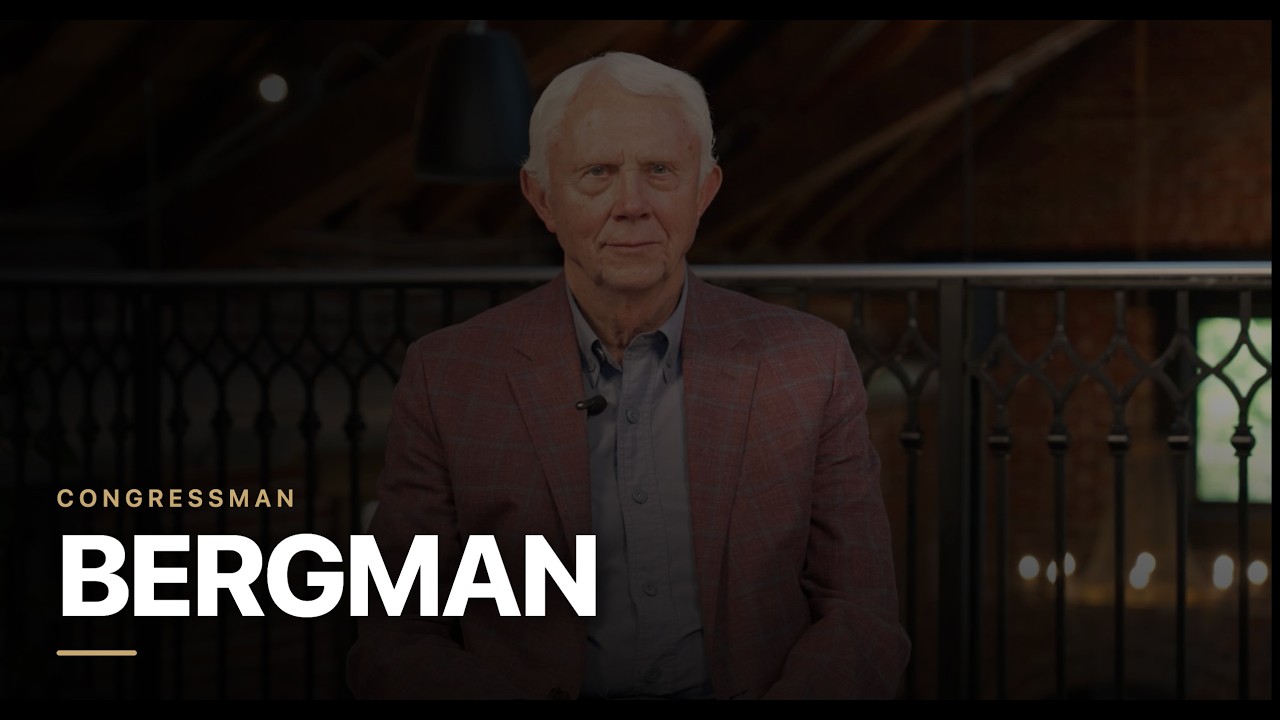
This story is the transcript of a Narratives video interview, lightly edited for clarity.
I'm the congressman for Michigan's First Congressional District, which is about half the state of Michigan. As a member of Congress, I have three committee assignments: Armed Services, Veterans' Affairs and Budget. But who I am: I'm a husband, I'm a father, I'm a grandfather and a proud Marine.
Leading Marines
You're the highest-ranking combat veteran in Congress. Before serving in the House, what accomplishments from your military and civilian career are you most proud of?
I think the thing I'm most proud of is having led Marines in combat. There's never anything that I've ever done that could even take a close second to that. But I will say that as an airline pilot, I took responsibility for the lives of, in some cases, 200 or 300 passengers, to get them safely from point A to point B. So I take my responsibility for whatever I'm tasked with very seriously, and I am not afraid to lead in a mission status, if you will, to make sure others succeed as well.
Is there a particular story from your time leading Marines that has always remained with you, that you think about often?
Well, there's probably several, but I'll choose one, and it is not in a combat scenario. It was in the dark of night in the Atlantic Ocean. We were on a search and rescue mission for a missing recreational boat, and I was leading a flight of two helicopters to search and maybe find these folks. We had to stop and get fuel in the middle of the ocean, in the middle of a rainstorm, aboard a container ship that had very minimal space to land our helicopters on.
I was most proud to be part of that mission, where, number one, we did it safely; number two, we saved the folks; and, I guess, number three, it built my confidence that I could do some things that were not normal, even to us, with Marine training.
Do you remember from your early childhood what made you want to go into service?
Yes. My father was in the Navy in World War II. My uncle was in the Army in North Africa in World War II. I grew up from my earliest days being around men and women who had served our country during that time frame. They were just a good, solid group. They worked hard, and occasionally they'd party hard, and that's okay.
By the way, I was not only the first one in my family to go to college, I was the first one in my family to graduate from high school. My dad had an 11th grade education. My mom had a ninth grade education. This is the 1920s. People were expected to go to work. Education was not a big deal.
For my first year of college, I went to the Coast Guard Academy and spent a year there, and found that I really enjoyed military life, but I just didn't have any passion for the Coast Guard mission that I would be doing after graduation. So I left, after a great year. Then I ran into a pretty smooth-talking Marine recruiter about six months later, and next thing you know, I was signed up to go into the Marines after graduation from college.
September 2001
Can you talk a little bit about the rise in veteran suicide after Iraq and Afghanistan, how that crisis has escalated, and if there is any personal resonance for you?
September 6th, 2001, our first grandson was born in San Francisco. Five days later, September 11th occurred. On the 14th of September, our second grandson was born in Cincinnati. And on September 25th, our nephew, who had been a Marine, took his own life.
So in September of 2001, we rode an emotional roller coaster like you wouldn't believe: the high of being new grandparents twice, the low of 9/11, the low of a life needlessly lost.
My commitment to the issue of veteran suicide began long before that. As I saw some of my peers who I'd been in Vietnam with go their own way, and I saw the suicide rate among veterans climbing, I began to focus on it back then in some tangential ways.
After 9/11 and after the family events, I was in command of the Marine Corps Reserve, at that time and for the next few years. I had responsibility for all those Marines who had deployed to Afghanistan and Iraq, who had come back, who were done with their active duty but were still under their eight-year obligation. It's called the Individual Ready Reserve. It's for all services. And we found that they would come back and isolate. They'd go to a farm in North Dakota. They'd go home to Texas. They'd go wherever.
So we made a concerted effort back then, in, let's say, the 2003, 2004 time frame, to reach out to these veterans, in our case Marine veterans, who we knew had deployed, who we knew might be at risk because of the single factor of isolation. I've been working on this in many different forms, to bring those Marines, and in some cases their families, into a space where they can deal with whatever it is they're dealing with.
A mission worth the heat
How and when did psychedelics first come onto your radar as a viable treatment for veteran trauma?
Well, I'm kind of the poster child, probably in a minority at this point in my life, of someone who's never used anything other than beer, or maybe a little glass of wine, that sort of thing.
I was approached by some folks to consider being the Republican lead in the House on a caucus that was being formed specifically to focus on the advancement of research on psychedelics and psychedelic therapies: not just the drugs themselves, the compounds, but also the therapies that would be administered by newly trained therapists. I thought about it, and I talked to a lot of folks. Do I want to put my name to this? When I reflected back on what I'd been trying to do for decades, I said, you know what? I'm a Marine. This seems to be a mission worth getting involved with, and I'm willing to take the risk of taking a little fire and a little heat from some others.
I believe that we are here as human beings by God's grace, and we all have bad times. How do we get ourselves back to a new normal, whatever that means for individuals? If it requires a different way of doing business, then so be it. And also, I would suggest to you that pills are not the answer.
When we named our caucus the PATH Caucus, Psychedelics Advancing Therapies, I wanted to add GOOD PATH, because GOOD stands for Get Off Opioid Dependency. I'm the Republican lead of this caucus. My colleague Lou Correa from California is my Democratic lead, and we are locked at the hip on what we're trying to do here, because this is not a Democrat or Republican issue. This is a mental health issue, starting with veterans and getting the research done through the Veterans Administration, so that the decisions that are made on new therapies and new compounds are made with the most exquisite amount and quality of research, to take whatever next steps are the right thing.
Are there individuals you know personally who have gone through that sort of transformation, where they struggled with their mental health, were potentially suicidal, received treatment through psychedelic therapies and came out the other side?
The call you get, or you don't want to get, from someone: it's 2 o'clock in the morning, they're drunk, they've got a gun... end of life. That's not a new story for me. And how do you talk people off a ledge when you're there? So I would just say to you, over the course of my life, I've had more than one encounter with someone who was in dire straits and not sure which way to go next.
If we can get these folks into therapy, whether it's individual therapy or group therapy, whatever the model is, we can do so much these days with the scientific research capabilities that we have. And we know, first of all, the most unexplored part of the human body is the brain. We know less about the brain than anything, just because it is so complex.
This is an opportunity for us right now as a country, not only for helping veterans, but helping others who are under duress, to get the therapies they need and to enable themselves to pull themselves back up by their bootstraps and start living life in a positive way.
Bringing colleagues along
Why do you think more GOP legislators, traditionally conservative on drug policy, are increasingly open to supporting psychedelic-assisted therapy?
I would suggest to you that maybe one of us, that would be me, and the second of us would be Morgan Luttrell, and third, Derrick Van Orden, to name three who are currently serving as Republican members of Congress, tend to be a little bit more aggressive than some of the average folks. So we encourage our colleagues, maybe in a more aggressive way. Maybe that's the way.
Without naming names, I have identified a few freshmen this Congress, both Democrat and Republican, who I'm going to be... well, actually, I already am recruiting them to come into the caucus. Because sometimes when you get to Congress, you get focused too quickly on too narrow a path of what you're going to accomplish in your time in Congress. So it's important to interact with our new members when they first get there and say, "Hey, come join us. Take a look at this, because we want you to be successful here as a member, and here's a subject we're all passionate about."
Can you give me a sneak peek at new legislation being created that would be supportive of psychedelic therapies?
In this case, it's more along the lines of not so much legislation, but policy and appropriations to support the Veterans Administration in their research. There's also some legislation that has been put in for the Department of Defense to do similar things for people that are on active duty. In fact, Congressman Crenshaw in Texas is kind of the lead on that. He's focused on DoD.
We are focused on the Veterans Administration, because we feel that is the more appropriate place for the research to occur. Veterans Administration: think of the name. We're trying to do better for the veterans. Department of Defense: we're focused on war fighting. So where's the core competency, and where does the federal government not waste time, effort and money, when it could focus in one area and get broad results across many different spectrums?
Treatment abroad
What is your perspective on decriminalization efforts?
When that comes up, I say, look, I'm not in the decriminalization space. That's not what I'm focused on. That's a totally different group. So I just basically say I'm not going to connect what we're doing on the House side, getting the advanced research, with some decriminalization effort, because it'll water it down, and we won't get what we need done on the research side. It'll get sidetracked.
What is your perspective on veterans today having to leave the country to receive psychedelic treatments? A name that's pretty prominent is Marcus Capone, a former Navy SEAL who has an organization that sends people to Mexico for ibogaine treatment.
Number one, it's a sad state of affairs. I know Marcus. I know others who have gone to Mexico or other places to get the treatment that they needed. I believe it's kind of a negative mark on our society and our government to have forced this to happen, because we know the therapies work. Why wouldn't we take those therapies that have been generated in other countries, do some more advanced research and then move forward here in our own country? That's where we are failing, I believe, as a government.
Five years from now, we would have compounds that have been tested to be whatever percentage, 90% effective, whatever it happens to be. So we have the compounds that would be administered, but, equally as important, we have the therapists trained to administer these new compounds. So the experience for the person going through it is not just the chemical side, but also the therapeutic side: the discussion of what happened and what you experienced. It's kind of like a railway. You've got two rails: the product and the people to administer it.
Churches and ale houses
Do you have any personal experience in therapy that you could talk about? I know some people have a stigma against therapy in general, and it's an important part of the psychedelic process.
Does beer therapy count?
Not quite.
Well, when you think about it, our country was founded in churches and ale houses. Why did people go to church? Well, they believed in a higher being. Why did they go to ale houses? Number one, to eat and have whatever they were going to drink. But the third piece: that's where information was shared in the towns. People gathered, and they shared the stories, and they shared all the things.
We've gotten away from that too much, because we've isolated ourselves as human beings through social media. We read it on our phone, but we don't talk to anybody about it. We internalize too much.
What would you say to fellow conservatives or skeptics who remain uncertain about the potential benefits of psychedelic-assisted therapy for veterans at scale?
I would say to them, if you're skeptical, come and join our caucus. You don't have to spend a lot of time, but we're bringing in speakers from time to time to educate us on different products that are going through the testing phase, and people who've been researching therapies for 50, 60 years. So we are really a fact-based group. To my colleagues, I'd say: come join us.
Out of the underground
You have a very interesting perspective, I imagine, because you've lived through the eras: the counterculture movement, a moment in time when psychedelics were largely researched, that research dying down, and now coming back. Can you walk me through the moment when someone approached you recently and said, we want you to lead this caucus? What was your visceral reaction?
I am open to trying anything. But I am experimental by nature, and cautious. Again, as an airline pilot, I have to focus on flying the plane and getting the passengers there safely. In this case, I have to be very careful about leading the caucus and getting the end results, which are better therapies and better outcomes for our veterans. So I'm focusing on the endgame, and then how do we get there?
You mentioned just beer and wine, but I have to ask: have you experienced psychedelic-assisted therapy yourself?
I have not.
You have not. Okay. What do you think about the interim solutions that exist? We talked a little bit about people going outside of the country, but within the country, there are underground psychedelic therapists. Many of them get certificates from universities to be proficient in psychedelic care, but technically they're not allowed to administer the medicines themselves, so their work is somewhat underground. What is your perspective on that community?
So many good things start underground. In my role as a federal legislator, I believe it's incumbent upon me and my colleagues to enable the scientific research, and the design of new therapies to deliver the new compounds, such that it brings the underground out from the darkness and into the mainstream, as an accepted way of doing it. If we could do that, I think we would have accomplished a significant amount of next steps going forward.
Parents, not friends
How have your views on mental health and trauma evolved over time, from your service in Vietnam to your time in Congress today?
Mental health, human stability, whatever you want to call it, will always be with us. I believe we are more challenged today, generationally.
I can get real pointed here, but I believe one of the problems that children have... By the way, there's a book out there called The Coddling of the American Mind. Jonathan Haidt and Greg Lukianoff wrote it. One of the points of the book was that the average 18-year-old in our country today is functioning emotionally at about 16 and a half to 17 years of age. All that means is kids are growing up slower.
So what do we do about it? Well, I would suggest to you, from what I've seen, that parents don't need to be their children's friend. They need to be that loving and disciplinarian mother and father who care deeply about their child's development, but aren't interested in coddling them or caving to their uniquely six-year-old wishes.
My daughter, who's a pediatric nurse practitioner, my other daughter, who's a career elementary teacher, and I are pretty much in lockstep about this view, because they deal with parents every day, in that pediatric clinic or that elementary classroom. And they would reaffirm what I just told you: I believe being better parents will result in better kids.
Faith and a servant's heart
What is your perspective on the role of faith in society today, and whether it's been lost? And is there resistance from the community of Christians and spiritual people in this country to the psychedelic advocacy work that you do?
I don't know if there's resistance in the religious community. I'm a baptized, confirmed, practicing Lutheran. And as we all know, Martin Luther wanted to be a Catholic, but the church wouldn't let him. So he decided he'd nail his 95 Theses on the door over there in Germany, and then he went out and created the Reformation.
Let me tell you, one pleasant surprise that I've had since being a member of Congress is the number of people in the House who are people of very defined and deep faith. I'm involved in a couple of prayer groups and Bible study groups. And I believe that while our faith may separate us ideologically a little bit, it's our faith in God that will ultimately bring us together.
I never miss an opportunity to tell someone I care for them and I'm praying for them. And I hear it from others, randomly. I'll be in an airport, I'll be somewhere, and someone I don't know will walk up to me. They'll recognize me as a member of Congress, and they'll say very simply, "I'm praying for you." That fills my bucket, whether they say they're praying for me or they just want to say something positive. It's that uplifting that we are supposed to be doing for others when they need a hand up. That's what makes us faithful people, because we know it's not about us, and we're all being guided from above.
Your aide mentioned that political service wouldn't make your list of top life accomplishments. What legacy do you hope to leave with your advocacy for psychedelic therapy, or is it other work that would be in the top five?
Well, I'm going to clean this up a little bit, because at one point I was going to just say my tombstone says, "He gave a..." You know. I know you can cut this. I guess all I would like people to remember about my existence here is that I cared, and I cared deeply for everyone, not just a certain group, and that I cared enough to lay my life on the line and lead others for the betterment of others.
Thank you.
I believe that in order to be successful, especially in this arena, if you don't have a servant's heart, you're not going to be a good legislator. And again, there's no party affiliation with this, because if you have a servant's heart, you realize that you were sent there by your constituents to serve them, to do the right thing, even though sometimes you disagree with them. If you understand what it means to have a servant's heart, you will be just fine. You'll be fulfilled. And that's enough for me.
A first look at ketamine therapy
Could you tell us about visiting the Spire Center?
Some time ago, I visited the Spire Center in New Orleans to observe ketamine treatment. It was the first time I'd seen it. I met with the therapists, the people who run the clinic, and talked to a couple of the folks who were actually going through some of the therapies there. I was very impressed by the thoughtfulness, the focus on what they were trying to achieve with these therapeutic advancements. That was my first foray into that, my first exposure to it.
I will go anywhere and visit with anyone if I figure I can learn from that individual or that setting, to do better what we're trying to do here, which is to continually advance new, stable therapies that actually provide results without addiction.
Sandpaper
How do you balance not wanting a generation to be coddled with wanting greater support, in recognition that this generation and the ones coming up are facing new challenges, from isolation and all of that?
When you think about when a child is born: they can't walk, they can't talk, they have nothing. But what helps them survive in those first few months is that warmth against the bosom, the shoulder, whatever it is that they can feel, as these little creatures from God who just arrived on this earth. That warmth, the warmth of love, the warmth of caring, comes through in different ways at different ages.
And one of the ways, and I know this for a fact because I've seen it in child development: when a young boy or girl is appropriately tasked with duties, make your bed, it's your turn to take out the garbage, your turn to set the table, the sooner they're tasked in a positive way, like "Hey, you've got to do this, and do it right. Here's how you do this," they build their inner self-confidence, and they're going to show you how good they can set the table, how good they can take out the trash. That builds within them a resilience early on that then shields them from the outside world and those influences.
That's why I go back to the parent being the parent. I use the example that parents are supposed to be the sandpaper in their children's lives. If you've ever dealt with wood, when you've got a rough piece of wood, you take a very coarse piece of sandpaper to start. And the closer the wood gets to being finished, you use a finer-grit sandpaper. So children are like wood, if you will. You want them to be finished and beautiful and perfect, but you start with a little bit of a coarse sandpaper on them as a parent. So when they rub up against it, they go, "Ouch, that's not very comfortable." Yeah, well, that's because you didn't do exactly what mom or dad told you, in a loving way.
I think that analogy rings true, because as that child grows, the parent, still wanting that future development for the child, just changes the grit on the sandpaper a little bit to fine-tune them.
Who stands to lose
Are there powerful interest groups or industries opposing the work that you're doing? Can you name any of them and talk about them?
Without naming names, everybody here knows the history of the Sackler family. We are where we are because of when physicians were required to begin treating for pain, decades ago. If you saw the documentary, that was ultimately part of the strategy for OxyContin and others. It was a planned strategy by corporate America.
I would suggest to you that there are corporate entities who will look at their bottom line, potentially, as psychedelics advance, and their stockholders are not going to be as happy as they used to be. Well, I'm sorry. I would suggest the stockholders invest in a different stock.