Navy SEAL Becomes Psychedelic Evangelist: How Marcus and Amber Capone Are Healing Veteran Trauma
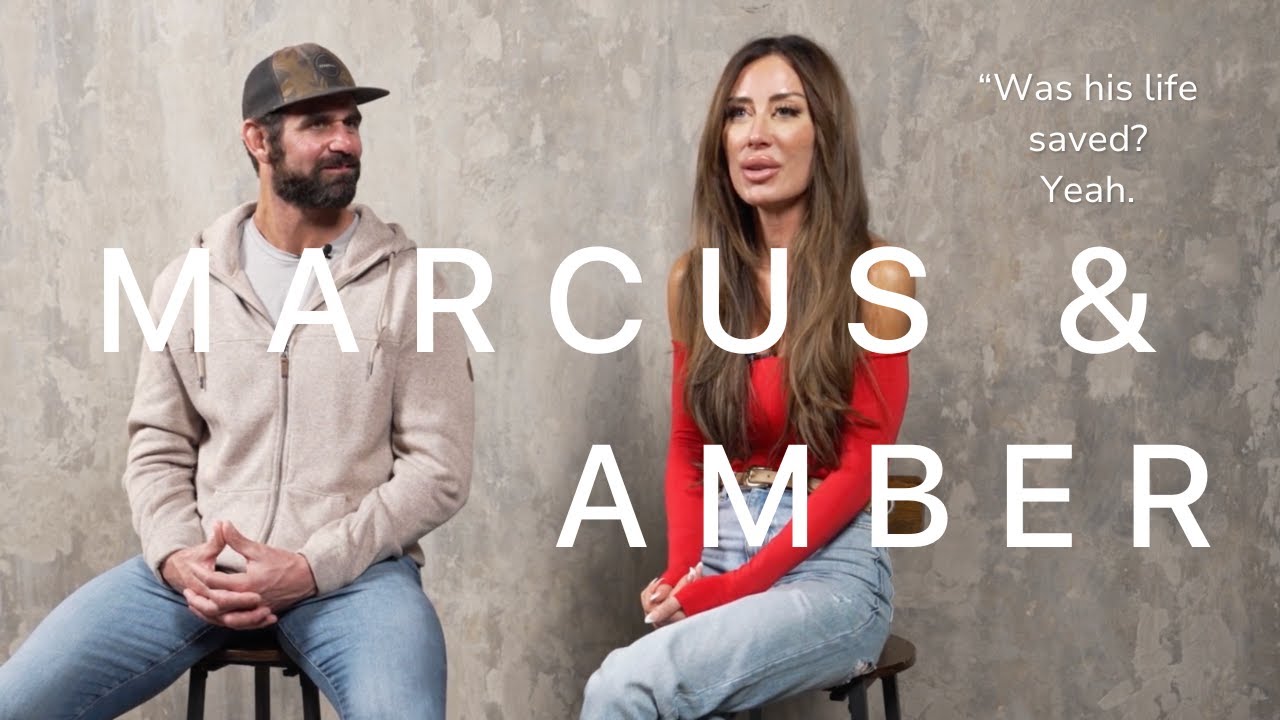
This story is the transcript of a Narratives video interview, lightly edited for clarity.
Content note: this story includes discussion of suicide.
Becoming a Navy SEAL
Can you tell me about the day that you decided to join the Navy, and what your mind frame was like around becoming a Navy SEAL?
Marcus Capone: It was actually the end of my junior year in college. I still had a year left. I was done playing football. I had a year left of school, and the thought of stepping off into a work environment at 22 years old with a shirt and tie... I grew up playing ball. I was a jock, and it really scared me to think that at 22 years old I was done. I felt like I was done. Hang up everything, and this was it.
And so for me, I saw a special on TV. I actually saw a movie, and it's a bit embarrassing: G.I. Jane. At the time I had no military experience, no background, and for me this was an introduction to the military, even though it's not right. It's Hollywood, it's a movie. But it intrigued me, because they talked about the best of the best in this movie, and I said, wow, that seems pretty cool. Is this real? To me, I thought it was real. Obviously I didn't know that Demi Moore was not real.
But from that point forward, I got really interested in the SEAL Teams, and I started reading every book I could find. There wasn't really anything at that time online, so I went to the library, and I found as many books as I could on the SEAL Teams, and most were written after Vietnam or during Vietnam. And so the more I read, the more intrigued I was, and then I just got laser focused. About a year before graduating, my senior year, I said, this is what I want to do for the foreseeable future.
Was there a point in the early career, in the training, where you ever questioned that this was for you? Or once you joined, were you in it, and you felt that the team, the brotherhood, was kind of your place?
Marcus: Initially, I was extremely excited. I graduated college. A lot of stuff was happening at that time. When I enlisted in the Navy, it was everything I wanted to do at the time. And when I got to BUD/S, there was actually a little bit of apprehension, because I remember we were all sitting together right at the beginning of training, and it didn't even start yet. There were 175 of us, and I was looking around, and I was just thinking, how am I going to really be one of the 30 out of this, or 40? Those were the numbers. It was such a high attrition. And I was just scratching my head a little bit, because there were so many good athletes there and so many talented individuals that I just thought, man, am I going to be one of these one out of five that are going to make it through?
So there was a little bit of that initially. But once we got started, I felt like I was in my zone. I was right where I was supposed to be, and nothing from that point forward was questioned. I never thought I wasn't going to make it through training. The only thing I was worried about was potentially getting hurt. But there never was a doubt in my mind that I wasn't going to get through BUD/S, Basic Underwater Demolition/SEAL training.
And what was happening, like, macroeconomically, in the world at that time? What did you perceive would be the missions that you would be going after and doing?
Marcus: So before graduation, I was in the first class to graduate when the towers came down on 9/11. Before that, there was nothing going on, and there was not a lot going on in the military. And so we didn't know what we were doing as students. We were just doing something we thought was cool. We'd run on the beach and get in shape, and we'd get to shoot things and blow things up and jump out of airplanes, and that was really cool.
After 9/11, there was this whole shift in everything. And still, for us as students, we just wanted to finish training, which was only in a couple of weeks. But the instructors, you could see the ones that had been in for 10 or 15 years, their demeanor completely changed. They went from this kind of, I want to say happy-go-lucky, but fiery group of instructors, to all of a sudden their demeanor was very serious. And it was, "Hey, we're going to war now. Does anybody understand that?" And we didn't understand what that meant. The guys who'd been in for a while did, and you could see it on their faces: oh, shit, this is real.
And there were actually individuals that had graduated from SEAL training and gone on to what's called SEAL qualification training, another six months of advanced training. There were individuals who actually quit then, finding out that, oh, you're actually going to go to war now. Some individuals just did not sign up for that. They signed up for the cool, fun aspect of everything they'd heard and read about, but some people didn't want to go to war.
And how many years were you active as a Navy SEAL?
Marcus: I was 13 years active.
Can you share some of maybe the most mentally taxing missions that you might have been on?
Marcus: BUD/S itself. BUD/S is what we call basic training for SEALs: Basic Underwater Demolition/SEAL training. It's six months. It's grueling, it's demanding. It's mental, physical, but you get through. And then you get to your platoon and you start training with your platoon of 18 individuals. You do that for a year and a half to two years, and then you deploy. It's just the constant grind. You never ever have a break. You're gone 300 days out of the year.
So if there's one thing, Milan, that would stick out, that I'd say, oh, this thing was so hard, it's the getting up every single day and doing it again. I used to tell people the hardest part of BUD/S was never a surf evolution, or a running evolution, or swimming, that was so tough. You got through it. The hardest part every day was waking up at 4:30 or 5:00 a.m. to do it again. It's cold in Southern California. The water's 58 degrees. You know you're going to be in there within the hour. That's the hardest part.
And many people don't know this: most people quit in the morning. It's not like it's a hard thing that they did the day before and they're like, you know what, I can't take this anymore, I'll ring the bell. They wake up in the morning, and you're completely stiff. Think about doing the hardest workout you've ever done, every day. And so you wake up, you can't move, you're just swollen everywhere. You've got to run, you've got to go in the water. That's when people crack. So that part is really tough, just getting up and doing it and doing it.
It's the same way when you get to your platoon. You're constantly going. You don't have time to rest. And so family life is almost nonexistent, and you're just focused on the mission, and the mission is every day, and that train can go for years.
Meeting at 17
Can you tell me about when you two met for the first time?
Amber Capone: My dad recruited Marcus to play football for him at a local university, and I'd been hearing about him, but I had never met him. And one night one of my friends had too much to drink, and I had to pick her up from a place that Marcus was at, and the bouncers let me in the back door to get her, and he was sitting right there on a stool. I knew who he was because I had seen his picture in the paper, and I thought he was pretty cute. And then when I saw him in real life, I was just like, oh, wow.
So we exchanged numbers after a few weeks, I think. I kept going back, after that night, because you were there, and then one week you weren't there. His friend was a bouncer at this place, and I shouldn't have even been in there, because I was 17. And when Marcus wasn't there, I was devastated. And so Jason, his friend, said, "Well, give me your number, and I'll give it to him." He called me, and we hung out the following weekend, which I think was the 4th of July. And from that point forward, we were together almost constantly.
I don't think you've left each other's side for 27 years.
Amber: Well, a lot of years along the way, with the military.
And at the time when you met, did you know you were going to go into the military?
Marcus: No. It was my sophomore year in college. Amber was a senior in high school. No, I was still playing ball, and no Demi Moore, G.I. Jane, on the TV.
And how did that conversation go for the first time, when you were told?
Marcus: You remember it, don't you?
Amber: Yeah. I don't remember you watching G.I. Jane. I think it was probably the Discovery Channel special. Class 224 had a special on Discovery Channel. Maybe G.I. Jane kicked it off for him, but I remember him watching this special, and it was the worst part of SEAL training, where they bind you at the wrists and at the ankles and then you bob up and down in water. Obviously you can speak more to that. But he was like, "I can do that. That gets me going." He was an ocean lifeguard and swimmer his whole life, and he was like, "I want to do that."
And I didn't know what a Navy SEAL was, or what this training was. I grew up in a family where five of my great-uncles were in World War II. Two of them were killed, and another was killed in a training accident. And so I was raised in a very patriotic family, where we honored veterans and we loved our country. But I thought it was definitely not something that I wanted to do.
He decided to go into the military and do SEAL training, and I thought this was probably a really great jumping-off point, because I met him at 17, and I had really no life experience, college experience. And I was sad about it, but we were very amicable about this idea, to split up at the end of the semester, before he graduated. In that context, I felt like I didn't want to hold him back from his dreams. He was older than me, so I was still in college and he was graduating, and I've never wanted to hold him back from his dreams. I would never be that kind of partner. And so I just thought, this isn't for me. This is really important to him, and I don't know what the future holds, but I think we're not going to stay together. There's really no other option.
And when did you both get married? Did that happen later?
Amber: So about a month after we made this decision to split up, I found out that I was almost through my first trimester of pregnancy with our son. And so those days were really hard, because he was so excited about this new chapter of his life, and this just felt like such a blow, and I was so scared, thinking about how to navigate this situation. You kind of go through all the options, and ultimately I was just like, I'm going to have this baby, and if I raise the baby alone, then I raise the baby alone.
And we did spend a lot of my pregnancy apart. But because Marcus is always coming through, no matter what, he's going to do the right thing, he reconnected with me shortly before our son was born, and he's like, "I don't know what this means, but we've got to do this together, and we'll figure it out." And that's exactly what we did.
And how long after that was it when you were first deployed out of the country?
Marcus: Still a couple of years. I graduated, then I enlisted in 2000. I went to BUD/S in 2001. I got to my first platoon in '02.
Amber: He deployed in '03, I think, early.
Marcus: So it was still a couple of years. But as soon as I got to the team, like I mentioned, it was nonstop. I was gone all the time for training.
Unprecedented deployments
And so, the first time Marcus came back from being overseas, what was that like?
Amber: Well, I think I was so young. I was 20 at the time, to have a baby and move so far away, and then be supporting him through what many would say is the world's toughest military training. No one had a baby. There were maybe one or two others that had kids, but most of them weren't even married. We were so young. And I think I was just super naive, thinking that he would get through SEAL training, the six-month block of training, and then somehow things would get easier, or we would be normal.
And I think that my naivety all along the way has sort of been a protection mechanism, because if I had really known, or really ruminated on how hard it could be, it probably would have been easier to quit. I don't have a lot of quit in me, so I was always pretty committed to figuring it out.
But when he got back from his first deployment, it was kind of like, okay, well, we checked that box. And 9/11 had happened. You go into the military during a time of peace, and very shortly thereafter you find yourself in a time of war, and then you're part of a force that is forward-deployed in this fight again and again and again and again. It was unprecedented, even for our community. My great-uncles who died in World War II, they did one tour, maybe two for those that survived. Now we have veterans that have done over 20. And so there was no preparation for that. You just figure it out and you adapt on the fly. And it wasn't just the military members that had to adapt. It was the families as well. So seeing him come back from his first deployment, it kind of felt like, okay, well, we checked the deployment box, without knowing that we would do that again and again and again.
Was there a moment, looking back now, when your naivety kind of died, a moment when you gained this awareness that things were not the way you perceived they would be going?
Amber: The crash in the Operation Red Wings incident, where 11 SEALs were lost in one helicopter crash. And it wasn't just something that you heard on the news. I thought SEALs were invincible. I remember having thoughts like, wow, nothing ever happens to them. They really are trained well. They really are the best in the business at what they do. And then you lose 11 people that you know personally, and you're friends with their spouses, and you see their children at their funerals being handed a flag. And then you're like, oh boy, they're not invincible.
Marcus, can you talk about that time a little bit? What was that like for you?
Marcus: We were deployed at the time, and it was a really tough week when that whole mission went down, because these were guys that I had trained with for the last two years, was on the road with. We slept together. I mean, we were together all the time. My teammates. And just finding out, hour after hour, we were getting reports back from home. It was weird how things were working back then. It was 2005, but we were getting intel back from our spouses about Navy personnel in dress blues showing up at so-and-so's door and bringing the bad news.
It was horrible. It was a tough week. We were just sad. We didn't know how to react. There were guys that were really broken in my platoon for a while, absolutely broken, just shocked that we had just lost so many friends, guys that we had just seen a couple of months earlier. And at the time we couldn't do anything about it, except maybe reflect. We drank a lot, to kind of numb out everything and try to have some semblance of fun and peace and laughter in the middle of all of it. This was the largest loss of life in the SEAL community's history in a long time. I believe since Vietnam.
And we just didn't know how to react and didn't know what to do. And at the end of the day, you're still fighting. So you kind of wake up, put your boots back on and then go back out there, and that's what it was. So many of us, although we were reflecting on what had just happened, I don't think anybody was really processing it.
Amber: What actually happened that week was a bit of an anomaly too, because there were four individuals that had gone out on a reconnaissance mission. Three of them were killed, but there was one lone survivor, and they were looking for him. And the helicopter that went down was a group of SEALs that were going to help them. And so while he was still missing, everything was halted. And so almost a week had gone by, and no one knew if their spouse was part of that helicopter crash. It was agony. The days were just ticking by. And that's why Marcus was completely unaware, because when the knocks started happening, everyone was just anticipating the worst. And then 11 individuals ended up dying. It was terrible.
No one talked about therapy
At the time, among the two separate communities, for both of you, the community that you had here at home, the wives, the kids, and then for you, the brotherhood that you had, was there any conversation around mental health? Were resources offered? Did anyone ever go to therapy? Was that normal at the time?
Marcus: No one ever talked about therapy before that. And right after that incident, my platoon was in Germany, and we had to forward-deploy immediately, because they had lost almost everyone in their platoon. They came back to Germany, and evidently the psychologist flew into Germany, and they were supposed to sit down with every active-duty member who was part of that platoon to talk, I believe it was for 30 minutes. And most of them didn't want to do it. And the first person sat in there and didn't come out for two and a half, three hours. So there was a lot of stuff to unpack, right? And I don't know what those conversations were like, but it sounded like those guys were feeling it, and it was heavy. And it's just stuff we never think about at that time, because you're Superman. You're going 100 miles an hour, and you don't really think about any of the stuff that happens down the road.
And what about for you, the community that was here? Witnessing what was happening with the wives and their husbands, was there any conversation around mental health for people that were here?
Amber: No, not really. I think they called it grievance counseling. You remember that term? They'll have somebody available if you need to.
I think what a lot of our time in the SEAL community consisted of was just sheer survival mode. Because if you think about a natural disaster, a hurricane, a tornado, whatever, it's almost easier to live through the event itself than to clean up the aftermath. And it seemed like we were always in the event itself. There was always a death. There was always someone to rally around. There was always the fear of death. And you couldn't really take a break to think about the big picture, because it was so real, and it was in your face so much, that it could have been the undoing of this sort of battle mentality that not just the guys had, but the wives had as well.
There was a righteous anger after 9/11: get over there and do whatever you need to do. And a lot of my friends who lost husbands would say things like, "He was doing exactly what he would want to be doing." It was just a mindset that was like, we have to get through this right now. And the difficult part definitely caught up to us, and has caught up with our community, I think, as a whole, which is surveying the aftermath and cleaning it up.
You are about the 200th person
When we look at the aftermath now, there are tons of statistics, which you all would probably be better at understanding, about mental health issues and suicide among SEALs. When did it start to become really apparent that there was this epidemic, a real problem, of SEALs experiencing more trauma, or more difficulty integrating into life, than dying abroad?
Marcus: It was either 2010 or '11 for me. I started struggling a little bit, and a coworker, a college teammate of mine, just said, "Hey, I think you should go talk to the psychologist." So that's what I did. I went to see the psych, and he goes, "Marcus, you're about the 200th person that has come in here in the last year or two, and you all have the same issues." He literally said, "I don't know what's going on, but you're all coming in here and telling me the same things."
And so now you look back and you go, well, yeah, I mean, we are all fucked up. We all are struggling with post-traumatic stress, mild or actual traumatic brain injury. Guys are going into depression. They're having panic attacks. Years of injuries are catching up. If guys are injured, they can't operate, and if they can't operate, they get depressed.
And I just remember that first meeting I had. I remember saying to him, because I'd never heard about any of this, "No, I'm struggling with some stuff." And here he is, the psych, telling me, "I don't know what's going on." He didn't know. He was like, "There's something going on in the community, because you're," he literally said, "you're like the 200th SEAL that's come in here to talk about exactly what you're saying. You're angry, you can't sleep, you have nightmares." And we would literally laugh, at that time, at the term PTSD. We don't get PTSD. We like going overseas. We want to go to war. That doesn't mean that you don't have chronic PTSD. It is what it is.
And so that was the first time that it really opened my eyes a little bit, that I wasn't the only one. Actually, it felt good, knowing that I'm not the only one here kind of raising my hand and asking for some advice. It really wasn't like "help." It was like, hey, what's going on with me? Help me out here.
Amber: I would say the first time, for me, realizing that there was something more, an epidemic in our community as a whole, was actually after we spoke out and found the courage to share our story. People came out of the woodwork. Before, it was kind of this notion of, yeah, I heard I'm the 200th guy, but it seems like everyone's fine. And everyone is fine on the surface, but behind closed doors, these families were falling apart. But because the community, I don't know if it's just used to operating in secrecy, or this massive competitiveness that exists, or this reluctance to show weakness, no one was talking about it. And when we spoke out about it, if I had a dollar for every person who said to me, "Oh my gosh, we're struggling too, please don't tell anyone." And I'm like, that's the problem, that we're not telling anyone.
Marcus: We didn't talk about it either, for a long time. Some of my close friends, of course. But even some others just said, "Man, I didn't even know." We'd get invited out to do stuff, and I would never go. They said, "Man, I wish I would have known you were struggling." And they would say that years later: "Now I know why you didn't want to come out, or you didn't call me back, or you didn't text me," or whatever.
What were the symptoms? What did you start to identify in your life? If it wasn't talked about as PTSD, and you would laugh off that term, what was it that gave you the energy and courage to go in and address it, and made you get a diagnosis?
Marcus: It was the feeling of loneliness. You're the only one. You feel like you've lost your team. I feel like I didn't have any team structure. I felt like I didn't have friends. I felt like, again, I'm the only one. The weight's on my shoulders. Nobody else is dealing with anything. Nobody understands. Those were the initial signs that I was getting. And I was looking at the world completely differently at that time. I felt like I was by myself. And that is when you see the world in a different light. That's not what other people are seeing, but that's what you're thinking and you're seeing. And the more you see that, you start getting more depressed, you start numbing with alcohol more, because now you're thinking, is there something wrong with me? So it's just like a snowball effect that starts to happen.
Do you remember what the signs were for you, that made you think something was wrong? Did you push him to go get help at that time, or did he identify it in himself?
Amber: I think that Marcus was away from home so much, and we had grown apart in our relationship, to a point that I felt like I didn't know him anymore, and I wasn't around him enough to really see these issues. I knew that he drank a lot, but so did our entire community, so he was really no different than anyone else's husband, as far as I could see. And a lot of the things I probably missed, because we were apart most years, up to 300 days a year. And I think anytime someone visits you for a five-day span, which is typically what it was like, you come home from a trip on a Saturday, and you're there for the next week, and then you're right back out the door, you can pretend and play that everything's fine.
So I just really didn't know. I started noticing the disconnectedness, the numbing, the anger. And that escalated over a number of years, to the point that I started seeing more neurological, cognitive types of issues, and that really scared me.
Marcus: And then, Milan, I started breaking down emotionally in random spots and times, all the time. It could be anywhere, and I didn't know why. So there's obviously a lot of stuff going on internally that I didn't have a grasp on and I didn't understand. These are the classic symptoms of post-traumatic stress and traumatic brain injury. They overlap, the symptoms, so it's very difficult to say, well, you have TBI, or you have PTSD, because the symptoms are depression, anxiety, hypervigilance, headaches, all these things. And when you experience them, you start getting scared too, because you're thinking, is there something worse? Is there something really wrong?
So what did you try, and what was recommended to you by the resources that you had at that time, when you got your diagnosis?
Marcus: I had access to military medicine, so traditional antidepressants, mood stabilizers, something to go to sleep, Adderall to stay awake, Provigil, Nuvigil to focus. It was all these prescriptions that gave me horrible headaches, horrible side effects, for years. But this is what I was being told: this is what you need, or this is what you should try. And I'm not a doctor. I trust my doctor, and so you try these things. And for me, it was the gauntlet of failure. I was considered treatment-resistant. You could have given me anything that we had access to, and it was not going to work. And the talk therapy, I couldn't count the number of psychologists and therapists that I met with over the years.
A treatment in Mexico
So when was the first time that either of you heard about psychedelic-assisted therapy, or any kind of psychedelic treatment?
Amber: I think, to touch back on the naivety: Marcus had done several deployments, and we'd lost so many friends. It felt like we were getting out alive by the skin of our teeth. And so I naively thought that we would just become a normal family and start a civilian life like every other non-military family. And then surveying the damage, and really understanding the aftermath, became our reality.
I saw him trying to get better. I saw him being a great soldier and taking the doctor's orders and taking the pharmaceuticals and showing up for talk therapy. But ultimately, SEALs are unconventional soldiers, and I just thought there has to be something more. I'm also sort of a root-cause warrior, and a lot of these solutions were Band-Aids. It was just masking a symptom. And I just thought, we've got to get to what's truly affecting him, and that's not going to be found in the current system.
One of our friends, who knew that we were struggling, had reached out and said that her husband, who was a SEAL, had done a treatment in Mexico. And honestly, as desperate as we were, I was also very reluctant, because it sounded crazy. But I did trust them and respected them greatly. And I approached Marcus with it and said, "You know, so-and-so did this, and it apparently really changed his life." And he's like, "Absolutely not."
But then he continued down the fail avenue, and it got to a point where I felt like I really had to choose between staying in this, sticking it out and hoping something would eventually work, or getting the kids out of this cycle of insanity and misery and trying to start over. And I was sitting with that and realizing that the stabilizing force of a family was probably the only thing keeping Marcus alive. And I knew that he was struggling with thoughts of being a burden to us, and thinking that if he wasn't in the picture, we would somehow... And I understand the thought, but it's not based in reality, because we would have dealt with that for the rest of our lives.
And I just thought, I can't leave him and know that we left something on the table. I've got to know that I tried everything, and even if the worst happens, then I'll be able to forgive myself, instead of thinking, well, we should have done that one thing. And so I changed my approach. We were both exhausted. I knew we were probably running out of time, whatever that meant. And I just said, "We've got to fight in a different way. I will never leave your side. I will fight alongside you, but you've got to fight with me, and we've got to fight in a new way." And he was very receptive to that approach. Even though he didn't think that it would actually work, he was like, "Whatever. I'll try anything."
And what did you know at the time about psychedelics?
Amber: Absolutely nothing. I grew up in a very sheltered, conservative Christian home in the Midwest, and I didn't even know that ibogaine was necessarily a psychedelic. I didn't understand what it was. I just knew it was a treatment in Mexico. And having lived in San Diego before, I was very aware of the medical tourism that happens, everything from plastic surgery to stem cells and cancer treatments. So I didn't know what it was. I just trusted the individuals who said we should give it a try.
And what about you? When you first heard that this was an option, going down to Mexico, what was your perspective on it?
Marcus: My first response was that this was crazy. I didn't understand psychedelics outside of them being just recreational drugs. That's all I knew. That's all I was taught. All I could think of was hippies running around with flowers in their hair. And so for me, this was absolutely insane, that this was the option that was brought to me. Like, hey, you did all these other things, but now we're going to treat you with this thing called psychedelics. It was absolutely crazy. And it took me a year to even commit to go get treated, because, again, I just didn't think of it as a treatment. I thought of it as just doing drugs, and I didn't understand that.
And so I had to do my research and talk to some people, and the more research you do, the more you realize that these were intended for medicinal use, and that everything can be abused as recreational drugs. And so that got me more comfortable making a decision to go do the treatment.
Amber: Important to note, too, that we're talking about a time period of 2015, 2016. Pre-Michael Pollan, pre-psychedelic craze. This was very obscure outside of the psychedelic community. Nobody knew.
Marcus: Everybody was in the same boat as me. Michael Pollan's book, or the Netflix special, did not come out yet. So people didn't know what psychedelics were, other than, again, recreational drugs, unless you were in the industry or you were a researcher.
Ten years of therapy in one night
Can you tell me about the journey to your first psychedelic experience, and what that was like, and what you learned and gained from it?
Marcus: So I committed to doing treatment. I got paired with a psychotherapist who'd been working with ibogaine for maybe 15 years. She came from a Tibetan Buddhist philosophy, and she was really good at what she did. And so she prepared me, because I had no idea what I was going into. I'd never had experience with anything like this and didn't know what to expect. And so I kind of went in eyes wide open.
Amber: I remember at one point Marcus was like, "Do you remember that Beavis and Butt-Head episode where they're sucking the toad? That's basically what I'm going to do." Looking back, that's literally what that was: 5-MeO-DMT. They're sucking on the toad, thinking that they're going to get high. And I was just like, wait, what have I signed you up for? This is crazy.
Marcus: So you take ibogaine. It's just like any other pharmaceutical. It's in pill form, and you take it for your body weight. Within 45 minutes to an hour, you start feeling the effects. For me, I had an individual room, a nice bed. My therapist actually slept on the floor at the foot of my bed, so she was with me the whole night. I went through medical intake, blood work, urinalysis, EKG, so everything's clean.
And when it was my journey, I was there for about an hour, and I wasn't feeling anything. Usually you start hearing a little bit of a buzz. And what I noticed was, I had eye shades on, but I could see the room completely. I could literally see the whole room that I was in, and I would take them off, and I would put them on. It was just odd. And obviously I was now in it, but didn't even know I was in it.
There was a piece of art on the wall, a 3D piece of art, and I was looking at it, and all of a sudden the piece of art literally came out from the wall, fully extended, right to me. And it wasn't scary, and it wasn't intense at all. It was just the beginning, right? My mind was starting to see things and hallucinate. I had eye shades on, I had music, and I just thought, oh, man, I'm in it. This is it. And it was very peaceful.
And then I started hearing some buzzing, and the buzzing got louder and louder. I'm trying to think of the first time I actually purged, or threw up, but at that time it's right when it started getting intense. And then it was like war for the next, I would say, six to eight hours. It was extremely intense. A lot of visuals, a lot of dark, demonic, death, blood, fighting. It was just really gnarly. It was like the worst horror nightmare you could ever imagine. That's what I went through for 6 to 8 hours. I mean, it was terrible.
Amber: And also purging, though, because I remember.
Marcus: Yeah. Through that whole time, I was throwing up every 30 minutes, maybe, or so it felt like. And that was a struggle, because you're in the middle of a gnarly experience. You're revisiting things that happened in your childhood, and then it was just random experiences and random gnarliness, and then I'd throw up, and that was tough. And then you go back, and you recover a little bit, but you're right back into the trip. And it just went on like that for a long time.
And once I started coming out of it, it felt like the weight of the world started lifting off my shoulders. One of the doctors says it's like wearing a backpack full of bricks, and the bricks just keep getting tossed out. And so at the end of your experience, you had this heavy bag, a thousand pounds of bricks on your back, and when you're done, it's light. It's zero. And that's how I felt. And so here I did 10 years of talk therapy in about six to eight hours, 10 hours.
You also have a long reflection period, and for me, I was so wiped out. My reflection period, I basically slept the whole next day. My sleep, though, because the medicine's still in your system, you're kind of going in and out of light experiences. They're not intense, but it's a reflective period, so you're reflecting on all the crap that you just went through. And you finally wake up feeling a little bit better, I'd say 48 hours later, and you finally just kind of sit back and go, man, what the heck did I just go through? But you feel better. You feel like you just worked through a lot of different things.
Amber: And then you did DMT right afterwards.
Marcus: Well, no, you wait 48 hours. And then you do a drug called 5-MeO-DMT. It's not N,N-DMT. It's a different molecule. It's extremely powerful. Some consider it the world's strongest psychedelic, along with ibogaine. So here you are, doing two of the world's most powerful psychedelics, back to back. It's a very spiritual experience compared to ibogaine. Ibogaine is a very dark experience that brings everything to the surface.
Amber: For you.
Marcus: For me, yeah. One of our facilitators at Ambio, Trevor, says it power-washes you from the inside, where 5-MeO-DMT kind of polishes it after. And so my last 5-MeO experience, I did it a few times, was extremely spiritual. It was extremely powerful. I'll never forget it. I haven't needed to do it again. I got everything I needed out of it. I saw that we're not alone here, and this is a temporary place. This body of flesh is tangible, but what I felt and what I saw, what I experienced, was eternal and very loving, unconditional love, pure love. And it felt good, and it felt like, oh, okay, whatever happens here, I know where I'm going. And that kind of was the cherry on top.
A mystical experience
What was your religious background, or your life before that experience? Even during your time as a SEAL, did you have any faith or religious upbringing?
Marcus: My religious upbringing was very confusing. I had a Jewish mom and a Catholic dad, and I think they both turned their backs on their religions and raised me with nothing. So I had no religion growing up. I grew up in New York, with a lot of Hasidic and Orthodox Jews, and then a lot of Irish and Italian Catholics, and that's the environment you grew up in, in New York. And we celebrated Christmas, went to church once a year, but what does that actually mean? And then my dad would go to work during the holidays, and my mom would bring out the menorah, and you'd spin a dreidel. So it was this weird upbringing of no real religion. I tell people I grew up confused. I don't know if that's good or bad.
And then you came to have a truly mystical experience.
Marcus: It was definitely not religious. It wasn't black, it wasn't white, it wasn't Catholic, it wasn't Jewish, it wasn't Muslim. It was just being connected by something more powerful than us. It was extremely spiritual, and yes, that was my experience. If you talk to others, ibogaine and 5-MeO have brought people back to their faith. If they were brought up Christian, or they turned their backs, let's say, on a church, many have such a powerful spiritual experience that they go back to their faith, because they say, we're not alone. And I think that's pretty awesome.
At the time, I get that there wasn't all the Michael Pollan craze out yet about other psychedelics, like ayahuasca and LSD and mushrooms. Was it truly just not having known about the other protocols that you went after ibogaine and 5-MeO-DMT?
Marcus: It was what was presented to me. If someone had presented LSD, I would have done LSD. If someone had presented psilocybin, then... Really, the only reason I did ibogaine was because this other individual literally had his life changed by it, and I trusted him. So if he'd done psilocybin and had his life changed, that's what I would have done. I didn't know that there were others. I'd heard of LSD. I'd heard of mushrooms, from a surface level. I had zero clue what these did.
So people who are in the industry, our psychonauts, when I tell them my first experience was with ibogaine, they're like, whoa. And I say, oh, my second experience was with 5-MeO-DMT, and they're like, holy shit, you went from zero to a thousand. But that's, again, as Amber said, we're unconventional, the SEAL community, the special operations community. We just want to get the job done. Let's go from zero to a thousand. Let's get it done. I want to get better and get on with my life.
You still feel like ibogaine is probably the nuclear option?
Marcus: It's absolutely the nuclear option. I think it's great. I think it is the most powerful teacher that someone can utilize to change their life, to grow out of a really bad spot, or optimize.
The only way is through
And so when you came back, what was the energy, coming back to civilization, coming back from Mexico?
Marcus: I was ready to live again. I was like, hey, let's go. What do we got? What's next? What's next to tackle? I was just so glowy. They call it the afterglow. I was in afterglow for a long time. I couldn't wait to see Amber. We saw each other at the house. We embraced, and I was like, "We've got to help everybody. The world needs to know about this." I just wanted to tell everybody how amazing this thing that I just went through was.
I mean, think about that, how amazing this was, and I just told you how dark and demonic it was. Honestly, it was, no doubt, one of the hardest things I've ever done, and I said this is the most amazing thing. Because I have a tagline that I use: the only way is through. And it's true. No matter what we do in life, if you're not talking to your parents, you have a coworker, you have a brother, a sister, whatever it is, if you just bury those issues, you'll never find the solution. And so you have to go through. You have to confront your demons, right? That's what this does. It literally takes everything that you are struggling with, and it holds it up in front of your face and says, "Hey, fucking deal with this now." You don't have a choice. You can't run. You could run from a therapist. You're like, you know what, I don't want to talk about that. You can't do that on the drug. There's no coming back. You deal with this gnarly thing. You're like, okay, I'm going to deal with this. And you deal with it, and it's gone. And that's the beauty of it: that you get to just deal with your issues very quickly, and that's why the healing is so incredible.
What did you notice when Marcus came back home? What was the energy like? What could you see?
Amber: Well, first of all, when he left and I dropped him off at the airport, he got out of the car and I just completely deflated, because it felt like all this buildup, the time had come, and I had put it all on the table. And so I knew that this is it, one way or another. And I really wanted it to work, but I was also reluctant to believe that it could, because so many things hadn't. I didn't want to get my hopes up, but I was very hopeful at the same time. It was a lot of emotion.
Marcus: I remember what I said, too. I remember saying, "Don't expect me to leave this weekend and come back any different or changed or something. Come on. That's not going to happen." I literally said that.
Amber: So that was sort of the mindset that I was going in with: okay, well, I guess I'm not going to expect anything, because history would prove that nothing works, and he's already telling me that he doesn't think it's going to work. And I believe in the power of thoughts and the power of words, and he's giving power to this not working.
I flew in the next day to go see him. And the SEAL that had encouraged him to go and shared his own experience, which was sort of the catalyst for Marcus going, was updating me via text all throughout the night. And it was a very difficult journey. And so when it had resolved in the morning, and he was out of the experience and resting, I had this freak-out of, has it worked or not? I was supposed to see him later that day, and I just had so much hesitation about seeing him, because I would know immediately if it did or didn't. And in the car ride on the way to see him, I was like, "I don't think I can go. This is not a good idea. I'm really freaking out." And the wife of the SEAL that was with Marcus said, "He's asking for you. We told him you were coming. You have to go."
And so when I heard him walking down the hall, I knew that was the moment that I would know. And when he came around the corner, it was literally like being in his presence during the time that I first met him, when he was just this magnetic, full of light and life and love, and so charismatic, and just so everything to me. And he had become this monster. And so his energy and his presence were back to the way that I remembered, and it was like, this is beyond my wildest expectations.
And also, you feel yourself sort of letting go, letting the walls come down and becoming hopeful after years, a decade-plus, of hopelessness. And then you're like, oh, it's too good to be true, it won't last, and you're trying to put that protection back up. So the integration process was also a series of ups and downs, just managing the expectations and the bad days. It hasn't been perfect, for sure.
What does the process of integration look like? What was that like, and did you play a role in that as well?
Amber: I had to go through my own integration period, because I was so desperate in finding him help that I didn't really look into what the help was, or how this would come into play with my own upbringing as a Christian. And I had to go through weeks of unpacking the spiritual component of this, because I was so scared that we had done something wrong or bad. And my therapist, thankfully, was walking through this with me week after week, and she started with the most basic question, which was, "Were your prayers answered?" And I was like, yeah. She said, "Was his life saved?" Yeah. "Was your marriage saved? Was your family restored?" And by that time others were also experiencing it, and she was saying, "These are all things of God. So how could it be bad?"
Paying it forward
What happened from that point to realizing that you needed to scale this somehow? How did that get to VETS?
Marcus: At the time, we just wanted to pay it forward. We didn't really know what that was, but we knew there were others, obviously, that were dealing with the same stuff that I was. We talked about the first time I saw the psych, there were 200 people that had been in there. So now it's 2017, and I had a friend who was really struggling and reached out. He was like, "Hey, I'm not well." I said, "Well, let me tell you about this." And again, he knew nothing, just like I did. He just trusted my experience. And so we got him treated, and he was a totally different person, a much better person. And we're like, hmm, that's weird. Two of the same experiences.
We got another friend through, another friend through, and then they brought two friends. And then we were trying to put together what we could to raise some money. We got a check from a friend's mother, a $25,000 check. We treated five individuals with that check. And so we started figuring out, man, there's something really here. We're helping individuals go do the same experience that I did. And so we filed for our 501(c)(3), to be a nonprofit, because we didn't know anything else. Someone actually funded my experience, and we wanted to fund everybody else's experience.
We initially started working with a few different people, and other people had jobs and this and that. Not that we didn't have jobs, but we just went all in and focused on this full time. And we received our 501(c)(3) status, I think, in 2019 or late 2018. And this year we'll hit veteran number 1,000 that we've fully funded for treatment. It's pretty remarkable.
Amber: The first thing he said to me was, "This is it. This is it. We've got to pay this forward. We have to help everyone." And obviously we didn't know what that would look like, but because I do think that God is in it, the path has just been to walk in obedience. And the vision of walking it has not always been easy, but it's been something that's so deeply rooted in me that I don't care how difficult it is. I know that it's the right thing to do, and I know, from walking up to that point of no return ourselves, how important it is.
How has your perception of hippie culture changed, or that mindset around psychedelics in general? Being on the front lines of getting veterans in, are you battling this reputation of hippie culture, keeping people from getting help?
Marcus: First of all, what I say now is, hey, they had something right, for sure. Actually, they had a lot of things right, but not everything. And I consider myself a sophisticated hippie. I really do think we have to open our eyes and ears. Once we close ourselves off to learning, to the world, that's no good. That's not evolving. That's not evolution. And so we need to really turn over every stone and see what's out there. For me, it was a whole new world that I knew nothing about, but that radically changed my life, and is changing the lives of literally thousands of people, and is hopefully going to change the lives of millions. And so we just have to be open to what's out there. Hippies definitely had some things right, and they have other things that are not right.
Legal paths to care
And from there you went on to create another company as well, that's focused on psychedelics. I'm curious what that does, and generally how you've navigated the legalities around all of this, running a nonprofit that's focused on psychedelics in the US. What are all the different ways you've been able to reach people and help people, and what does the new company do?
Marcus: My company is TARA Mind. We're expanding affordable access to mental health care. We are focused on novel treatments, and to go deeper, we're focused on psychedelic-assisted therapies, where we're focused on FDA-approved drugs. And so today, our network is built with ketamine clinics that are provided by psychiatrists, and we built a large network around the country of over 500 providers now, psychiatrists and therapists, and we power it with a platform that enables them to actually be able to talk to each other, which doesn't happen today.
How that got started: my co-founder had been involved in VETS for a number of years, and he saw the impact of what we were doing, and he just said, "This is much bigger than veterans. The world needs this." And I got hired on to the venture capital firm that he had founded, and we just tried to figure out, how do you take what we learned to do with veterans, and how do we transfer that, or pivot that, to the private sector? And how we're doing it is through FDA-approved, legal pathways.
Among the veteran community as well, how effective have those legal treatments been, like ketamine-assisted therapy?
Marcus: So at TARA Mind today, we focus on ketamine-assisted therapy. It's what we have access to. Ketamine technically is not a psychedelic. However, it puts you in a psychedelic-like experience. It's been around since the 1960s. It's the number one drug we could use right now for an individual that's got clinical depression that's not responding to the current antidepressants.
So what we've done at TARA Mind is we built this network of individuals that are skilled in providing ketamine-assisted psychotherapy. We put it into a standard of care. We're taking that and we're bringing it to self-funded employers. So this is a covered health product, a service that your employer would offer to you as an employee, a 100% covered benefit. We're collecting data, and within a year, a year and a half, we'll go back to the insurance companies, the UnitedHealthcares, the Aetnas, the Cignas, and we'll show them that these individuals have improved significantly. And then we're going to ask them to cover this for all their covered lives. That's basically it.
That's very cool. And are you mostly focused on vets?
Amber: The organization is more or less three in one, because we provide direct programmatic services to veterans in this new battle for access to care. We also provide a ton of support services and community engagement opportunities, to feel purpose again and feel connected again. So aside from the program piece, we're also sponsoring research happening in the United States that will allow us to pair the voices within our program alongside the data, to really impact scale at the policy level. So we've got initiatives happening at the state level, federal level. And the education and advocacy that we have engaged in over the last number of years, I think, has really helped to bring validity to the movement and educate everyone, from concerned spouses to veterans to lawmakers to military leaders. It's been really remarkable to see the movement gain so much traction, and I think veterans are largely at the forefront of that, because they're a population that everyone can agree deserves care once they hang up their service to the country. So it's been a beautiful bipartisan sort of area.
Do you feel like the progress in getting psychedelic-assisted therapy scalable beyond ketamine in the US has been held back by politics, or held back by a lack of research? Is it both?
Amber: Well, because so many of these compounds are Schedule I substances, the research is slow going at best, and there's no federal funding for research, or there hasn't been. There's been a little bit over the last couple of years, but not really enough to make an impact. So the research that has emerged over the last decade-plus has been a continuation of the favorable research in the '40s and '50s and '60s that was all halted with the Controlled Substances Act of 1970. And so whenever substances are classified as Schedule I, there's so much red tape in being able to study them, and then everything's philanthropically funded. So the major slowdown right now, I think, is primarily around regulation and funding. I think once the research can really open up, we're very confident about what the outcomes will be.
Hype ahead of science
We're talking about a different landscape now, from the time that you found out about psychedelics. How has the culture changed or evolved, from what you each have perceived, even among veterans, but maybe even beyond veterans?
Marcus: We were talking about hippies earlier. I see now center-right, conservatives, are absolutely opening up to psychedelic therapy. There's no doubt. There's no left, there's no right anymore. This is, as Amber mentioned, a bipartisan issue. I don't want to be political at all. I shouldn't be political. But that's what I've really seen: individuals who you would never expect to raise their hand give me a call and say, "Hey, can I go do ibogaine?" And it's somebody from the C-suite who's never done a drug in their life. But again, they've read, they trust, they've opened up their minds a little bit to, hey, there's something out there that's probably better than what your doctor is giving you today. So to me, that's what I've seen over the last couple of years: policymakers that are being vocal about their own personal experiences with this, and individuals that you would never expect seeking out these treatments.
Amber: And I would add to that: we were featured in Oprah Daily not that long ago. They wrote an article about soccer moms and psilocybin a couple of years ago. The narrative is shifting far beyond the psychonaut, and even the veteran community. It really has gone mainstream.
Along with that, I do have a concern that the hype is outpacing the science, and the real possibility of a repeat of the counterculture and what happened in the '60s is likely, because these are such powerful substances, and there can be adversity associated with them. Unsupported journeys are, in our opinion, very, very dangerous, and a very stark reality, unfortunately. And so in the veteran community in particular, you have a population of individuals who are suffering greatly. They are very trusting of one another, and so they're sharing. They want to help. They're telling their friends, "Have you tried psilocybin, or ibogaine," or whatever. But getting your hands on a bag of psilocybin mushrooms is not the same as being in an administered, clinically guided medical setting with the proper integration and preparation support. So I would say we're really concerned about the hype.
Can you tell me a little bit about the difference between doing psychedelics on your own and doing them in an assisted therapy setting?
Marcus: Set and setting. You always hear about it: what's your mindset, and what type of environment are you in? It's a big deal. These experiences can go south very quickly if you're not in the right mind frame. A lot of that has to do with preparation, preparation with a coach, preparation with a therapist, prior to these experiences. The setting is the other piece. So if an individual has never done this before, or maybe they struggle with some anxiety or some trauma, and they decide to do these substances on their own, at a party, out in public places, where it's probably not the right environment to feel safe, that anxiety can hit again, and then these journeys could go really far south, and they can be really detrimental and tough for the individual.
And the other piece is the dosing. If the individual is just hearing, "Hey, this saved my life," people have no idea: should I be taking 5 milligrams, 50 milligrams? They have no clue. And so here an individual has no idea how much they're supposed to take of a certain substance, and you're rolling the dice. If you're taking a pharmaceutical drug, there's dosing on there. 50 milligrams compared to 800, that's a big deal. That could hurt your stomach. It could do all types of things. So these drugs, as Amber said, are really powerful, and we have to approach them with reverence and care. And when done correctly, they can be, as we know, magical and lifesaving.
The documentary
Something that I definitely believe in a lot is the power of storytelling to help culture evolve. And it's super interesting to hear your perspective on how there's this nuance between getting ahead of ourselves in the psychedelic movement again, and counterculture actually being a detriment to the progress that can be made with them in the mental health sphere and as a treatment. Can you talk a little bit about the documentary that you two have been a part of, and the role that you hope it plays in helping the culture evolve?
Amber: Totally. We've been filming this documentary, not the entire five years, but we started working on it about five years ago. And we were very reluctant to become involved, but we also realized that they were telling the story of the work that we're doing, whether we're part of it or not, whether VETS is featured or not. They were just really excited about the notion of capturing these real-life stories that are happening week in, week out, and the transformations that are taking place. And so we reluctantly agreed to sort of gatekeep and advise, and then eventually found ourselves as subjects of this film, along with two of Marcus's very close friends. They've been friends for 20 years, and the story is captivating, because our lives have been intertwined for these two decades in a number of ways.
And so to see the final product is really humbling. It's an honor. It's something that I think will impact countless lives and bring hope to a very hopeless world. I feel like everyone is only one degree separated from someone who's suffering. And so to see these larger-than-life characters admit that they're struggling, I think, will encourage others to do the same.
Marcus: I watch the movie, and I see extremely hard, tough individuals open up and tell the world that, hey, I needed to raise my hand for help. There was a point in my life that almost felt like rock bottom, and I was able to climb out because I asked for help. And I think, as Amber mentioned, when you have individuals that are so tough and so hardened, and who also show that they can be vulnerable, and struggle, and then bounce back, and then be stronger than they were before, and then pay it forward, I mean, that message is a global movement. That's real healing that's going on, and it could have real impact, not just on single digits, or thousands of folks. This can potentially reach everyone. And paying it forward is why we're here.
Looking back
Now, being a new face for hippies, almost: what is your perception now, when you look back at the military, at war, at being a Navy SEAL? Has any of that changed?
Marcus: I won't take back anything that I did. I think it was everything I wanted to do at the time. I still think it's allowed me the opportunities that I have today. It's stuff that I'll cherish forever. I think we all change, we all grow. We look at things differently. I think we make better decisions than when we were younger. And so if I knew some of the things that I know now back then, I probably would have been a better operator, a better leader, a better person.
And when you look back at the evolution of your family unit, and the healing, how do you see the ripple-out effect of how psychedelics have impacted your entire family?
Amber: Let me think about how to say this. The ripple-out effect of the impact of psychedelics on our family has been remarkable. I think that the ripple-out could go either way. When one person in the family unit is struggling, others in the family are affected. So our son, for example, as the film depicts, was really struggling during the time that Marcus was really struggling. And then he says later on in the movie, when my dad started to stabilize and get better, we all saw how hard he was working, and it inspired the rest of us. Our whole family unit just started to work again. And that's very, very true. I think that it can definitely work to end and alleviate generational trauma cycles, and allow true, genuine connection to occur.
And I just look at Marcus's life on a larger scale as well, beyond our family unit, and how close we likely were to losing him, and how that would have impacted us for the rest of our lives, and none of this work would be happening. And because he's here, and his one life was saved, countless other lives have been impacted as well. So for anyone struggling, I would just say that better days are absolutely possible. And not just better days, but true life's purpose, and impacting others through your own story of struggle or suffering and healing.