A Behavioral Pharmacologist on Psychedelic Therapy
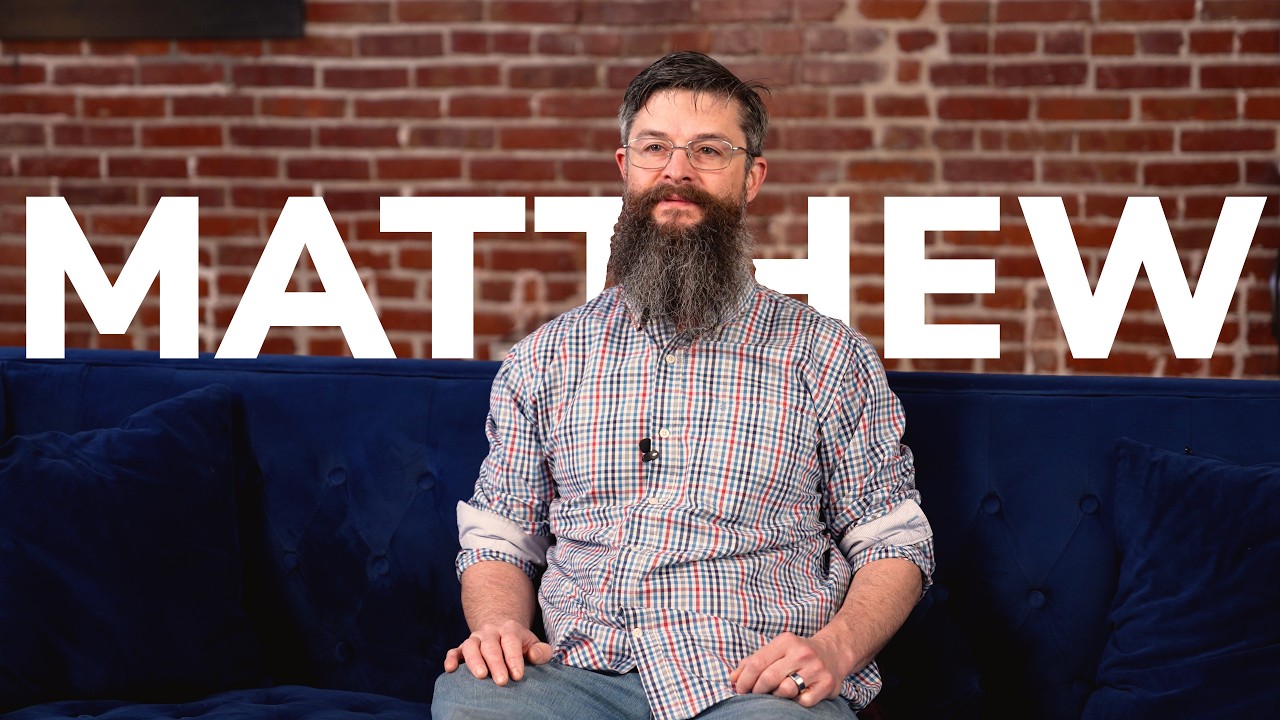
This story is the transcript of a Narratives video interview, lightly edited for clarity.
Why psychedelic research went dark
I have a PhD in experimental psychology. I got that in 2004 from the University of Vermont. My real focus within that field of experimental psychology is the study of psychoactive drugs. You could call it behavioral pharmacology.
I've really studied all the major drug classes, everything from stimulants like methamphetamine and cocaine to alcohol, caffeine, nicotine, opioids and cannabis, but I've done a whole lot of work with psychedelics, starting 21 years ago. For the last 10 years or so, I've had my hands in a number of things, studying some other drugs such as tobacco and the role of nicotine in tobacco dependence.
With psychedelics, I've really been focused on some therapeutic studies: using psilocybin to treat cancer distress, using psilocybin to treat depression, and using psilocybin to treat tobacco addiction, which is really the main thrust of my current work. Although I have interests all across psychedelics, including the dark side. I've done quite a bit of focus on risks and safety factors in psychedelics, and how to keep people safe.
How did you first get introduced to psychedelics?
I did a paper when I was in college, an undergraduate paper, and discovered this older era of research, from the '50s to the early and mid-'70s, where LSD was being used for a number of disorders. And I really discovered that it wasn't that we found psychedelics weren't effective as mental health treatments. It was really just the sociopolitical environment, their association with the counterculture, and a whole lot of other factors during the '60s.
There were the Manson murders at the end of the '60s. LSD was involved with that. A little bit further into the '70s, it was revealed that the CIA was using psychedelics clandestinely in some very nefarious experiments. All of that just left a really bad taste in the mouth for society regarding psychedelics.
So they went from being at the edge of mental health treatment, really the frontier, to being the third rail. Just something that made people crazy. Not only would it make your kids weird and put flowers in their hair and protest the war, but it might actually make them homicidal maniacs like Charles Manson's followers. So they were stigmatized for decades, until this research slowly started creeping up. And I was lucky to get involved with that research when I completed my PhD in 2004.
The counterculture hysteria
Years now after having worked with psychedelics, do you believe in some of the hysteria that existed around the counterculture? Is there any validity to it?
It's important to remember that some of the stigma from the '60s wasn't based on nothing. There's a kernel of truth. Surely it was overblown, and the research itself shouldn't have been sacrificed. But there is a dark side.
For one, a lot of people took LSD. The doses on the street were about six times higher than they are now. There were a lot of bad trips. It's humbling to talk to some of those older psychiatrists, nurses and others who worked in the emergency rooms back in those days, in the late '60s. There were definitely some young folks and others, especially ones that had psychiatric vulnerability or took it in really suboptimal, chaotic settings, for whom it was really hard.
Now, there were also lots of people who took LSD and other psychedelics who will say today, 50 years later, that it was one of the most important things they ever did. They can tell you a narrative of how it changed the course of their life in a positive way. Both are true. So we have to keep that in mind. There is still a dark side.
One of the things I'm concerned about as we move forward, as there's continued access and expanded access, is that it takes great responsibility. For example, with therapists, I see a very strong likelihood that we're going to see an increasing number of therapists who go down what I call the guru route. Especially because these experiences are often very spiritually meaningful, it's very easy to step into that spiritual guide role.
That moves it away from the patient's experience and from letting them be the chief meaning-maker of that experience. Instead, the therapist fills the role of spiritual leader, professing to be an expert on metaphysical levels where, honestly, it doesn't matter if you're a scientist or you have a PhD in clinical psychology. No one's an expert on this. Everyone has a right to their own opinion, and those opinions are just as valid as anything we can determine objectively.
And you're also going to see a lot of therapists sleeping with their patients. That comes along with a cult of personality. The two big things are folks fleecing their patients out of money and sleeping with patients. Those are the classic things.
We know that this happens in the mainstream helping professions: social work, psychiatry, clinical psychology. Something around 10% of therapists will say that at some point during the course of their career, they had a romantic relationship with a client. And that's without powerful, mind-expanding drugs. So there is reason for concern, not just with using these drugs in a party setting, but even in intentional therapeutic use.
It's something that requires training, visibility and transparency, which is one of the extra concerns when things are underground: you obviously have less transparency. When there are bad actors, can they be called out? Can there be a course correction? Ultimately, I think it's best when there's appropriate regulation. If somebody's doing something wrong, there's a regulatory body that can come in and say, you can't do this anymore, or you have to undergo some correction to improve the way you're doing things.
Mystical experiences and outcomes
Based on your findings, how important are mystical experiences in successful psychedelic treatment?
It appears that mystical experiences are related to the likelihood of a therapeutic outcome: decreased depression and anxiety in cancer patients, or a decreased likelihood of being a smoker many months after one's quit attempt.
These aren't perfect correlations. It's sometimes been overstated that a mystical experience is necessary for the therapeutic effects. That's definitely overstating it. There are plenty of folks who don't meet the criteria for the so-called full-blown mystical experience, but who are nonetheless helped very much. And there are also folks who have a full-blown mystical experience, by all accounts, and we don't see the therapeutic target, the reduction in depression, anxiety or substance use.
Some studies haven't shown this relationship. For example, with MDMA, it looks like mystical experience is less related to therapeutic outcomes compared to the work that's been done with psilocybin. So it's an important thing to keep examining, but we're just scratching the surface.
More broadly, there are other aspects of the subjective experience that seem important. There's the sense of emotional breakthrough, which is sort of like the sense of catharsis, to what degree you're having a very emotional experience. And there's whether the experience seems to relate to personal insight. Those are other aspects of the subjective experience, along with mystical experience, that seem to show some relationship to whether a session is therapeutically helpful.
I do believe that the subjective experience in general is going to be necessary for the long-term therapeutic outcomes, at least with the models we're using right now, where you have one, two or three sessions with these compounds and we're seeing improvements six months or a year later.
So I think it's great that folks are exploring these so-called non-psychedelic analogs, perhaps inducing similar neuroplasticity, if there's a future therapeutic use there. I simply think that's going to be a very different therapeutic model. I don't think you're going to take one of those once and see improvements in depression or addiction months later. That would be more of a standard psychiatric model, where one takes the substance on a more chronic basis to address symptoms.
Screening, preparation and integration
You published some of the earliest modern guidelines on psychedelic safety. Could you briefly explain the core principles of psychedelic therapy safety today, and why they're important?
Yeah. In 2008, I published so-called safety guidelines for administering high-dose classic psychedelics like psilocybin or LSD. Some of the basic recommendations were that you have to screen people.
We have pretty good reason to believe that certain folks shouldn't be exposed to psychedelics. For example, people who are currently dealing with psychotic disorders such as schizophrenia, or people you can identify, in structured psychiatric interviews, as having an identifiable predisposition for those types of disorders.
Also, people at the more severe end of cardiovascular disease. That's not a concern for the large majority of people. But for those folks whose doctor says, "You really shouldn't take the stairs at work. Anything that can push your blood pressure or pulse up could be dangerous, so take it really easy," those are generally the type of people who could be at elevated risk, because psilocybin and these other compounds typically cause modest increases in blood pressure and pulse. So you screen for that.
The next important aspect is preparation. You spend any number of hours, and that's varied across studies, and we don't know scientifically what the magic minimum threshold is. My gut tells me it's something around at least two hours. A lot of early studies ranged from four to eight hours in terms of the time spent between the so-called guides, or the therapists, whoever is going to be with them in that room when they're on the psychedelic, and the patient or participant, the person taking the psychedelic.
You don't want to be around strangers. That can add to paranoia and anxiety. You want someone you've developed a rapport with, who can verbally reassure you if you have some strong anxiety, and who can hold your hand. That can be very powerful in helping you through it. I strongly believe there should be limits to the touch, because of concerns about boundaries and sexual violations. But it should be prepared and consented that you can hold the person's hand. That can be really powerful in helping someone through it.
Then there's the session itself. Everything should be prepared. The person should know the environment, the session room where this is going to take place. There should be no surprises. The person should be kept safe in whatever that container is, and monitored continuously. So, for example, if the primary therapist needs to go use the bathroom, there's either a second person there or someone who can move into the space to take over, someone the patient has also developed a rapport with.
And then there's the so-called follow-up, or integration, phase. This is the day after, and depending on the study and the therapeutic model, it could extend beyond that, to the next week or several weeks beyond. This typically involves discussion with the patient to help them make meaning, if any is to be found, out of these experiences.
Importantly, that also provides an opportunity to assess safety. Is the person experiencing some atypical, but certainly possible, persisting effects that could be troubling them?
Serotonin syndrome and HPPD
There are disorders out there such as HPPD, hallucinogen persisting perception disorder, in which people have perceptual anomalies after the psychedelic experience. Fortunately, that hasn't really cropped up in the modern era of psychedelic research, probably because of this extensive screening. Maybe we're weeding out people who somehow have a predisposition for it.
Serotonin syndrome is something that we see in the field, typically associated with recreational, or let's just say non-professionally guided or non-scientific, exposure: people taking psychedelics on their own or with their friends. Typically, that results from other medications or drugs being on board that can augment the serotonin response.
Serotonin is one of the neurotransmitters in your brain, and these various psychedelics can affect it. Drugs like psilocybin can essentially fit into the same receptor that the serotonin in your brain would normally fit into. MDMA is a little different. It releases a lot of your natural serotonin.
But there are situations where people are on other medications that also affect the serotonin system, and you can have too much of a serotonin response. That can be very dangerous. So one of the parts of the screening and preparation is that, depending on the study, you either exclude people on a certain number of drugs, or taper them off, or make sure they don't take them the day of the session. All of this depends on the drug and its half-life, and there's a lot to evaluate there. But that's probably why we don't see things like serotonin syndrome, or people reaching dangerous levels of other medications, in these clinical trials.
And then HPPD, hallucinogen persisting perception disorder, is still very mysterious. It seems very clear that it goes on, that people have these effects. We haven't seen it in the research. We need to keep our eye on it.
My gut tells me it's the type of thing that you may not see when you run a few thousand participants, but you will when you're running tens of thousands, hundreds of thousands or millions of people, when it's approved as a medication for therapeutic use. And this would also apply to potential underground therapeutic use. You're going to see more cases of it.
So when it does come up, it's going to be important to identify it, and hopefully to figure out some prediction. Can we figure out what type of person is particularly prone to it, or what conditions? Maybe they've been doing something recently, or maybe there's a drug interaction that makes people especially vulnerable to it.
That's also one of the issues with anything that's underground. We need to bring things above board so we can clearly see them. A therapist conducting a session illegally is not going to want to catalog this in a national registry of adverse experiences, which is what we really need to do. We need to connect the dots, especially with those more rare adverse effects.
The underground therapist scene
Can you talk to me a little bit about what you think of the underground therapist scene?
Yeah. The underground therapist scene is certainly a part of modern psychedelics. And because it's underground, I think you just get a wide spectrum.
I've certainly heard of, read about and am familiar with therapists who are doing things that in many ways really mirror some of the best clinical trials, in terms of screening, preparation and ethically conducting these sessions. And then you hear horror stories: people conducting sessions in dangerous locations where the person might get hurt.
A pretty common one is sexual abuse during or after sessions, and I would say after sessions definitely counts. You're trusted, in that hierarchy. The patient may be telling you, as a therapist, things they wouldn't tell their closest loved ones, because you were in that special place, in that therapeutic relationship. It's just not fair that someone can take advantage of the vulnerability that person has put themselves into. That certainly goes on.
I'm very concerned about the provision of metaphysical advice. Certainly I don't encourage the idea that you need to impose materialism, that you need to do this work in a white room, and that if someone has a religious or spiritual interpretation, you say, "No, no, no, that was just your serotonin 2A receptors." No. My strong feeling is that you need to let the client or the patient drive the bus.
Why therapists should not play guru
Maybe they interpret their experience as Jesus coming into their heart, or an experience of their ancestors, or plant spirits visiting them, or a manifestation of the Buddha. Great. I can neither confirm nor deny those levels of experience, but that's not your role.
So one of the things I'm concerned about is the therapist playing a heavy hand, because there's a real risk. Psychedelic therapy can work really, really well. And when it works well, it works really well. There's a huge risk that you come out of it thinking, as a therapist, I'm God's gift to therapy. Look at the healing I've done with these people.
There can be a lack of humility. No, I'm lucky enough to be using this very, very powerful technology, and this person has trusted me to play this role as part of this technology, or this tradition. And it's not about me.
Certainly, you need to be confident. You need to be caring. I don't want to say the therapist is not important. But you're in a service role. You're not a spiritual guide. Those are my views.
So if, during a session, you believe you've had an experience where Jesus has visited your heart, or you feel there's been a manifestation of the Buddha, or plant spirits have come to visit you, or you've experienced your ancestors, or you feel something has gone on with your chakras, it's not the therapist's role to confirm or deny those experiences.
Have you ever heard of anyone losing their license for practicing in the underground?
I've heard rumors of people losing their license because they were practicing in the underground. I really don't have any definitive information on that. It's not something that I closely follow. But it wouldn't surprise me at all that there's a reality there. And that's presumably one of the risks of conducting underground psychedelic therapy work.
Training psychedelic therapists
We've asked others about ideal training for psychedelic therapists. Based on your research, can you talk to me a little bit about what's essential in training these therapists?
I think the most important thing in training psychedelic therapists is, first of all, to be well trained in one of the relevant helping professions. And it's not restricted to psychology. There's clinical psychology, there's psychiatry, there's social work. I think nursing can play a very strong role, and nurses are fit to serve in the role of psychedelic therapist.
A solid foundation in those core disciplines is the most important part. That's not going to cover everything. But on the biggest concerns, for example around boundary violations, you're going to find training in all of those disciplines in a way you might not if someone's exclusively trained in the underground for psychotherapy. The boring old boundary violations and professional codes are probably less likely to be a focus there.
So I think a core foundation in those disciplines is important. Then, certainly, some type of internship is ideal, where people can serve in a secondary guide or secondary therapist role in the room, where they're not the only one, and they're learning from someone who's more experienced.
Beyond that, there's a lot of variability in the training programs that have crept up over the last 10 years. Some of them haven't seemed to be ideal. I think some of them have evolved. I've seen people tout themselves as great trainers of therapists who actually haven't conducted many psychedelic therapy sessions themselves.
So I think we have to pay attention to the humble voices and to the folks who are well regarded among their colleagues. And we have to be open to the fact that we're going to learn things about how we can optimally train psychedelic facilitators and psychedelic therapists, and be willing to adapt our training programs as we learn new information.
Funding and bipartisan support
What do you feel is holding back the psychedelic movement from having more funding, more research and being able to make progress faster, in comparison to other treatments that seem to get there a lot quicker? Is it social stigma? Is it the pharmaceutical industry? Is it something else that I'm missing?
I think the biggest challenge, traditionally, over the last 21 years that I've been in psychedelic research, has been funding. That's changing now, certainly, with industry sponsors moving compounds through the FDA pathway.
You get good science from that, but it's very narrowly focused on achieving FDA approval, so you don't get the most interesting science. To be clear, it's good and necessary science, but it's not the science most needed to move the field forward in the bigger picture.
There's an increase in funding by government agencies. I received the first NIH grant in the modern era to look at the therapeutic use of a classic psychedelic. This was psilocybin for tobacco smoking cessation. So there's an increase in NIH funding, and we certainly need more. There's also an increase in funding by other government agencies within the U.S., such as the VA and the DoD. We need more of that, and more philanthropy.
At this point, I'm not sure that stigma is holding us back. The potential hype might almost be stronger than the stigma. I think there's a lot of excitement now, including from the government, which is a weird world to land in.
It's also true, crazy enough, that right now, in 2025 U.S. politics, support for responsible psychedelic medicine might be the most bipartisan issue in U.S. politics. In particular, there's a lot of conservative support for the very promising work on treating PTSD in veterans. That's a big source of the interest on the conservative side.
Should therapists have their own experience
Some scientists we've talked to have shared personal experiences with psychedelics. Have you personally experienced psychedelics, in a research context or outside of one, that you're comfortable talking about?
I haven't experienced psychedelics in the research context. There have been some studies that have allowed scientists or others involved in the psychedelic area to actually participate in a study. I haven't done that.
I still deflect the question of whether I've personally had an experience, but I'll tell you why, because I think it points to an important domain. I think the question points to a really important concern. Does the person have empathy? Do they understand the potential range of experiences, and how intense this can be for people?
I've seen psychedelic therapists with and without personal psychedelic use, and I don't see a very tight correlation between whether they've had that experience and how good a therapist they are. There are plenty of people who have taken lots of psychedelics whom you wouldn't want to go anywhere near a patient, for any number of reasons. And there are also some very, very caring, empathetic folks who haven't had those experiences, who have listened to many people describe their psychedelic experiences.
We have to keep in mind that just because you've had any number of psychedelic experiences, you haven't had the experience that person is having that day, at that time. For example, in the work I did with cancer distress, I don't know what it's like to be a 70-year-old grandmother dealing with lung cancer, having a psychedelic experience.
So I think another mistake from the '60s, with Tim Leary, even though he was brilliant and made many great contributions, and I encourage people to read his work, is that I think he could make this more about the experience of the scientist or the therapist than about the patient.
And we are still living in a world where, in most cases, psychedelic use is illegal. So I still remind younger folks that you might be cautious in what you choose or choose not to share, because you don't want to engage in anything that's going to cause problems for you.
Legalization versus regulation
We've interviewed several people with varied views on psychedelic legalization, from broad legalization all the way to strictly therapeutic use for veterans. What is your stance on how psychedelics should become legally accessible, and why?
I tend to think more about, and like to use, the language of regulation rather than legalization, because it's kind of a false dichotomy. We think alcohol is legal. Well, no, it's not for those in the U.S. under 21, and no, it's not while you're driving. So sometimes that's an illegal substance.
You might think psilocybin is an illegal substance. Well, it's Schedule I, but no, it's not in the context of an FDA- and DEA-approved clinical trial, such as the ones I've conducted. And even with something like caffeine, in the form of coffee or tea, there's pretty much no regulation. But in soft drinks, the FDA regulates the caffeine content. In over-the-counter products like NoDoz or Vivarin, you can't just put any amount of caffeine in there. That's an over-the-counter medication.
So there's typically more nuance there. I think about what the drug is and what the appropriate form of regulation is. There are many drugs that I don't want readily available at the convenience store. Cocaine at the convenience store: bad idea. But should people who are addicted to cocaine be able to access it in a safe-use place, and make sure they're not using a supply with adulterants that could be very dangerous, for example spiked with fentanyl? Yes, I think that would be a more appropriate form of regulation.
So with psychedelics, there are a number of models. The biggest thing is that I think we need to look at the early evidence from what different cities and states are playing with. It's a naturalistic experiment unfolding.
One of the older models that's been discussed, and I don't think it's been implemented yet, is the driver's license model: it's legal to access only once one has essentially passed a driver's test. Part of that would be didactic, filling out a test, and maybe some of it would be use under supervision. Maybe some of it would be psychiatric screening. I think that's an interesting model.
I also remind people that the Netherlands has had a model, not full legalization, because it's technically illegal, but decriminalized, tolerated access at these so-called smart shops for decades now, of either mushrooms or, after a nuance in the law where they switched years ago, truffles, which are essentially the roots of the mushrooms. Same thing. You eat enough, and you're going to have as much psilocybin as you desire.
That's available without these levels of psychiatric screening or training. And there have been harms. But one has to really look at the data and admit that the harms have been relatively minimal. They're nowhere in the same league as the harms from alcohol and other illicit drugs like opioids and cocaine.
The most typical issue, and they have been monitoring it on a regular basis, is young British males taking a flight over the Channel, getting there after a night of drinking, and then deciding, oh, let's do some mushrooms, too. So it's in combination with alcohol.
So there is a pretty good track record of relatively safe use, even under a pretty liberal policy, one that has point-of-sale distribution. And presumably, even in that model, you still have control over the supply. If something happened, if there was somehow a tainted supply, there's an ability to track what happened and where it came from, and presumably to prevent it from happening again.