Life After 31 Years in Prison for Murder
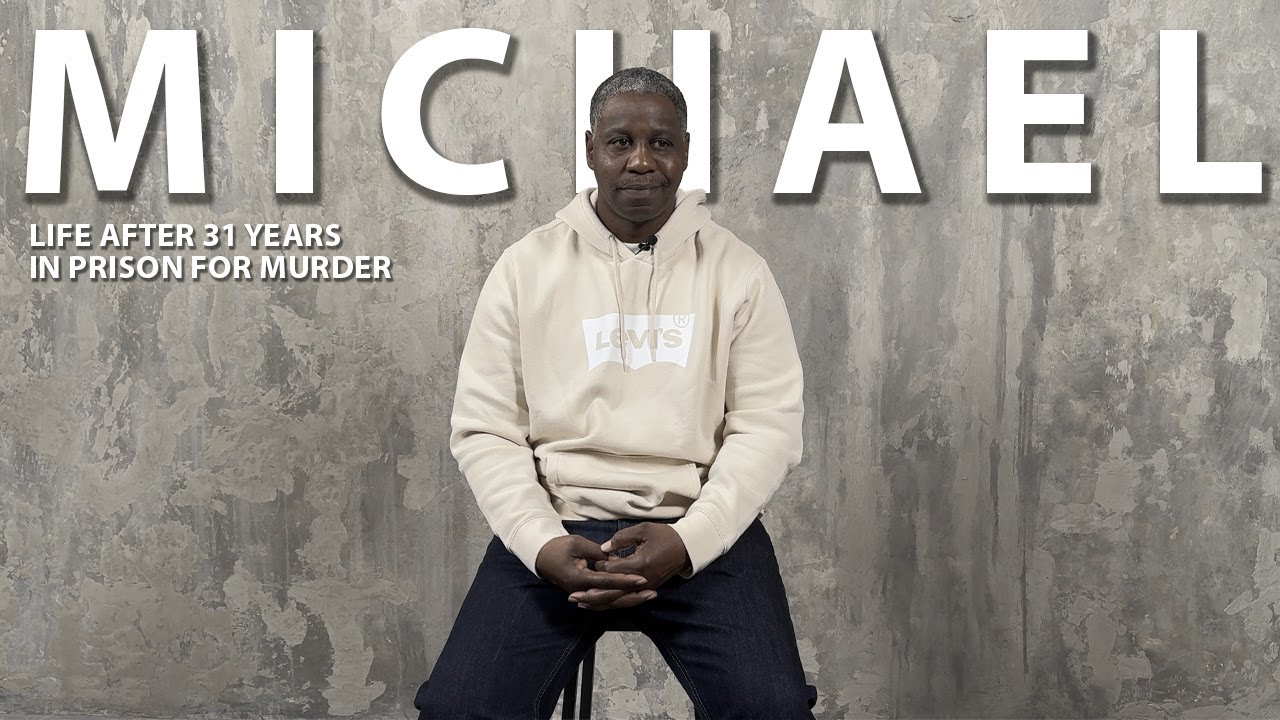
This story is the transcript of a Narratives video interview, lightly edited for clarity.
I was recently incarcerated for 31 years, and I came home August the 15th. I'm here to tell my story because I feel like it could help someone going down the same path I went down as a young man, not understanding the gravity of the situations I put myself in. I want to let people hear my story.
Growing up
Could you tell me a little bit about your childhood, where you grew up, what your family was like, and what life was like for you as a kid?
Yes, sir. Well, I grew up in Orange County, California. A pretty diverse area back then. I had a large family there. My family had been there since the early '50s. My grandfather moved out here from Texas for a better life for his family. He was in the military and whatnot. He brought my mom and her three siblings out here. He was a hardworking man. He was like a man's man, when you look at it. A good person, like a role model, and he raised his family up well. I was interested in school as a kid, and sports. My dad worked for the post office.
Were your parents together when you grew up?
Yes. They were never married, though. They were together, but they were never married.
Was your father a good role model in your life, would you say?
Yeah, my father was. My father was a good man.
And your mom?
My mom was a good person, too. It's just, later on, things happened in life where addictions came into play, as I got into my early teens. I got involved in gang life, and I got kicked out of school. Once I got kicked out of school, it seemed like my life took a dramatic turn for the worse.
It wasn't like my uncles or the older people in my family were involved in any of that. It was my generation that brought the gang life to my family. Just growing up in the neighborhood, the neighborhood was gang-infested already. So it was like guilty by association, so to speak.
As you were starting to get involved in gang life, what are some of your earliest memories of other kids being involved? Did you think it was cool? Did you think it was a way to make money? What drew you to that, especially since your parents weren't role models of that?
I didn't look at it like it was a bad thing. I looked at it like just a bunch of kids that were friends, because, like I said, most of us grew up together since elementary school. So I never differentiated family from the gang. My friends, y'all are like my family. And once I took that stance, that made it easier for me to adopt the gang mentality, so to speak, because you mess with my family, you mess with me. So I took my friends as my family. We started stealing cars, breaking into houses, stuff like that.
The first time I got arrested and went to juvenile hall, I broke into a school, but it was on Halloween, and I'll never forget it. We had been dressed up earlier that day, and officers came to our house and arrested me that night. They took me to juvenile hall, and I was scared, because it was my first time. But my mom came and picked me up that night. They let me go on house arrest. That was my first encounter with really being that nervous, going into a situation, not knowing what to expect.
Was that your first, quote unquote, crime that you got caught for, or were there many you got away with before that?
I had the petty stuff, like stealing candy out of the store, when I was a kid. But that was my first time thinking, like, I'm going to jail.
How old were you the first time you were caught? What was the plan, and how did it go wrong?
I was 12, 13. I was 13. I didn't really have a plan. I was just impulsive. I just saw something was open, and I went in there and took some stuff. The elementary school I went to. Just doing idiotic stuff.
And there was no fear at the time? Did you ever think you would get caught?
There was fear, but no, I didn't think I would get caught.
When they came and picked you up and took you to juvenile hall, what was that experience like?
I was there, but I didn't get booked all the way in, because my mom came that night. They called her, and they let me go that night and put me on house arrest.
And what did your mom say?
She was mad at me. She wasn't pleased with me. But I was her son, her youngest kid. So she always stood by me. She was supporting me. Even when I was messing up, she supported me. She did things to try to get me to go in different directions. And it was just me. It was me. I'd tell her, it's not because of you. You did a good job. I just made bad decisions.
Expelled
When you look back now, was there anything that could have changed you, or kept you from making those decisions?
Yeah, I think there were things that could have. Like I said, I got kicked out of school, and I've talked about this before: I feel like that was a real big turning point in my life. My mom had moved me from a school in the neighborhood I grew up in, because of the direction things seemed to be starting to go. She moved me to another school, in another school district. They let me go there, but they said, "You get in any trouble, you're out of here. No breaks." So I ended up getting in a fight at school. I was like 13 or 14. They expelled me from that school. After that point, it seemed like that's when my whole life just started going down, the way I started acting.
I went to continuation school, and that wasn't helping me out, because we'd go to school for two hours a day and then, boom, you guys can leave. So just imagine a young gang member going to school for two hours, then back on the street. That kind of took me in a different direction. Then I had some kind of, not hatred, but I started disliking authority figures, because I felt like the back was turned on me.
So what happened in the years between then and when you got convicted? You got convicted of murder, right?
Yes, sir.
What were those years like? Were you still in and out of school and getting in trouble?
Yeah, I was in and out of school, but I was getting in trouble. I went to juvenile hall numerous times before I committed my crime, when I was 21.
What happened that ended you up in juvenile hall multiple times?
Mostly gang stuff. One time, I saw some rival gang members, and I took one of their chains and punched them, and I went to juvenile hall for that. Another time, I got in a fight with one at school, and I went to juvenile hall for that, because I was fighting a guy, and my teacher tried to break it up, and I punched the teacher. So yeah, I was just out of control.
Were you angry as a kid, do you feel like? And was there a reason for it?
Yeah, I was angry, but at the time I didn't really know it. I just thought this is normal. I'm a young rider, whatever you want to call it. This is what we do. But it was anger. It was anger in there, from not being able to have a voice.
As a young kid, I grew up in a time when kids at home, you listen. You don't talk back. You don't do none of that stuff. You do what the parents tell you. You do what your elders tell you. So when I was able to get out from up under it, when I was away from home, out and about, that's when I would act up. But when I was at home, I was good. I would just chill. When I got out and got around my friends, I was a different individual. And I always wanted to show that I was loyal, and that was my way of being loyal: always stepping up to the forefront when things were happening.
The crime
You were 21 when you were sentenced to 43 years to life for first-degree murder and attempted murder. What did it feel like to face that at such a young age?
It was terrifying, really, because, like I said, I didn't know what was in store for me, what was going to happen when I got there. I didn't know any of that stuff. And a lot of times, when I was doing things, I didn't have any remorse at that time for the things I was doing. So my mindset wasn't advanced. I wasn't in a growth mindset. I didn't really care about the people I victimized, or any of that. So when I went to prison, since I hadn't worked on myself in any fashion in a good way, I took that mentality with me. The same mentality I had on the streets, I had in there. I took it with me.
Can you tell me about the crime a little bit? What led up to it, and what was your perspective on killing someone? Did you know you were going to do it? Was it something you had ever questioned in your mind, whether it was okay or not?
Yeah, I had questioned it. I didn't know I was going to do it, but I knew I was capable of doing it. The night of my crime, I wasn't even supposed to be where I was at. I was supposed to be going to an amusement park. I just didn't go, and I stayed around our neighborhood to hang out.
I had some personal beef with individuals that were, quote unquote, rivals at that time, that I considered enemies, and I happened to see them. Instead of not going into the situation, I approached the situation. It wasn't nobody else's fault but mine, because I went over there to confront them, when I could have just got in the car and left and went on about my day. But I was just so angry, and I had so much pent-up aggression that I made the situation worse.
I approached. I went over there. We had an argument. We had some words. Another individual took a firearm from me, and I ended up leaving to get another firearm. And when I came back, the guy was still there, and I shot him.
What was the story with this guy? Was he similar to you in age?
Similar. Yeah, same age. Grew up in the same community. We knew each other. We just went different directions as far as the gang thing went.
And what about the court proceedings? Did you plead guilty or not guilty?
I pled not guilty. Yeah, that's another thing I talk about: not understanding accountability. Even knowing I did something, I'm still in denial in my mind, like, I'm going to get out. I'm going to beat it. I had that game, like, no, nobody's going to come to court on me.
Inside
You spent 31 years in prison. What moments stand out to you from that time, in a good way or a bad way? Let's start with the bad.
What stood out to me was just the lack of freedom. I know prison is all about not having freedom, but just sitting in there, it's like a person walking dead. I felt like the walking dead. I'm here. I'm breathing. I'm doing things, but this is my world. I'm confined to this little circle, and you've got to live with someone else in a little cell for years. It was frustrating. It was humiliating at times. You had to get undressed. Sometimes they come in, "Hey, we're going to search you," and make you squat and cough and strip, all this stuff. So it was terrible. It was terrible.
You were in there for three decades. What was the first third of your sentence like, versus the last third?
The first third was more the same as when I was on the streets. I'm doing my gang thing. I'm doing everything that I'm not supposed to be doing in prison. I'm still doing that because, like I said, I hadn't made any effort to change my mentality or any of that. I feel like I was a bad individual. Looking back, I did a lot of bad things. That was my first third of prison: pretty much the same thing. Not following rules, getting write-ups, going to the hole. And I'm like, this is part of prison. This is what I'm supposed to be doing. That's how I rationalized it.
Looking back now, do you think prison does a good job rehabilitating, or not at all?
You have to make an effort to want to rehabilitate yourself, because they have the classes. They have different groups. They have a lot of things now that they didn't have when I first came in: college and everything. So if you want to, you can take advantage of everything that's in there. It is way better now, because I see a lot of guys that you would never suspect would make that change. A lot of people are probably saying the same thing about me. But it's possible, and it's there.
What about drugs and alcohol? Was that ever a part of your life or your story?
Yeah. Even in prison, I continued to drink, and to smoke weed.
When did that start? Can you talk a little bit about your relationship with substances throughout the years?
When I got involved with the gang stuff, around the same time, like 13: smoking weed, and I started drinking, because I've got a family that drinks. I'd seen that my whole life, pretty much. So it's regular to drink. I would drink and I would smoke. I did that pretty much every day once I got older. I used to dabble when I was younger, but once I got older, like 15, 16, I would drink and smoke a lot. Sometimes I would take breaks where I wouldn't. But yeah, I drank in there for years.
How were you getting the alcohol in prison?
Make it.
You'd make it?
Yeah, I used to make it. And it was a way to make money, to hustle, instead of asking my family to send me stuff. So that could be a way for me to take care of myself.
Did you have family members that had gone to prison?
Yeah, I had a couple that went to prison, but not for long times.
How did you survive and cope across all of those years? You mentioned alcohol early on in prison, but what about the second and third parts of your stint?
Alcohol was a bad coping skill. I always talk about coping skills with people, and I say you've got good and bad coping skills, and that was a bad coping skill. Like I said, I started to want better, as far as coping. I would exercise. That's how I would deal with things. I like to read. Then I liked school. I got involved in education. Then later on, I got involved in going to different groups and things like that.
That opened my mind to seeing the world in a different light, because you get people that come in there, volunteers who take their time out to come sit in the prison and work with us. So I'm like, yeah, there are some good people out here. So I would be open to listening to what they were teaching us. That kind of opened me up. I was able to start coping with things a little better, and I started feeling like there was some light at the end of the tunnel, because at one time I never thought I was getting out of prison, period. That's a scary feeling, to have that mindset: I'm here for the rest of my life. I'm never going nowhere.
The turn
Do you have a moment you can recall, whether it was something you read or a conversation with a volunteer, that was the light bulb moment for you, where all of a sudden you thought, I have an opportunity here to change things around?
When my mom was sick. She passed away. They had called me up there to get on the phone, and my family told me what happened. So I went back to my cell, and I told my cellmate, and he was like, "Man, I'm going to leave out and give you some time." I said, "I'm all right, man." And we just sat there and talked.
I was telling him I feel terrible because I wasn't there for her when she was sick. My sister was there the whole time and took care of her, but I wasn't there. And he told me, "Don't get too down on yourself. Your mom will love you no matter what. Just focus on starting to do right, starting to do better, and that'll make you feel better." So that was one of the conversations that made me focus on what I really need to do.
What was that like, the decision to make a change? How did other gang members respond to that?
Nobody really responded to it negatively. You have a few, but for the most part, when they see a person who wants to change and wants to work on themselves, nobody really takes that into consideration. And I never gave nobody no reason to feel any type of way about me like that. So it was easy for me to make a transformation and start working on myself. And I was getting older. I can't keep doing the same thing I was doing when I was 21, 25.
How old were you when that moment happened?
I was like 37 years old.
Did you at that time still have a lot of time to go?
Yeah, I still had life. Back then, lifers weren't getting out unless they got overturned through the courts or something like that. It wasn't like anybody was going to parole from Level 4. I had never seen it in my life. But it was something I needed to do personally, to make myself a better person and treat people better.
Which prison were you at? And did you change prisons at all?
Yeah, I changed. I was at Centinela at that time, but I changed. I've been to a lot of prisons.
What was the difference in your experiences at these different places? Were some better than others?
Yeah. I started off at Level 4s. I was there for like 25, 26 years.
Level 4, what does that mean?
Maximum security. I was there for a while. Then I went to Level 3. That's a lower level. I went to another prison, and that's where I got to see all the programs they had, the educational stuff, and that's when I jumped in. I got a job working in the mental health department.
In the mental health department?
Yeah. I was helping some of the lower-functioning guys in the prison. I did that for like five years, until I came home. That was a big change for me in my life, too. It created a lot of empathy and understanding.
What drew you to the mental health clinic?
My mom worked in mental health when I was a kid, so I would always be around it. She worked at a state hospital out there in Orange County, so I used to go to work with her sometimes, and it gave me a different understanding. So I know it's something I always wanted to do. I always wanted to try to help people. Even when I was living that negative life, I still thought I was helping people. That's what I always wanted to do, and a lot of that came with the peer pressure and all that stuff. But in my mind, I'm helping somebody.
It's like it runs in my family. That's what we do: we try to help people. My mom did that, and my sister works in something similar, helping people out, too. So it was perfect for me. When I went there, some guy was like, "Hey, man, you might be good for this job, because I see how you vibe with all the guys around here." And I'm like, "Yeah, I'll check it out." So I filled out the application, I had an interview with the ladies and I got the job. And it really changed my life. It did. If I didn't have that job, I don't think I would be here right now.
What was it that was so impactful about the job?
I used to go to work, and you would see people that didn't have any family, didn't have any connection with anybody on the outside, but they were just so humble, so understanding. And it was like, man, they should be bitter. They should be mad. They should be bitter, but they're not. And I'm like, man, you've got people that help you out and do this and that for you. So you learn something from them.
Self-talk
Tell me about the self-talk, the stories you would tell yourself over the years, and how that voice in your head changed. At first you were angry. You were okay with stealing or hurting, but in one sense you believed it would still help other people, right?
And I looked at it like it's normal, right? Because it was just so prevalent where I was at. I normalized it.
And when you got to prison, what was the talk like there? Was it, I'm here forever, or, I need to do whatever it takes to survive?
A mixture of both, because, like I said, when I first came in, life meant life. You usually only die in prison, or something had to happen in the courts. So I came in with the mentality of: I'm here. I'm going to be here. So what I've got to do to survive here, I'm going to do. If it means hurting somebody before they hurt me, then that's what I'm going to do. But that was that negative self-talk, telling myself that.
As I changed, I would try to mix in positive stuff, but I was in that vibe where, okay, you can't let nobody see you look weak and all that type of stuff, because that's the stories you hear about prison. But actually, you have some good individuals. You meet some of the best people. I met some of the best people that I know in prison, and they're friends to this day. So you find good people in there, too.
And what is the self-talk now, in your daily life?
It's like: I could be successful. I could help people out. I don't got to hurt people anymore. I'm out now. I can't have no bad days, really. My worst day out here is way better than my best day in there. So I take that ride. Positive self-talk.
What about romantic relationships in your life, from before prison, in prison and now? How do you view them?
Before prison, I was young. I didn't really think about being in a committed relationship. But I had relationships in prison, not with people in prison, but with people on the outside. It can be stressful, because there are so many barriers. You've got a phone call and a letter.
A phone call and a letter.
But I think you build more of a spiritual bond, because you don't have a physical presence, but the letters and the good conversations build a tighter bond, I think. So I was able to bond with people like that, and I made friends, female friends. Now I have a beautiful person in my life. I'm engaged. Got engaged on Christmas.
Wow. Congratulations.
Thank you.
Redemption
Do you think people who have never been to prison misunderstand it?
Yeah. I see it on TV. I see it when I converse with people. Sometimes I just hear people talking that don't really understand it.
What do they not understand?
It's a horrible situation. It's a horrible place. But some good can come out of it. For a lot of people like me... I think if I had never gone to prison, I'm 97% sure that I would have got killed. So going in there, even though it took me so long to finally figure things out, I was able to do the work I needed to do to manifest and change some of the thought processes that led to the negative actions that led me there.
Do you think everyone can be redeemed, or were there people you met in prison where you thought, this person will never change?
I think everybody can be redeemed, but it's up to that person. It can't happen from the outside. It has to be some internal stuff that you want to do. And some people don't want it, because some people are still caught up in what other people say about them or think about them in there. So they have to want to take that step, too, try to better themselves and go to groups and stuff like that, because all that helps, you know what I'm saying, on down the line.
So I think people can be redeemed, because people probably said that about me going in there: this guy, never. But I was able to redeem myself. I can never take back what I did. I did a horrible thing. But I'm always going to pay amends. I'm always doing something to pay it forward.
You worked in the mental health department. I'm curious what you saw with psych meds. A lot of people in prison end up taking meds to escape, or as treatment for actual mental health issues. What would you see?
That's funny that you said that, because I talked to somebody about that not too long ago. When I was on the Level 4 yard, if we had people that were on psych meds, that was a no-no for us. You wouldn't talk to them. You'd look down on them. If we had homies that were on meds, we were like, "Man, why are you on this?" That type of thing. But a lot of people had mental health issues, and they needed that. We didn't know that at the time. We were just on some gang stuff: that's weak.
But when I got that job, I started seeing, okay, some people do need that help. Some people really, really do need that help. But you've got some individuals that don't. Some people just use it to escape. It's like sanctioned drug use or whatever. They've got some new stuff. They've got Suboxone. They've got people taking that.
Do you feel like the meds ever held back people you were working with from changing or working on themselves?
Yeah, I've seen some of the guys. I could tell for a fact that the meds were holding them back, because they would be out of it sometimes, and they'd be like, "Man, the meds they're giving me are too strong," or something like that. It kept them from making the progress that they needed.
Were you ever drawn to them?
Meds in prison? No.
And that was because of the mentality of gang members about it?
Yeah. And I felt like I don't need it. I self-medicate. That was the ignorant mentality, but that was the mentality I had. I'd drink some wine or smoke before I'd take some of that. That's all right? But that's not all right, you know what I'm saying? It's like, come on, man.
Lessons
What were the biggest lessons or skills that you took out of your time in prison?
There's so many lessons, but the biggest one, probably, for me: if you stay the course, you will be able to make that change, to get to where you want to be. As far as me, I wanted to get out. At one time I never thought I was getting out, but then I started seeing it was possible. So I made the necessary changes that I needed to. I stayed the course. I didn't give up. I didn't try to do nothing crazy to myself. I didn't get reckless and be impulsive like I used to be.
And I think to be a listener, a good listener, because sometimes you talk too much, and if you listen, you learn a lot more. That's a skill I think I've got now. I can listen to people and not just form a judgment. Sometimes I might have had a rebuttal in my head, but not anymore. I just listen with an open mind.
Are there any stories you can recall of good or bad interactions with the officers inside of prison?
Inside of prison. Yeah, I've had bad run-ins with them. What's the worst one I had? I never really got beat. I didn't get beat. But I have seen them jump on people. So like I said, I had a resentment towards law enforcement for a long time, from being in there and seeing how people were treated. I think some people abuse their authority.
But I've also seen some good ones, some good individuals that work there, people who just treat everybody good. When I just left, we had an officer, he was cool. He would come through and tell everybody good night, every night before he left. He treated people respectfully, no matter what they were in there for. He treated people right. So I try to have that mentality now. I know people have got jobs to do, and I understand they could be going through something in their lives as well, just like I was.
Was there ever a moment where you got in a lot of trouble in prison and had to spend time in isolation?
Yeah, I did. I went to isolation several times.
What were those instances from?
Riots. Getting caught with weapons.
Could you tell me a detailed story about a riot?
It was 2006, I think. We had a riot, a racial riot, over a basketball. It was stupid. But that's prison stuff that happens. You go to the hole, you sit back and think about it later on, like, this is stupid. But you don't want to look like you're not with it, so you're going to go. But yeah, it was over a basketball, at a 180-design prison, Kern Valley. I'll never forget it. It happened on one yard, and it just carried over to another yard.
What happened with the basketball?
I wasn't on that side. I was on the other side when it kicked off. Something happened where another race had the basketball. Somebody came and took it from him and started playing with it, and he wanted it back or something, and he said something, and a dude punched him, and it just... everybody started. And then it ended up carrying over to the other side of the yard.
So on the other side of the yard, people see this, and they're like, okay, we're going to start a fight now?
Yeah. We couldn't see it, but there were people at medical, and they're like, "It's going up over there." So yeah, then it just kicked off.
Is the intention of a riot just to fight, or is it thinking you're going to break out or something?
It's not about breaking out. It's about protecting yourself, or trying to hurt somebody that's your opposition.
How did you end up getting in trouble if the riot happened on the other side? You weren't even involved with this basketball.
Because I was involved in all the gang stuff. I was involved in everything. So I'm getting involved. I'm not just going to sit there. That was my mentality. I'm going to get involved.
Was this in the first half of your prison stint?
This was a little later. I had just got out of the hole, too. I had just got out, literally, some months before.
When did you start working in the mental health clinic?
In 2019.
So this was still a while before.
Yeah, it was still a while before then.
Could you tell me a little bit about the racial dynamics between gangs in prison?
Like I said, it's changed a lot. Prison is not like it was when I first came in. There's a little less tension. But if you're black and you see a black person fighting another race, that's just how it goes. If another race fights somebody, they're not going to let that... That's not supposed to happen. I'm not supposed to be fighting another race, period, point blank. So if it happens, usually everybody's going to get involved. That's just the way it's been in California.
So you stick with your own race, and if there's some kind of crossover interaction, it usually turns into a fight?
No, you could be cool with other people from different nationalities and stuff like that, but when it comes to some violent stuff, that's when everybody gets involved. I've always been the type... I've got friends from every race. I don't really trip like that. But I'm in there, so I'm going to do what I've got to do. I don't discriminate like that. That was part of my job, too. I didn't care what race he was. I had to take care of it.
What's next
When you were a kid, did you ever dream of having a job or a career outside of the gangs? And once you started to believe you could get out of prison, did you have a new dream for your life coming out?
Yeah, I had a dream when I was a kid. I liked sports. I used to play football, baseball. So I wanted to be a football player. I had an uncle who was a professional football player. He went to the NFL and all that stuff. And I was pretty fast. I ran track. So that was my dream: to go to college and be a football player. You know how difficult that is, but that was my dream. Now? Oh, washed up. I can barely run now.
But now my dream, like I said, since I got that job working in mental health, I want to do something in that capacity. So, go back to school. I was going to school, trying to get my degree in sociology, a couple units off. So I'm going to get back into school, and I eventually want to work with people reentering society, like the ones that came from the mental health program. A lot of people don't have resources. They're getting out of prison, and they're just putting them out here. They've got to go to transition. I understand that. But people need more resources, especially people that don't have family.
What has that manifested in, now that you've been out? Are you working?
Not yet. I'm out here in LA, but I'm not staying out here, so I'm just going to wait till I get back to Orange County. I've got something lined up. I want to work out there.
What was the process like of getting out of prison? Did you have to go in front of a board of sorts? And what did you tell them?
I went to the board March the 24th. It's two commissioners and the DA for my county, but it was done virtually. I was in there for three hours. No breaks, nothing. They asked me if I wanted a break. I'm like, I'm good. We basically talked about my childhood, the time I came to prison, my progression in the negative and then my change. I was able to break everything down for them, and they were satisfied with how I answered the questions.
There was one moment when I felt like I was going to be found suitable, during the hearing. I was talking about emotional intelligence, and the commissioner was like, "Wow, Mr. Haslip, I had just written that down in my notes." It was like, boom, I just hit it on the head. I was talking about how I used to be fighting when I was a kid, and I didn't have any emotional intelligence, so I didn't know how to deal with the feelings I was going through. So the first thing I would want to do is fight, that type of stuff. I was just breaking that down to her.
Anger and trauma
What is your relationship with anger now, and how did that change? What's your perspective on the anger that you had as a kid?
I've been working on it. I'm in anger management still. It's something you manage, and I need to continue to go to different groups.
Oh, you're in anger management. I thought you were saying you were a teacher for it.
No, I go on Mondays. I still do different groups and stuff. But my relationship with anger now: I know anger is a secondary emotion. It doesn't just come up. It comes from somewhere. So now that I understand that, I always question myself: why are you mad? What are you angry about? And when I do that, it always simmers down. If I've got any aggravation or irritation or something, it'll subside. I just have to have that self-talk: why? Where's it coming from? Because, like I said, the anger came from stuff, childhood traumas and stuff like that, that was unresolved.
But at 13, 14, 15, you don't know anything about childhood trauma. You don't know how to break it down. There's some trauma involved in your life, but I didn't know how to break it down. Once I was able to do the work and study and go to groups and listen to other people's testimonies and stuff like that, I was able to put everything together. So I was able to talk about it. I usually didn't talk about it. If I'm mad, I'm just quiet.
If you're comfortable, I'd like to hear a little bit about that trauma. When we started this interview, you gave me the answer most people give: I love my parents, they gave me the best childhood, I didn't have bad role models. Having all of this experience now, do you look back and think there were a few things that were traumatic in your childhood, and if they hadn't happened, or if you had been to therapy, that would have changed things?
Yeah, there was a lot of trauma, like I said, growing up in a neighborhood with violence, drugs, alcoholism. And even within the household, that type of stuff: I've seen drugs and stuff. Like I said, that happened when I started getting to 10, 11. So that was traumatic, because I started feeling like people weren't really there for me. They were just dealing with their own demons, or whatever they had to deal with.
Day one
I guess now it's easier to have empathy for them, right? Because now you can say they were coping with their own traumas, and that left you not knowing what to do with it at that age. So, on your first day out, what did you do? And what was that moment like?
My first day out, I got out in San Luis Obispo. So I went to the beach. I went to Pismo Beach, and I jumped in the water, because I love the ocean. That's something I'd been talking about: man, I want to go to the beach. I want to go in the water. So that's something I did. And it was a day up there on the Central Coast. It's kind of cold. The water's colder up there. But I did. I went in the water. I feel like, let me rinse some of this prison off me for a minute. And it was a wonderful feeling.
My sister was there. One of my best friends came, my cousin, my fiancée, and some of my other buddies: one that was incarcerated with me, and another guy I met who runs a group. He came up there as well, him and some of the people who are part of the group. So they came to meet us at the beach. It was good. It was a fun homecoming.
Narratives thanks Timelist Group, Inc. for its invaluable work.