Healing Common Traumas like Sexual Assault and Family Relationships with Psychedelics
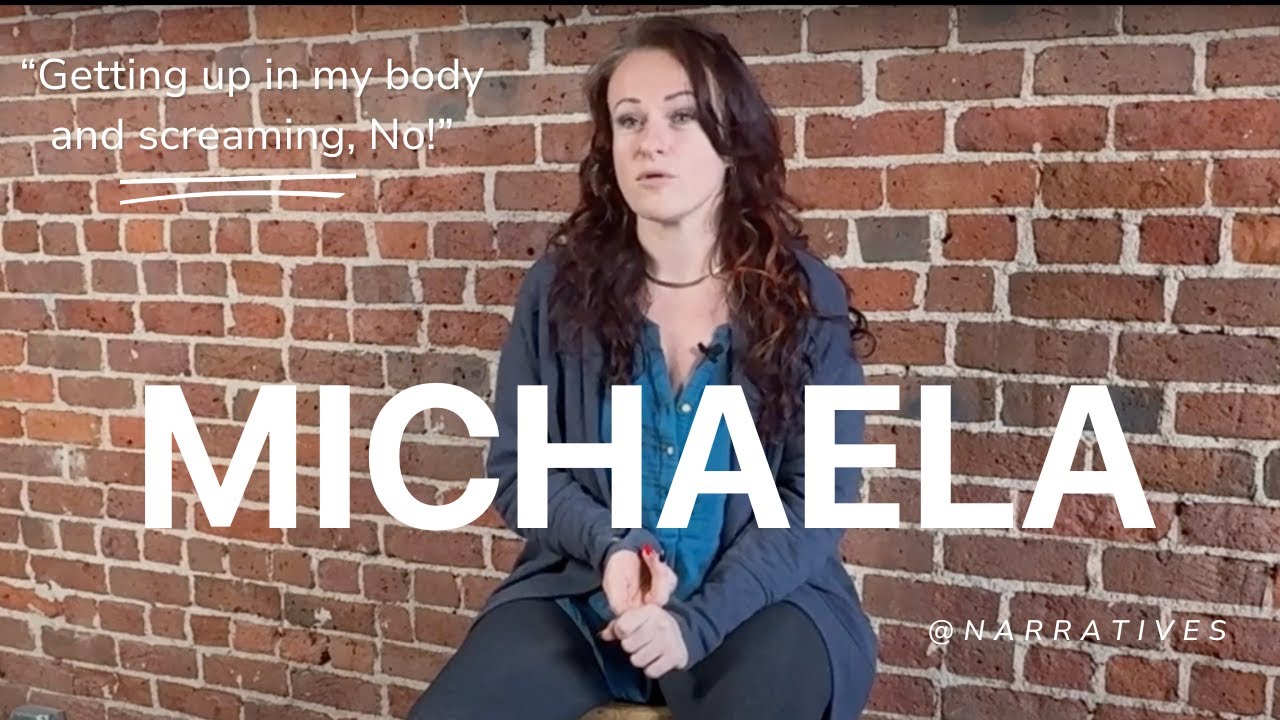
This story is the transcript of a Narratives video interview, lightly edited for clarity.
Content note: this story includes accounts of sexual assault, a suicide attempt and the deaths of friends and family.
A childhood close to death
...accident and crashed into a tree when I was 9 years old, and I was the one who came out and found the accident. And then it continued in high school. I went to a high school of only 400 kids in a really small town, and I had a number of my friends commit suicide in high school, get into drunk driving accidents, et cetera. And even when I was 16, my best friend was murdered by his dad, with his sister as well.
So there was just, in my own lifetime, for some reason, a really deep entanglement and strong connection to death, and death being around me. And I thought it was normal until I was in college and talking to people about death, and I realized how skewed my perception was of how statistically frequent death actually is. I would just assume, if I couldn't get a hold of someone, that they were dead. And I would meet people who had never had someone die in their life, who were in their 40s. And so I really started to realize, oh, this is actually more rare, to have this level of experience of death. And I think that my strong connection to death is also something that drew me to psychedelics.
What plant medicine means
Psychedelics, to me, is a broader term that encompasses both chemical and naturally occurring substances, or entheogens, that create a mind-altering state. Psychedelics is a broader umbrella term. Plant medicine is one of the categories underneath it. And there is a lot of what I would say is contraction, ego identity, around people comparing chemical substances like LSD, or pharma, with naturally occurring substances. And then there's also people who take a broader view: it's all nature, all the way down.
And I have in myself seen this superiority, as if nature is better than a man-made substance in a lab. And I've had to work with that ego and identity in psychedelics, around that superiority complex, as if any of it's different, as if we could ever create something that isn't in nature. So I really like the term entheogen, which is essentially a God-inducing substance. It evokes the magic within us, or it evokes something beyond our humanness or our identity to connect us with.
So we have plant medicine, psychedelics. There's a whole bunch of different categories of plant medicine as well. For example, Kambo is a frog medicine that supports people in detoxing and cleansing through essentially a peptide treatment, and that isn't psychedelic. However, it's still considered a plant medicine, because it's kind of lumped together, even though it's an animal, or an amphibian, medicine.
So I would say culturally, in the plant medicine ceremonial culture, there is a term of "medicine," and people can also refer to any other thing that they take that they find healing to be medicine. So someone could say they had a healing experience drinking alcohol in a therapeutic setting, where it really uncovered some of their deep traumas, and they really got to grieve and let down some filters, and they could call that medicine. And there is a long history, especially in Judaism, of using alcohol in a therapeutic and ceremonial, medicinal way.
Self-aware medicines
So today, in our world, people are just so on their high horses about one medicine being better than the other, and I have my own version of it. I'll speak a little bit about why, which is that, in my experience, plant medicine has a consciousness and a spirit behind it that's kind of running the show and giving you some kind of direction. One of my teachers calls them self-aware medicines and non-self-aware medicines, which I really like, because if you take self-aware medicines, you'll be like, holy shit, they are self-aware. They know what they're doing.
So my experience of taking something like LSD and MDMA, versus ayahuasca or iboga, is that there is a guy that has an agenda, and it's not letting you leave without that agenda being complete. And it doesn't care how much you kick and scream and run for the hills and don't want to look at this thing it wants to show you. It's going to sit there until you see it.
Now, with MDMA and LSD, it's like Pandora's box. It's the context and the set and setting and so many different things, the guide you're with, whether you take it at a party. It's like Choose Your Own Adventure, right? You could totally have an MDMA experience that's just fun, and you can have one that's really therapeutic, and you can have one that's both. You can give a bunch of people MDMA and literally have no one have any kind of awakening, and then you can have the right set and setting and have people have a really, really beautiful blossoming and blooming into seeing something in themselves. But it's typically with a good facilitator or guide.
Mushrooms are a shit show. They really are kind of a trickster energy, and so they stand in some ways separate, especially because they're a fungus. They're not quite a plant, and so there is a different level of consciousness they have, being not a plant and not quite an animal. It's like they're their own category. And in my experience of mushrooms, there's just this trickster and jokester in them that doesn't really care how you feel about it, and can take you really deep into some dark shit and not necessarily be attached to helping you find your way out. And so I find that it's less likely to happen with something like ayahuasca, or iboga, or San Pedro, or peyote. If people are going to have a harder journey with plant medicine, it's usually with mushrooms.
Arriving with a broken heart
One thing that I've noticed when people have a conversation about this topic is they like to think a lot about theory, and they detach a lot of the personal emotion. And one of my jobs at Narratives is to really humanize and bring out the emotion of the stories we're telling. So you said to us that you were sober, and then you went to this retreat center that you thought you were going to help out at, and you got introduced to psychedelics there. At that time, what would you say was the trauma, if there was a singular trauma, that you would have been needing to unpack with psychedelics?
When I arrived at the retreat center, I arrived with a very broken heart. I had gone through a really hard breakup and been hospitalized, because I had tried to kill myself. And after going through that experience, I would say the thing that happened in my life that I projected all this pain onto was specifically the breakup. It was almost like my vessel, or my portal, into really healing all of the underlying things beneath it. So at the time I was like, oh, it's the breakup that was so traumatic. And it was a really, really abrupt experience, with many people involved, and someone going into a psychotic episode, and just a lot of complexities and nuances of life and family. And basically, when I arrived at the retreat center, I was like, that's what I want to work on. That's what I want to heal: my relationship with this man that I split up with.
I also had a background of going to school and working as an art therapist, specifically helping people struggling with addiction, as well as sexual assault. So I did a number of different art exhibits and shows around survivors, and so I had a strong identity as a survivor, around sexual assault specifically, that I had experienced both in high school and college. And so I'd say it was kind of mixed together: I want to heal my sexual trauma, I want to heal my relationship to the masculine and men, and I want to heal my relationship to this breakup that I was still trying to make sense of, that I still felt traumatized by, just the abrupt nature of it.
Seeing her father differently
You had told me in a previous conversation about healing trauma with your father.
One of the things that was most impactful for me, through my work with psychedelics, specifically iboga, was that I went in with some agenda and some intention, and really the medicine was like, okay, cool, got it, and we're going to take you over in this way. So for example, I went in to attempt to heal my relationship with this guy I had split up with, and really, my entire journey ended up being about my dad. It surprised me.
My relationship with my dad was that he was a good guy, and people around him really loved him and thought he was great. And behind closed doors, there was a lot of difficulty, and psychological manipulation, and psychological abuse, and things like hacking into my mom's and my emails, and putting trackers on our cars, and just a lot of different things that could arguably be defended as a father trying to protect his daughter. And the result it had on me is it basically added an extreme layer and level of paranoia and distrust with the masculine, specifically because none of it was ever acknowledged to me. So I would do a lot of catching him, and he would deny it. And so in some ways I still feel like it would have felt better if he was just like, "Yeah, I'm going to put a tracker in your car so I know where you are all the time." But the level of dissonance, of him saying a thing and then me having to be wondering all the time, questioning all these different things. I would say there was a lot of psychological abuse and manipulation that was coming from his own desire to protect, that came out in a very distorted way.
And sorry, why was he tracking your car? I think a lot of daughters can relate to having protective fathers, but tracking your car is definitely another level.
I don't have a clear answer. I had tried to speak with him about it many different times. And what I'll say is that what was actually most traumatic was just, like I said, being in the wondering, and feeling crazy, and going into my own email and seeing the folder that was created that I didn't create, that he had put a bunch of emails in, and then sent to himself, and then deleted the folder, but then didn't delete it from the recently deleted. And I'm a millennial, so, you know, and a detective. So there would be things like that.
What plant medicine helped show me was having a completely open heart, and compassion, and empathy, while not excusing the behavior, but knowing that he was a really lonely guy who had lost his entire family and deeply wanted connection with his wife and his daughter and didn't know how to get it, didn't know how to ask for it, wasn't capable of creating it. And the only way he knew how to know about my life was to stalk me, and to go through my emails, and to follow me. And while I still don't think it's okay, I'm in a place now of power where I'm like, go ahead. Open kimono. Whatever you want to know about me, you can just ask, and I'll tell you.
So working with this medicine had me not only actually somatically feel the feeling in me of feeling like a victim, but actually alchemize the feeling of victimhood into empowerment, by not excusing the behavior but having empathy for it, and really having compassion: that if someone knew how to do something different, they would have.
Confronting her own behavior
And so, same with my experience of sexual assault. Part of healing through plant medicine was really, actually, number one, looking at the predator in me, and being confronted with the ways in which I have assaulted people that are less explicit than a rape, for example, or a physical assault. But the ways in which I would manipulate, the ways in which I would pressure, the ways in which I would psychologically mess with boyfriends, and the way that these energetics can actually play out quite similarly.
And what that kind of looked like is ways in which maybe I was getting in a fight with a partner, and they were like, "Hey, I have a boundary. I just don't want to talk about this right now." And I'm like, "Too fucking bad. I don't care if you want to talk about it or not. We're going to talk about it now." Put a man behind that voice, and everyone would be all over the internet, right? If he's like, "I don't care what you want. Sit down. This is what we're going to do."
And so to me, I had to confront the one in me who actually runs very similar energetic dynamics. But when it's run on me, I'm like, they did this thing, and I wasn't looking at the ways in which I created it, the ways in which I allowed it, the ways in which it's in me too. And this is some of the most profound healing I experienced with plant medicine. It doesn't care how you feel about it. It will show you where this is in you too, and why it's being reflected externally.
And what I'm saying here can be very easily manipulated and skewed and bent out of shape to justify all behaviors that are terrible. And to me, I don't care about what's right or wrong. I care about one's internal experience and their relationship to life, and what the relationship to life they want to have is, and how they can actually create, through healing with plant medicine, a sense of empowerment and a sense of control and sovereignty over their own reality.
Growing up anticipating harm
I want to walk through two experiences that you mentioned: one, healing your relationship with your father. But I want to start with healing your experience of sexual assault. So if you don't mind, can you tell us a little bit about the physical experience you had in the real world here, and then what was that medicine trip like? Walk us through what that experience was that healed on the other side.
Thinking back to my childhood, I remember being in a tiny female body and not understanding sometimes why older men, or adult men, would interact with me in a way that made me feel uncomfortable, whether that was something as simple as wanting to give me a hug when I didn't want to, or picking me up and throwing me around while I'm screaming and saying, "Put me down." And I would say that these are some of the energetics that create a feminine system that is already anticipating having her boundaries crossed. Even something as simple as tickling, where a kid is screaming "Stop," and it's like, replace the characters there, and it starts to get really dark.
Those experiences growing up, specifically where there would be maybe older men in my family, or someone drinking a lot that I was around, who would say things to me that I didn't even really know what they meant, or I felt really uncomfortable. And even into my young teenage years, having friends of my parents make weird comments or grab me in weird ways. And none of this was necessarily overtly explicit. There wasn't ever a thing where someone tried to trap me in a bedroom. But it just started building. It started foreshadowing a relationship of how I could anticipate men interacting with me.
So when I was in high school, I had multiple experiences where I was drinking with friends, et cetera, and I would wake up to a man having sex with me while I was unconscious. And I had a number of different experiences where these men that were doing these things were fully sober. And a number of experiences that are, unfortunately, countless, of going to parties with a group of my girlfriends and just wanting to have fun with them, and being drugged, or just waking up sore with my pants off and not really understanding what happened.
And in some ways, these are complex situations, where going and drinking and partying, et cetera, I wanted to be able to do that and remain safe. I also wanted to be able to drink and do drugs and have fun with friends, and have sex with someone I wanted to have sex with, if I wanted to. But there were experiences where I would go to a party, be super drunk, and go into a corner and find a place I could go to sleep, and wake up to someone having sex with me.
And I've also had a few experiences later on in high school with close friends of mine, specifically when I was in a really vulnerable state and was allowing them in close, whether that was to come over to my house, et cetera. I remember this one experience where I had told a close guy friend of mine that I was going through something with a partner of mine, and it just felt really vulnerable. We had been essentially lovers before and had had a relationship, but we had been friends for many years. And I said, "Hey, you can come over and support me if you want, but I want to be really clear ahead of time that I'm not interested in having any kind of romantic or sexual contact."
And I remember crying in his arms about this thing that I was moving through, and while that was happening, him putting his hand on my body. And I was in such a frozen state that he ended up basically pulling my clothes off and having sex with me while I was crying, telling him to please stop.
The freeze response
And it's a complex dynamic, where I know a lot of times the people on the other side of these stories say, "Well, she could have gotten up. She could have punched him. She could have screamed." There's ways that they say she could have stopped it. And unless you've been in a female body, you don't understand, number one, just this lifetime, but also the thousands of years of literally being killed for saying no to someone, and what's in our lineage, and what's being unconsciously communicated from our own mothers around "Don't tell men no." And just the unfortunate likelihood that you could be killed if you defy someone.
And so I think all of these things lead to a freeze response being more and more common in females, where they basically just kind of dissociate. And if they say no enough times, it's actually more painful to say no, and to fight back, and to have it continuously overridden, than it is to just dissociate, let it happen and wait till it's over. And this is the story of so many different survivors, of basically saying it was easier and safer to eventually just submit.
This experience that you're describing, it's so common. Now tell us about where plant medicine, or psychedelics, for you became an opportunity to work through that.
An emotionally corrective experience
I would say that a way in which psychedelics can support people in working through some of these experiences, and healing some of the traumatic memories that they have, is providing an emotionally corrective experience. And what that means is, whether it's an opportunity to physically and externally represent a scene or memory that happened, or just in your own psyche and in your own head, practicing showing up differently.
So what that can look like is having a memory of something that was happening and actually feeling where in your body the pain is. And in my experience of psychedelics, they can make it slow down. So there's a way in which you can notice. In my own experience, I had memories, remembering the somatic memory, remembering what my body felt like in these experiences, that some could describe as a bad trip, or uncomfortable. But in the right set and setting, your psyche and your body are taking you back there to fully release the trauma that's being held there, and to alchemize some of the energetics there.
So an example of how this could happen is actually being able to be taken back into the memory, starting to play it out in your psyche, or starting to open your eyes and see it. Which can happen a lot with medicine guides: a client or attendee or participant goes into projecting that you're the perpetrator, and they need to replay the story in a way that ends well. And so this is why it takes such a skillful facilitator to create these experiences, who's actually willing to take on the projection, who's actually willing to say, "I will play that for you, and I'm here, and I will change the story with you."
And so in my experience of healing sexual trauma, one has been actually being forced, via the psychedelic or the plant medicine, to go back into the feeling and sensation that was so uncomfortable, that I was attempting to dissociate from or trying to run away from. What that could look like is feeling, for example, someone touching me in a way that didn't feel good, and actually getting up in my body and screaming "No," and pushing people off my body, and allowing my body to do what it wanted to do then, that I had a story it wasn't safe enough to do.
And I don't know if it was safe enough to do at the time. I don't know, if there were situations where I was under the influence, or someone else was, and there was something happening I didn't want, what would have happened if I had done that. But what I know is that going back into psychedelics, the psychedelics can show you what needs to happen to release it from your body, and to release it from your psyche, and to no longer be chained by it. And usually plant medicine and psychedelics are quite clear about what needs to happen, and your resistance and lack of surrender to doing it can create just a very difficult trip and a difficult experience, when you know you need to say something or scream something.
And so I know we've run journeys together where people essentially start screaming, and everyone's like, what are they talking about? And they're like, "Get off of me. Fuck you. I release you. I hate you." And there's some cathartic release of being able to actually send your psyche back into the timeline of where this thing happened, and to change the story, and the memory in your body, by doing something different. And I really believe, on a shamanistic level and a spiritual level, that it is alchemizing and changing something, from a timeline perspective, of being able to actually access you in that timeline back then, and how it can change the whole course of who you are now, as well as your lineage, as well as your DNA. And this is why I think it can be so supportive to do plant medicine with your family, and to be changing the energetics and the lineages together.
When a journey goes wrong
So I think this is interesting. It seems like it has so much potential. But what you're also describing to me, if it's sexual assault, which unfortunately many people can relate to, or other trauma that someone else may have, and this is something the individual wants to work through, it seems to me a little bit like the Robert Frost poem: two paths diverge. And you can work through it in a way that really empowers you and corrects or realigns your future and your orientation to that experience. But what if it goes the other path? Can it get worse? What's the risk there?
I would say with medicine, with psychedelics, there is a 100% real possibility of retraumatization: set and setting, not having an expert, experienced guide or medicine person who's really worked with the physical, energetic, emotional, spiritual, shamanistic realm and knows how to work with it. In my experience, when dealing with people's psyche, especially when it's in a neuroplastic state, there's something in them that wants to keep the story they have, that really is attached to reality, and what was true and what is not true.
And when you're holding on to that, that's when some of the looping can happen when people are on psychedelics. Specifically with LSD and mushrooms it happens a lot, where people start saying the same thing over and over and over, or the scene that you're watching on psychedelics just keeps replaying. It hits a stop, and then it's like a GIF, and it just keeps replaying, and you're like, how do I get out of this loop?
I think there's absolutely a possibility of it happening, and it's why you yourself, in my opinion, need to have a lot of experience working with these medicines, which are a medicine and a poison. Dosages matter. What's happening in your energetic body and life at the time matters. Who's with you matters. Where you're doing it matters. All of these things, I believe, can be either a help or a hindrance to your journey.
Scientists, therapists and ceremonialists
So the way I would break down psychedelic workers, people who work with psychedelics in some way: we've got scientists and chemists, and they have more the perspective of how can we manipulate this particle and molecule and substance, or alkaloids, et cetera, to get over here, to get a certain experience. Anyone could be mixed in all these categories. But I understand that they really want to make sense of what psychedelics are doing, and odds are they feel safe knowing and having knowledge, and so they want to understand this thing instead of surrendering to the mystery.
Then we have therapists. Therapists who have no experience of anything energetic or ceremonial, or even lighting a candle for the session. They just learned how to appropriately and scientifically, medically administer an experience or substance to a person in a safe way, physically safe. And then they just have to sit there, and they're like, let them cry and scream. Maybe there's some prompting, like, "Yeah, tell me about your dad." But they're working on a surface level of engaging with the human and nothing else, just engaging with the person, instead of the spiritual realm, the energetic realm. Maybe they're in the human and the emotional, but lineage or ancestors, that stuff isn't necessarily being addressed. And it could be, if you have a really, really great therapist.
And then there are the ceremonial workers. So we have scientists, we have therapists, and then we have ceremonialists, which some people might resonate with the term shaman. Some people believe that the word shaman is some form of cultural appropriation, because in Indigenous tribes, a shaman was kind of chosen and born and raised to be a certain carrier of some type of medicine since birth, not that they did a weekend workshop on psychedelics. So I would say nowadays the people who are shamans actually don't call themselves shamans, and the people who took a weekend workshop call themselves shamans. So our world's a little upside down.
And I would say that when you're choosing who you want to work with, you have to have some kind of informed consent and knowledge and wisdom. And more than anything you read on the internet about who to work with, you also have to have a connection to your own body and your own yes, and be able to actually find someone you resonate with, regardless of what their title is.
So I would say I fall much more into the ceremonial and therapist category. I'm a therapist turned medicine woman. The way I work with people, when they come and see me, when they come to a retreat, when they come to a weekend workshop, when they come to an experience, et cetera, is that, let's say their name is Bill, I'm engaging with Bill, but I'm also engaging with everything around Bill, and the whole room that we're engaged in, and then outside of that, the town we're in, and outside of that, the lineage he's connected to and what he's bringing in, as well as what's happening in his physical form and body.
And this is, to me, a much more holistic or transpersonal approach, which is beyond the personal. It's beyond the personality or the identity of Bill, but also engaging with Bill from the perspective that Bill is not just Bill. He is a collective consciousness of both our society and his own lineage and the cells he has inside of his own body. Right now we're inside of his mother. We're inside of his mother's womb. I'm not going to engage with him as if he has no connection to his mother other than through a relationship. And so there's a way I'm engaging with clients' entire lineage, entire life story, and the energetics that they're carrying that are both theirs and not theirs, that may have been put upon them, whether that be something like an entity, or some kind of energy that just kind of latched on, wanting to hitch a ride, and isn't theirs, but is impacting their psyche, is impacting their physical experience of reality in some way.
Multiple truths
When you were talking about Bill, you mentioned his mom, and you mentioned your dad. I've been interviewing people for over a decade, and I always joke that the subtheme of every interview I do, regardless of the topic, could be "Well, it starts with my dad." So let's talk about your dad and how plant medicine helped you heal your relationship with your dad.
The number one way that plant medicine helped me heal my relationship with my dad, along with a whole host of other traumas and difficult relationships, was specifically around its introduction to nuance, and the idea that there are multiple truths, that there are multiple realities, all happening at the same time. And the confronting reality that my reality is not necessarily the reality, which was a mind-blowing epiphany for me: that just my experience of what did or did not happen doesn't necessarily mean that it's the truth.
And when I tried that on, it made so much more sense of where arguments happen, of why people have conflicts, of why people who see someone run into a room and steal a backpack and run out all describe him as having been wearing a different color. And so, the complexity and nuance of human experience and human meaning-making, and how we each experience an entirely different nervous system reaction and meaning-making in the same situation.
There are plenty of people who have grown up in a very, very difficult childhood who honestly just didn't feel as impacted by it as their sibling did, and their sibling became a drug addict and just could not fucking deal with what happened to them, while they just kind of looked back and were like, "Yeah, it was a difficult childhood, but I still felt loved." And why should we say that this other person, who was really, really sensitive and got super blown out from the childhood and was very traumatized by it, is making it up or is extra sensitive, versus that we all alchemize and digest things differently? We all have different meaning-making around it. We all have different understandings of what did or did not happen.
So how this comes back to my father is that, specifically, I had a rough relationship with my father growing up. As a child, I was just in love with him. I just thought he was the greatest thing ever. But he very much prioritized working, which for me felt like work was more important than his relationship with his daughter and his family. So that was my reality. And then his reality was that he was stressed out and exhausted and having to spend every single moment trying to figure out how he was going to provide for his family, how he was going to make sure we had food on the table, how he was going to make sure we had what we want, et cetera. And so that's an example of how two realities can exist in the same one. I could tell him, "No, you didn't care about me." And in his world, he's like, "It's because I cared about you that I did these things." And the reality is that he chose to do this, and I had this experience of it. I had this experience that work was more important than a relationship with his daughter.
A flood dose of iboga
So in 2018 I did my first flood dose of iboga, which is a plant medicine from Africa that is a root bark. From a more metaphorical perspective, this medicine is a root that grows in the ground in Africa, which is, let's just say, the origin of all humans. It doesn't get more into your root than that. It doesn't get more into your root chakra than that. It doesn't get more into the root of your trauma, and the root of all of your existence, and where you came from.
So I went in with this really sweet intention to heal my trauma and my relationship that happened in this breakup, along with some sexual assaults, my relationship with the masculine, et cetera. And the whole journey ended up just being about my dad.
Iboga is a very, very long experience. It typically ranges from 40 to 72 hours, so this isn't a 4-hour trip that you're taking. And you dose over a period of time, usually over 10 hours, and you're taking your full dose over time. If you took the full dose at once, it would be too much for your system to be able to digest and process, because you're eating wood chips.
Many people serve iboga in a variety of different ways, and so I want to just first clarify: you heard it here first, and if you hear about someone else's different experience, that's not necessarily how iboga is everywhere. Especially in Costa Rica, they're serving ibogaine, which is just an alkaloid that's extracted from iboga. And to me, that's spiritual blasphemy, to break down a chemical and medicinal compound to assure a better result. To me, you're shattering the spirit of the consciousness of the plant, and it's no surprise that more dangerous things happen with ibogaine than with iboga.
So the way that I sat in ceremony was, I sat with a medicine man who was my teacher at the time, and it started in the night. He went around and gave us all our first doses. We had previously measured out the dosage that our body wanted to take, based on the intention that we had. And he would come by and ring a bell every hour, and he would come and bring you your dose and give you a little sip of water with your dose.
And so as you're coming up, it's not a fast come-up, in the way that other psychedelics or medicines could be. It's kind of like a plane. You're on the runway, and you're like, okay, we're going, there's no turning back. But it's really slow and gentle and soft. It's not like the way that other psychedelics are, where it just hits you really hard and fast. With iboga, because you're titrating the dose into the system, you're basically being able to go on a soft rise. And so you start to fly in the air, and once you've left the ground, you know you've left the ground.
Home videos behind her eyes
So in my experience with iboga, you can kind of feel like you're sleeping, but you're awake. It's very hard to explain, but you're in quite a state. And many people have the experience that I had, which is that all of a sudden a movie starts playing behind your eyelids. And when you open your eyes, you're back in this reality, but when you close your eyes, the movie starts playing right where it left off.
So in my experience, I was lying there. We had beds all laid out. And I started to feel a little curious about what was happening. I start opening my eyes. I'm like, what's that shadow over there? What's that? I'm like, okay, we're going into it. So I started to fall asleep a little bit, and I wake up to a movie playing behind my eyes. And it basically starts to be a home video, and the home video has the old-fashioned flickering line through the video. It's flickering, and someone's filming live, and it's someone walking up to a couple sitting on the grass holding a baby. And I immediately recognized that it was my mother and my father, but I had never seen them so young, because I didn't remember them that young. So they're probably in their late 30s, early 40s in the video.
And the camera walks up to my dad and zooms in on my face as a little baby. And the first thing I remember feeling impacted by was, wow, I've never seen my parents so young and so not stressed, so relaxed, so peaceful, so chill. And so I felt impacted by that: oh, these are also human beings who I don't really know. I don't really know the full extent of their humanness, of their existence. I know what I know about them, but it doesn't even scratch the surface of the human beings that they are. And that right there was already confronting. That right there was already something that hit something in me, to be like: you think you know your father, you think you know your mother. You know a piece of them. What else could be true about them?
And so, as the camera zoomed in, I remember being brought to tears, specifically by how my father was looking at this baby. And I remember just feeling love pouring from his body into this baby, as if it was the only thing that ever existed in the entire universe, as if this was the only thing he had ever wanted, as if this was the only thing that had ever mattered. And in that moment, I was receiving a transmission, receiving that healing. Right there, getting to be a third party viewing my father looking at me, was already healing and starting to alchemize some of my dynamic, some of my judgments of him, some of my understandings about our relationship, et cetera.
And I was realizing I have no idea what I am to my father, and I don't think I'll ever really understand. I can have stories, but I will never really understand who I am to him and how much I really mean to him, regardless of how his love for me comes out sideways. But that love was just non-negotiable, feeling and viewing him, and seeing the way in which, yeah, it was almost like I was his God in some way. This baby was just the most he could... nothing else existed.
And so I remember the camera turning off, going back to dark, and just sitting with that and being like, maybe there's things I don't know. Maybe there's more story there. Maybe there's more things that happened that led to the father that I know now, versus that complete innocence, the purity of love that was streaming through his heart, unguarded, unjaded, just this baby that he wanted to spend his life serving and protecting.
And then I remember, throughout the journey, the videotape started playing again behind my eyes, and I'm coming in and out of it. I open my eyes, I see my t-shirt over there, I know I had taken iboga. One of my favorite things about iboga is that it's never rocked me to the point where I don't know my name, or I don't know I took iboga. There's a way in which it actually lets you learn through reality. It keeps you in it in some way. So you can open your eyes, you can see your friends lying on the ground, and then the minute you close your eyes, it just goes black. You can't hide from it.
I remember just staying in the darkness and digesting that scene, and then opening to a scene of my father's childhood. My father was a little boy, and I knew it was my father because I had seen photos of him as a little child. And I knew that he was bullied a lot, and that he had a stutter, and that he had his own whole host of traumatic experiences as a child with his own father. There have been a lot of conversations that I have had with my father that have led me to realizing how he's played out his same story with his father, but that he doesn't see it. And when he talks to me about his father, I'm like, you're that dude. So there's a way in which we try to run from being what we're most afraid of and end up embodying it.
And so with my dad, I remember seeing videotapes in this iboga journey where he'd be on the ground and being kicked by kids, and bullied and teased and made fun of, because he had red hair, and then basically the running away, and him being left alone. And then just flash scenes of his life that I had known about briefly, that he had briefly mentioned throughout my childhood: that he was bullied and teased and things like that, and never really felt like he belonged, never really felt connected, et cetera. Then I started to have these scenes as my dad grew up, seeing him in college, and getting to see things that were kind of behind the scenes.
And during the experience I wasn't in question of, did this really happen? Are these real scenes? Am I psychic? Am I seeing back in time? None of it really mattered. All that mattered was that I felt like I was getting a deeper understanding of my father, and the result was more compassion, more love and more empathy for his human experience.
Her father's grief
My parents were divorced when I was about 13 or 14. It was very hard on my family. My mom ended up leaving him, and I was going through puberty at the time. I was a young teenager, and I really needed my mom, and I didn't really have a close connection with my dad. I didn't really feel comfortable around him. I didn't really feel safe. I didn't really feel like I had a relationship with him. And mix in the hacking into my emails, and stealing my phone, and going through phone records, and hacking into my Instagram and my Facebook and my Myspace, da, da, da. There were just a lot of extreme feelings of violation, of wanting to have been treated like a human being who was asked. I would have told you if you'd asked. But this feeling of being violated, and not having any understanding of what it was like to have my own privacy, any understanding of what it was like to have something that was mine, that was sacred, that wasn't going to be intruded upon with his gaze or his wanting to know about it. And then it ended up resulting in him using a lot of the things he found through hacking into my emails, or stalking, et cetera, in the divorce with my mother, to try to get custody of me.
So, going back to the iboga journey, I had a vision that was incredibly, incredibly impactful, where it was my father as an adult, lying in his bed, without my mother in his bed. And the camera just kind of zoomed out, and I remember hearing a soft whimper, and him just sobbing. And it zoomed out to the bed that was empty, just him lying in the fetal position. It zoomed out even more, to a room that was empty, and it zoomed out even more, to the whole house that was empty, and it zoomed out even more, to the whole property that was empty.
And there was just this transmission of my father's grief, of viewing him in a way that I never got to see, that he never shared, of how heartbroken he really, really was. And even though I actually think my mom leaving him was justified, that there were many chances she gave him to be different, or to change his lifestyle, or to work less, et cetera, that still doesn't mean he didn't have his own experience of it. And his own experience of it was losing his entire family, and having his entire heart and everything he cared about taken away and shattered. And whether he did something that caused that is irrelevant to the fact that I know, in my body and heart and soul, that it was his experience.
And there was something about this iboga journey where I was getting to play a third party. I didn't really view these videos I'm telling you about from the view of Michaela. If Michaela had viewed these videos, I still might have a layer of guardedness towards viewing them and be like, "Yeah, well, he's crying. Well, good, because he did these things, and he should be crying." But it was actually as if I was a third party watching a movie about this guy. I felt so connected to him and had so much love for him, and I was like, how heartbreaking, his whole family left him, and he's all alone, and he's just weeping here.
And these are some of the things I was seeing on the physical level with my eyes, behind my eyes. But what was happening on a heart level, and what was being alchemized and transmitted through me, was that, number one, I don't know the full story, and I never will. And number two, there are two sides to every story. And number three, basically, just because I have an experience of someone, or this is my reality, does not make it the fundamental reality, and does not make my truth or my experience of something any more true than his truth or his experience of something.
And I would say that overall helped me heal my relationship to my father in me, internally. It didn't even need to be healed externally. It was as simple as being like, how arrogant and narcissistic have I been, to think that my experience, and how I feel in my body in relationship to something, means it's what happened, across the board, non-negotiable, this is what's true? Instead of actually getting curious and asking my dad to explain what was going on for him, and trying to understand where he may have been coming from, whether I agree with it or not, whether I agree with the end result that he thought or deemed appropriate, based on the agenda he wanted to have.
And there were a number of other things that continued to happen throughout my iboga ceremony, but I would say, to summarize and wrap it up, there's a way in which plant medicine, specifically iboga, can force you to look at things and experience them in your body and in your heart, and in your seeing and your perception of something. It helps you see the bigger picture, the fuller picture, that we're all just characters in a play happening, and we have a really strong attachment to our character, as if our character is the only one that actually experiences the true reality, and everyone else is lying, and everyone else is fucked up, except our own experience.
And so there's a way that iboga loosened that for me. It loosened that attachment to "I think I know." At the time, I thought I knew that my dad was just this really awful person who really deeply violated me, took away my privacy, was just psychologically very abusive, and fucked with my head to the point of extreme paranoia. And that did happen, and my experience of it was that I felt abused, and my experience of it was that I felt violated. Now, could that all have happened to someone else and they did not have those feelings? Absolutely.
And that's something that iboga was trying to show me. Not that how I was feeling was wrong, or that it was invalid, or that I had no reason to feel it. But it was showing me that my experience of it was unique to me, and because my experience of it was unique to me, it was 100% my responsibility to work with my experience of it, to work with what was happening in me. So for example, if I thought my dad was an abusive person, what matters is not trying to change him from being abusive or not, but much more trying to change and work with the parts of me that felt abused.
What changed after
What I'm seeing also is that throughout your life you felt unloved by your dad, and if that created this sort of gaping space in your life, through the medicine journey you were able to feel that love that you'd been wanting. I mean, there is no person on Earth that hasn't wanted to be loved in a certain way and felt a lack there. But I think the next obvious question is: after that experience, did you feel the need to fact-check that, and take that experience to your dad? And if so, what happened?
We're leaving reality a little bit, because it gets a little bit more woo-woo in this realm. So, did I feel a need to fact-check what I remembered in these medicine experiences, specifically the story that played out with iboga? The true answer was no. I actually didn't care if they were true or not, because, number one, I knew that in medicine I can see things and experience things that are trying to physically show me an energetic dynamic that's already happening, not so much a scene from something that actually happened in the physical realm.
So sometimes I might see a scene of my mom and I, and it's actually just showing me a relationship, or an energetic that happens between us. Maybe we're punching each other, and instead of being like, did my mom actually punch me and I forgot, I'm much more being like, ah, I see what you're showing me. That's just an example of not taking anything you see too literally, but also knowing it all means something, and it's all trying to show you something.
So on top of that, how my relationship with my father changed after this experience: literally the moment the ceremony ended, it was like three days long, I came out, and I received a message from my dad. I don't remember the exact words. He didn't even know I was in the ceremony. And I looked at it and was like, this is not how my dad communicates. I'm so confused. This sounds so conscious. This sounds so mature and adult and owned. And I was just in shock.
And that experience started to have me question how much the internal work changes external reality, and how much, when I'm trying to heal something in myself, the other person, it literally just dissipates in them. It neutralizes whatever is playing out between us, on a relational, energetic, spiritual, whatever level. And so ever since then, my relationship with my dad was just different. Literally, ever since I came out of the ceremony, the way he communicated with me, the way he spoke with me, the conversations we had, I was like, this is not the same father that I grew up with.
And what it really brought into question for me, and this is just a rhetorical question, an existential question I'll forever be sitting with, is: how much of the father I was engaging with or interacting with was my own internal projection of something happening in me, wanting to play out? And how much was I really able to actually see him as a human being, and relate to him as a human being, instead of this hero, or father figure, or God that was supposed to be perfect and engage with me in a very particular way, like in movies, et cetera? And so yes, he's a human being who fucked up a lot, and made a lot of mistakes, and harmed me in a lot of different ways. And there was an openness that happened in the field between us, in our relational field and the energetic field, that welcomed him showing up in a different way after I worked through these things in ceremony and healed them in me. And my dad just took more ownership. He was more self-aware. It was just crazy. I was like, this is night and day. Three days.
And I would say, if anything, being able to do these ceremonies, you'll start to realize that when you're working things in yourself, they get worked externally, and it actually changes the external physical reality, or at least your perception of it. And that's the question. That's the great question when people do this healing work: did out here change, or did my perception of what I'm looking at change? With this black box, did I only ever look at it through a lens that was black, and that's why it was a black box, and when I removed the lens, I realized it's a gray box? And so these are just the questions that no one's ever going to give you an answer to, but they're great questions that you are supposed, in my opinion, to just eternally chew on.
Deaths and safety
Okay, so I'm going to ask you about a woman named Lauren Levis, who passed in Costa Rica this past summer, in August of 2024, while taking iboga. And of course there are other sporadic deaths associated with trips gone wrong. When you hear about incidents like this, what are your thoughts?
It first brings up heartbreak for me. What it doesn't bring up is questioning. And what it brings up is that people will read that, and it might keep them from ever having an experience with it, and that's actually what I feel most protective and defensive of. And the complexity of being a part of an industry that's not regulated, that literally anyone can go to Costa Rica and serve medicine and call themselves a medicine guide.
What I know is that most of the time in these deaths, people are serving ibogaine, not iboga. So they're serving an alkaloid, an extract, essentially, of the medicine. And people use the words iboga and ibogaine interchangeably in the news, and that's basically, I'm trying to think of a comparison, like the coca leaf and cocaine. They're entirely different things, even though one is a part of the other.
So, one, there are very few people I would ever suggest people sit with for medicine, and I've got a short list that I'm happy to give to people, because they work with it in a different way that I believe adds an additional layer of physical, energetic, spiritual, emotional safety. Because I really believe with medicine you're playing with dynamite, and you're playing with physical dynamite too. I mean, you're eating wood chips, okay? The body's not the biggest fan of that. It's going to be very hard to digest. It's going to be hard on the liver. You need someone who understands all of these different layers.
And there's definitely spiritual bypassing that can happen. People could say, "I'm a shaman, trust me, if anything were to happen, I'm going to heal it," et cetera. Who's to say that's not true? None of us know. But what I will say is that the people who care about the physical, and just that, are the ones that I find often end up getting hurt the most, in some way. If they calculate, this is the safe dose, there's so many other things that happen that they don't know how to engage with.
So there have been deaths with iboga, and there have been deaths with, for example, Kambo. There's been a number of deaths with Kambo. You and I were at an unfortunate experience where there could have been one, realistically, if someone wasn't paying attention. And typically what's happening is, it's not that they put the Kambo on and then the person dies. But if they put the Kambo on and the person falls over and hits their head and starts bleeding out, and no one notices, and then they die, then people say, oh, this person died on Kambo. So when we're reading these news reports, we don't really understand the full complexity. And it's not to defend that there are never deaths caused by it either, but it's complex.
And what I wish is that people... it's hard to say "do your research," but even then, just be really, really discerning about who you sit with, and make sure they have hundreds of reviews from people that have sat with them, and that your body's a full yes. What I want is for those stories to not keep someone from doing iboga who really feels called to it, who really feels and knows in their heart or soul and their body that they need to go do this medicine.
And I believe that some people are serving it in a way where they care about maximizing participants. They care about really capitalizing on the medicine industry. They want to have 100 participants in a retreat so they can make the most money out of it. They're not doing proper intake forms on people's psychological history. They're not doing proper intakes of people's medical history, supplements, medications they're on. All of these things can lead to death. And in this exact case, I know that there's still a lot of back and forth about what's true and what happened, and what the retreat is saying, and what the family of the person is saying, and just the complexities of that. And I find that a lot of medicine people don't take ownership, and they say, "Oh, this person lied about their medical history," or something.
What I really care about is that the people serving medicine have a deep, deep background and training in working with the medicine on a physical, psychological, spiritual and energetic level. And iboga itself comes from the Bwiti tribe in the Congo and West Africa, and they put people in huts and give them iboga for two weeks straight, suffering the full force of the medicine, and they experience deaths, and they relate to death in a very different way than our culture does.
And so it's important to know that, specifically with iboga, it is more fatal than other medicine. That does not mean iboga is fatal. It does not mean it's a high likelihood you'll die. But it's the way you do it. With my medicine teacher, the way he does it is he does muscle testing. And specifically, he's not saying, "I'm a shaman who knows what's best for everybody." He's asking each individual's separate body how much medicine it wants. And in that experience, for 10-plus years, I've never seen anything happen to someone's physical safety, emotional safety, et cetera, because of how he doses.
Not for the masses
Do you think psychedelics are for the masses?
Wow, what a question. No, I do not think psychedelics are for the masses. I think that psychedelics have been used for millennia, ever since our existence. We were eating mushrooms off of animal poop and being like, "What's this?" and then having mind-expanding experiences.
Why it's not for the masses is because, number one, we do not have a cultural groundwork that prepares us to deal with the stuff that's going to come up, that we will experience on psychedelics. What that means is the ability to hold on to some sense of reality, or to hold on to some sense of something, when all reality is being ripped away from you, which, I'll be straight, will happen on psychedelics if you take enough of them. Everything you know, every construct you know, everything you think is true, is going to be ripped away in larger doses. And this is why people call it an ego death, or some form of death, where you feel like you're dying, because everything you know to be true, everything you cling to, every part of reality you think is what makes life life, is gone. But you're still there. That's confusing.
So why it's not for everybody is specifically because not everyone has done the proper groundwork, the proper practices, the proper knowledge, the proper education, the proper study, the proper relational and bodily awareness of something. If you don't have a meditation practice, or you've never meditated before, psychedelics could be something that helps open you up a little bit, but there might be things you experience that you have no idea how to be with, that you have no idea how to process. And it doesn't have to be meditation. You can have some kind of embodiment routine that can still help you hold on to some sense of reality, or even the practice of letting go of reality, either one of these two things.
But this is why I believe, when psychedelics became for the masses in the '70s and '80s, when it was on the rise, people started jumping out of buildings, and then that was what was getting attention, instead of the people who were actually able to access God consciousness and enlightenment and be able to love everything around them, et cetera. And it was just, this is a dangerous thing, bad drugs, et cetera. And basically, under that, it really threw away a lot of the healing possibilities with psychedelics. But it also highlighted that they're not for everybody: that not everybody's psyche or physical body is prepared to go through the alchemization process that's required when you're being decomposed by a psychedelic.