Psychedelics for Survivors of Abuse
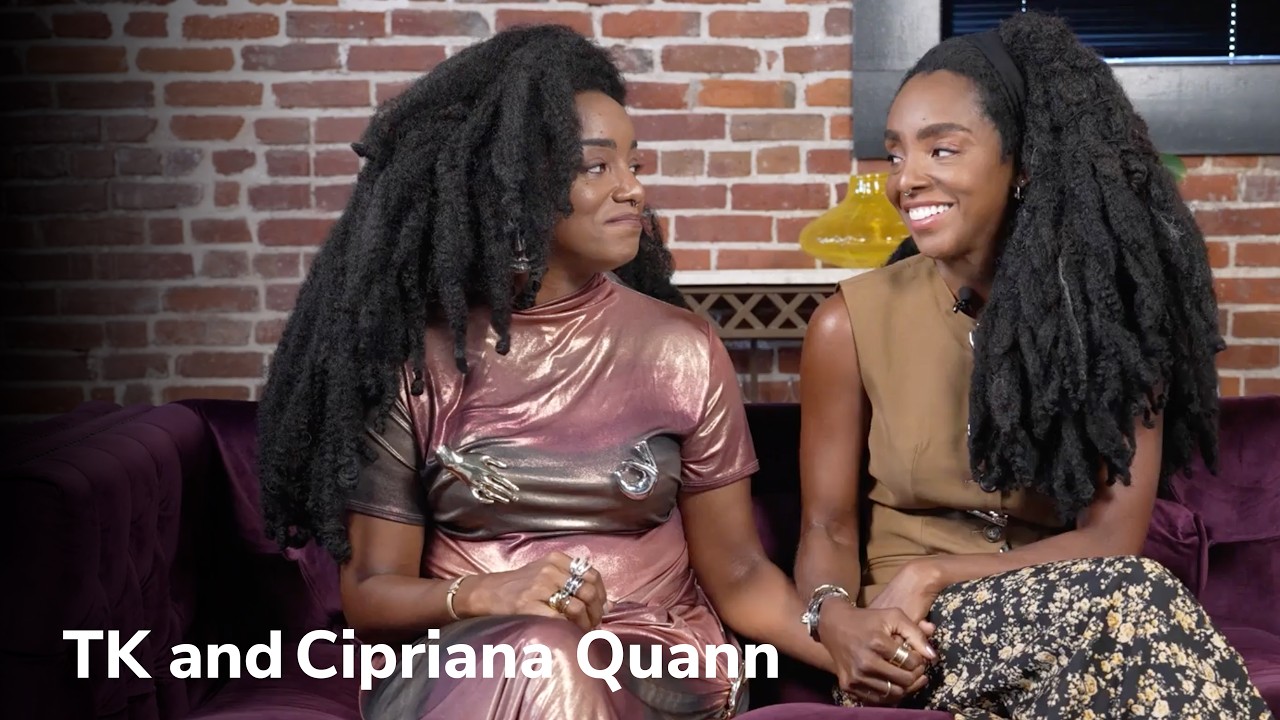
This story is the transcript of a Narratives video interview, lightly edited for clarity.
Content note: this story includes accounts of childhood physical and sexual abuse and of suicidal thoughts.
Joy and pain
TK Wonder: We grew up in a very difficult childhood. We experienced physical and sexual abuse every single day. And it's a weird thing for some people to hear when I say that although we were experiencing these horrific acts of sexual and physical violence every day, I always had joy every single day. Is it true that we went through these hardships? Yes. But I had joy because I had this bond with my sister.
The joy and pain of our childhood was a strange dichotomy for me to come to grips with as an adult, because all my life I was used to being in pain, but I also had joy. They weren't mutually exclusive.
We grew up in a household where we also had this dichotomy between our dad and mom. Our mom is beautiful and amazing and strong, but we also had this father who did these horrific things to us every single day. It also taught me a lot about compassion and kindness, because our father did come from a really difficult childhood. He grew up in the streets. He was in jail. He was mentally unstable. He was an ex-heroin addict. Before he met our mother, he was addicted to heroin. So he was unable to break his generational trauma. I'm just grateful that I was able to, and my sister was, and I know it's because of the bond that we have with one another.
Cipriana Quann: And as my sister said, we had to deal with this when we were little, and it was very extreme. The earliest memory I have of us being sexually abused was at 5 years old. It could have been earlier, but that was the earliest memory that we have. And it happened every day for a little over 10 years.
So when I think about our childhood, yes, I had my twin sister, and I know for a fact that's the reason why I'm sitting here today, because I had this bond with her. But it was hard. It was very hard. No one knew. Our father threatened our lives. He threatened the life of our mom if we said anything. So we were very good at being clandestine and keeping a secret.
Masking our emotions
TK: We're very good at masking our emotions. We learned that at a very, very young age, because even when we were going through the abuse, our father would say, "If you cry, the abuse will be worse. I'll hit you harder. The whipping will be worse. Don't cry. Don't cry." My sister talks about this often. She thinks that was our father's way of trying to feel less guilty for the abuse. If he saw us crying, maybe it would make him feel a certain way. I'm not sure.
It was very difficult keeping this secret. But I knew that we had to keep it, because we believed the threats that our father... Sorry. He threatened us all the time. This idea of us as small children keeping this big secret, because we wanted to save the life of my mom and my sister, is something that I still have a hard time thinking back on, even at 47 years old. Thinking about all the pain. It was just very difficult for us as children to deal with that. But I think our coping mechanism was each other.
Two coping mechanisms
Cipriana: We had positive and negative ones, right? But our coping mechanism when we were little was the bond that we had with each other. I didn't realize it until I was an adult: seeing someone that looked exactly like me, pushing through to the next day. I didn't realize how impactful that was on me as a little girl, and as a teenager and a young adult, to see her just pushing through and being this beautiful and joyful person.
We learned how to mask our emotions at a very young age, so that wasn't a coping mechanism that we had the freedom to express when we were little. That was definitely something that we had to work on as we became older.
TK: I think that we definitely had some positive and negative ones. The positive coping mechanism was definitely our bond, but our negative one was seeking solace in sugar and ultra-processed food. I remember as a young kid getting allowance money and sneaking to the store and buying these huge chocolate bars. I mean, this big. And they were a dollar back then. That tells you the era that we were growing up in. They'd probably be $10 now. And just hoarding them and hiding them.
Food was something that we sought solace in a lot. And it's never the good stuff. No one goes, "Mmm, I'm craving some broccoli right now," or "I'm going through broccoli withdrawals." I wish. It was sugar, and eventually it caught up to us in adulthood. But as a child, it really helped me survive. First and foremost, my bond with my sister. Secondly, seeking solace in food. That coping mechanism served us then, but as adults, it started to kill us, literally.
What he warned us about
Cipriana: For me, I couldn't really grasp what was going on, but it didn't feel right, despite everything that our father told us. We grew up in a household where he was very clear about not letting other people touch us in certain places, and being aware of strangers or adults that want to do these things. So he prepared us, in a way, almost as if we would grow up into young women able to tell him no. At the time, as little girls, he was telling us to be aware, to be careful of everyone. And yet, the hypocrisy: he was doing the exact same things he was warning us all these other people would do. It was him who was doing all these horrific things to us.
I just remember being 5 years old, and it was after school. I remember coming back from kindergarten, and our mom was working. The thing with our father and the sexual abuse is that he would never do it with us together. He would take me into the room and close the door and do these sexual acts, and then he would take my sister, or vice versa. So I always knew when she was in the room and the door was closed, something sexual was happening. And when it was me, something sexual was happening with me. But the physical violence was in person, and together. He was very comfortable doing the physical violence with us together, but the sexual acts were very private, individual.
TK: Yeah. As children, it was very confusing. I remember, I think at 9 years old, our father tried to rape me, and there was no penetration because I kept saying no. I remember saying, "No, Dad. No, Dad." And he stopped. He listened to me, thank God, but did everything else over the years. I'm very thankful that was something that I didn't have to experience, and I always think about the children who actually go through that every day.
Having this bond with my sister was definitely a lifesaving experience for me, because I had suicidal ideation as a child, and I can say quite clearly that if I didn't have this bond that I have with my sister, I wouldn't be here today.
Forgiveness and boundaries
Cipriana: As of today, we don't have a relationship with our father, and I feel very comfortable saying I will never have a relationship with my father ever again. But I have forgiven him, and I feel like that is the biggest gift that I could give to him: the act of forgiveness. But also, my love language is boundaries, and unfortunately, because of the severity of everything that he did to us, those are the consequences of his actions.
But I am grateful that he was my father. It might sound strange to say that, but I know that I wouldn't be the woman I am today without him. That doesn't excuse anything that he did, but I had to forgive him to forgive myself, because essentially, he is a part of me.
TK: My sister and I think differently about this. I don't know if I feel grateful that he was our father, but I definitely feel grateful for the lessons that he taught us, because it is true that someone can show good and evil. I think we saw that in our father because of the way that he grew up. Like I said, he was unable to break his generational trauma. But I am grateful for the lessons that he did teach us, and one of those lessons was to always have one another's back, no matter what.
I think that really stood the test of time as adults, as we're still learning and striving, trying to heal and find better avenues to become healthier. My health really hit rock bottom last year, just a year ago. But this bond that we have is really showing me the way, because my sister has been quite healthy for the past nine years, and her story has really inspired me. It's a journey, that's for sure.
Our third triplet
Cipriana: But the relationship with our mother is fantastic. We call her our third triplet.
TK: She's our triplet.
Cipriana: Yeah, she's our triplet. And we actually didn't tell our mother all the things that were happening to us until we were 18. By this time, our parents were separated and they had no more communication. They weren't living together. Our mom had our father committed, because he was saying things like he was going to kill himself.
TK: So she had him committed in a psych ward. I remember us visiting him after school, and it was, what was that? One Flew Over the Cuckoo's Nest. That's what it felt like going to those wards, visiting him. Shortly after that, maybe two years later, because we were about 16 then, she separated from him and eventually divorced him. And when she separated from him, that's when we told her. I remember the first thing she said was, "Why didn't you tell me?" And it wasn't accusing us. It was her saying, "I would have left the situation immediately."
I tried to provide some comfort to my mom and tell her there's no way that you could have known. There's no way you could have known. Because our mom deserves grace and kindness. It's really difficult for some people to hear. They'll be like, "Oh, weren't there signs? How could your mom not know?" I was like, "Take a step back. That's a mother you're coming for." She took such great care of the family. She was so dedicated and so loving, compassionate. I'm just thankful every day that we have her as a mom.
Finding support
How old were you both the first time you had any kind of support, like professional support?
Cipriana: The first time I actually sat down and felt comfortable speaking to a therapist was about two years ago. I remember leaving the session and thinking, why didn't I start this earlier? But I realized I wasn't in a place to start therapy then, because I wasn't ready to be 100% honest.
My sister and I didn't speak about the abuse with each other. We knew that it happened, but we never spoke about it. When I was 37, almost 38, I had my first psychedelic session. It was an eight-hour sound meditation session, and it was a mix of psilocybin and MDMA. After that session, which was profound and transformed the trajectory of my life, I called my sister, and we spoke about what happened for the first time. I was almost 38 years old.
TK: Mine was a year ago. A year ago was the first time I had a session where I was speaking to a professional, but it was in conjunction with ibogaine. I also want to say that my relationship with my sister has been my therapy over the years, since we started talking about it at 38.
There's this great book I always like to quote, called What Happened to You?, by Dr. Bruce Perry and Oprah Winfrey. It talks about childhood trauma, and Oprah says she never went to therapy over the years because she felt as if her best friend Gayle was her therapy, someone that she could talk to anytime, no matter how many times a day, how many times a week. That's the relationship I have with my sister. So albeit I didn't have a professional therapy session until I was 46, at 38 years old, when we started talking about it all the time, that was like therapy for me.
Getting past the stigma
TK, was there something that initially held you back from exploring psychedelic-assisted therapy when your sister started it?
TK: Yes. Growing up, our father was very adamant about us not doing drugs, and I believed all the stigma that surrounds psychedelics. I believed that they were just hardcore drugs. Even when my sister would tell me about her experiences, I was like, "Girl, you're in the forest listening to music and people banging on pots. What's going on here? You're taking drugs?" So I had the perception of psychedelics that a lot of people have when it comes to the stigma. But I was always open-minded. I never judged.
Cipriana: We felt the exact same way before I had my first session. Even going into my first session, my partner, who introduced me to it and someone that I very much trusted, told me what the experience would be like, and I said, "I don't feel comfortable partaking in any drugs." I call it medicine now, but I said, "I'm not doing any drugs. I'll partake in the music and the sound. That sounds wonderful, but I'm not touching any drugs." And he was like, "Of course, whatever you feel comfortable with." So yes, we grew up in a household that was adamant against us using any kind of drugs.
TK: But over the course of the last eight, nine years of my sister's experience with psychedelics, I began to see her transform in a way that was deeply inspiring to me. I was so incredibly proud of her journey, but really disappointed in myself, because she was soaring in a way that I was unable to. I really wanted to join her on that journey, and I could see the way that she was transforming, but I just couldn't. I knew that it was closely aligned with her journey with psychedelics, and it was deeply impactful to me, maybe even on some subconscious level. But over the years, I was just like, it's not for me. A year ago, that changed for me, and it was with ibogaine.
Let go
How did you initially get introduced to psychedelics and plant medicines in general?
Cipriana: As I mentioned before, my partner, who I'm with, a very beautiful man, introduced me. He has two really good friends, a couple, and they went to Burning Man. I was like, "Oh, Burning Man." I had very misconstrued ideas of what psychedelics could do in a very healing, safe set and setting, which I'd never really thought about. I'd always seen movies. I thought of Woodstock and the '70s, the rave scene and partying, ecstasy and people touching each other. I just had all these very misconstrued ideas of what psychedelics could be.
So when he was like, "Oh, I have a good friend," his friend had gone to Burning Man, and there was a facilitator there who did a very large group session, and everyone was talking about how transformative and how healing it was. So he was able to set up an appointment for my partner and me, and him and his girlfriend. It was the four of us. It was an eight-hour sound meditation and, as I mentioned before, a mix of psilocybin and MDMA.
I spoke to the facilitator and said I wasn't comfortable doing any of the drugs, and he was like, "Oh, that's completely fine. Do what you feel comfortable with. But let me just sit down and talk with you all about what's going to happen." So he actually sat down with us for three hours before our eight-hour sound meditation. He talked about the history, how psychedelics can work in a healing capacity, and showed us research and graphs and brainwave patterns and neuroplasticity. I was blown away. As my sister said, we're not judgmental people. I'll be like, "Oh, I'm not doing it." But if you give me enough factual information...
TK: You're a nerd. You have to give us information.
Cipriana: So I was like, "You know what? I'll try just a little bit."
We went into the sound meditation, and I remember the first feelings I felt. There were two: relaxation and fear. The fear was of the unknown. There were a lot of things happening during that session, and the one thought that kept going through my head, almost the entire eight hours, was one line on loop, and it said, "Let go."
I didn't realize it, but I know that's something I have been holding on to ever since I was a little girl, because it kept saying, "Let go. Let go. Let go. Let go," always on repeat. And I felt this surge of fear. It was so strong. Then maybe two hours before the end, I was like, "Okay, I'm going to let go." Being sexual assault survivors, not having control of your environment... Control is how you feel safe. Even to this day, I walk into a room and I'm like, "Okay, where's the exit?" It's a survival instinct that I don't think will ever leave me. But that's okay. I'm still working on a lot of things.
TK: You always like to say we're healing, we're never healed, because healing is something that you can constantly evolve and learn from. So I have no shame in saying that we're still healing, and it's a lifetime commitment for us.
Cipriana: So I was hearing "let go," and finally I decided to let go. I also want to mention that during this session I was crying the entire time, but it wasn't wailing. We had our eye masks on and everyone was in their own journey, but tears were just flowing down my face. Between these lines of "let go," I was also like, why am I crying so much? And then a voice in my head came and said, "Oh, you're crying because you weren't able to cry as a little girl." And then it clicked. I had my first session at almost 38. I'd been holding on to all these emotions for decades, not realizing all this was stuck in my body.
When I was releasing the tears, and I finally started to feel, "Okay, I'm safe," and I started to let go, I felt this weight just released from my body. I didn't even know I was carrying this weight. It was an emotional weight, but emotional weight carries physical feelings. That was the first time I realized how much weight I was still carrying from my childhood. It was such a beautiful feeling to be in a safe place and to be able to release it for the first time, and to feel so comfortable and also strong. I didn't feel like I was weak for releasing or crying. It felt so free.
Before the session, I was also talking about the money aspect. I was like, "Oh, it's kind of expensive. I could do this. I could play some music and facilitate." When it was over, I realized I was so ignorant of what this space is about. I would have paid triple the amount for that experience. As I mentioned before, it was an experience that transformed the trajectory of my healing journey.
Ibogaine and a healthier body
Thank you for sharing that. And what about you? What was your first psychedelic session like, if you can go into some detail about it?
TK: Sure. Well, I'll do two, because the first one was very quick. My first experience was with psilocybin, and it was with my sister, her partner, their two friends and my ex at the time, who had a very strong and visceral reaction to the mushrooms. So it took me out of my experience.
Cipriana: And I knew it was going to take her out of her experience. She was going to be focused on him the entire time.
TK: That's exactly what happened. My second experience was with ibogaine, a little over a year ago. I had a lot of trepidation up to the very moment that they administered the pills. The sole reason why I went is because I saw how transformative my sister's own session with ibogaine was, in 2023. I didn't know what to expect with ibogaine, but I just knew that there was something in me that wanted to change.
Over the last seven, eight years, I'd been really trying to change my health. A year ago, I was 110 pounds overweight, which caused debilitating, severe pain every day. I was hypertensive. I was prediabetic. I developed fibroids. I was exhausted all the time. My health was in shambles, and I knew I needed to change something. I just didn't know how to, because I had this coping mechanism for decades that I just couldn't break. A lot of people, when they hear "addicted to sugar," don't think it's as strong an addiction as drugs. But there are a lot of similar parallels, and it is. And I just couldn't break it.
I had my session with ibogaine at a facility called Beond, this great facility, and they tell you to set an intention, but no expectations. My intention was: healthier body, healthier body, healthier body. In my 12-hour session, TMI, I had to use a basin in my lap. But I felt like I was purging all this toxicity from my body. Even though physically I was the heaviest I'd been in my life, it was the lightest I'd ever felt.
And I had this epiphany. For years, as children, we were so acclimated to abuse that it was our norm. I didn't recognize that as an adult, I had become my own perpetrator, and I was perpetuating this abuse because it felt normal. I didn't realize that I was continuing the abuse through food, abusing myself in this way, because abuse was normal, and anything other than that would have felt abnormal. And I was like, aha. It was like a light went off, and I said, "Okay, I'm not eating this way anymore." I had never felt this way in decades.
I left Mexico and went home. I didn't drastically cut out refined sugar and ultra-processed food. I eliminated it. And it seemed so simple. I was like, "Oh my God, what is this?" For the past year, I've completely changed my lifestyle and started doing all these integrative practices. And after my session, when I was still in Mexico, I called my sister and I said, "I get it. I get it."
Someone who listens
Cipriana: Yeah. And when I got off the phone with her, I was talking to my partner and I started crying, because I was like, she finally gets it. I'd been talking to her about it for like eight years. The funny thing is, she just wasn't ready. But she was always ready to listen, even though she'd be like, "Okay, girl, you had an ego death."
I've always had that relationship where I have someone that listens, no matter what. Anytime, any day, no matter how many times. Even if we don't have the same sentiments or may not agree with one another, we always extend each other grace, compassion and a listening ear. So I know how powerful that is.