Venezuelan Mother Endures Hell for a Better Life in the United States
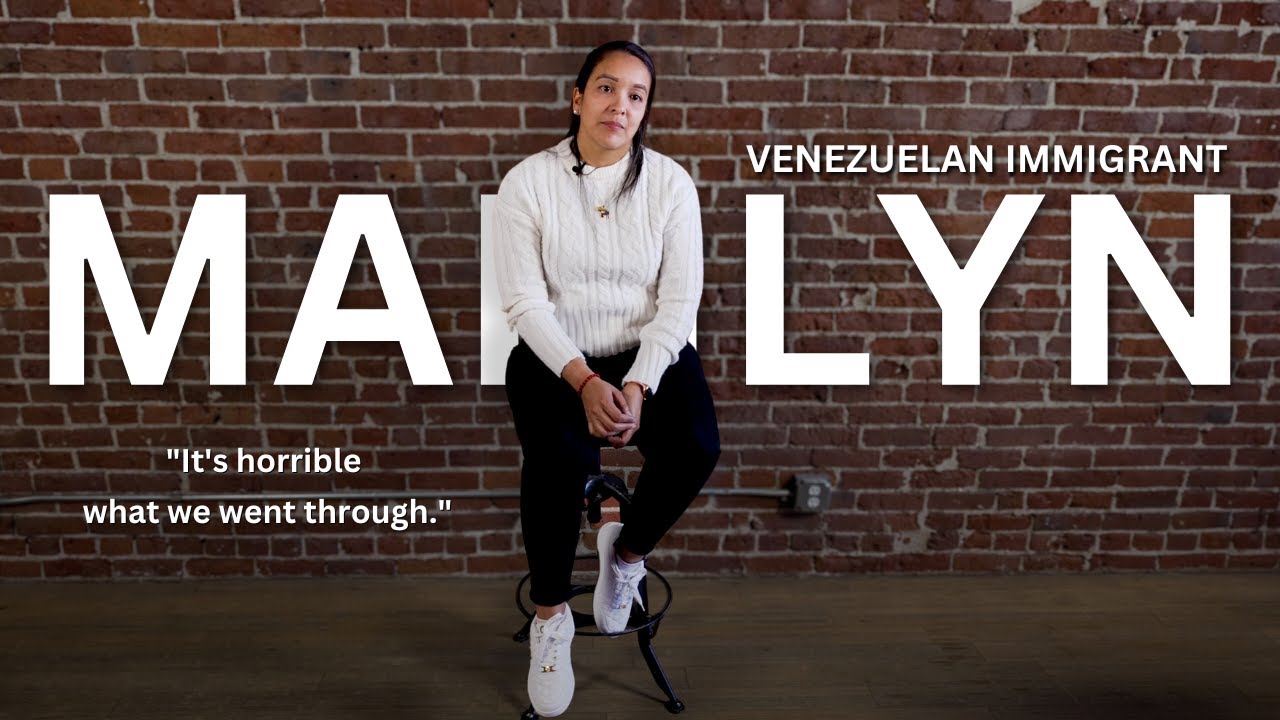
This story is the transcript of a Narratives video interview, translated from Spanish and lightly edited for clarity.
Content note: this story includes accounts of sexual violence, suicide and the deaths of children. Names of her family and friends are withheld.
A humble family
My childhood was pretty calm. I come from a very humble family. My mom always worked in people's homes. She worked ironing, for some military men in Caracas, the capital of Venezuela. My dad is a construction foreman. There are only two of us, two sisters: my older sister and me. They raised us, humbly.
Today I'm a nurse, but I wanted to study medicine. It didn't work out, because the degree back then was very expensive. I wanted to study medicine. It took five years, then the specialization, and they couldn't pay for those studies. It was either food or studies. There was nothing to be done.
My daughter's father and I are the same age. We met in school. We studied together from when we were little, from kindergarten until we finished high school. After I graduated, each of us went our own way, and then we met again. We started talking and getting to know each other more, and today we've been together nine years. Back then, he was very thoughtful. I think a thoughtful man has to be that way every day, not only on a special date, like Valentine's Day, which in Venezuela is February 14. For me, it has to be every day. He's very thoughtful.
When I got pregnant, I didn't expect it. I was 25. I always said I was going to have only one child, but at 30. So when I took the pregnancy test, I was in shock: a mom at 25. But as the days went by, things were different. It's something very beautiful. In fact, when my daughter was born, people asked me why I got pregnant so, how do I explain it, so old. In Venezuela they say it that way, because girls of 12 are already mothers, at 10 years old they're already mothers. So to them, 25 seemed very late for my pregnancy. But it's something very beautiful. My daughter is 6 years old, and she's a blessing.
Mothers too young
It's very complex, because they're mothers at a very early age, when, I'd say, their organs haven't even finished developing, or maybe haven't developed at all, when they're already pregnant. You still see that in Venezuela.
It's very difficult, because back then President Hugo Chávez was in office. When he was president, he created some foundations called Ser Mamá, and they gave them bonuses. They gave them everything. So this thing broke out where many people, many girls, got pregnant, because they were given a bonus: a bonus for pregnancy, a bonus for maternity. He did that. So at that time, this wave broke out of girls getting pregnant at an early age, being so young, being children.
Leaving Venezuela
I never imagined leaving my country. Never. When my daughter was born, things started changing. The situation got very bad, because I couldn't find the formula I gave my daughter, since she didn't breastfeed. That was one of the reasons I decided to leave the country. But never in my life did I imagine leaving. Who wants to leave their country? When my daughter was 6 months old, I decided to leave the country in search of better economic stability, for me and for my daughter. I left Venezuela with my daughter's father. My daughter and me, the three of us.
Why Colombia?
Colombia because it was closer. I could say, I'll travel to Colombia, and whenever I can, I'll travel to Venezuela. It was a bit closer for me. Even so, it's 20, 25 hours by bus. It wasn't impossible. But I left my parents in Venezuela, my family. That's why I decided to set out for Colombia: because it was easier to travel from Colombia to Venezuela. So the three of us decided to leave for Colombia. My daughter was 6 months old. It was very hard to leave your country, leave all your things and start over. But God gave me the opportunity, and after 6 months, my mom was with me in Colombia.
Unfortunately, I couldn't work in my profession in Colombia, because of the problem with my degree. Getting it apostilled was very expensive. Apostilling the degree so I could work in Colombia as a nurse cost 700 to 1,000, and at the time I didn't have that money. But since God doesn't abandon us, I worked for a man who has no legs. I took care of him for three years. I worked in Colombia for three years with him, and practically did my work as a nurse with him.
I left Venezuela for Colombia in 2017, if I'm not mistaken. I spent almost seven years in Colombia. I did a lot of things in Colombia. In fact, my husband and I have a restaurant in Colombia right now, and it's running. It's Venezuelan and Colombian food. My husband's mother and his brother run the restaurant. They're working hard at the business. We did a lot of things, projects, and I really loved that country. Many people reached out to help us.
Why we left Colombia
It sounds like things were really good in Colombia. Why did you decide to leave?
I left Colombia in January, but since the year before, I had three jobs. Things were going great for me. But sales at the business started to go down. In Colombia, there's this thing they call the guerrilla, and honestly, things are very hot. The municipality where I was is very hot right now. So the money wasn't enough, just barely for rent and utilities, just the basics. If I wanted to buy something for my daughter, I couldn't, because it was the rent and the utilities. So we decided to set out on the journey, which was very long, to get here. Right now, they're charging every shop, every business, a vacuna, a protection payment, and if they don't pay, you can imagine.
We came here to the United States because I think, in the long term, this country has many opportunities and many projects. In the almost seven years I was in Colombia, I couldn't buy myself a house in Venezuela. I think that here, working hard, I can give a better quality of life to my daughter and to my parents in Venezuela. But here you come to work hard, like in Colombia and every country.
More than anything, I also did it for my mom. My mom has hypertension, she has kidney failure, and she has a heart condition. So I also decided to come here to the United States because it's easier for me to buy her medications or send them to her. In Colombia, I didn't have the means.
This year I have a lot of things in mind while I'm here. But I always said, when I was in Colombia, before leaving Colombia for here, that I wanted my own house, and to give my parents a better quality of life. Now it's our turn as children to give them a hand, because my parents raised us from the bottom, working hard. So I'd say, since they did it, now it's my turn. Not to repay that favor, but to have them better off.
Half the story
I left Colombia on January 28 of this year. The people who are here in the United States, when I was still in Colombia, told me a lot of things. Friends were guiding us and telling us, this and that, be careful in the jungle. But they didn't really tell us what was happening in the jungle. I say you have to live the experience. Everyone has to live their own experience, and it was our turn.
Really, they tell you half the story, but they don't tell you what really happens inside the jungle, across the seven countries you go through. I became very afraid, most of all in the jungle and in Mexico. That's really where you see that the movie is very, very complicated: the jungle and Mexico.
If you had to do it again, would you come with your daughter?
No, I would never do it. Not even if I had to do it again would I put my daughter through the jungle.
The jungle
We started the journey from Colombia to Panama, which was when we crossed the jungle, and that's really where you live a bitter experience. We spent four days inside the jungle: two nights in Colombia and two nights in Panama. And the two nights we had in Panama were the worst of my life.
A friend who is in New York was explaining everything to me, but she didn't tell me the things you go through inside the jungle. She only told me about things on the surface.
The two nights we lived through in Panama were terrible, because there are the Panamanian guards, as they're called, the Panamanian guard, but they're working together with some Indigenous men who are very bad. The last two nights we were in Panama, they come down from the hills. They take your money. They rape the women, the girls. That night we heard a lot of screams. We were camping. It was 10 at night, but everything was dark. We only heard screams. We heard some lions. That's why I tell you that those nights were the worst of my life. I felt like I was going to die that night.
What happened?
The last night, the one I told you about, we heard women screaming. They were shouting at us, but we stayed quiet so they wouldn't hurt us. You couldn't see anything. It was totally dark. I had brought a small Bible. It was around midnight. The guys were outside, and I was inside the tent with my daughter. With the Bible, I started to pray and pray, waiting for the hours to pass. Then that night a monkey also came down. I remember it perfectly. They were very aggressive, because we were in their territory. They took a bag of food. We waited until 5 in the morning and continued the journey. We walked from 6 in the morning to 6 in the evening, four days walking and walking. The journey felt endless.
We paid for a package, including food, but only from Colombia to Las Banderas. I sent you some photos: there you'll see a photo with Venezuela's flag. The guides go with you up to there. They're porters, mochileros, and they were armed those two nights. They were great. But from there, they go back down the hills and tell you, "God bless you. This is as far as we go with you." From Las Banderas to Panama, you go with God and the Virgin. From there on, no one protects you but God.
The porters are trusted guides. They go with you. There are thousands of them, thousands of porters, including young women. They have a lot of stamina, because the same day they went up with us, they came back down again. They were armed. They help you. They come to your aid. In fact, the day we went up, a young woman broke her foot, and they had to carry her back down. I don't know what happened to her, but they had to take her back. We were already halfway. And she was pregnant, this young woman. She broke her foot, and they had to take her back down.
We kept climbing, and my daughter's father couldn't take it anymore, because he had to carry our daughter here on his back, plus the bags. So we had to pay something extra for them to carry the bags, so we could carry our daughter.
So the women had men traveling with them?
Yes. They go with their husbands, with cousins. We all go accompanied. It's an incredible crowd. But there, they can't do anything else. Why? Because the attackers are armed. They have weapons.
That night nothing happened to us, first because I had entrusted myself to God. I don't know if it was because we were ahead or behind on the walk. But we came across a young woman who had been raped in front of her husband and in front of her son. They had held him, and he couldn't do anything, because otherwise they would kill him, or all of them.
Yes, it's hard, because we can't do anything. They would kill us all. In that jungle you see many things. There are people who go into the jungle but don't come out, because of their physical condition, because they break a foot, because an animal bites them, or because of what the Indigenous men are doing. Days before, the Indigenous men killed a whole family because they didn't have money, or they didn't want to give them their money. They cut them up and put them inside the tent, and there they stayed. And you go climbing up and seeing all these things. It's horrible. Horrible.
We met some Haitians, because on the way you see people from many countries: Haitians, Chinese, people from different countries, Mexico, Honduras. When you're climbing through the jungle, there's a hill they call La Loma de la Llorona. That hill is terrible. You have to know how to climb it, because if you slip even a little, you fall. The Haitian woman was climbing with her son, a boy of about 3, and she had no one to help her. She slipped, and the boy fell into the void, and there was no way to get him out. She kept going, and further on, we saw her hanged. She hanged herself.
Smiling for her daughter
You sent me photos of the journey, and you're smiling. Why were you smiling? Were you doing that to protect your daughter from how bad this really was, to create an alternate version: we're going on a trip, we're going for a better life?
The photo I sent you, with the Venezuelan flag, is from the place called Las Banderas. That's how far the guides from Colombia go with you. From there, we kept going. There you see the flags. You write your name, the date, you write a lot of things. And there I decided to take a photo, because I needed to lift my daughter's spirits.
But she had more strength than us, than her father and me. She enjoyed part of the trip, in the sense that the river is huge and she bathed in it, the jungle river. It's a river that wears you out, because the water comes up to your waist. On me it came up to here. Being in the water so much wears you out. But she enjoyed that, because she loves a pool, a beach. We let her bathe, and for a while we'd walk like that. But I tried to keep a smile, because I was falling to pieces. I cried every time we sat down to rest, and she would ask me, "Mom, why are you crying, if this is a trip?"
Has the journey changed you?
Yes, quite a lot. Personally, yes, it made me stronger. It changes your mentality, the way you think. And I always instill these things in my daughter. I tell her that she always has to be grateful, for everything we lived through on the whole journey, and everything we do to give her everything. That's the example I give her.
And she also saw things in the jungle that she shouldn't have, but it happened. Wrapped sheets, with people in them. We saw a 5-year-old boy who had died. Older people who get carried away by the river: suddenly you're standing there, and the flood comes and takes them. Parts of the jungle smell bad, because so many people who died stay there. They bury them there. They dig a hole and bury them. A young woman also died after she got dengue inside the jungle. She was with her husband, and she died, and her husband had to bury her there, and he kept going.
Everyone who asks my daughter about the trip, she tells them she's a warrior.
Mexico
Going up through Mexico is not easy, because of the cartels, and because of immigration. We had a hard time in Mexico, too. We went up stage by stage until we reached Mexico City, but it took us 20 days to get up through Mexico.
They were going to kidnap us in Tapachula. When we were going to a town called Tapachula, they have an arrangement there between the cartels and the drivers of these vans, which are like a bus, but small. You pay them the fare, and they pick you up, but the driver stays in contact with the cartels, and, as they say, they point you out: "Look, this person got on. This family got on." That's where the terror you live through in Mexico comes in. They were going to kidnap us, but since there were only a few of them, my daughter's father grabbed her and ran, and I ran behind. It was like a desert. There was so much sun, so much sun. My body couldn't take the heat anymore. My daughter had had an operation in Colombia, and she started bleeding from her nose from the sun, until we got to a place, and a man picked us up there and took us where we were going. Mexico is terrible, too.
Finally, we reached Mexico City. We took detours to get around immigration. They asked me for papers. They asked whether he was my daughter's father. Yes. I showed them the birth certificate, and they let us go. We finally got to Mexico City, and we stayed there 20 days, about 25 days, to cross the border.
Thank God, the appointment came quickly. The appointment that everyone waits for came for us in 12 days, when there are people who wait up to a year, nine months. It came in 12 days. From there, we went to the airport in Tijuana. We spent two days in a hotel in Tijuana, and from there, with the appointment, we went through the port of San Ysidro. We were between Mexico and the United States, and I felt joy, because three months to get here was not easy.
The immigration papers: we had the appointment, and it took all night. We entered the port of San Ysidro at 4 in the afternoon and left that port at 6 in the morning. Part of the afternoon and the whole night, sitting with the immigration people, the officers doing our immigration paperwork. You have to take great care of those papers, because that's where the work permit comes from, the Social Security number. They're papers, but there are many of them. They're the immigration papers that give us the time to be here, to apply for asylum. The work permit is included in all that.
My daughter saw the American flag and said to me, "Mom, we're in the United States now." After so much time traveling and walking. And I said, "Yes, sweetheart. We're in glory."
Denver
We were lucky. When we left the port of San Ysidro, we got to California. We stayed in a hotel there for three days, waiting for tickets to our destination, because my destination was Atlanta. My destination wasn't here in Denver.
How did you end up in Denver?
We were waiting to see where we would go, whether to Denver or Atlanta, and finally it was settled that it would be here, Denver. I said no, no, because it's very cold. More than anything, it was fear, because many people told me that work gets very bad when the snow falls, that everything shuts down. And, as they say in Colombia, I like to work a lot. I've worked since I was 15, 16. And I said, not Denver. I won't be able to work. I won't be able to get ahead, because there's no work.
We came by bus, a full day of travel. We left at 6 in the evening and got here the next day at 6 in the evening. We arrived at a shelter. We spent three months in the shelter, and we could go out to work. My daughter started at a day care there. We started going out and getting to know people. But we arrived at a shelter, here in Denver.
What have you been doing since you arrived?
Since I got here: when I was at the shelter, at the Quality, I met a good person. He's Mexican. He's the one who started giving us work by the day. My husband helped him, or I helped him. After we left the shelter, we moved to Aurora, and that's when I started meeting more people. I met a woman my husband worked with, and that's how the friendship grew. She started calling me. She gave us houses, and we cleaned them, and that's how everything grew.
Are you happy here?
Yes. I was recommended by a friend of hers, who put me in touch with another woman, and, well, I'm very grateful to her. If I didn't feel good here, I wouldn't be here, really. But as the days pass, you get used to it, and there really are very good people here, with very good hearts. I'm grateful to her, because she's the one who helped me have that stability of work. Right now, thanks to her, I have work. Not every day, but I do. I feel comfortable here. Very good.
Where have you felt unwelcome?
In the shelter, I didn't feel good, because there were many people, many migrants who come with a different mentality. And on top of everything, in the room where the three of us were, they put another family in with us. That wasn't pleasant at all. I wanted to run out of there.
Who I am
If you had to describe yourself as a person, who you are, your heart, what would you say?
I am, and I consider myself, a person with a good heart, with good feelings. I like to help, whether someone needs it or not. That's why my mom says things go well for me, because I help everyone. If it's within my reach, I do it.
The trip made me think a different way. Last week we had to pay rent, and we didn't have the full amount. And there's a young man from Mexico I follow. He has drug-resistant tuberculosis. I don't know him, but I follow him. Without looking back, I said, no, I have to send him something, because he needs it, and many people need it. And I sent him 100 dollars, which wasn't in the budget, but I felt I had to act. I knew he was going to be okay. He needed fruit. He needed food. And I don't know him. I said, well, God's timing is perfect. I sent it with fear, because I don't know him. I thought, maybe he'll spend it on something else. But he sent me photos and videos of what he had bought, and he said to me, "Thank you, and I don't even know you." I told him, well, I'm like that. I like to help a lot of people.
Not all of us are the same
[Donald Trump] said last week that it's time for everyone to leave. Everyone to leave. He was referring mostly to Venezuelans, that we all come here to do harm. I came here to work hard. Yes, I was afraid of whether he would win or not, for that very reason, because he said he was going to remove everyone here: those who are here illegally, those who have CBP One, those who have humanitarian parole, those who have TPS. And I don't know if they'll give him the power to do that, to remove everyone here. He also said he was going to remove those who don't have a political asylum case.
I think there are many Venezuelans here who are making things ugly. They're stealing. A friend of mine had her car stolen last week, and it was Venezuelans, our own compatriots, who stole her car. They were wearing hoods. They were armed. She couldn't do anything. So yes, in some ways I agree with him: deport the ones who are doing wrong, the ones who are stealing, the ones who are killing. It makes me very ashamed, because I'm from Venezuela, and there are many Venezuelans here. It makes me very ashamed to hear someone say, "So-and-so robbed me," and they're Venezuelans. What a shame. It makes me very ashamed, because they're Venezuelans, our compatriots, and they come here to do harm. But not all of them. The bad part is that we all pay because of one.
A lot of people here support Trump. If they were here in the room, what would you say to them?
I want you, the people who are here, who were born here, not to think that we came to... Well, yes, there are people who are doing a lot of harm, but we're not all the same. Each of us has a different culture. But maybe you're afraid of Venezuelans, because more than anyone, it's Venezuelans I've heard come here to do harm, or you're afraid they'll come work in your house and rob you.
The man I worked for in Colombia used to tell me, "I love Venezuelans, because you're," they say berracos there, "you're berracos when it comes to work." Hard workers. Not everyone comes to do harm. You're afraid of us here, that we're dangerous, that we come from a gang. No, we're not all the same. At least my family: we have good hearts. We come here to work. Yes, you're going to find good people and bad people. And maybe Trump has those bad thoughts about us Venezuelans. But don't be afraid. We're good people. We're quality people. I wish you could get to know us as we are, and you'd see that we're great. We Venezuelans have very good hearts, good feelings. We're good people. We criollos, we Venezuelans, like to help a lot of people. If it's within my reach, I do it.
Let me tell you: the places where I go to work are people with money, I'd say. They leave me alone in the houses, totally alone, and they've done things like leaving gold chains in plain sight, and money. Maybe they're testing you, to see whether you'll take it or not. They keep calling me. They're testing your sincerity, your honesty. What I do is clean it and put it back. They keep calling me. Maybe, as Trump says, there are Venezuelans who are dangerous. But no, we're not all the same.
Starting from zero
What do you hope life looks like for you and your daughter in five years?
I hope that in five years I'll be in my country, with a house for her, and that she'll have matured more and learned the language, because I know she will. I think in five years I'll have accomplished a lot of things in this country. I hope, and I aspire, that God will keep giving me life and health, and that I'll be, wow, in Venezuela.
Did you ever consider having your parents come here, and if not, why?
No. I couldn't bring her, because my mom, first of all, has all those problems: she has hypertension, kidney failure, a heart condition. Putting my mom through the jungle would be like killing my mom myself and leaving her there in the middle of the jungle. How would I help her? On top of everything, my mom is a little overweight. So no, that wasn't the solution.
I decided to send her to Venezuela, because she was with me in Colombia. My mom and my dad were with me for those seven years. They were the happiest years of my life. When she found out I was going to make this journey, she told me she couldn't go through the jungle. That's why I decided to send her to Venezuela, and, well, to wait while I spend the time here, do what I'm going to do, finish my projects and go back.
I don't know if you've ever had to leave your country, leave everything, even the material things. When I was in Colombia, I started buying my things, a bed, everything new. And suddenly you have to emigrate, after so many years, leave your family. And not only that: start from zero. I had to start from zero in Colombia. We slept on the floor. We spent a long time sleeping on the floor. I remember I started getting a little bronchitis. Little by little, you meet people, and I started working. I worked hard. I had three jobs. Then my husband said, let's go. I told him, no, I don't want to go, because I'll have to start from zero again. And it's hard to start from zero. Everything we went through in the jungle, without food, without anything. Here we had to sleep on the floor, too.
Even so, I want to be in my country. I miss my family a lot. It's hard. It's hard to leave everything, leave the material things, leave your family without knowing if they'll pass away, without knowing if you'll see them again. Because that's what's left. God keep them for me, my mom and my dad. That one day I won't wake up to someone telling me, "Your father died, your mother," while I'm so far away here. How would I manage? I couldn't. It's hard. It's been hard for us. I miss my country. I miss my family. If God doesn't give me the chance to bring my mom, well, that's okay. But I know that by saving and working hard, I'm going to achieve what I want.